
How Xenomorph Stunt Performers Cameron Brown & Jayde Rutene Terrorized Noah Hawley’s “Alien: Earth”
When the trailer for Noah Hawley’s Alien: Earth surfaced, it teased a brand-new saga, yet the chilling blend of dread and terror from Ridley Scott’s iconic Alien film franchise persisted, revealing a world where primordial creatures capable of kaleidoscopic terrors begin stripping away any sense of safety.
The year is 2120, and a spaceship “carrying five lifeforms from the darkest corners of the universe” crashes into Prodigy City, home to a secret research facility perfecting “hybrids,” a form of humanoid robots infused with the consciousness of children. Wendy (Sydney Chandler) stands as the bright (and perhaps dangerous) breakthrough, the sole figure capable of confronting the Xenomorphs now terrorizing the city.
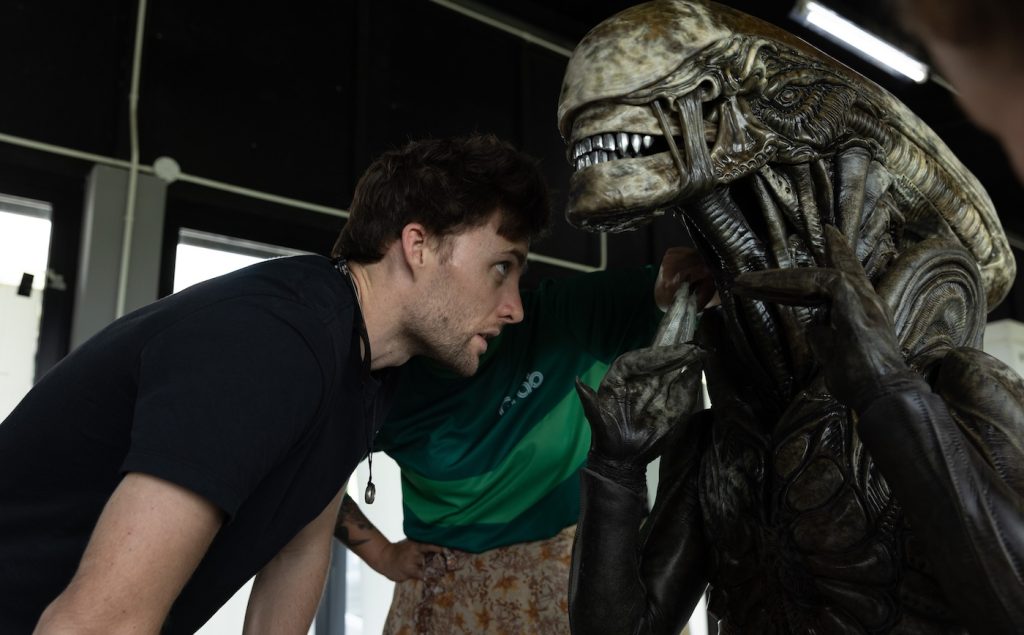
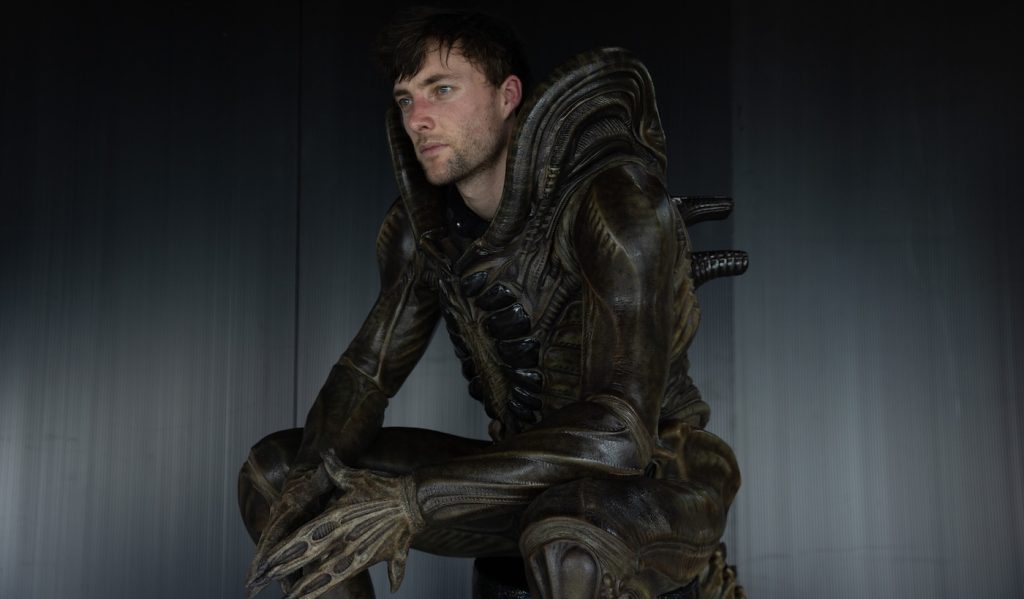
In building the futuristic setting, whether it’s visceral cinematography, bespoke costumes, or the elegant brokenness of Jeff Russo’s score, Hawley and crew grounded the sci-fi storyline in practical realism, a motif extended to the Xenomorphs. It’s here that Weta Workshop took over, designing animatronic versions of the deadly creature, alongside highly detailed practical suits—both full-sized and adolescent forms—brought to life by stunt performers Cameron Brown and Jayde Rutene.
As part of a larger stunt team, the New Zealand natives have collaborated on over a dozen projects together, including Kingdom of the Planet of the Apes, Furiosa: A Mad Max Saga, and David Leitch’s The Fall Guy, where they share a SAG Award for best stunt performance. With Alien: Earth, they realized it would be different.
“We knew we were stepping into very big shoes with these roles and were very honored to have had the opportunity to play that part,” says Brown, who performed as the adult Xenomorph. Rutene added, “I was already on the stunt team before I was cast in the adolescent Xenomorph role, so I got to see Cameron early on, from the audition to conception. It was super cool getting to watch him live out and fulfill this super iconic role. And then getting the opportunity to step into the adolescent role is still kind of mind-blowing to me.”
Below, Brown and Rutene break down the process behind shaping their strikingly crafted performances.
What was the main influence that shaped your approach to portraying the Xenomorph?
Cameron Brown: The wardrobe was probably the key influence. Once you start putting all the elements of the suit on, it dictates whether any ideas you had prior will work. So the suit itself and the design that Noah was pushing and Weta was creating informed many of the decisions.
Jayde Rutene: It was the same for me developing the adolescent character, but the adolescent design was slightly different. The suit’s physicality informed some of the movements. This was constantly discussed with the Weta team while the suit was being fitted, to try to give as much physical range as possible. Then, looking at past references of all the alien lore helped develop it from there.
Jayde, did you and Cameron coordinate movements or behaviors to connect the two versions of the Xenomorph? Or do you see them as having distinct physical styles?
Jayde Rutene: Cameron and I have worked together a lot in the past and know each other really well. So when the adolescent Xeno came up, we workshopped those ideas together. Like, how will it move? Will it be the same as Cam’s or will it be different? We started with those discussions, and it went from there.
Cameron Brown: When we started workshopping all of that, we wanted them to feel like they were in the same world, but not limited to being exactly the same cut-and-paste character. The whole conversation of nature versus nurture is very interesting. The first Xenomorph is more a traditional product so to speak. And this new adolescent one was raised differently, so there are some behavioral patterns that differ as a result. But we definitely wanted them to feel like they existed in the same space.
You mentioned the suit’s physicality. How did the size and weight influence the performance? Did you have to exaggerate certain movements for the camera?
Jayde Rutene: For me, it was interesting being in the suit because what you’re feeling is often different from what someone sees on the outside. So you might feel like you’re moving very dramatically or exaggeratedly, but then it might look really small from the outside. So getting familiar with that, then having to internalize and think about each movement, was an experience.
Cameron Brown: One of the biggest elements that you have to work with is that you’re almost completely blind when you have the head on. So a lot of it came down to rehearsing action or performance before you could see it, so you could get it all into your muscle memory. And then you perform it all blind and hope that you’ve matched all of the beats that you walked out prior to the cameras rolling.
In the Alien film franchise, Xenomorphs lurk more in the shadows. But in Alien: Earth, we get to see more of their fighting style. What informed or influenced your movements for action and fight scenes?
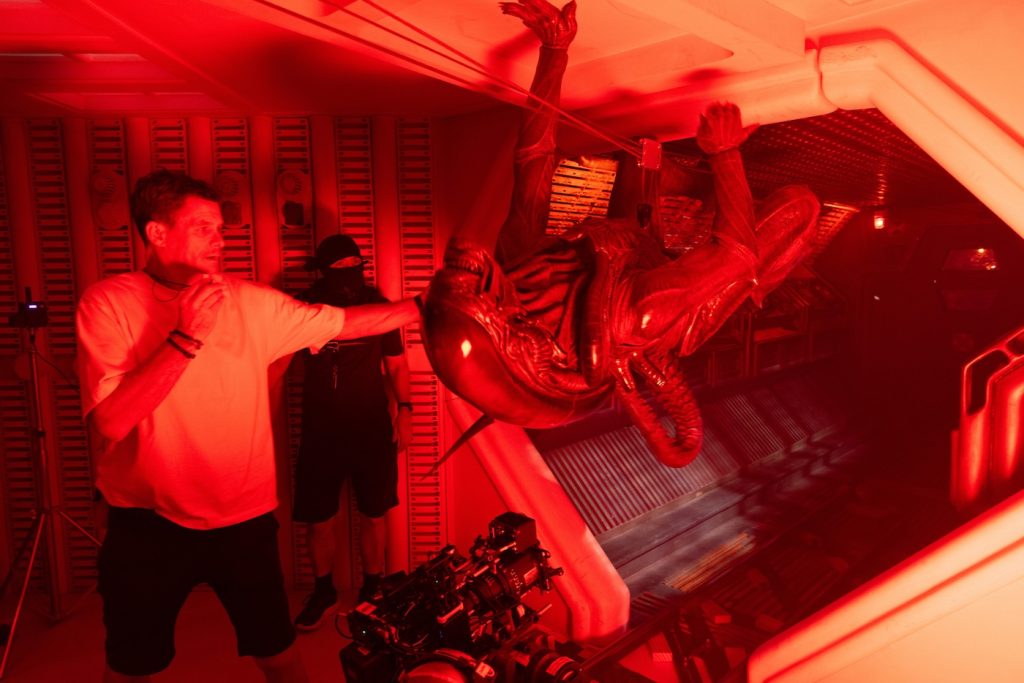
Cameron Brown: As you said, the Xenomorphs in prior installments are sneaking around in the shadows, and there were quick kills. So in the preproduction phase, we explored what combat looks like for these creatures. So a lot of it was learned in exploration. Like, what tools does the Xenomorph have at its disposal to fight with? And how does it use them? I wouldn’t say we referenced any martial arts films or anything that would have felt like we were going down the wrong track. We looked a lot at the first three Alien movies as a guide. And then tried to figure out from there how we wanted these ones to move.
One of the bigger action scenes sees Wendy trying to save her brother, Joe, who is trapped inside a trailer by a Xenomorph. How did you approach the sequence with supervising stunt coordinator Rob Inch and stunt coordinator Florian Robin?
Cameron Brown: When we arrived in Thailand, it was really cool to meet with Rob and Florian and the team that he’d built and almost immediately see that they had the same sort of ideas for the action that I was hoping for, which was to make the creature as much of a physical performance as possible and to not rely on CG. So that was kind of a dream to hear as a performer that you would get to do everything practically. The trailer scene was a great example of that. For all the action you saw, I can’t speak to what enhancements they did later with CGI, because they’re pretty smart with it and use it really well. But for my part, most of the stuff we did there with the Xenomorph was practical.
A major reveal in the story is when Wendy begins communicating with the Xenomorph. How did you want to differentiate those scenes from the action elements?
Jayde Rutene: That was quite a turn of events! I had some good conversations with Sydney about the idea of that and what it might look like when we performed it together. We discussed how Wendy might feel about it and how the adolescent might feel instinctively. So when we got to performing those moments, this made it quite easy to move with it naturally. It felt very different from the action. You’re kind of in that fight or flight mode, and everything’s quite fast-paced. In the slower scenes with Wendy, you could be far more internal, actually, and it felt like you were acting a scene and were a real character. You’re a real, living, breathing thing.
Alien: Earth is streaming on Hulu/FX/Disney+ now.
Featured image: FX’s Alien: Earth — Pictured right to left: Jayde Rutene and Cameron Brown: BTS. CR: Patrick Brown/FX