Director Lee Cronin on Resurrecting a Very Different Kind of Mummy
For Irish director Lee Cronin, the power of filmmaking is in what you hear as much as it is what you see – especially in theaters. In fact, it’s so important to him that for his latest offering, Lee Cronin’s The Mummy, he sent a note to projectionists stipulating the correct playback sound levels to highlight the work of the “insanely talented sound nerds who built the incredible audioscape that drives the experience.”
The supernatural horror, a reimagining of iconic IP, centers on parents Charlie and Larissa Cannon, played by Jack Reynor and Laia Costa, whose daughter, Katie, vanishes. Years later, Katie, played by Natalie Grace, is found mummified but alive; however, it’s clear something is very wrong, and their relief soon turns to terror as the extent of Katie’s transformation begins to unravel.
Here, Cronin shares with The Credits how he and his international team of artisans, including Oscar-nominated make-up and effects artist Arjen Tuiten, raised the dead with practical effects, and how two California-based horror films, Poltergeist and Seven, influenced his nightmarish vision.
Audiences are celebrating the way the movie sounds. Did you have a clear vision for that right out of the gate?
It was an enormous part of the process. I was doing a podcast for Dolby with my sound designer, Peter Albrechtsen, and we were reminiscing about it. In the first draft, we discussed how the movie sounded. Sound is part of the movie’s rhythm, and tension is often expressed through it. We’ll often enter a scene describing what you hear before you see it. It might say, “Bang, bang, bang,” in relation to a wheelchair going up the stairs before we cut to the shot. It sets the tone. It is 50 percent of the experience. I feel it in the finishing process of my movie, too. From week one of our edits, we started structuring the background sound because it was so relevant to how we were cutting the picture.
The foley work is next level. It’s often overlooked.
It is an art form. Peter and I aim to be as practical as possible with the sounds we create. There’s the basic work like footsteps, creaks, and bangs, but early on in the movie, a rope breaks and a chain whips through the air. I’ve got videos of Peter in his apartment whipping ropes around microphones. It infuses the movie with a strong sense of authorship and adds bespoke qualities to every moment you’re hearing. It enhances what you’re seeing.
With the creature design, how much came from you and how much came from the prosthetics and effects teams?
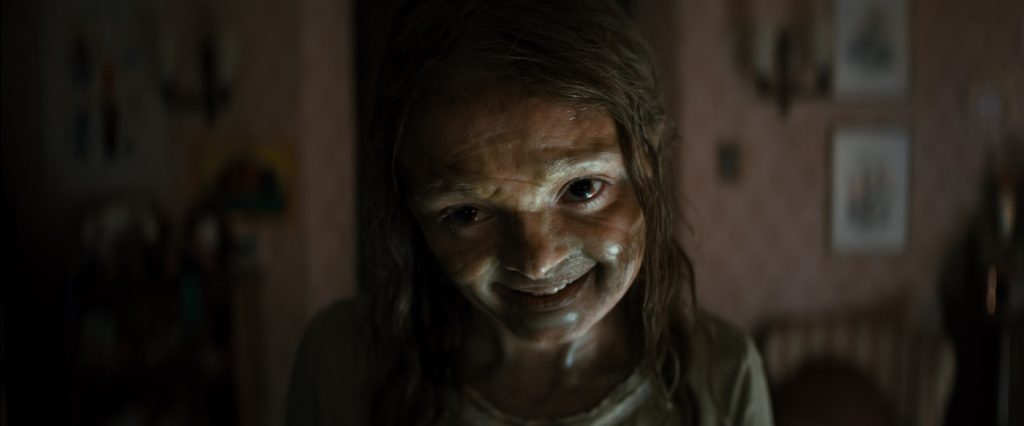
For Katie, we had our creature designer, Arjen Tuiten, who knew the level of detail required early on; he stayed focused on management, design, and implementation. Matthew Smith from Ireland worked on the other effects, like Carmen’s look and details like scars and wounds.
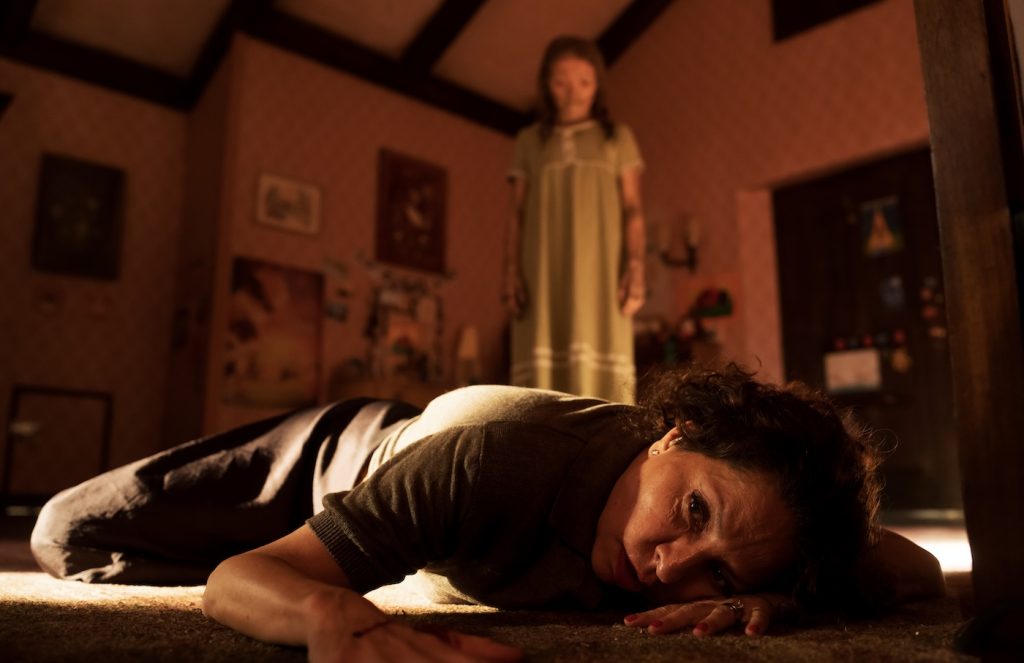
I told Arjen we had to go on a journey with this monster. I take Katie out of a box 30 minutes into the film and bring her into the home. We know she’s the danger, but we don’t know where it’s going, and we need room for her look to develop. It wasn’t about creating one look but more about finding a concept and modifying that as we create the final look of our version of a mummy.
You filmed a lot of this in Ireland. There are big production and FX industries there now.
There are, considering the scale of the country. I view movie-making in international terms. I definitely needed a creator of monsters, and Arjen, who is from the Netherlands, comes from that school. We shot the vast majority in Ireland, in studio, on location, and in some interior locations as well, so there was an enormous Irish creative input. We had a wonderful crew in Spain that also had a massive impact. My sound designer came from Denmark, we had great people from the US, and we had cast members coming in from Egypt. It was an international effort with a strong Irish spine running down the middle.
Poltergeist and Seven, both California-set movies, influenced this, but you chose not to set the film there. Why?
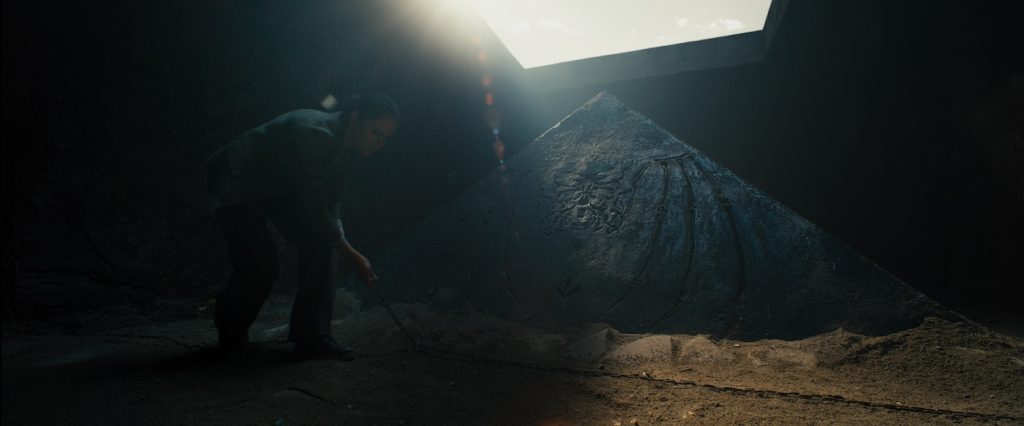
It’s an interesting one. Authenticity is probably the headline there. My production designer, Nick Bassett, my cinematographer, David Garbett, and I were deep in discussions three or four months before we started official prep. I wanted there to be this strong Egyptian lore. I also wanted to take this 3,000-year-old curse, where you can draw a line from the here and now back to another family and the decisions they made centuries ago. I wanted that world where it was arid, where there would be scorpions, and it fit.
Given that Poltergeist was a reference, did you talk to many of the creatives from that Amblin era and pick their brains?
A lot of times, for me, it’s more than the visual presentation and the tonal infusion. I leaned into Poltergeist because I love the family threat. I go harder, and that’s where the Seven reference comes in, so it’s the threat, the body horror, the danger, and the visceral nature of it. It’s only since the movie’s release that I have thought that, as with Poltergeist, it’s ultimately about a kid who’s missing inside her own home. Yes, Katie was missing for eight years, and they brought her home, but it’s the seed of doubt that exists within the parents.
Homes and families are the heart of your films. Your set here has a second world within the house walls.
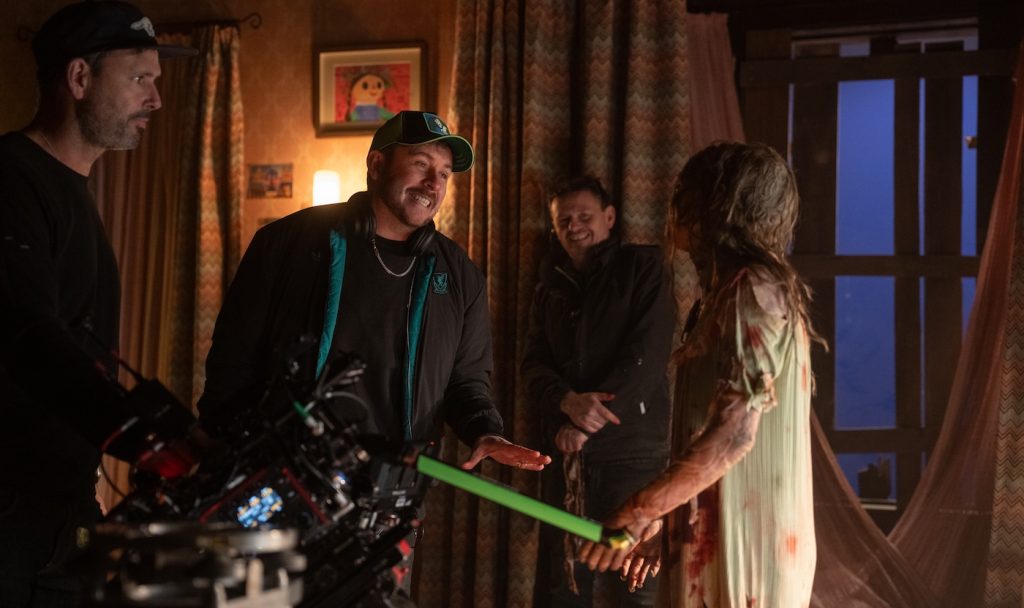
Like me, Nick Bassett, my production designer, is obsessive about detail and texture. The eaves set is really interesting. I’ve shot in confined spaces before, but here I thought, “How do we make this work so she can fit and move around?” Then I realized I didn’t want her to move around, I didn’t want anyone to be able to fit, and we had to make it awkward. Nick and I joke that there’s almost always a meter too much or too little in a set. Before we started building Katie’s bedroom, I tried to judge it by taping off the floor, and it was a bit too small. Since we would be spending a lot of time in that room, we expanded the set. Then you walk into another room and go, “This is going to be too baggy,” so you bring it in a little bit. It’s not that you’re crossing your fingers when you build these things, but you’re hoping you’ve got that dimensionality right.
You worked with cinematographer David Garbett on Evil Dead Rise. There’s a similar visual texture to this film.
Evil Dead Rise was broader, so I told David I wanted to draw this movie with slightly finer pencils. It’s about grounding. This entire movie is the panic attack of getting back the one thing that means more than anything, then realizing it might not be the fix you need. We wanted to be very atmospheric, with a layer of dust on everything, and as the movie progressed, we wanted a greater volume of decay. Katie’s bedroom is a good example. When we are first in there, we capture this evening light, and mom is in there; it’s like a museum to her lost daughter. Everything’s really pink. Eight years later, Katie’s home, and we return to the bedroom. We wanted to create this contrast between who Katie is now and the innocence of that super pink room. We could start pulling the color out and bringing the rot and decay in. All of those things become textural backdrops that reflect the psychological journey you’re taking the audience on.
Does working between big and smaller budget movies keep your filmmaking skills sharp?
Yes, 30 percent of everything I have done to date is something I’ve never done before. That’s not to say I don’t know what I want to achieve, it’s more that I’ve never achieved it this way. I don’t pretend I know how it all works. Educate me so I can absorb that information and come up with new ideas. I had never shot with probe lenses before, and David arrived to start prep with two cases. He said, “Based on what we talked about, you’re going to want to get close to eyes, skin, and texture,” so we started to experiment. The challenge is to improve on what you did the day before. I’m a big sports fan, and I think of it like building a successful football club. You’ve got to keep training, but there are bits you could do in your sleep. When you’re shooting a drama scene, you’ve got it boxed off, everything’s working, but you might effectively have a cup final that week, which is a big, exciting, difficult set piece. You’re tuning your skills and your instincts so that you’re as ready as you can be for the big moments.
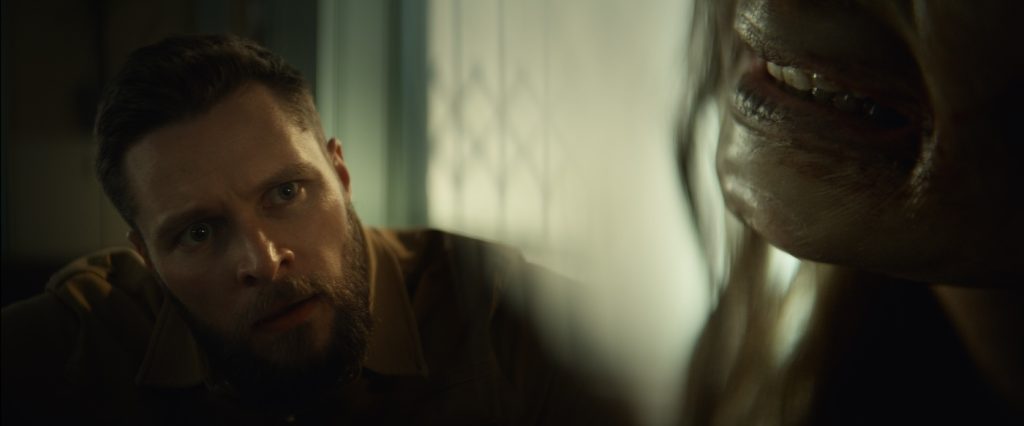
Featured image: (Second from left) Director/Writer LEE CRONIN and NATALIE GRACE on the set of New Line Cinema’s, Atomic Monster’s and Blumhouse’s “LEE CRONIN’S THE MUMMY.” A Warner Bros. Pictures Release. Photo Credit: Photo by Patrick Redmond