
Pilou Asbæk on Playing a Morally Compromised Cop in Prime Video’s “Snake Killer”
Denmark might be a country of only five million, but it has reached billions with decades of award-winning films and series, actors, and directors.
“It probably helps that we spend six months a year in darkness,” jokes Pilou Asbæk, the Danish star of Borgen and Game of Thrones, and the lead in Amazon Prime’s new series Snake Killer. “What makes this possible is a mix of things: a strong public funding system that allows risk-taking, good film schools, and a willingness to push boundaries,” Asbæk argues.
Inspired by real events surrounding the Uropatruljen, one of Denmark’s most controversial police units, Snake Killer marks the first Danish scripted original by Prime Video, in partnership with Nordisk Film Production. Created by Anders Ølholm, the series plunges into the moral grey zones of institutional power with an ambition that extends beyond the crime-thriller label.
Ølholm read a book about Copenhagen’s infamous narcotics police as a teenager, and the story stayed with him. “There’s this mythology around the Uropatruljen, I’ve always been fascinated by it,” he says. “A lot of Snake Killer comes down to what I’m fascinated by: films with true antiheroes, morally ambiguous characters, and endings that aren’t necessarily happy or reassuring.”
While the series blends and condenses characters and cases, Ølholm notes that audiences might be surprised by how much is rooted in real people and events. “It portrays a pocket of Danish society where crime has taken a strong hold. So there’s a balance you have to strike in terms of believability.” Laura Christensen, who stars in the series, agrees. “If you’re portraying stories or characters that are based on real-life experiences, I think it’s important to do it as truthfully and authentically as possible,” she adds.
Sourcing true crime material can be difficult because insiders are reluctant to share their experiences, Ølholm says. But when a former Uropatruljen officer reached out and offered to tell his story, what followed were hundreds of hours of conversations, cross-checked accounts, and meetings with former colleagues and informants. “That was when I knew I had reached a level of realism and nuance.”
On set, that commitment to realism was anchored by Ølholm’s approach as a writer-director. Both actors describe extensive conversations about perspective, intention, and moral consequence. Asbæk notes that “What Anders wrote is essentially what you see on screen. That tells you how strong his artistic vision was.”
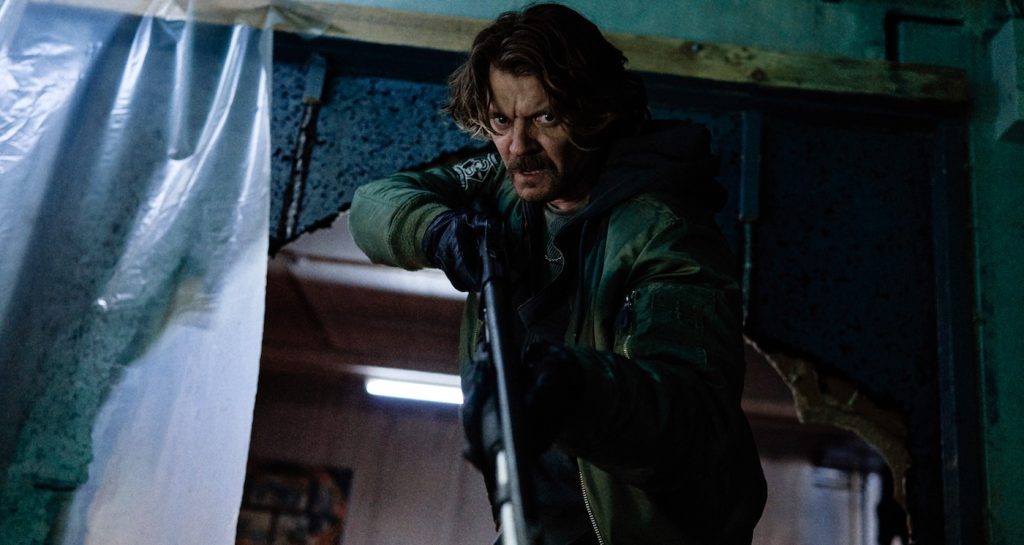
Asbæk brings Brian “Smiley” Petersen to life, a charismatic and deeply compromised policeman whose moral compass rarely aligns with the system he serves. Being from Copenhagen made it easier to relate to the world Ølholm had created. “I was raised around the areas depicted in the series. I knew these guys [from Uropatruljen],” he says.
What drew him to Smiley was not heroism, but contradiction. “He isn’t meant to be a role model; he’s meant to be a reflection of how people justify their actions when systems start to fail,” Asbæk explains. His character does “what he personally considers morally acceptable in a specific situation,” creating a persuasive and self-justifying internal logic that becomes Smiley’s defining trait.
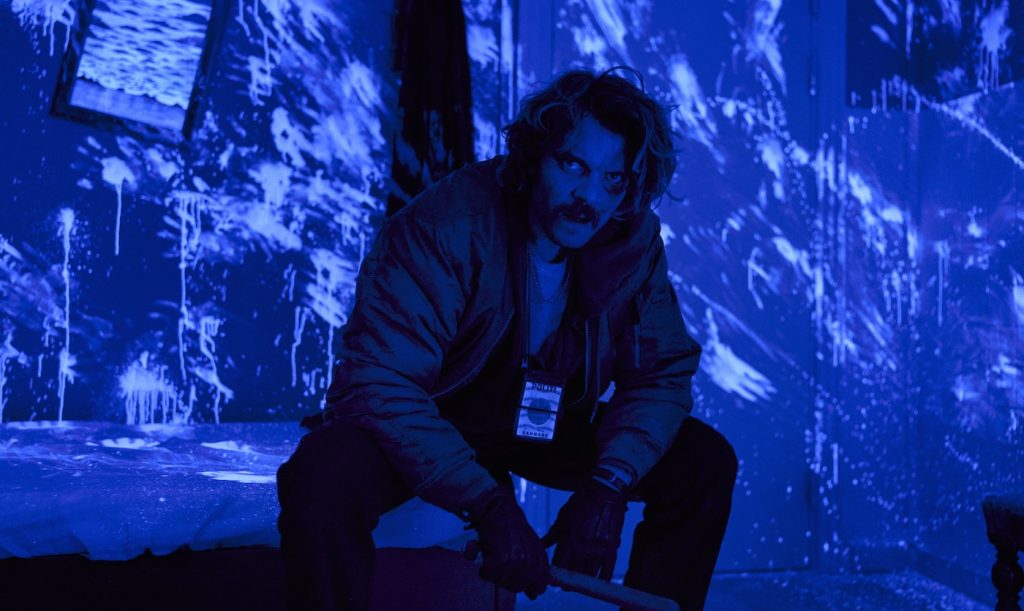
Portraying such figures, especially when inspired by real stories, is a challenging act. Asbæk is aware of the risk that such flawed characters might be glamorized by audiences. “Actors add layers, charisma. And suddenly you’re sympathizing with people you might not otherwise,” he says. For him, the ethical question is whether the end product serves a larger purpose. “It depends on how you present the material. The audience should feel wiser afterward, like they’ve gained something.”
That responsibility resonated strongly with Christensen, who plays Camilla, an escort whose relationship with Smiley deepens the series’ moral terrain. Christensen approached the role through direct engagement with lived experience, speaking with women who had worked in similar environments. “It felt necessary,” she says. “Camilla isn’t a real person, but I know there are a lot of ‘Camillas’ out there.”
For Christensen, authenticity is inseparable from respect. “When people open up and give you that information, you have the responsibility to portray it truthfully,” she explains. That research shaped a character who resists easy categorisation. “She’s not what you think she is. And that’s always interesting,” Christensen says.
Despite having to navigate the moral qualms of the themes in Snake Killer, Ølholm doesn’t see the series as a political act. “I see myself more as reporting back what I’ve seen and heard,” he explains. “In Denmark, many people have a very fixed idea of what these police officers were and what they represented. I hope the series complicates that image.”
Snake Killer has been released on Prime Video, initially in the Nordics region only. But the engines for international distribution are already running. Although it’s a Danish story based on local events, Ølholm believes its themes are universal. “It’s about people, about identity, and about coming to terms with who you are and what your role is,” he says, adding that across Europe, “criminal organizations are gaining a stronger foothold in society,” which makes a drug crime thriller feel relatable.
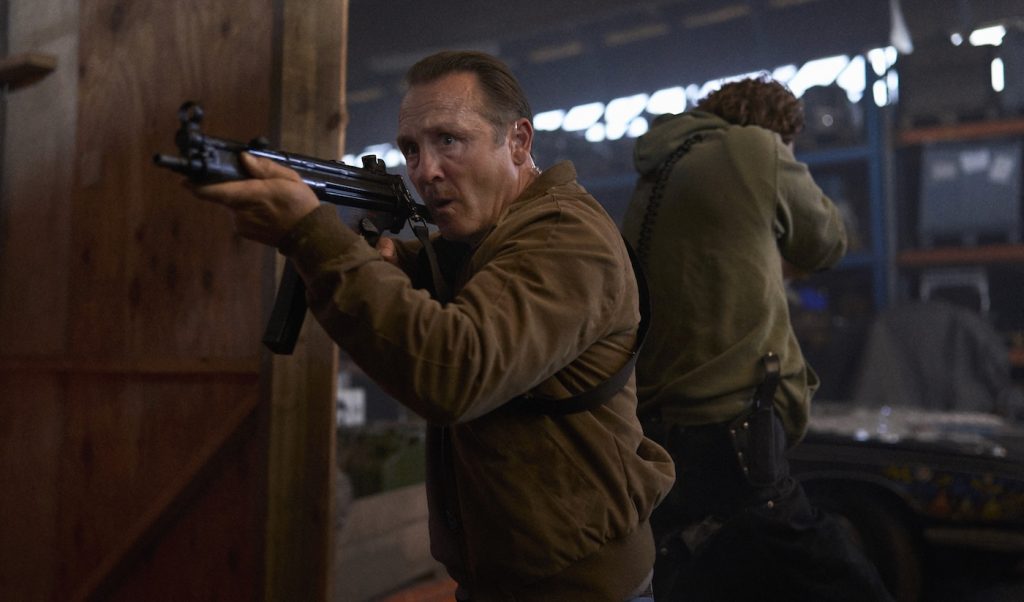
But is it only the universality of themes that makes films and series internationally successful? “People are genuinely interested in stories from other cultures,” Ølholm argues, pointing to global successes that retain strong local identities. Asbæk agrees. “The idea is that you start locally, then regionally, then internationally. The pie grows as the specificity holds,” he says. For Christensen, the equation is even simpler. “It’s a great story, so everybody can watch it.”
Snake Killer, then, has the chance to become yet another Danish international success. Pilou Asbæk is no stranger to global hits, but working so close to home is the best of both worlds. “I get to work on big international productions, and I also get to go home and do projects with my friends and family. I can be a tourist in Hollywood and a movie star in Denmark, and I love that balance.”
Featured image: Pilou Asbæk. Nikolaj Thaning Rentzmann/Prime