
“Song Sung Blue” Writer/Director Craig Brewer on Touring Kate Hudson & Hugh Jackman Through America’s Heartland
Song Sung Blue is a story of working-class America, made by working-class America. Writer/director Craig Brewer, best known for helming Hustle & Flow and Dolemite Is My Name, even carried that through to the film’s innovative marketing, taking it on a tour of middle America.
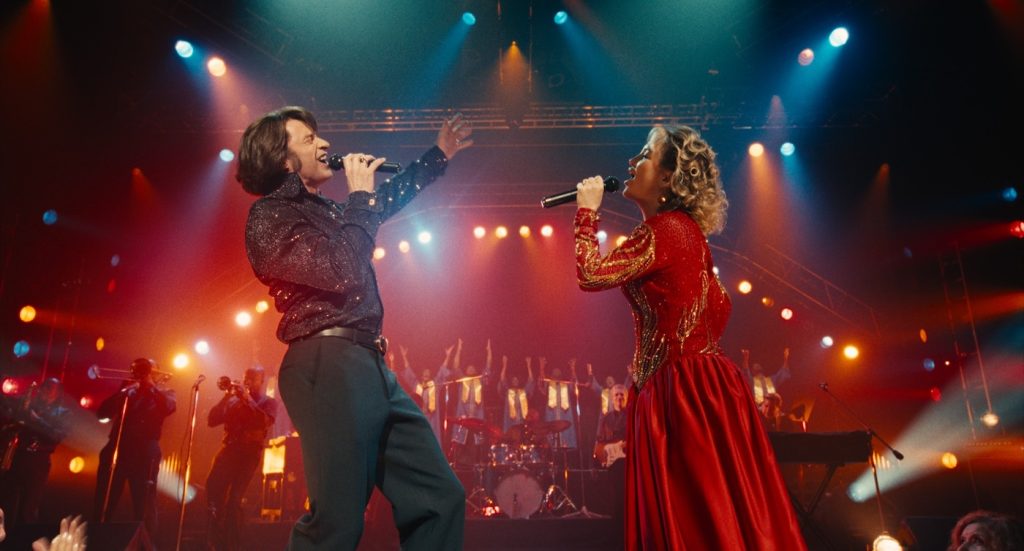
The biographical musical drama, based on the 2008 documentary film of the same name, stars Hugh Jackman and Kate Hudson as Mike and Claire Sardina, a couple who performed as Lightning & Thunder, a Neil Diamond tribute band. As they’re about to hit the big time, their lives are turned upside down by a freak accident. The ensemble cast also includes Michael Imperioli, Fisher Stevens, and Jim Belushi.
Buoyed by two stellar performances from its leads, Song Sung Blue is heartwarming in a way that earns your trust, eschewing mere sentimentality for something deeper. Brewer pays homage to two entertainers who have some talent, yes, but whose impact goes beyond their musical chops, and whose lives are every bit as hard as the people they’re entertaining.
Here, Brewer, who also produced the film, explains why his grassroots approach to storytelling was more important than ever and what the industry can learn from old Hollywood, and his respect for Jackman’s optimism on the road and Hudson’s raw, wonderful performance.
Like a band, you took “Song Sung Blue” on a tour across the US, in a way we don’t publicize movies these days. Why was it essential?
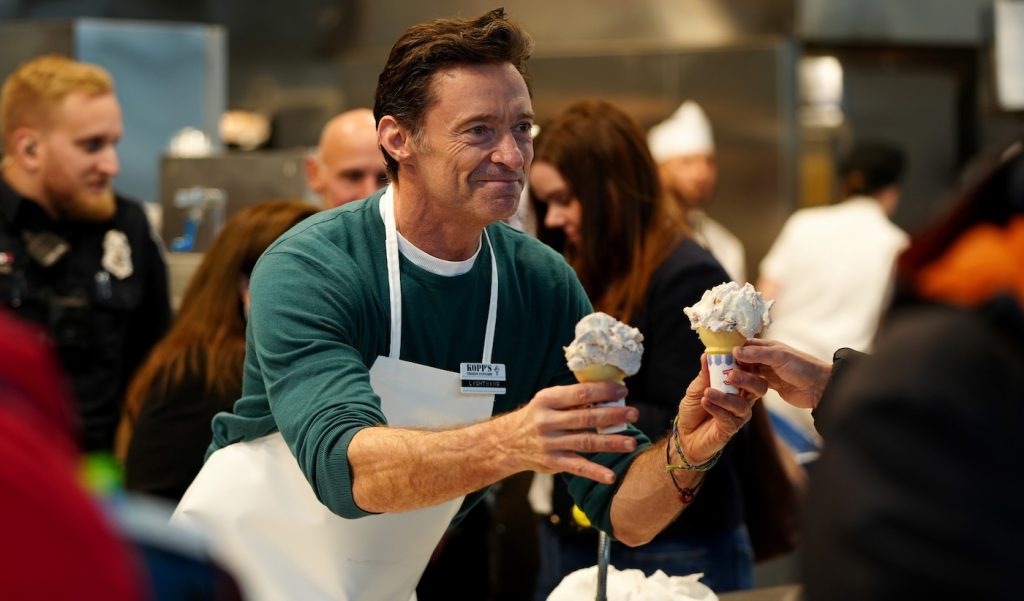
If there’s one thing I’ve learned in my years in the business, it’s that there is a methodology to how movies and awards campaigns are sold. It usually filters through the coasts, and it’s an LA and New York thing. They hope that the flyover states will eventually catch up, or they won’t, but they don’t care. From a very early stage in this movie, Hugh and I, and Kate in particular, believed we wanted to make a movie for the country and about people in middle America. It’s a real working-class movie. Not only did we want to make a movie that celebrates those values and attitude, but we also wanted to come to that audience very respectfully and say, “You’re the most important to us.” Hugh, in particular, and I don’t know if it’s his Aussie spirit, believes it, and he was like, “We’re definitely going to Milwaukee.” A couple of thousand people waited for three hours in 40-degree cold and snow. We were only supposed to do about 100 photos, but Hugh wanted to take a picture with every single person.
It sounds very personal.
What we kept on hearing from some of the reporters in these places was, “Back in the day, stars would go on tour through America and sell their movie. They don’t do that anymore.” They do junkets, they’re in one hotel, and then you could fly in there, but what is special about a black wall that has the picture of your movie in front of it? Nothing. What’s special is Hugh Jackman serving 1,000 people frozen custard, taking pictures with people and their babies, and making memories. I have pictures of my family when Gone with the Wind played in Atlanta. Clark Gable was there, and they took pictures with him. It meant something to them.
You live in Memphis. You are in your community, involved in grassroots filmmaking organizations, and even your daughter’s school productions.
That was a big commitment. My daughter said, “You’re probably going to go make that Snoop Dogg movie next year [a biopic from Universal is in the works, with Brewer attached to direct], and you’re going to miss my graduation. I would like you to direct my high school play.” It was three hours every day, Monday through Friday, but I was so proud to do it. The movie’s spirit embraces that, too. We’ve messed up our view of what success is. It usually means that you get big, you get famous, and then you move to LA, New York, or Atlanta, and I really think it is killing our local art scene a bit. Memphis teaches me this. So many great artists and creatives live in Memphis. They all have families. They’re the parents of the kids that I was directing in the play of 12 Angry Jurors. There’s another way to view fame and fortune. Fame could be recognition of your passion. Fortune could also be interpreted as: “I want to be able to pay my bills, and if I’ve got a toothache, maybe I can do something about it.” It’s tough to be that in this country. A lot of people feel that artistry is something that you can grow out of, and you need to be a doctor or a plumber, or the reason that you don’t have health insurance is your own fault. All artists are trying to do is elevate the human experience and entertain people.
Song Sung Blue is set in Milwaukee, but you filmed it in several locations, including Chicago, Los Angeles, and New Jersey. Why was that?
It was primarily New Jersey because it not only had a strong tax credit program but also a fantastic crew base in the boroughs of New York and New Jersey. It also had really great locations. This is my first time filming in New Jersey, and it was a fantastic experience.
Did you hire local crews?
That’s the essential part of the process. We’re talking in Los Angeles right now, and even though it’s still the leader in film production, there’s a great deal of concern about the quantity of work in Hollywood. We’re all living in too much of a bubble. I don’t think that we’re fighting just for Los Angeles. We’re fighting for this country. If we were making this film a year from now, I wouldn’t have been surprised if we were doing it in London. As we try to fight to keep these productions here, I remind everybody that it’s not about the stars. It’s about the local community, electricians, drivers, hotels, the catering services, and so on. That’s where the incentive is granted. I remember my daughter and I driving up to set and seeing the hundreds of crew members and saying, “Just so you know, honey, when you sit down in front of that screen, like when I’m trying to bang out a script, know that a lot of people are going to be able to buy Christmas gifts because of that. Don’t think that just because we’re on a movie set, people don’t have bills and issues.” Everyone wants to come to America and be part of American entertainment and storytelling. A big part of being an American storyteller and filmmaker is working-class jobs. The people who drive the trucks work much harder than I do. When you start putting it in those terms, a lot of American voters start going like, “I thought this was all about whether or not Tom Cruise was going to get a check.” Even stars like Tom Cruise are fighting for people’s jobs.
Kate Hudson is generating a lot of award buzz, with talk of a potential Oscar nomination.
I definitely hope so because she really deserves it. I would love nothing better, especially given the movie’s theme, if Kate Hudson, the underdog of the conversation, could rise up and be part of it. She’s absolutely amazing in the film. It’s a performance where you get to fall in love with her like we did when she was Penny Lane in Almost Famous. I really hope the people who vote take the time to see her performance in this. I don’t want anybody thinking this is a movie is a joyful confection. We go to some tough places, and Kate is leading the charge.
There is a massive tonal shift halfway through the movie. Was it a challenge to get it to hit hard without losing the audience?
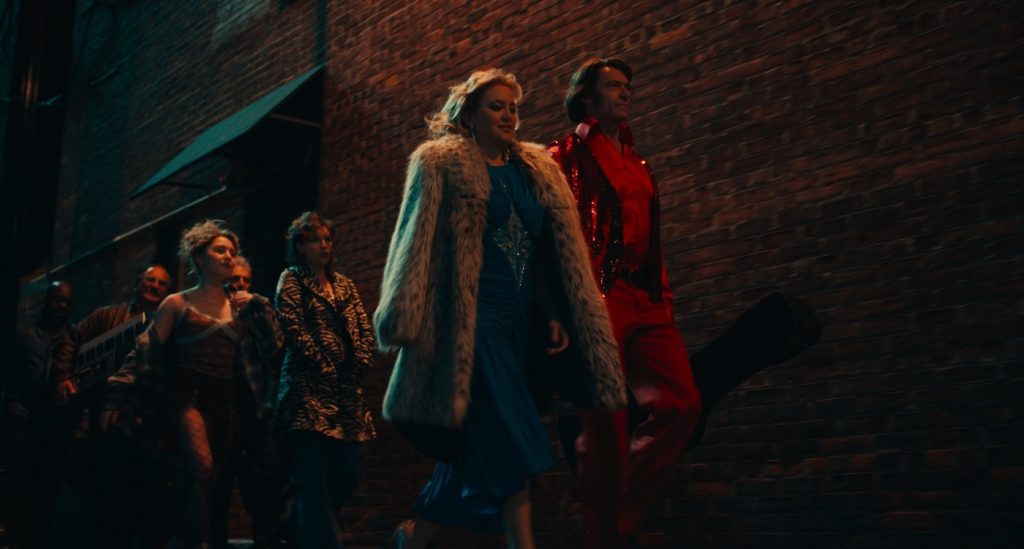
It was. It’s something that I remember struggling with early on. How do I do it? Where I landed with it was first of all to recognize that this is the way life works. I’ve had people in my family who’ve had terminal illness, and while you’re dealing with that, your auntie makes a joke, and everybody’s laughing. Life is moving forward without you having to choose between misery and light-hearted humor, but it is a delicate balance. But what is too much? I tried to think of it in two levels. Firstly, try to be respectful of the subjects, treat them as real people, and take some of the cynicism out of myself and the world a little bit in this movie. Secondly, and more importantly, examine what true love is. True love in your 50s is different than what you think true love is when you’re in your early 20s, and you see that person across the bar, and there are fireworks. True love is actually when that lightning bolt comes out of nowhere and changes your world. What I decided to do was say, “Let’s get everybody in love with them, then let’s kick them in the gut and see if we can get through it together.”
Song Sung Blue is in theaters now, and available to stream.
Featured image: (L to R) Hugh Jackman as Mike Sardina and Kate Hudson as Claire Stengl in director Craig Brewer’s SONG SUNG BLUE, a Focus Features release. Credit: Courtesy of Focus Features © 2025 All Rights Reserved.