
A Technicolor Nightmare: Cinematographer Jo Willems on the Retro World of “The Hunger Games: Sunrise on the Reaping”
For the sixth installment of the Hunger Games franchise and his fifth as director, Francis Lawrence colors Panem with a bold, dystopian spin on the 1970s. The retro vibes take audiences to the generation before Katniss and Peeta’s time, when a young Haymitch Abernathy (Joseph Zada) was sent to Panem’s ruling Capitol to kill his fellow youth at the Games. In previous films, Woody Harrelson played Haymitch as a reformed drunk and tough-love mentor to District 12’s poverty-stricken junior tributes, but in The Hunger Games: Sunrise on the Reaping (in theaters November 20), Zada portrays a younger version of the character, a sober, surprisingly sweet-natured boy who ardently loves his family and his girlfriend, Lenore Dove (Whitney Peak).

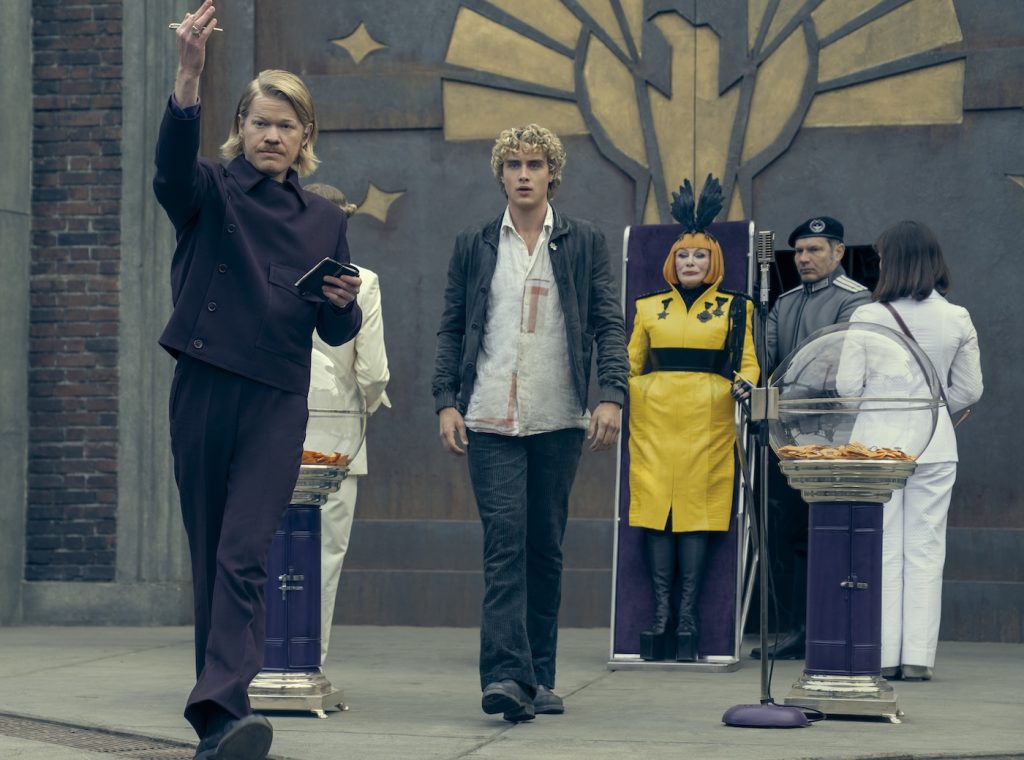
That gentleness is ill-suited to the backbiting world of the Capitol and the vibrantly beautiful, deadly Arena where the Games are played. The brutality Haymitch faces from his fellow child contestants pales in comparison to that of the psychological violence launched by President Snow (Ralph Fiennes) and the political machine that protects the Capitol’s dominance. Orbiting Haymitch are the seeds of what’s to come—a young Effie Trinket (Elle Fanning) cleverly upstaging the District 12 tributes’ manager Drusilla Sickle (Glenn Close), Plutarch Heavensbee (Jesse Plemons) playing politics from a youthful bachelor pad, and Beetee Latier (Kelvin Harrison Jr.) tinkering with electronics as a mentor.
This is the fifth Hunger Games film lensed by cinematographer Jo Willems, who comes to the franchise and his work with director Francis Lawrence with a well-established shorthand. While the movie gives off a new vibe, with retro-inflected costume and production design and a heightened sense of color in the otherworldly Arena, Willems is able to draw comparisons across the series to point out that much of what seems all new has been hinted at for years.
We got to speak with Willems about dialing down the cinematography in comparison to other departments, shooting on location in Spain, and maintaining a sense of intimacy while telling Haymitch’s story:
This is such a colorful film, yet the tension never lets up, particularly in the Arena. How did that come about?
It’s this beautiful place with this slight magical element to it, and we pushed it further into that world of color. But the Capitol always had quite a bit more color. I think back to Catching Fire, the scene where Katniss is dancing with Plutarch at Snow’s mansion, which we shot in Atlanta. It’s not like the other movies weren’t colorful; it’s just that this time we leaned into this 1960s, 1970s aesthetic. Then we really pushed the color, particularly on the games and its environment, which is how it was written and how it was in the book. The Capitol, for sure, I really wanted to push. That was one of the biggest scenes to accomplish, the presentation of the tributes.
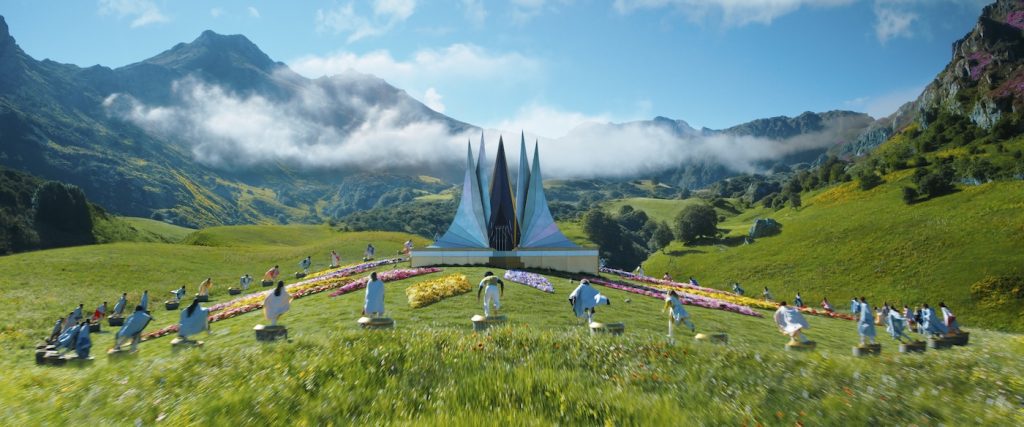
The tribute presentation seems like it would have been a major challenge.
Months before we started shooting, I was talking to Uli Hanisch, the production designer, about it—if we want this to be successful, we should really start on this early. Both production design and lighting were one unit. And that’s what makes it fun to collaborate. I think we were really successful at that particular setup, even though it was a challenge.
That’s interesting that production design and lighting collaborated so closely.
When I started my career, cinematography was the one thing that I focused on from the get-go. How can I put my stamp on this? I work in a slightly different way now. I look at wardrobe; I look at production design, rather than finding references for what I want it to be. I am led much more by what they’re doing first, and also by locations. What can we do here, and how do I approach it, rather than just, ‘I want it to look like this.’
Did the location influence how you developed the aesthetic of the Arena?
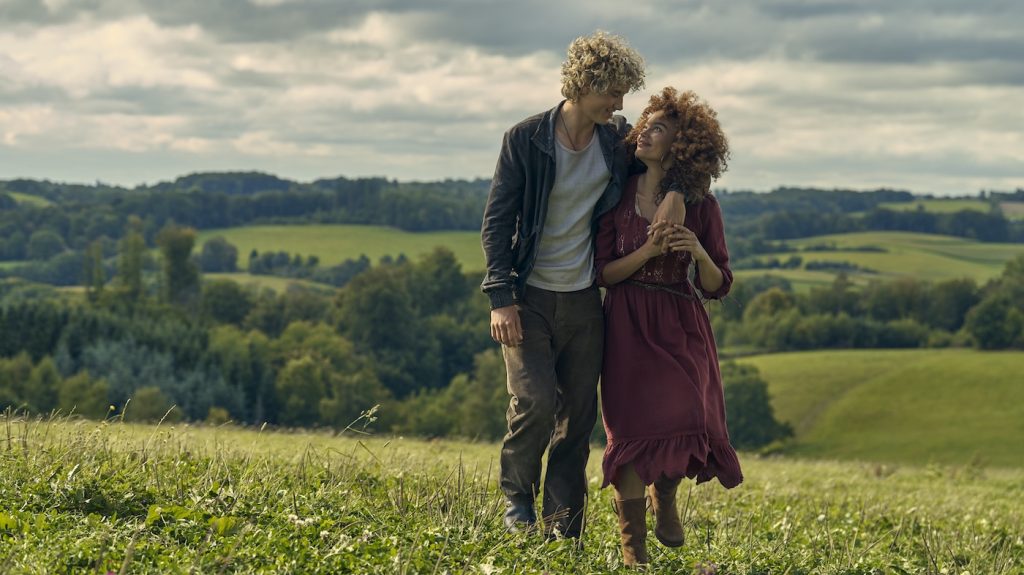
We last-minute pivoted to Spain, up in Asturias. We just walked around this valley, trying to find different locations. We shot there in the summer; it was pretty hot, and we had sun most of the time. It’s a little bit ‘cinematography of acceptance,’ where you can’t control things. Some of those locations were very remote. We had to carry stuff in. For some of the effects—explosions, fire— we did have to use artificial lighting. But in general, we just picked the right direction for the sun. You lean into what the light is. You can’t have too many preconceived ideas of what you want it to be. But it worked out really well, actually.
Was there anything that really surprised you when you were shooting there, that went in a different direction than you’d planned?
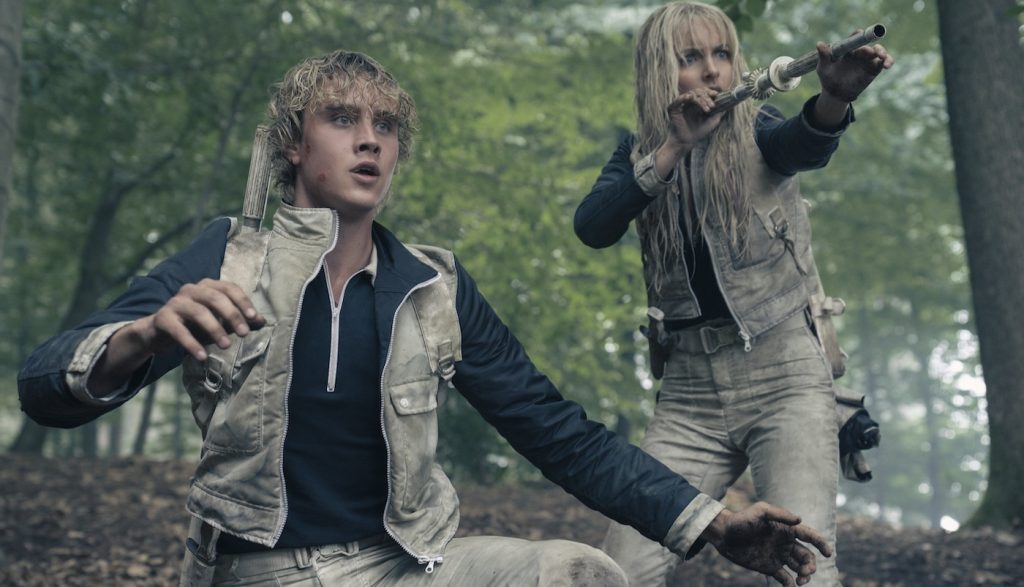
We scouted one location where the river runs. That was off the main road. When they first took me there, we just kept on going down, and the road was maybe ten feet wide. I had night shoots there, so that was quite the challenge. You have to be adaptable. I ended up putting lights in the trees, lights on the floor, to make it feel as if they belonged within the Arena at night. Otherwise, I really couldn’t have shot there. It was very difficult to access a lot of the locations with any real big equipment, so we hand-carried a lot of it in.
How did you approach close-ups in this installment?
These movies are obviously really massive in scale, but they’re also really intimate stories about these people. It’s always been our style to be close to people. We don’t really shoot with long lenses. We always look for that intimacy, to be in the eye line, and shoot it from their perspective. You can look back at all the other movies; we’ve always done it that way. The emotional part and the intimate part of the movies are as important as these big set pieces and big fight sequences. The personal stories are as important, if not more.
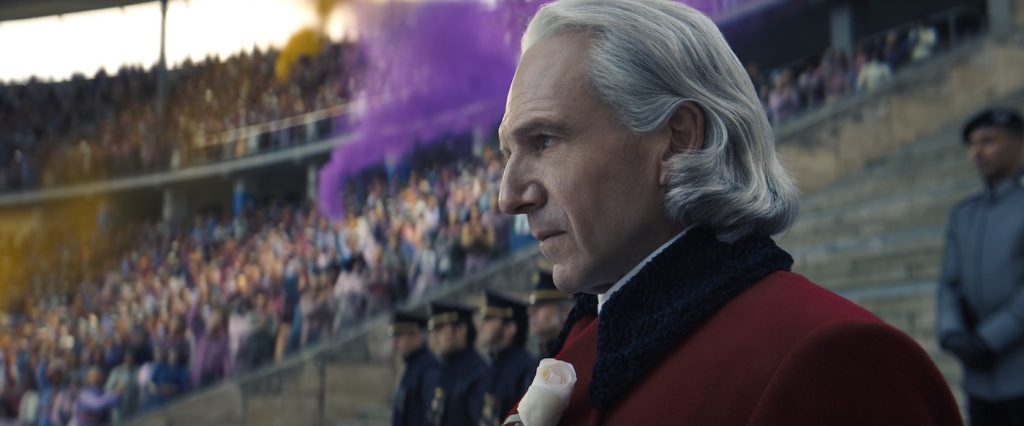
How did you balance the retro vibes in the costume and production design with the photography?
You go in with a certain idea of how you’re going to make this look. Do you make it look like 1970s slide film? Once the movie was cut together and we watched it, we thought, maybe there’s already so much of this aesthetic in there that we don’t have to push it any further. We can be a little bit more naturalistic with the look and the color of it, rather than trying to lay this 1970s filter on top. Early in my conversation with Francis, he wanted to show that in the production design and the wardrobe, so we decided to hold back a little on the cinematography side.
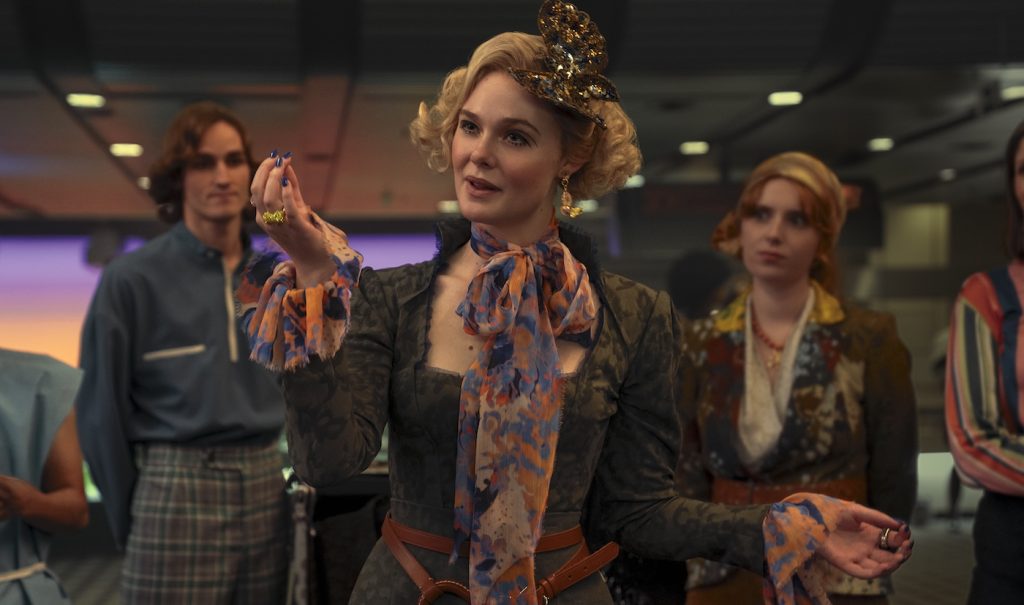
This is your fifth Hunger Games film. What’s it like to have that kind of knowledge about a world when you go back in for another Games?
We have a shorthand. As you look at the progression of the films, I find this movie in particular is incredibly precise in how it’s put together and how it’s one cohesive piece. And like you said, the tension just never lets up. We just all grew as filmmakers from when we started to where we’re going now, and that’s a fun part.
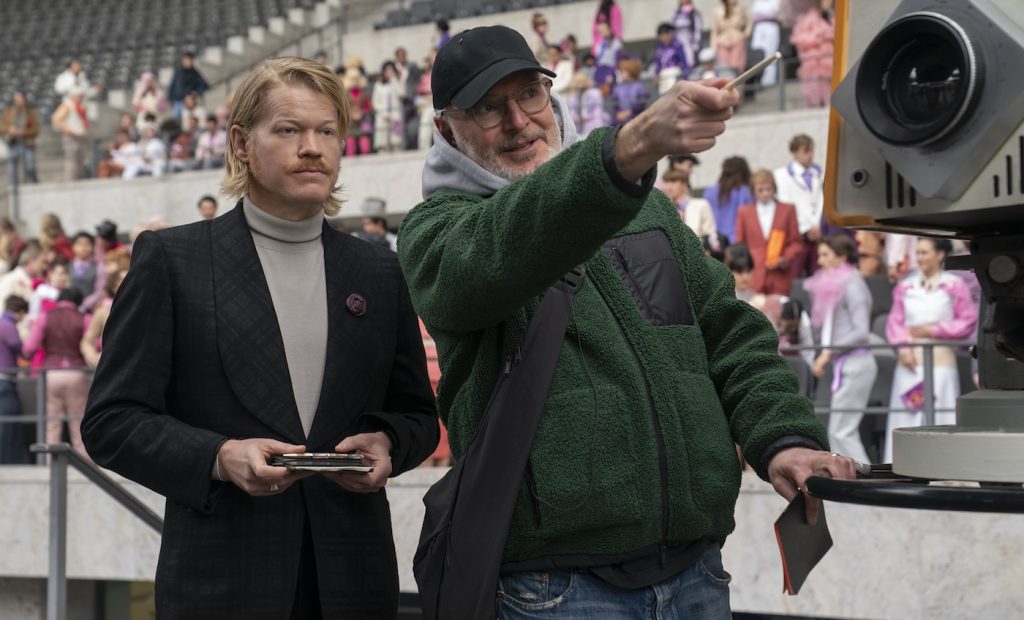
The Hunger Games: Sunrise on the Reaping is in theaters on November 20.
Featured image: Joseph Zada as Haymitch Abernathy in The Hunger Games: Sunrise on the Reaping. Photo Credit: Courtesy of Lionsgate