
The Testimony: DP Jeff Cronenweth on Lighting Power, Doubt & Control in “The Social Reckoning”
Sixteen years after David Fincher’s The Social Network shone a spotlight on the ugly early days surrounding Facebook’s founding, writer/director Aaron Sorkin brings Facebook whistleblower Frances Haugen’s (Mikey Madison) story to the big screen in The Social Reckoning. The script tracks reporter Jeff Horwitz’s (Jeremy Allen White) arrival at The Wall Street Journal and his effort to develop an inside source at Facebook, an endeavor that pays off when he contacts Haugen just as she begins to question her employer and recognize the company’s capacity for harm.
The film is a polished juxtaposition between Haugen’s isolation, Horwitz’s investigation, and the bustle that surrounds Mark Zuckerberg (Jeremy Strong) while his staff tries to prepare him to testify before Congress. For cinematographer Jeff Cronenweth, Sorkin’s “scripts are so tight and so well-conceived, and it falls on us to reach that same level,” he explained. The DP previously shot Being the Ricardos for the director, so “I know what he likes and what his tendencies are, but his mandate is always to push me out of my comfort zone, and so that’s what we do.” For this project, Cronenweth focused on keeping the camera (a Red Raptor XL outfitted with ARRI’s DNA spherical lenses) fluid and moving, and worked with many of the same crew he previously shot with in Vancouver while filming Tron: Ares.
We had the opportunity to speak with Cronenweth about maximizing the script’s impact, setting up Frances’s isolation, and making otherwise quotidian environments aesthetically compelling:
Going in, did you view this as a sequel to The Social Network or more of a standalone film?
It’s almost its own movie. It’s funny, Aaron and I reached out to Fincher. Aaron didn’t want to approach the project if it would be problematic at all. And he couldn’t wait for us to go do it. We put little Easter eggs in here and there that the five of us might know. But it’s such a different environment that we found ourselves in. Your modern buildings and the headquarters are all different, and you’re not on a Harvard campus. The story itself is more sterile. It’s less about interpersonal [relationships] and more about the subjectivity that they apply to humanity, which is the big problem, right?
Did anything in this film visually reference The Social Network?
One of the interns [working for Jeff] lives in a college dorm. The hotel rooms had the same quality of light, even though the light fixtures have changed quite a bit. We like to stay true to what the practicals of the era are. Those dorms had soft tungsten light. These modern rooms all have LED lights of some sort. We tiptoed through that, visually.
How did you handle the film’s everyday environments, like the hotel where Jeff lives?
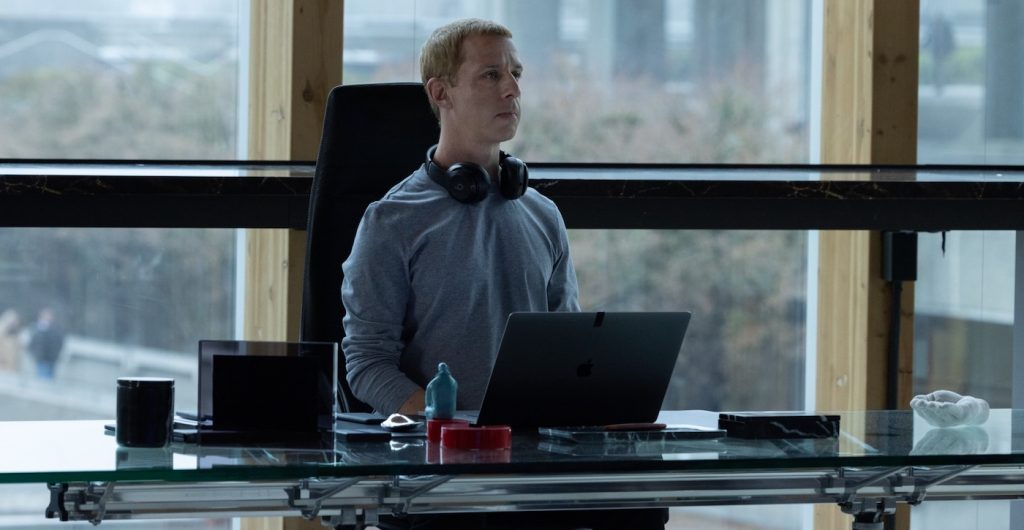
I like to start there and then make it a little bit hybrid, a little hyper-reality, so that we are telling a story. We have a responsibility to visually enhance that story and place those characters in something that an audience can be aesthetically drawn into. You push with light, and you push with drama. Ironically, sometimes we took stuff back and were more conservative, visually, when the scenes needed that.
Can you give me an example?
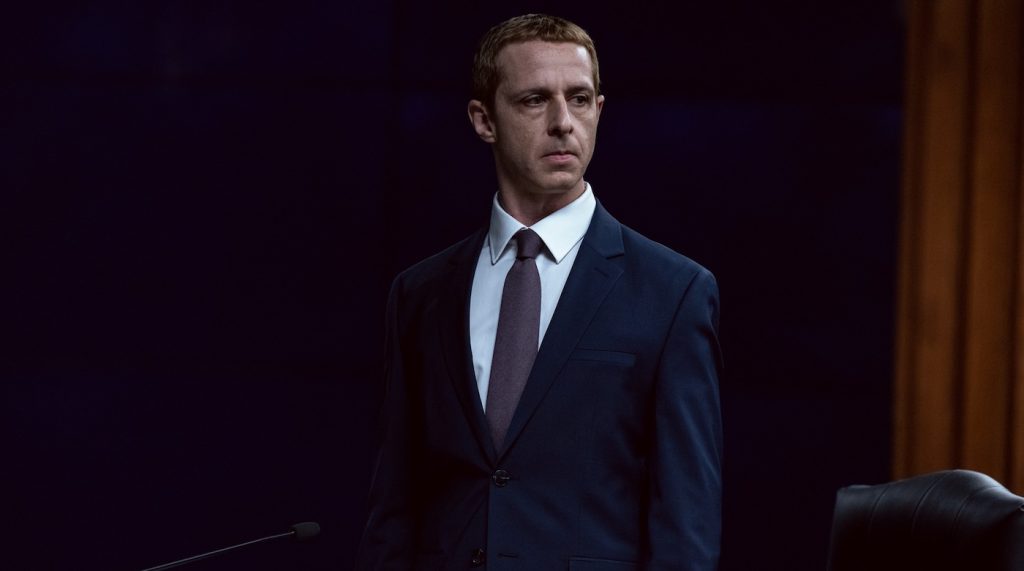
It was too easy to make Mark Zuckerberg, Jeremy Strong’s character, evil with really deep shadows. And it wasn’t necessary. It was more important to understand the choices, to watch him process this information and come to the conclusion that he did when he says, ‘I want to go with MSI [meaningful social interactions]. I want to go with the money.’ I went against my nature, and we had more fill light; you could see more of it, and we went away from trying to make him evil through shadows in the eyes or anything like that.
The scene where Zuckerberg rehearses for his Senate hearing and is told to nod conveys so much.
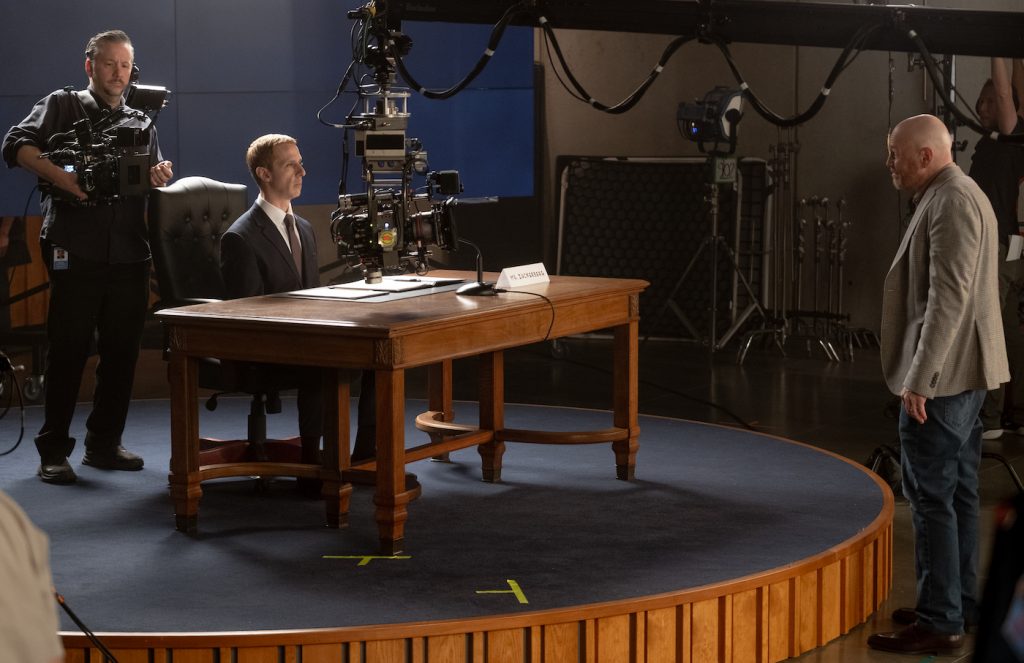
As a director, Aaron wants to keep pushing and evolving. One thing he wanted to do was keep the camera alive and, when opportunities arose and there was proper motivation, keep it moving. In that rehearsal area, there are about 48 pages of dialogue. It’s an amphitheater-style building. There are inherent challenges when you’re trying to move the camera around all the people on different levels. But that shot was a moment to resolve, and it let you watch Jeremy deliver it. It was just so appropriate, and his mannerisms and that little internal smirk really played well.
How did the camera help demonstrate Frances’s journey?
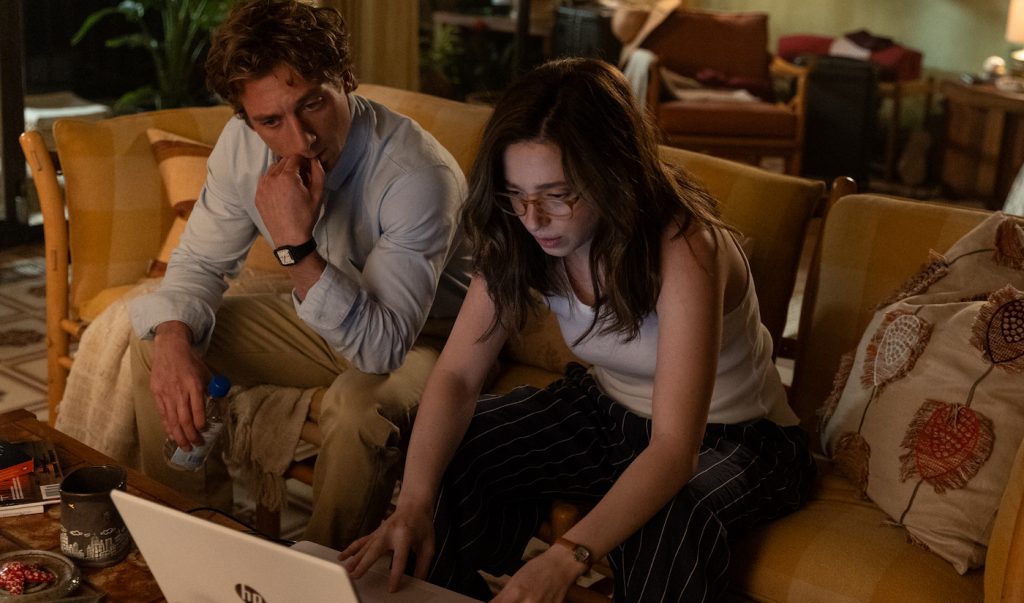
One of the asks was to keep the camera fluid when possible, with a sense of isolation, awareness, and awakening. You watch Frances go from loving the Facebook world and being curious about how her friend flipped, to clues of awareness about the destruction and how it’s hurting society. We didn’t want it overly stylized. You’ve got to make sure that the words come across and the weight of those words is felt.
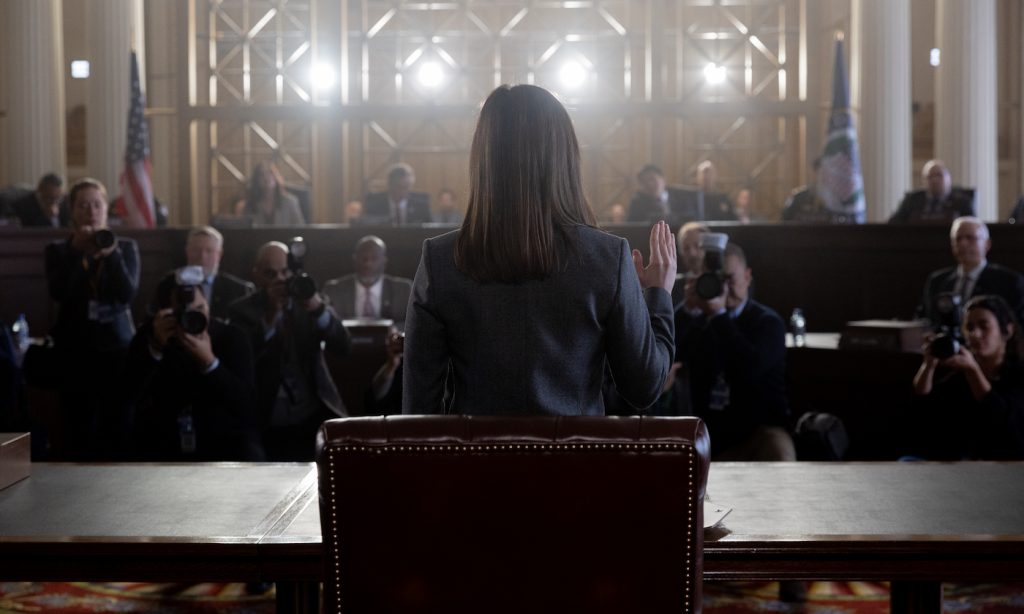
We really see her journey.
When her friend, who is rather distant up until the very end, tells her that 32% of all young girls have body dysmorphia because of Instagram, that almost knocks you off your feet when you understand that.
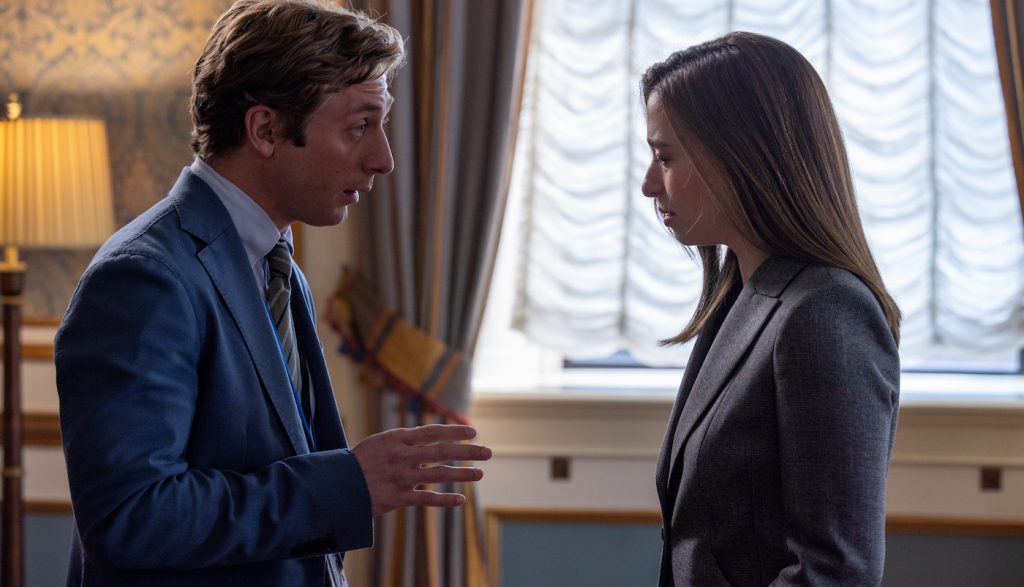
A lot happens at night. How did that influence your process?
Nowadays, the sensors on these cameras are so sophisticated, and there’s so much latitude, that a dark palette and lighting up is much better than trying to control light and knock it down. It lets us, as filmmakers, create the entire world, instead of being stuck with what exists.
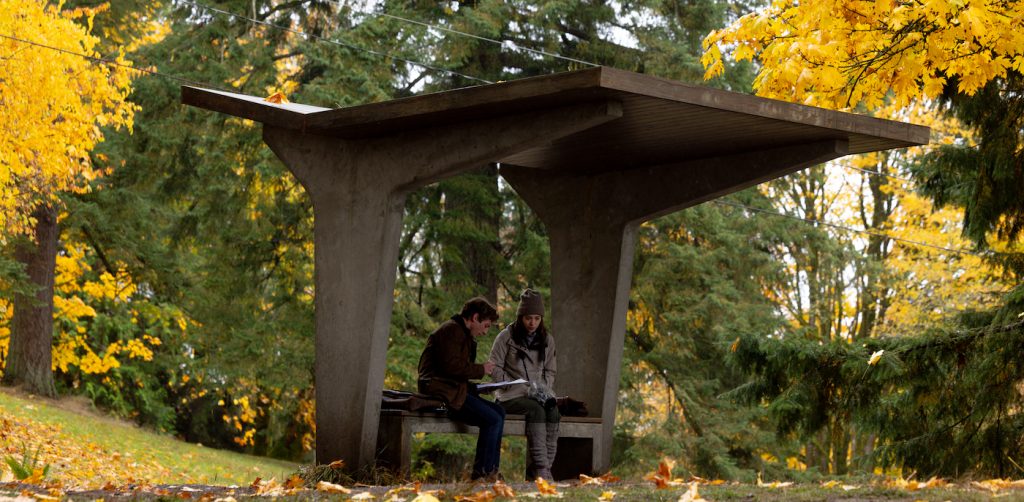
Was it difficult to convey the sense of secrecy around Frances and Jeff’s meetups?
They were physically alone, obviously because of her insecurity about being outed by Facebook employees, but the locations helped solidify that. When I read the script, I was excited about most of it, but then you wonder: how many scenes in a mid-priced hotel room can you do and still keep them exciting? They’re functional, right? The background lights at night, San Francisco, and the weather outside gave us opportunities to have light and dark and be more complementary. There is some half-light stuff in there, but most of it is just underexposed low light levels, as the room would have, because it does give you a sense of isolation for them. The two of them are trying to tackle the giant. It’s David versus Goliath.
The Social Reckoning is in theaters now.
Featured image: Mark Zuckerberg (Jeremy Strong) in Columbia Pictures’ THE SOCIAL RECKONING.