How “Lord of the Flies” Costume Designer Maja Meschede Turned School Uniforms Into Survival Gear
When writer Jack Thorne reimagined William Golding’s Lord of the Flies as a four-part series for Netflix, he wasn’t interested in simply retelling the iconic story, nor in trying to recapture the two cinematic adaptations, Peter Brook’s 1963 British version or Harry Hook’s 1990 American one. As he told The Credits, he wanted to explore the emotional complexities, vulnerabilities, and social dynamics that emerge when a group of boys is stripped of civilization’s structures and left to fend for themselves. “The book did something to me for two reasons,” Thorne told us. “One, I thought the story was incredible. Two, I thought I was Simon. When you’re a young person, you’re looking for yourself in literature. Suddenly, you find yourself, and you’re like, ‘Oh, right, that’s who I am. This person is me.’ And then… Simon died. It was like having the heart ripped out of my chest.” With more canvas to work with than the two films had, Thorne and his team created a visually stunning and emotionally bruising adaptation, all four episodes directed by Marc Munden, that charts the gradual collapse of order with remarkable intimacy.
A major player in building the world of Lord of the Flies was costume designer Maja Meschede, who joined the production after costume designer Marianne Agertoft established the project’s initial visual language. Filmed in Malaysia’s intense heat and humidity, the series required costumes that evolved organically alongside the boys themselves, transforming from neat school uniforms into increasingly rent and reeking clothes besieged by dirt, weather, blood, and the signs of desperate survival.
We spoke with Meschede about maintaining continuity through the boys’ increasingly desperate circumstances, working with authentic vintage pieces from the 1940s, collaborating across departments, and why the production felt like an adventure every single day.
What was it like taking on a project where you knew the clothing would have to become progressively more weather-beaten, damaged, and transformed over the course of the story?
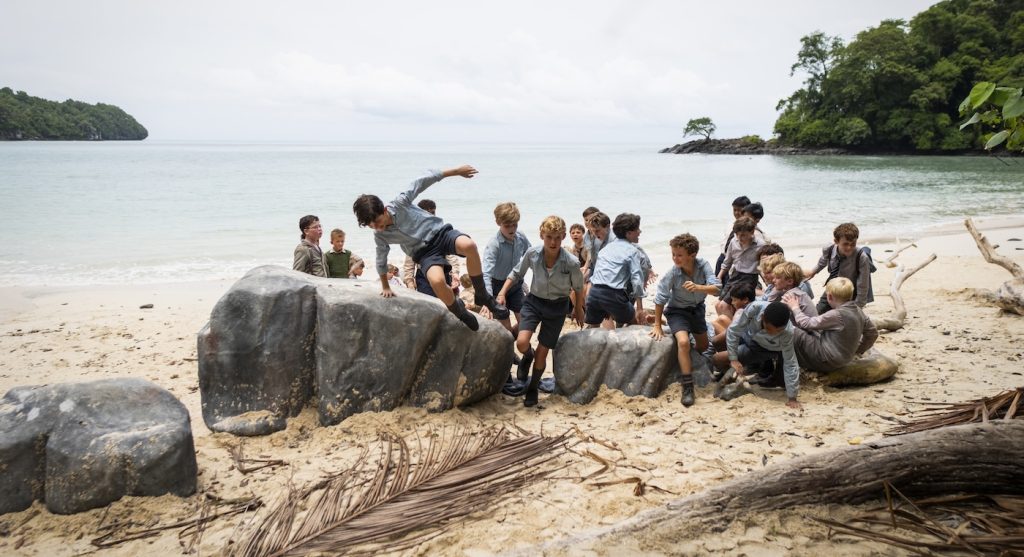
It’s wonderful. Telling a story through costume and being able to track that kind of evolution is really the best part of the job. Marianne Agertoft had already done extensive research and developed the initial visual language with Mark Munden before I came aboard, so my role became translating that evolving language through the costumes. The children arrive with a sense of unity and uniformity, whether they’re choirboys or schoolboys, but then they begin shedding layers because of the heat, putting garments back on to protect themselves from the sun, and gradually adapting to their environment.
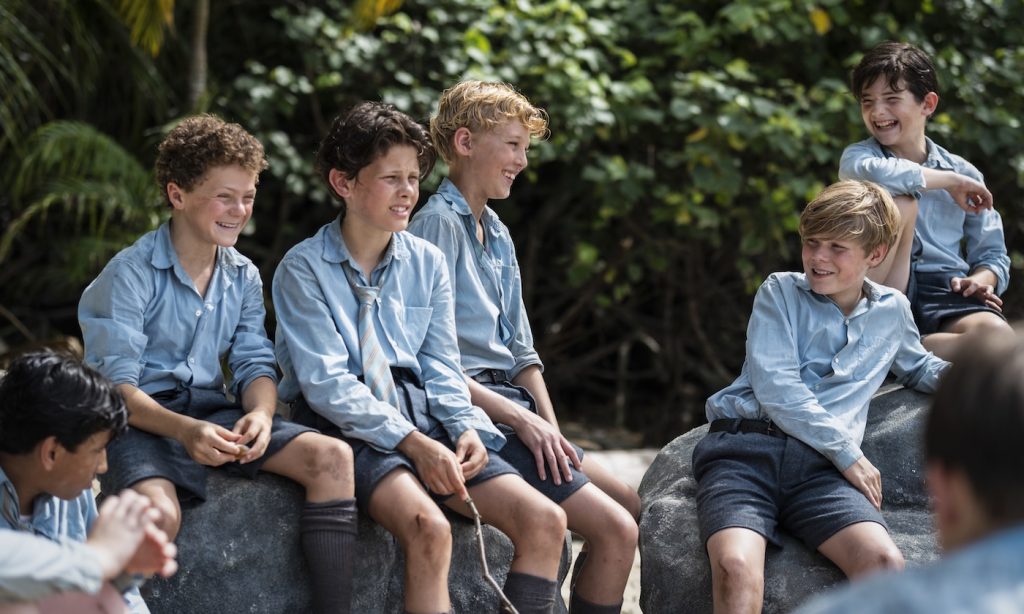
The white vests become dirtier day by day. There are bloodstains, rips, thorns, and damage from the island itself. The volcanic rock was so abrasive that even crew members had to be careful not to tear their clothes. Being there in person was incredibly valuable because it informed the entire breakdown process. At the same time, it was important not to make the costumes’ deterioration theatrical or overly symbolic. We wanted everything to feel emotionally truthful and subtle. It couldn’t simply be a story told through obvious stains, tears, or blood. The evolution needed to happen naturally and almost subconsciously.
This story has become almost shorthand for societal collapse. Did its themes about human nature affect you as you worked on it?
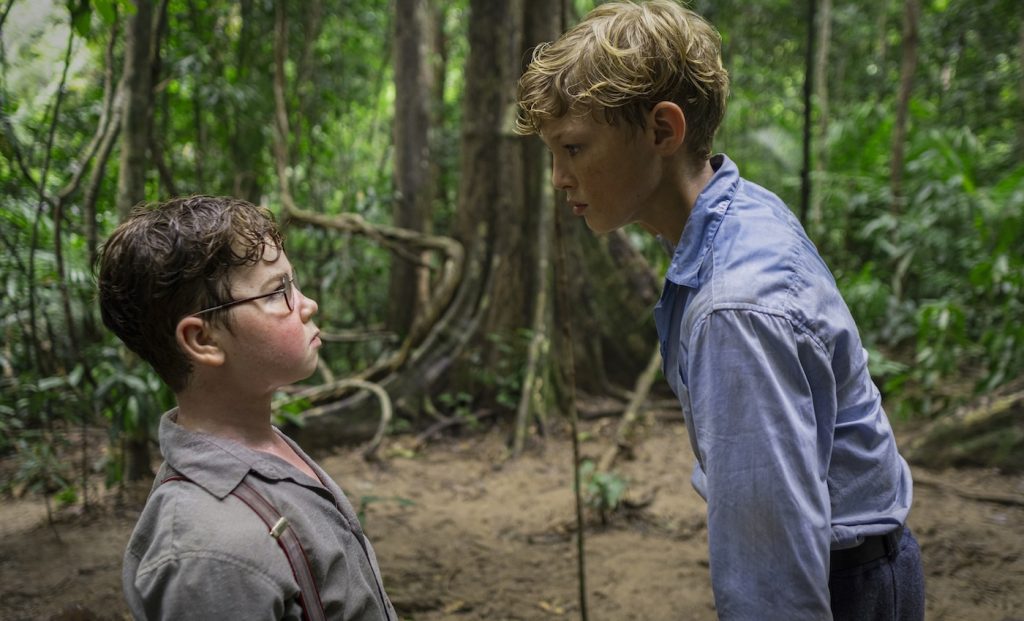
I think the story really comes down to identity and belonging. These boys are initially part of a structured society, with schools, teachers, adults, and rules governing their behavior. Once all of that disappears, instincts begin to emerge in different ways. You have someone like Jack, carrying his own trauma, while characters like Ralph and Piggy are trying to preserve a sense of humanity, compassion, and community. The story asks what remains when you strip everything away. What’s left beneath all those layers? It’s a very dark answer, and honestly, even after working on it, I found it difficult to watch at times. Yet it’s also incredibly beautiful. The way Mark Munden and cinematographer Mark Wolf captured the island, its wildlife, and the details of the environment—all of it is extraordinary. The contrast between that beauty and the darkness of the story is part of what makes it so powerful.
From a practical standpoint, how did you maintain continuity as the costumes became increasingly worn and degraded?
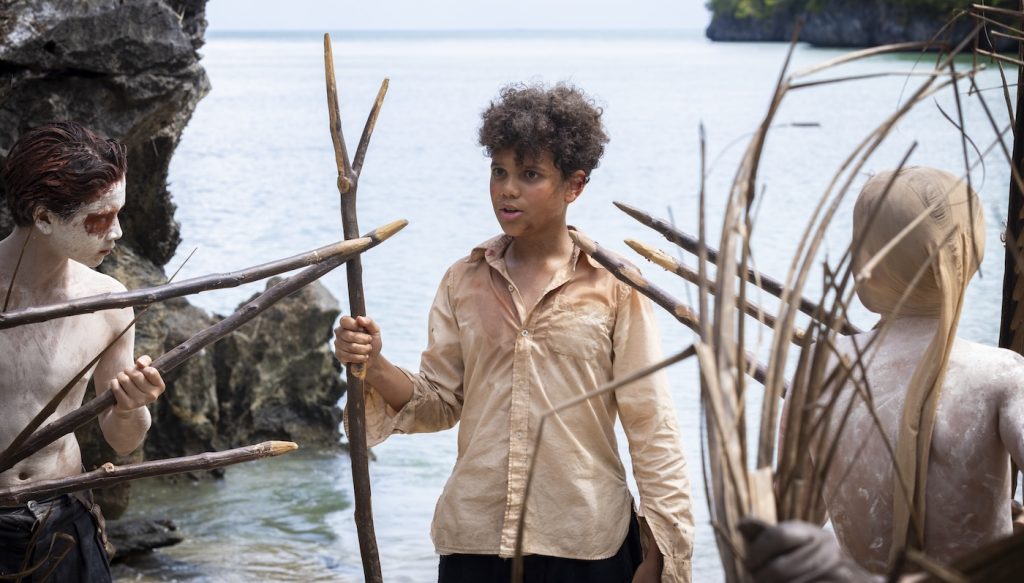
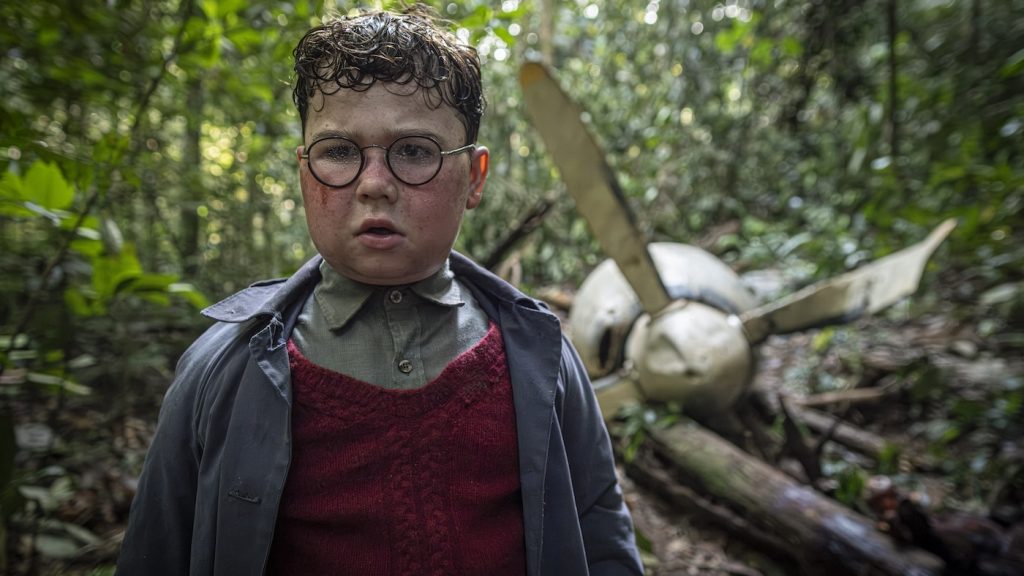
It required enormous preparation. Some pieces, such as the knitted vests, were genuine garments from the 1940s, and we only had one of each. Because they were wool, humidity and movement could cause them to shrink, so we had to be incredibly careful. Everything else, including shirts, shorts, and socks, existed in multiple versions. We broke down the script scene by scene and worked closely with Mark Munden to determine exactly when a character removed a shirt, put it back on, lost a shoe, or acquired a mismatched replacement. Every stage was meticulously planned. We had an excellent breakdown team that aged each costume through painting, sanding, distressing, and carefully introducing wear in ways that matched the environment. Then, on set, new ideas would emerge. Mark Munden might decide a character should lose a shoe or that a garment needed additional damage. The boys were constantly moving between water, sand, volcanic rock, fires, and dense vegetation, so continuity became a major undertaking. It was hard work, but extremely enjoyable.
What was it like filming in Malaysia? The sense of place feels incredibly authentic in the finished series.
Honestly, it felt like a real adventure for both the children and the adults. We began prep in Kuala Lumpur, an amazing city, then moved to Langkawi Island for filming. To reach some locations, we’d travel by boat to smaller surrounding islands. You’d be looking at sea eagles overhead or occasionally spotting a pink dolphin, and then twenty minutes later you’d arrive on a completely uninhabited island that had been transformed into our set. Sometimes heavy rain would flood portions of the camp, and we’d simply have to wait because when it rains there, it feels as if someone is emptying buckets of water over your head. The children loved it. They had a tent that served as their green room, although the local wildlife loved it too. Spiders, centipedes, and even the occasional tarantula would find their way inside. Fortunately, local experts knew exactly how to handle the animals safely and respectfully before releasing them back into the environment. It really was an unforgettable experience.
How much of the wardrobe was constructed specifically for the series, and how much came from authentic vintage sources?
We worked with two wonderful costume houses, Angels and Cosprop, both with incredible collections of vintage and antique clothing. Whenever possible, it’s wonderful to use authentic garments from the period because they immediately bring a sense of reality to the production. The yarns, the knitting techniques, and the construction all carry the history of their time and help transport you emotionally back to that era. We used genuine vintage pieces whenever we could, particularly elements like the knitted vests. However, because we needed multiple versions of many garments for continuity and breakdown, we reproduced items such as the shirts and shorts specifically for production.
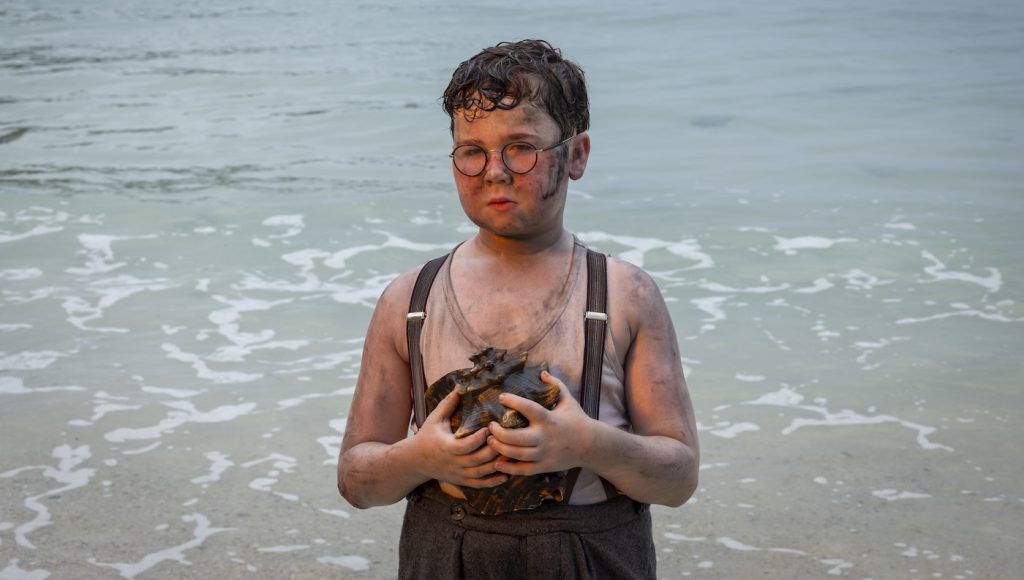
Shows like this feature iconic props, from the conch to Piggy’s glasses. How closely does the costume department work with props and the other design teams?
Very closely. The collaboration is constant. For example, the art department created the beautiful masks, while we worked on the clothing and the contents of the suitcases the boys discover. With Mark Munden, we selected the items that would become part of the characters’ journeys, whether that was a fur stole, lace accessories, pearls, or other pieces. The boys themselves were involved in trying things on and helping determine which objects felt right for their characters, which was wonderful because it supported their performances. We also worked very closely with the hair and makeup team. When they created the paint effects for the upper body, our department extended those designs onto the costumes so everything felt unified. On a production like this, communication between departments is absolutely essential. Everything has to work together as one visual language.
You’ve worked on projects as different as Downton Abbey and Lord of the Flies. Do you deliberately seek out radically different challenges from one project to the next?
It always begins with the story. If there’s a story I’m excited to help tell, I want to be involved. In this case, my agent introduced me to Marianne Agertoft and told me about Lord of the Flies filming in Malaysia. My immediate reaction was, “Yes.” It’s an iconic story, Malaysia sounded like an adventure, and Marianne was a wonderful person to work with. Opportunities to travel and immerse yourself in unique places are also incredibly special. I’ve been fortunate enough to work in remarkable locations throughout my career and visit places that most people never have access to. Those experiences stay with you forever. Ultimately, though, it always comes back to storytelling. If it’s a compelling story and there’s a chance for a creative adventure, I’m interested. I love that sense of discovery.
Lord of the Flies is streaming now on Netflix.
Featured image: Lord of the Flies – Season 1 – Episode 103 — Photo Credit: J Redza/Eleven/Sony Pictures Television