
“Lord of the Flies” Creator Jack Thorne on Reimagining a Timeless Classic in His Four-Part Heartbreaker
The summer of 2024 proved to be intense for British writer/producer/creator Jack Thorne, who found himself in the thick of two projects that dealt seriously with the psyches of a teenager and young boys. In England, he helped oversee the making of Adolescence, which wowed audiences and critics with its Emmy-winning portrayal of a troubled child. At the same time, in Malaysia, an extraordinary cast of young boys filmed Thorne’s four-part adaptation of William Golding’s 1954 novel Lord of the Flies (now streaming on Netflix), directed by frequent collaborator Marc Munden. “It was a very wild summer,” Thorne said.
During a recent trip to Los Angeles, Thorne recalled Lord of the Flies‘ gut-wrenching impact on him as a child, explained his use of flashbacks to illuminate the stranded characters’ psychology, and addressed the story’s timeless “warning” about the dangers of tribalism gone amok.
You first read Lord of the Flies back when you were 11 years old, the same age as the schoolboy characters.
Yeah, that’s right.
At that time, how did the book hit you?
The book did something to me for two reasons. One, I thought the story was incredible. Two, I thought I was Simon. When you’re a young person, you’re looking for yourself in literature. Suddenly, you find yourself, and you’re like, “Oh, right, that’s who I am. This person is me.” And then… Simon died. It was like having the heart ripped out of my chest.
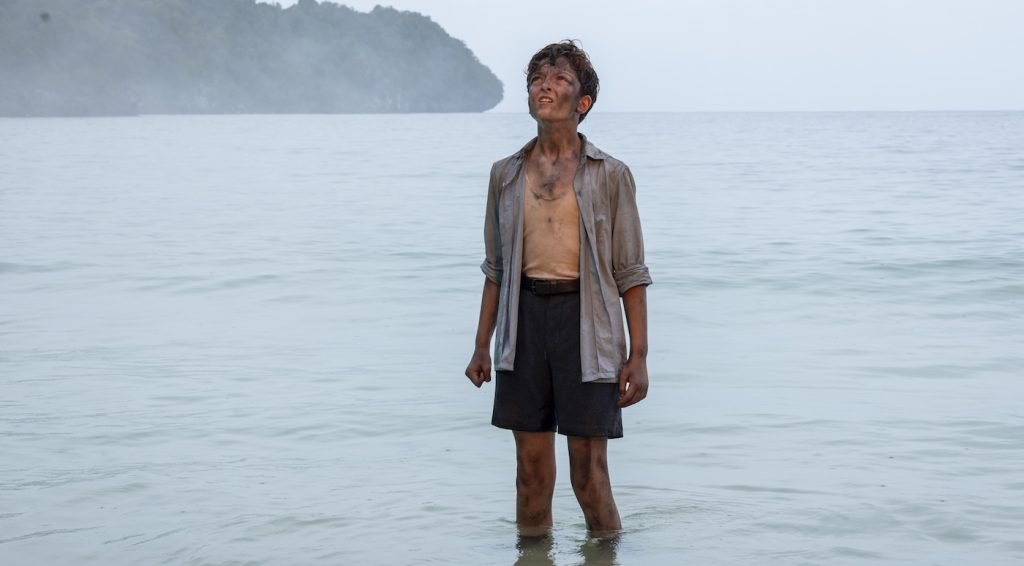
You identified with this fictional boy who came to a terrible end.
And I wasn’t reading the book for school. I was just reading it on my own, in my room at night, and yeah, I was deeply, deeply traumatized in the best possible way. It made a huge impact.
What about now, as an adult? Do you experience the story in the same way?
It’s a book that I return to over and over again. I’ve literally read it dozens of times, and each time I get something different from it. The older I get, the more I’ve felt like I’d misread it as a kid, that what I’d taken from it then was the easy thing of, “I see Jack in my playground, and I hate Jack.” That [take] became more troubling as I got older.
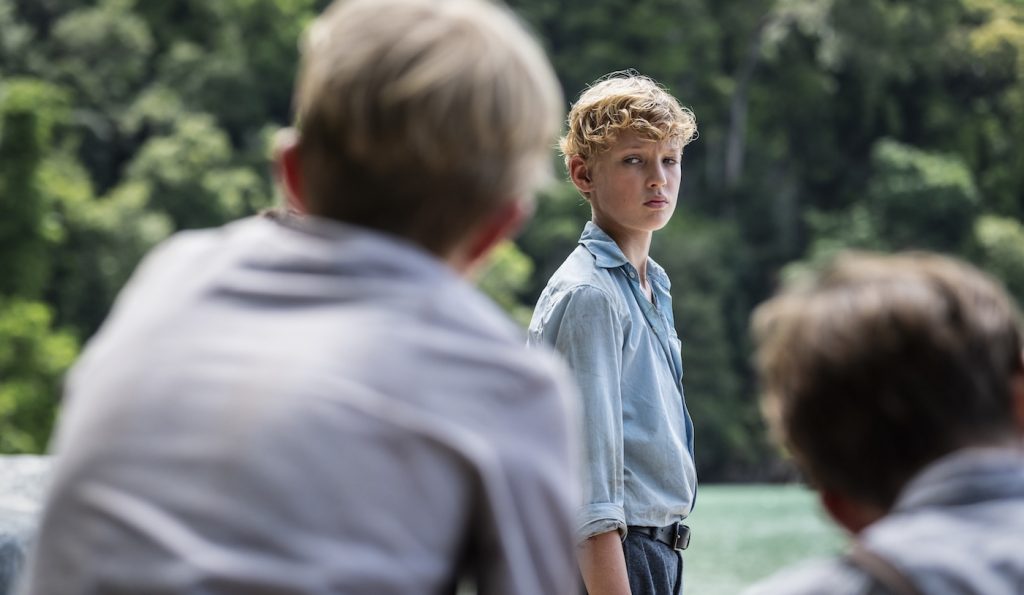
In fairness, Jack does come across as a cruel bully.
Well, in trying to represent that trouble, trying to represent that confusion surrounding Jack, I felt like a really wonderful thing about the vocabulary of television is that it allows you to lean into the odd places of character rather than the more traditional places of film. Television felt to me like it would suit the tenderness with which Golding wrote this book and somehow reflect that tenderness in the way we portray these characters on TV.
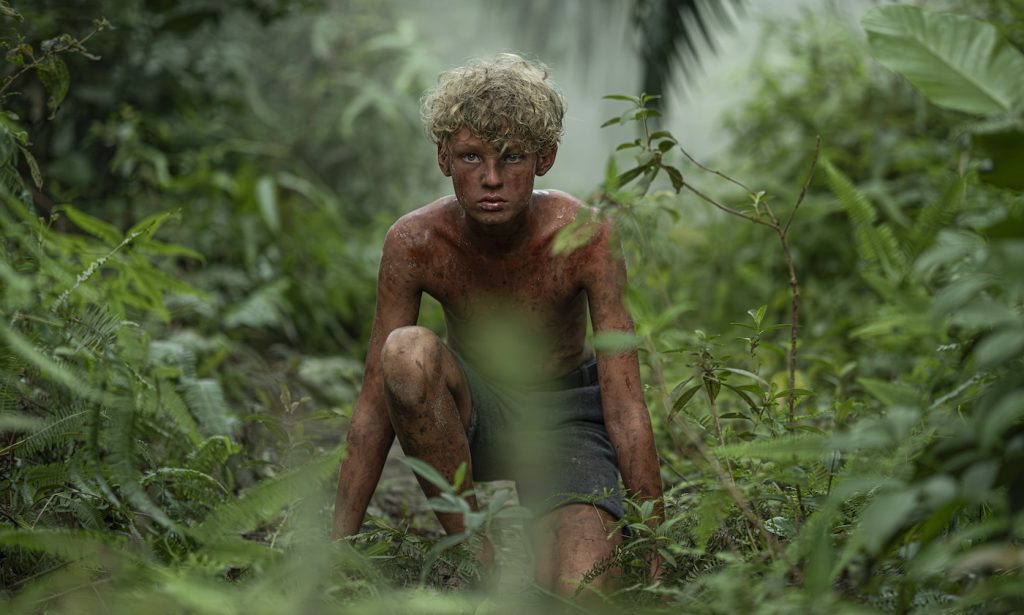
How did you go about incorporating that “tenderness” into your adaptation?
I think the most important action we took, in terms of writing the show, was to give Jack episode two, which gives you some understanding of the decision-making he exhibits. And if you have some understanding of why he’s made these wrong micro decisions, then you can understand what happens later on the island, and you’re more invested in the tragedy. Or that’s my opinion.
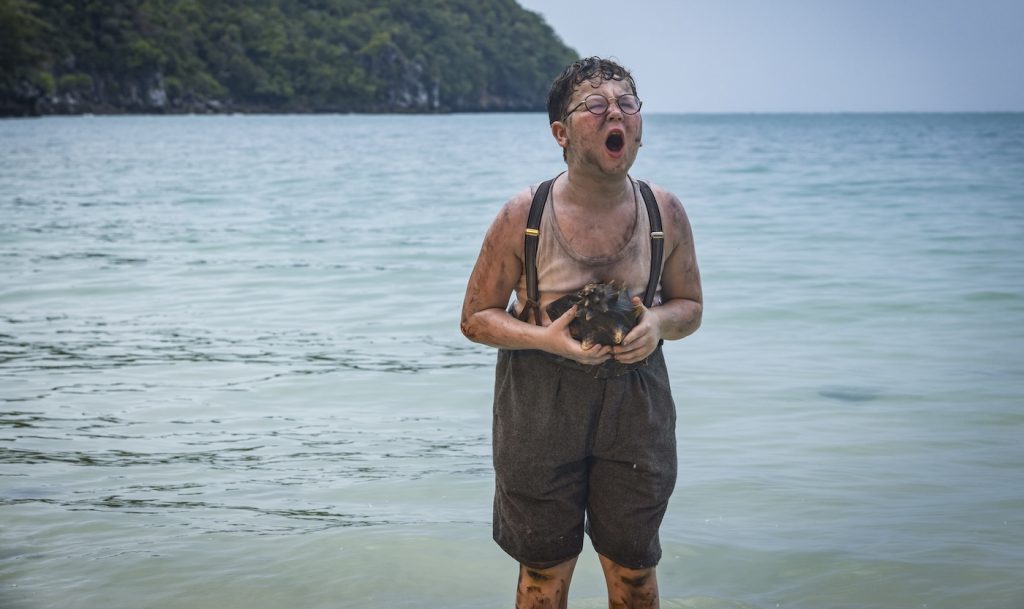
And it’s not only Jack who gets his own episode. You structure the story as four distinct sections titled “Piggy,” “Jack,” “Ralph,” and “Simon.” Was the original novel set up like that?
No, that’s not the original novel, but the amazing thing is—and this was part of our original pitch to the [Golding] estate when we were trying to get them to allow us to adapt the book—the amazing thing is how much of Golding’s book slots into place within that episode structure. You’ve got Piggy at the beginning, setting up democracy. Then you’ve got Jack with the pig hunt, the capture of the pig, and the [signal] fire going out. Then chaos ensues, and you’ve got Simon. Through his eyes, you see the beast and the idea that the island “speaks” and he is killed for it. And then you’ve got Ralph, trying to work out how to survive this war [between tribes of boys], ultimately giving himself up only to be saved by a naval man.
Ralph finds himself in a sad predicament because the boys elect him to be “chief,” but then most of the kids follow Jack instead.
Because ultimately, power is a more complicated thing than something that can simply be given. And I think Golding talks about that superbly in his book.
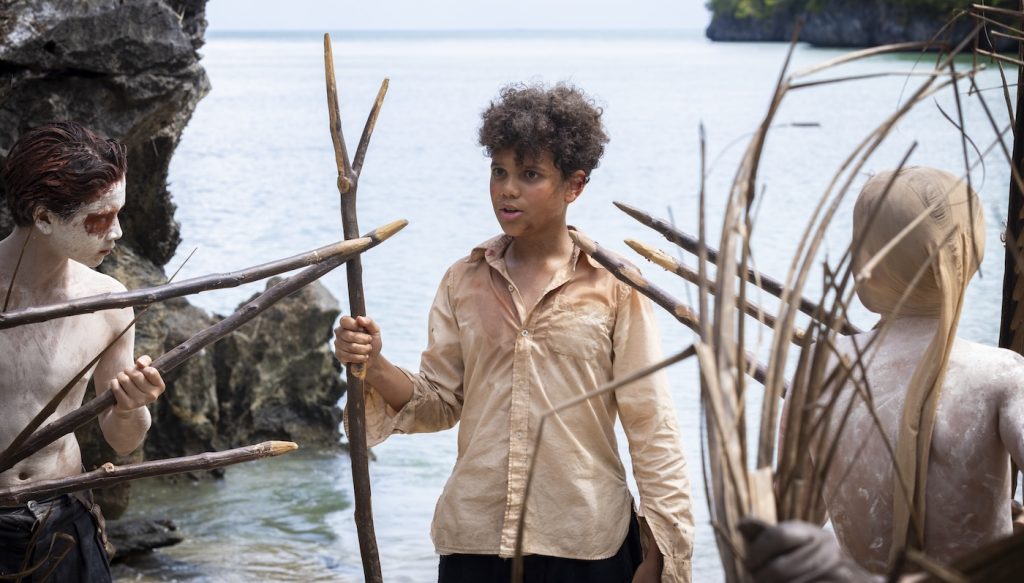
The novel came out in 1954. Lord of the Flies , the series, is now streaming in 2026. How do you see the themes of this story resonating with contemporary audiences?
It’s interesting that Golding wrote Lord of the Flies in the shadow of two World Wars. The children’s parents probably survived both wars and took some damage from them. It was also the beginning of a Cold War that would define the next 40 years. In terms of my lifetime—I’m 47—it does feel like we’re seeing behavior from both the right and the left, where hate is easier to talk about than love. Now, we are obviously not in this extreme situation of the boys on the island, but I think that if Golding were alive now, he’d see lots of warning parallels. We are on a road that is complicated and which could lead to tragedy.
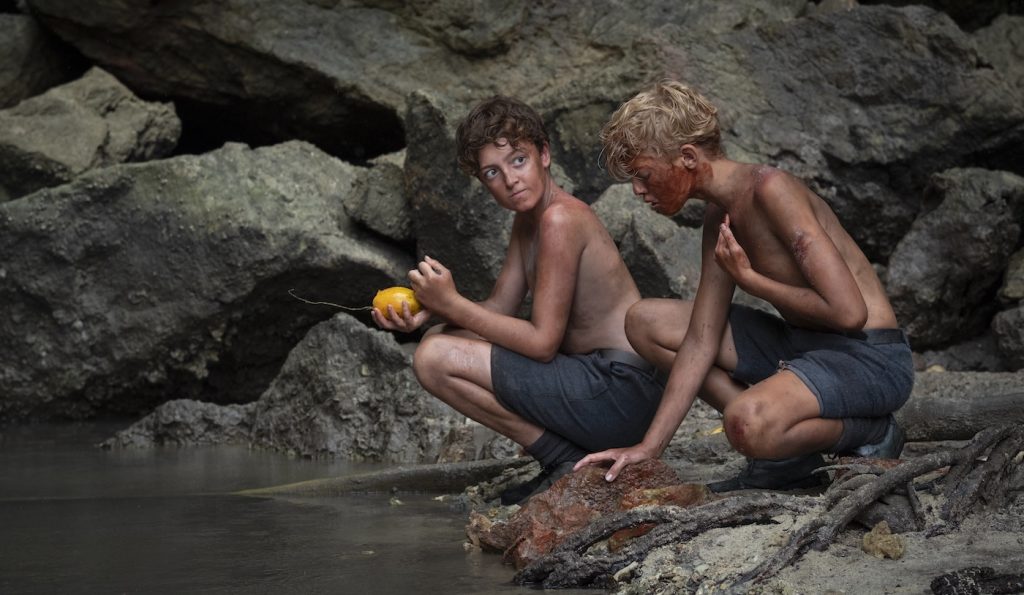
In your adaptation, it’s interesting to see how the values of these boys mirror what they’ve been taught by society.
Yeah. Golding wrote beautifully about how children are socialized and about how the ways we behave are inherited, and that our emotions are inherited.
You wanted to dramatize that dynamic through flashbacks?
Yeah, exactly, and without any words, other than the Ralph scenes. But [through the flashbacks] you get this sense of who these boys are and what they’ve left behind.
You co-wrote and produced Adolescence with Stephen Graham and of course that series won many awards and attracted lots of viewers. The story struck a chord in part by exploring contemporary male violence. Do you see a thematic connection between Adolescence and Lord of the Flies?
I think there is some connective tissue. There’s also a lot that’s different, and the most important thing that’s different is that Jamie Miller [portrayed by Owen Cooper in Adolescence] is 14 years old. He’s in the middle of adolescence. He’s looking up towards adulthood. The boys in Lord of the Flies are still boys. They look back more than they look forward. They’re not yet having to cope with the things that Jamie’s coping with. And yet they are dealing with this issue of complicated inheritance. By the way, Lord of the Flies was shot the same summer as Adolescence, so I was hopping back and forth between Rotherham [in England’s South Yorkshire region] and Malaysia. There were children everywhere!
Lord of the Flies and Adolescence are streaming on Netflix.
Featured image: Lord of the Flies – Season 1 – Episode 101 — Photo Credit: J Redza/Eleven/Sony Pictures Television