“Beef” Composer Finneas O’Connell on Building a Synth-Driven Score for Netflix’s Emmy Juggernaut
When Beef creator Lee Sung Jin built the second season of his acclaimed Netflix anthology, he knew the show’s volatile mix of wealth, ambition, self-delusion, and emotional reckoning would require a musical identity that could evolve alongside it. As Sung Jin told The Credits, Season 2 follows a cross-hatch of generations engaged in indirect, and eventually, quite direct, battle with one another. At the season’s central location, an expensive country club, Gen Z employees (Cailee Spaeny’s Ashley and Charles Melton’s Austin) and their Gen X managers (Oscar Isaac’s Joshua and Carey Mulligan as his wife and interior designer Lindsay) are at the beck and call of their Boomer members. The tension builds as each generation feels stifled by the one that preceded it.
Giving a shape-shifting musical identity to these internecine battles is the multi-hyphenate musician Finneas O’Connell. The Grammy- and Oscar-winning musician, songwriter, producer, and composer scored all eight episodes of Season 2, crafting a retro synth-driven sound that mirrors the characters’ nostalgia, mounting anxiety, and accelerating descent into chaos. Working closely with Sung Jin and the creative team, O’Connell built a score that grows from subtle emotional cues into something approaching rave music by the season’s explosive conclusion set in Korea.
Beef Season 2 was nominated for 16 Emmys after already winning 3 Creative Arts Emmys last weekend, including for Olga Mill‘s costume design, sound editing and sound mixing. In tonight’s Primetime Emmy Telecast, it will vie for Emmys for Outstanding Limited or Anthology Series, Outstanding Lead Actor for Oscar Isaac, Outstanding Lead Actress for Carey Mulligan, Outstanding Supporting Actor for Charles Melton, and Outstanding Supporting Actress for Youn Yuh-Jung, who plays the owner of the country club.
We spoke with O’Connell about collaborating with Sung Jin, scoring around the show’s carefully curated needle drops, creating recurring themes for key characters, and why Oscar Isaac’s complicated protagonist may have finally found peace when all his responsibilities are stripped away.
When Lee Sung Jin brought you into Season 2, did he have a specific musical direction in mind, or did he essentially hand you the scripts and ask what you heard?
I don’t think there was a specific blueprint for the music. Sonny has his own taste in music, and there’s probably a Venn diagram of things he loves that I’m less familiar with and things I love that he may be less familiar with, but there’s a pretty large overlap in the middle. We spent a lot of time talking about music we loved. I think music should function as a narrative tool. It should do its own leg of the storytelling. This season has a lot to do with where people are in society and in life. You have the Gen Z couple, Ashley and Austin; the Gen X couple, Joshua and Lindsay; and the Boomers, with layers of power and status operating throughout the story.
How did you go about achieving that?
One thing that felt effective for me was building a retro synth-driven score. We tend to think of synthesizers as modern instruments, but the Moogs of the ’70s and ’80s are now 40 or 50 years old, which actually helped the storytelling. At the center of the season are Oscar Isaac’s and Carey Mulligan’s characters, grappling with memories of who they once were and the dreams they thought they’d realized by this point in their lives. I’ve said before that when you hear music years after first discovering it, you’re reminded not only of the song but of who you were when you first heard it. That feeling of nostalgia and self-reckoning became a really useful way into the story musically.
Music plays a big role in Oscar Isaac’s character. How did you think about that aspect of him?
That was already in the script. Part of the character’s foundation is that he owns this old, expensive Moog synthesizer in his garage, which is arguably a questionable purchase. I think people should absolutely be enthusiastic about things they love, but if you’re deeply in debt, maybe it’s not the wisest purchase, especially if you’re not a professional musician. We talked a lot about who this guy is. Which Coachellas did he attend? Which lineups mattered to him? I thought including Hot Chip in the season was an inspired choice because it felt like a perfect nod to that era. His relationship with music is authentic, but it’s also a little like the dentist with the expensive Les Paul guitar. There’s a degree of fetishizing the hobby. He’s obsessed with his speakers; he’s collected sports memorabilia, and these interests become part of how he defines himself. Sometimes people hold on to an earlier version of themselves, and in his case, some of those passions feel like an attempt to preserve a part of his identity that isn’t reflected in the reality of his life anymore.
The score transitions into and out of the show’s needle drops beautifully. How does that process work? Are those songs already selected by the time you’re composing?
Usually, yes. Shout-out to our music supervisor, Jen Malone, and to Sonny because they did their homework. The nightmare scenario is that a song gets placed into an edit, I compose around it, and then later someone says, “Sorry, we couldn’t clear it.” Thankfully, they made sure those songs were actually going to live in the show. I’d still double-check and ask, “I love that this ends with this La Roux song. Is that for sure?” Once I knew the answer was yes, I could confidently write into it. That was one of the most enjoyable parts of scoring the season. The Hot Chip tracks, the Skrillex and La Roux material, and “Real Love Baby” all immediately take me back to being 17 or 18 years old and discovering that music for the first time. Being able to write cues that flowed into and out of those songs was incredibly rewarding.
What was your actual setup for the score? Were you working alone or collaborating with other musicians?
I worked out of my studio in Los Angeles, and it was just me. Initially, I liked the idea of bringing in collaborators, but what happened was that I started making music for Sonny during production, and some pieces immediately connected. I gave him a track called “Vicious Thoughts” early in the shoot. He was driving home from set listening to it and texted me that it was incredibly important to the story and that he already knew where it belonged. At that point, I hadn’t even seen the later episodes. Then I got Episode 8, and there in the script it literally said, “‘Vicious Thoughts’ plays.” That was an amazing moment.
The process ended up being collaborative in a different way. You’d have Sonny, editor Laura Zempel, executive producer and director Jake Schreier, and music editor Luke Dennis all sitting in a room discussing cues, making notes, and talking through ideas. By the end of those conversations, I didn’t feel the need to bring in additional musicians. I’d leave, go home, and execute what we’d discussed. There was something really satisfying about that. If I had a few free hours on a Tuesday, I could just go downstairs, write music for the show, and keep moving. I love collaborating, but collaboration requires schedules and coordination, and there was something liberating about being able to do this one on my own.
How much time did you ultimately spend scoring the season?
So much time. I loved doing it and learned a tremendous amount, so it was absolutely worth it, but the workload was enormous. There are the meetings, the writing sessions, the screenings, the discussions, and then all the revisions. Sometimes a cue almost works and just needs a tweak. Sometimes you have to create an entirely different version, and sometimes you throw it away and start over from scratch. The amount of time was honestly monstrous. It also gave me a new appreciation for composers like Hans Zimmer because I genuinely don’t know how somebody scores multiple projects simultaneously. When you’re working on a show like this, it feels like there’s never a moment when you can’t be working on it.
One thing that’s always fascinated me about composers and editors is the level of concentration involved. It’s not just the hours; it’s the attention paid to tiny moments and emotional beats.
Absolutely. I’ve been grateful for every scoring job because each one taught me something. I started with The Fallout, then Vengeance, then Disclaimer, and now Beef. With every project, I’ve thought, Thank God I’m learning this now. Beef was easily the biggest workload of those projects because it’s episodic, eight episodes long, and packed with music. It made me grateful to all the people who took a chance on me earlier and gave me opportunities to learn before tackling something of this scale.
The season escalates beautifully from uncomfortable tension into complete insanity. How did you build that escalation into the score?
Once Sonny told me “Vicious Thoughts” would appear in the finale, we could work backward from that point. When I started seeing cuts of the episodes, we treated it like planting a seed early and allowing it to grow. At the same time, the score had to reflect the increasing stakes and tension. One thing Jake Schreier kept emphasizing was that the audience experiences escalating stakes, but the creators already know where the story is headed. The music has to understand that destination from the beginning. You can’t make a hard left halfway through the season. You could score Episode 1 as something lighter and more playful, but Jake kept reminding me that the wheels were eventually going to come off, so the score needed to suggest that these characters were already headed toward that outcome. That was incredibly helpful feedback. By Episodes 7 and 8, some of those pieces are almost rave music. It becomes really fun.
Were there recurring motifs for specific characters?
Sort of. “Vicious Thoughts” became the primary love theme. In Episode 1, you really hear it with the younger couple. It’s saying, Look how in love these people are. As relationships begin to deteriorate, the theme weakens, fragments, and almost dead-ends before returning in a much bigger form at the end. Chairwoman Park has a motif as well, though hers is more chord-based than melodic. Austin and Ashley each have their own thematic material, too. Because the score leaned so heavily into synthesizers, there wasn’t always room for the kind of classic John Williams-style character melody that instantly announces itself. I love that approach and would love to do more of it in the future. Instead, these were subtler cues. You might hear a particular synth sound and immediately understand whose perspective you’re following.
One of my favorite touches was Oscar Isaac’s character ending up in prison but still managing people and solving problems. What did you make of that ending?
I thought it was hilarious. My read is that he’s been lying to himself for a very long time. He’s also operating like an addict, not necessarily a drug addict, but someone with addictive tendencies. He spends money recklessly, buys things he can’t afford, and makes destructive choices. By the end, he finally accepts responsibility. He falls on the sword, protects Lindsay, and gets someone he loves out of the situation. For maybe the first time, he feels genuinely good about himself. The other thing that makes him feel good is working. There’s a moment earlier in the season when he’s stressed because the dog is missing, and he goes to work to calm down. Most people go to work and become more stressed. For him, work is where he feels competent, in control, and useful. So I don’t think he goes to prison feeling ashamed. I think he believes he’s done something wrong and deserves the consequences, but he also feels at peace because he’s finally acted selflessly. That’s why he’s running around prison helping people and providing services for the inmates. I think it’s great. Even at the very end, when he’s asked whether he wants to send a message to Lindsay and says, “No, it’s all right,” it’s such a satisfying moment.
Tonight’s 78th Emmy Awards begin at 8 p.m. ET (5 p.m. PT).
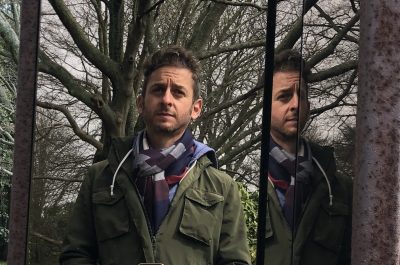
Featured image: BURBANK, CALIFORNIA – MAY 15: Finneas O’Connell attends Netflix’s “Beef” ATAS Event on May 15, 2026 in Burbank, California. (Photo by Monica Schipper/Getty Images)