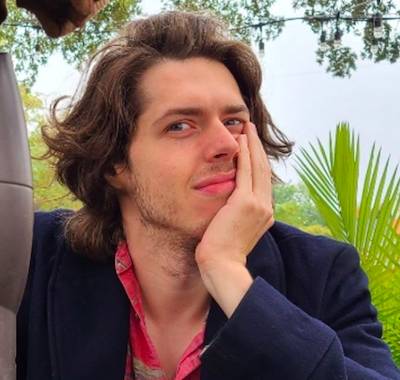
How Kendrick Sampson Brought Quincy Jones to Life in “Michael” With Just Two Days Prep
The role of Quincy Jones is a tall order. He’s one of the greatest musical minds to have ever existed. Even that description is perhaps selling Jones short, the man responsible for era-defining music ranging from his own albums to both live and studio releases he produced for Frank Sinatra and, of course, Michael Jackson.
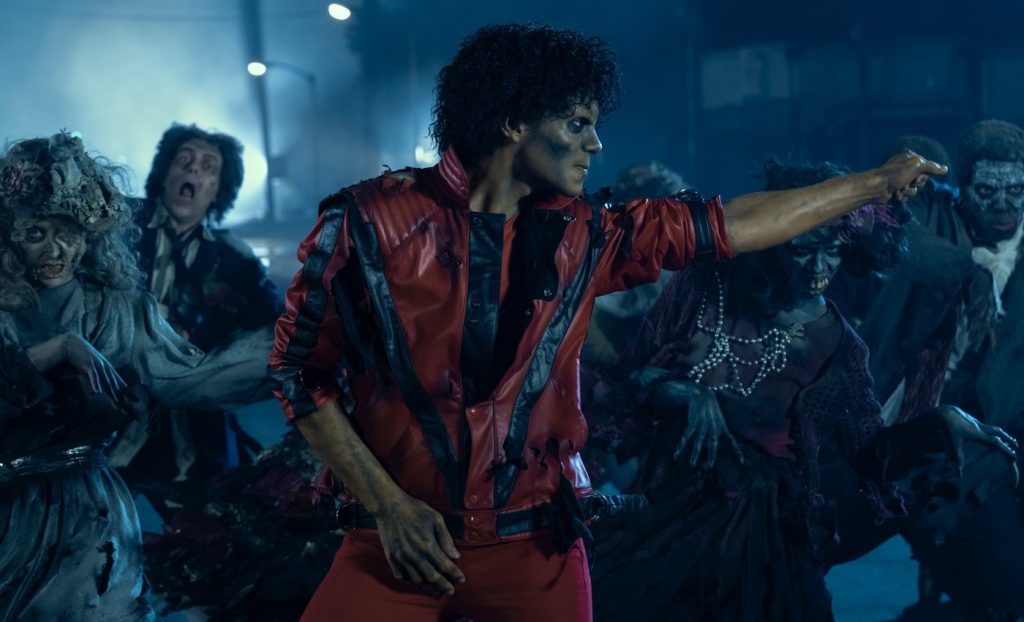
So now with director Antoine Fuqua‘s Michael, the biopic about the rise of the King of Pop (Jaafar Jackson) also shines a light on Jones’ artistry. While Fuqua’s movie portrays the rise of the pop star from his early days with the Jackson Five to his solo-stardom days, the story also brings in Quincy Jones’ crucial guidance. The box-office-smashing biopic Michael depicts Q and Jackson at work on Thriller, inarguably one of the most world-beating albums ever released.
Or, as Kendrick Sampson and Quincy Jones himself put it, allowing God into the room. Often seen in the studio with Jackson, Sampson convincingly plays one the coolest men ever to live. Again, no small task, and a role Sampson spoke with The Credits about handling with care.
You actually met Quincy Jones at a party or two and talked to him quite a bit, right? How did this full-circle moment feel?
I don’t think I’ve emphasized enough how obsessed I was with him growing up, learning about him. Sitting with him for even 30 minutes, I would remember every second of it, but two times I got to sit with him for hours. Honestly, the process of it was: why did it happen? It must have been something divine to prepare me for this opportunity.
What about those conversations did you dig back into when you got the role of Quincy Jones?
The more I worked with Jaafar [Jackson], the more I thought about the conversation and replayed it in my mind. He told me everything from his past relationships and experiences to what he produced that I didn’t know about, to his iconic moments, to what he believes about spirituality and about letting God walk through the room. I got to know him more. I felt like we were bonded because I kept having those conversations with him, replaying them over and over again in my mind.
The scope of his work is miraculous. With eight decades of creativity, playing with Ray Charles as a teenager, and still producing a ton near the end of his life. When you have his books, some of the best albums of all time, where do you start in understanding him through the work to play him?
Well, it’s hard. It’s hard because you don’t understand the reach of his work. You don’t understand that he produced The Fresh Prince of Bel-Air. I keep saying this because it blew my mind how casual he was. As he was talking to me, telling me different stories, he was like, “Oh yeah, and then I was in Italy, and I did this.” “Oh, let me tell you about when I produced the opening number of the Beijing Olympics. Did you watch that?” And I was like, “Are you kidding me? That’s your casual drop. I don’t even know how you do that. How do you produce the opening number of the Olympics? What are you talking about?” I was blown away more and more, but I was doing my best to understand him on an intimate level and what motivates him behind the music.
His film scores—The Pawnbroker, The Italian Job—are staggeringly great, too. Even as a longtime fan, what about his musicianship did you discover and find helpful to know?
I looked up a lot of stuff about how he would go into detail about pursuing the greatest orchestra conductors in the world and learning under them. Okay, I’ll put it this way: somebody asked me why people love biopics. Even in a two-hour movie, they love to see the small moments in processing, not all the big performances. Of course, that’s the time that you have nostalgia and think about when you saw that, or damn, that was really cool. But it’s the behind-the-scenes moments, the small moments of how they took care of each other through the process or didn’t, what conflicts they had, and what arguments they had.
Was that a big part of your focus, too?
More than anything, that’s what I was focusing on. When I got to study a lot of his career, it would be one thing if it were Thriller, just Thriller [as his career highlight]. But he has so many moments actually shifting the culture of America, subcultures, you know what I’m saying? Black culture, obviously. And my whole thing is, what was he doing? Was he drinking? What did he like? What was his favorite drink? At that time, who was he talking to? If he was sitting there with Lena Horne, did they argue? What did they say to each other? How did they look out for each other?
You didn’t have much prep time either, right?
Here’s God’s honest truth: I only had two days to prepare. That’s no time at all to prepare. For one of the people I admire most, I had only two days to prepare. I had to pull from my personal experiences, which was divine that I had them.
On set, how do you try to stay in the very singular space Quincy Jones occupied? How do you stay Q?
I always have this, even when it’s not based on a real person. Whoever this character is that I’m embodying, I have certain phrases that remind me of their tone and their style, how they speak. And so, I would say those things to myself. If I can say the lines out loud and they match that tone and that style, then they make sense to me. If they don’t, I’m going to refine it. I’m going to keep tweaking it. Even in little ways, even if they don’t notice, don’t tell the director. No, I’m just kidding. He encouraged it, but for real, I’ll tweak it even if I don’t feel right in it, it’s not going to feel authentic.
What were some lines of Quincy Jones’ that you kept telling yourself?
I thought about when he would say, “You have to leave enough space to let God in.” He said it over and over and over again when he’s talking about it in the studio, you have to leave enough space for God to walk through. He was talking about your ego, pulling that back, and making sure that God is leading the way. In his mind, you can blend notes like science. This is what they’re going to sound like. This is the end result, but you cannot do that with melody. Melody comes from God. Nobody can explain how people get melody and put melodies together, the center flow of the song. He was like, “You’re getting in the way of the art if you don’t let God walk through the room.”
And how do you do that?
I thought about a lot of that because I believe that care is at the center of art. I think at the center of art is care, protection, it’s power. I think that we separate art from its purpose a lot. We think of it as just entertainment, but it was central to community building, and the story was central to care. You have to care for each other through the process to create the best art, the most grounded art, the most impactful art.
Michael is in theaters now.
Featured image: Kendrick Sampson as Quincy Jones in Michael. Photo Credit: Glen Wilson