“Passenger” Director André Øvredal on Designing a Demon You Can’t Outrun
Much like the mark left by the otherworldly titular terror in director André Øvredal‘s supernatural horror film Passenger, the filmmaker was inspired by everything from the landscapes of Washington state to John Carpenter and Poltergeist II.
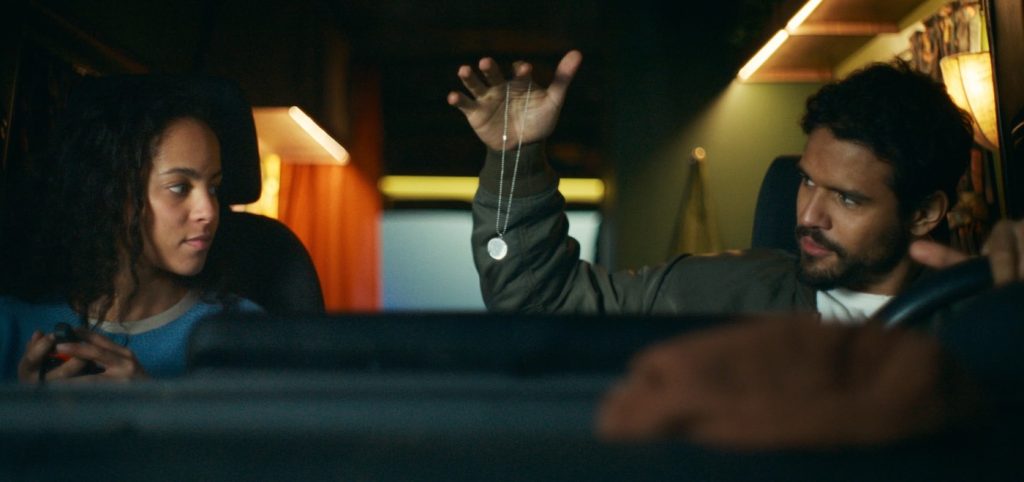
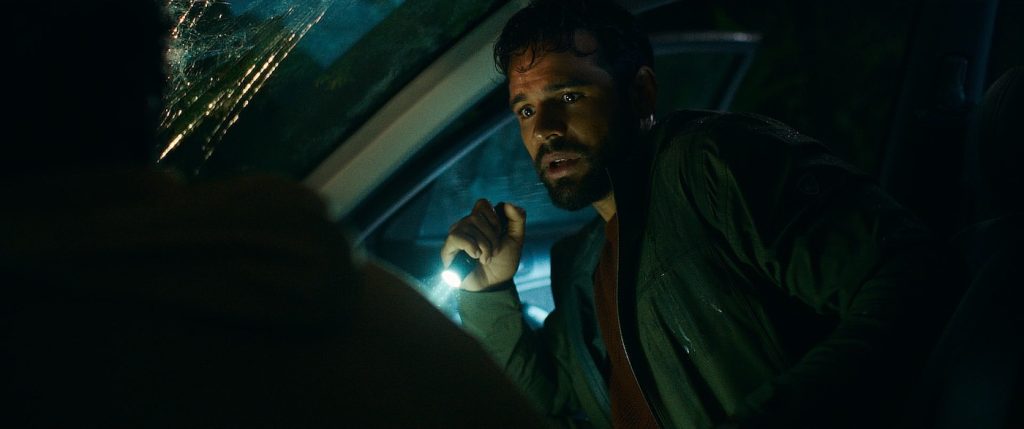
In Passenger, a few weeks into a road trip across America, a young couple, Tyler (Jacob Scipio) and Maddie (Lou Llobell), witness a horrific, fatal accident. However, their attempt to be good Samaritans creates an unshakable connection with a demonic stalker. Marked for death, they try to escape the malevolence that, according to traveler lore, is impossible to outrun. The film’s cast includes Oscar-winning actress Melissa Leo and Joseph Lopez as the titular demon.
Here, Norwegian filmmaker Øvredal discusses how he ended up shooting at an iconic location from David Lynch’s Twin Peaks, how local crews made the impossible possible, and why the practical effects were so good that they barely needed touch-ups in post.
Most cultures have their own version of the Passenger. Did that universality appeal to you?
Yes. You can recognize the lore and the feeling that it creates, whether you’re driving across some mountain range in Norway or you’re in the deserts of Middle America. We all drive cars, we move around and go on long road trips, and there is so much that is unknown in front of you. If you drive for days, there will always be an incident of some kind, but you hope it’s not like this.
Where did you start with the Passenger’s look and feel?
The initial character on the page was more of a shadowy entity, elusive and not quite tangible. As we developed it, our producers, Walter Hamada, Gary Dauberman, and I decided we wanted a more tangible Passenger with a physical presence and a human shape. After that, we started looking at who we should get to perform the character. We looked at creature performers and various actors, then Joseph Lopez walked into an audition and blew us all away. We saw him, the way he behaved and acted, and the way he was as a human being; he was perfect. Joseph brought so much gravitas, history, and a sense of ancientness to the character, but I’ve also always loved the preacher in Poltergeist II, Reverend Kane. I found him so scary as a kid. It also added a level of lore, fed into the Passenger’s religious context, and created a simple silhouette.
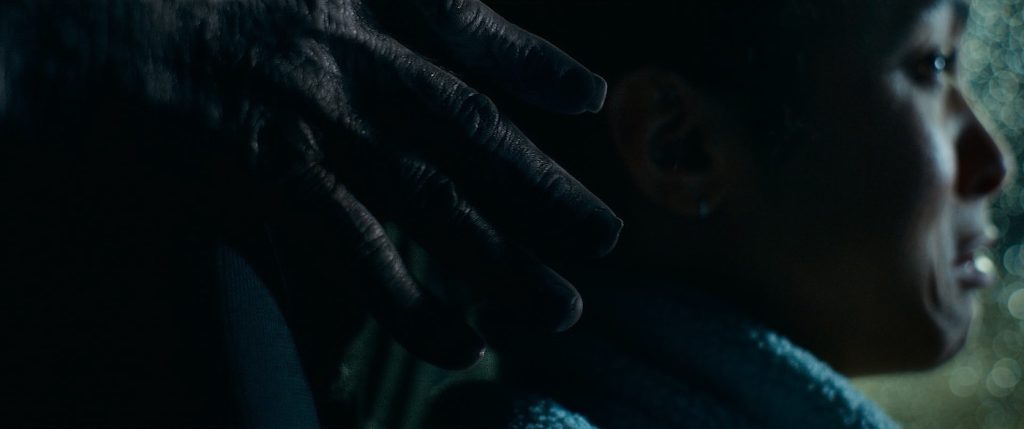
There is also a scene where light emanates from the Passenger’s eyes, which felt very John Carpenter.
Yes, that’s done as a transition from his eyes to the car on the road at night, so it was more of an effects-inspired idea, but it does appear like it’s light in his eyes. I love John Carpenter and that blend of lofty, grand ideas and hardcore horror with no let-up. His movies have influenced my work my whole life.
You shot this in Washington state. Why did you choose that locale?
Passenger isn’t really set in Washington; it’s set across the US, but we looked at a lot of different states to see if we could find one that gave us everything. Washington was an amazing option. I wasn’t consciously aware of how much diversity the state has when it comes to the kinds of worlds it could create. It can be middle America, very casual and grounded, it could do desert or forests, it could do mountains, ocean, rivers, or whatever the hell you wanted. It blew us away.
Washington also has a strong track record in film and TV with supernatural themes. For example, Twin Peaks was filmed there.
There is a diner in the movie, and it’s the same one they used in Twin Peaks. When we were shooting, David Lynch had recently passed away. Just days before we were going to shoot there, there was an enormous amount of floral tributes and so on. By the time we got there to shoot our stuff, it was gone, but standing there, shooting in a prime Twin Peaks location, knowing he had passed away a week or two ago, it felt like we were honoring him and the amazing work he had done.
In a place so well-suited for filmmaking and filmmakers, I’m assuming there is a rich pool of local talent to draw on?
The location offered amazing, beautiful places for us to shoot. The costume crew did great work, even with the seemingly simplest stuff, like how to dress the actors properly for the location. We would be out there at night in minus whatever degrees, so we had to be able to hide serious layers underneath the costumes and build them with that in mind. It was a huge task, and you need local knowledge of the challenges to achieve it.
Did the communities welcome you?
They were very helpful, warm, and welcoming across the board. It was very easy to film and to get permission from people. They were all open to it. Train Dreams was shot there just before us with some of the same crew. I felt like we were special because there aren’t many bigger productions up there. There are a lot of local productions, but they’re smaller, so this was a reasonably big movie to shoot with a lot of people involved.
Justin Raleigh did the physical effects on this, and he has done some incredible work over the years. What did he bring to the table?
He did a wonderful job creating many masks and all the gory details. He really knows how to make things look good on screen when it’s all just made in latex. The attention to detail and the way he made things like Melissa Leo’s head coming off look so realistic was something to behold. We didn’t really have to touch that up in post. That moment is pretty much like it is. There’s just some blood spurting we added in, but otherwise it was all practical.
Christopher Young, the composer, is another figure with a strong legacy in the horror genre. How much did what he brought to the table influence your vision?
We were deliberately temping the movie without his work. After a while, we started using his melodies and grand-scale stuff from various movies he worked on to indicate the scale we wanted. He was an amazing collaborator. Early on, he decided he wanted to suggest that he was going to do something original, something that he had never done before, which I describe as atonality. It’s not as melodic as you’re used to from Chris’ work, but it’s more painful to express the tension. I’ve been a huge fan of his since the mid-80s. I have a pile of his CDs from way before I met him. I’m a fanboy. It was so much fun to see his process and how he would initially provide templates for what the music could be like, not to the image, but just as music. Then we would talk about it and discuss things like, “Could that lean into this scene? Could this be worked into this musical arc here?” There were a lot of fun discussions with him and his team about how the music would be part of the movie.
I’m curious about the church for the film’s finale. Was that a real church that was already there, or something built on site?
We knew we were going to destroy it, so we had to build it. We were looking all around the state for a place that was visually stunning and that the church would find intriguing. Also, in the movie, you enter that space in darkness, so you don’t know or see your surroundings. As a result, when the light comes up at the end, we wanted something grand to be part of the visual language. We found this farm in a little valley that was so perfect, and it naturally felt like the place where the sequence is set. It had to be constructed safely, so we built foundations and even created roads for all the machines to reach the church. It was an enormous undertaking to build that church.
Passenger is in theaters now.
Featured image: Lou Llobell as “Maddie” in Passenger from Paramount Pictures.