“Mortal Kombat II” Screenwriter Jeremy Slater on Johnny Cage, Kitana & the Perfect Finishing Move
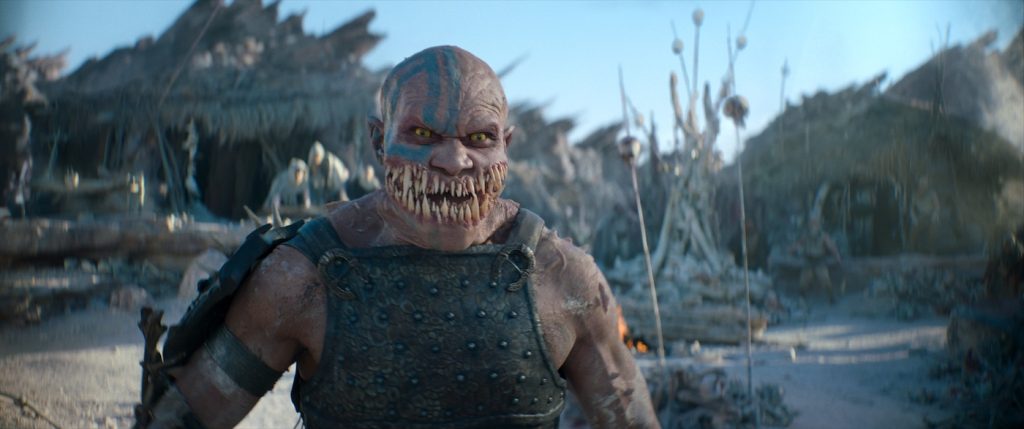
Jeremy Slater is the sole writer on Mortal Kombat II. No small feat for a screenwriter on a piece of major IP, especially considering the previous Mortal Kombat, also directed by Simon McQuoid, was written by two screenwriters (Greg Russo and Dave Callaham) and was based on a story by Oren Uziel. And, the previous Kombat was something of a surprise hit, given that it came out during the pandemic and became HBO Max’s most-watched original film in 2021. The result of Slater’s solo work is an action-fantasy picture that knows exactly what it is and how to handle fan favorites such as Kitana (Adeline Rudolph), Johnny Cage (Karl Urban), Liu Kang (Ludi Lin), and Baraka (CJ Bloomfield).
Slater sought to write a lean action movie that delivered on the goods promised by the property, with Johnny and Kitana serving as “the emotional spine of the movie.” The screenwriter spoke with The Credits about the process of writing a major action film, figuring out which moments were key to the story, and ensuring the final fight had the most epic finish of all.
When you write a movie, how much do you write with applause moments in mind?
My sensibilities are to always build towards those audience moments, where you get a big laugh or a big cheer or a big gasp, that sense of relief. If a Mortal Kombat movie is not delivering on those big moments, then you’re wasting the audience’s time. They want the spectacle. They want the big moments of humor, gore, crazy heroics, and last stands. From the script phase through the editing phase, we were calibrating every fight to say, ‘What are the big moments we want to land for the audience, and how do we pull that off?’
Whether in writing or post, how did you answer that question?
It meant making some tough cuts along the way, but it also resulted in a movie that is streamlined and relentless, I think, in a fun way. There’s no point in going to the concession stand and the bathroom. My wife is always like, “When should I go?” And I’m like, “There’s really no point. You’re going to miss something if you walk out.” That’s the way we designed this thing.
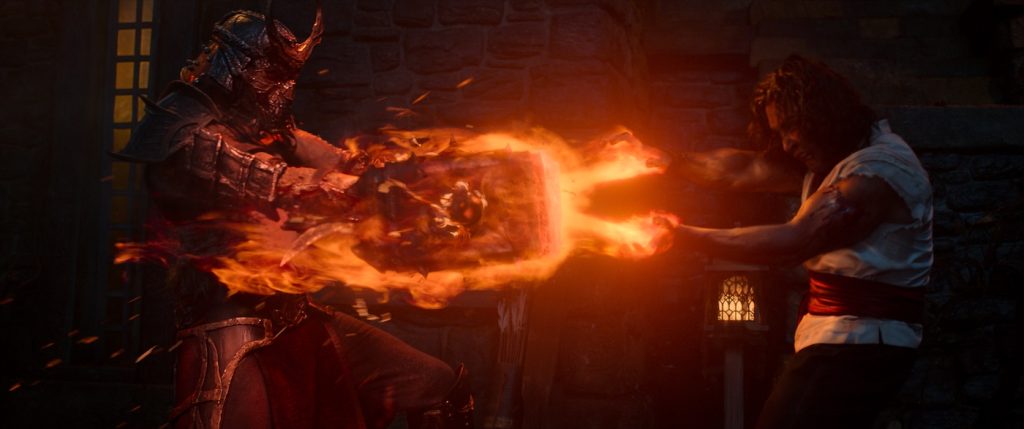
Streamlined, yes, but you do expand the world. The sequel leans into fantasy right from the beginning, with the opening fight between Kitana’s father and Shao Kahn. Was a part of your initial pitch to go more fantastical?
It wasn’t a discussion, but it was something I snuck in there and was constantly testing the limits of how much I could get away with. I am very much a child of the ’80s and early ’90s. I grew up on a steady diet of The Beastmaster, The Last Starfighter, and those movies no one is making anymore. No one is making martial arts movies, and no one is making R-rated fantasy movies. I got to do both of them at the same time. I smuggled as much fantasy stuff as I could in there, and I’m going to continue to do so until someone tells me to knock it off.
Johnny Cage must have really spoken to your diet of ‘80s and ‘90s action movies. Which characters and films inspired your take on Cage?
A lot of Shane Black, John McClane, and Kurt Russell in Big Trouble in Little China. You need that audience surrogate character to stand there and say, “This is ridiculous,” because it gives the audience permission to laugh. It lets them know we are aware that we are telling a story about a bunch of wizards, ninjas, sorcerers, cyborgs, and a movie star – all having a karate tournament for the fate of the universe. Johnny gives the audience that release valve where they say, “It’s okay to embrace this and go on the ride.” We needed someone like Karl Urban who can ground Johnny and make him a real character, but at the same time, we always want the audience laughing with us.
When you write, for example, the first fight between Johnny Cage and Kitana, how do you approach the action on the page? What needs to be expressed in your action lines?
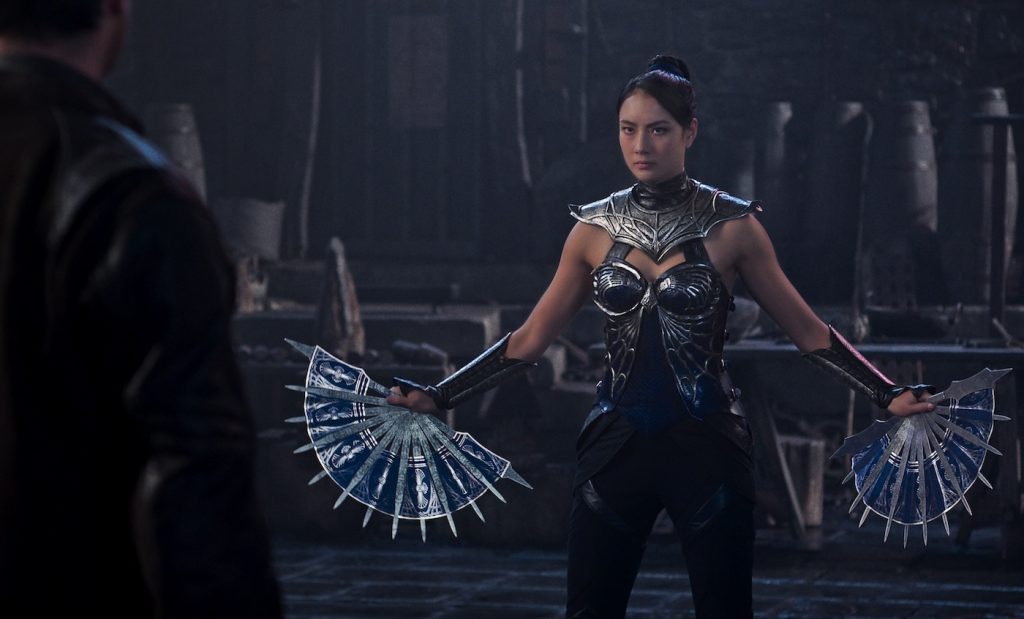
I’m probably writing about three pages’ worth of description for most fights. They’re not direct literal one-to-one transcriptions of what happens because your eyes would glaze over if it’s just, he kicks, he kicks, he kicks, she blocks, she blocks. What you’re doing in those moments is you’re selling them: here’s the story and here’s the tone. This is where the characters start, this is who’s on offense, this is who’s on defense, this is any dialogue they have. This is the moment when the scene turns, and this character realizes, “Oh, I’m in trouble.” And then you pepper through that with all of the best gags that I can come up with. What ways can she use her fan in a creative fashion?
What was the ultimate goal for every fight you wrote for Mortal Kombat II?
First and foremost, what do the characters want to happen? What do they not want to happen at this moment? What are they fighting for? What’s the worst possible thing that could happen? It’s not just about cramming in as many gags and stunts as possible. Really, you look at the difference between Johnny’s fight with Kitana and Johnny’s fight with Baraka, and you’re telling two very different stories in those fights.
[Spoiler alert] Going back to cheer moments, you have an especially good and gory one when Kitana kills Shao Kahn in the final fight. Was that always how Kitana finished him?
Always in the script from the beginning. I don’t remember what fatality that’s from specifically, whether that’s Mortal Kombat X or 9, but when you’re doing a movie like this, you spend a lot of time looking up fatalities. What are Kung Lao’s signature moves? What are Liu Kang’s? Oh, Liu Kang’s got this cool kick. Okay, I know how I could use this spinning flame kick in a scene. The second I saw Kitana use her fans to bisect someone’s head, I’m like, “That’s her finishing move. You’re not going to beat that.”
You had a 140-page draft, which you pared down to 90, but when you were streamlining the story, what were the key essentials of Mortal Kombat II?
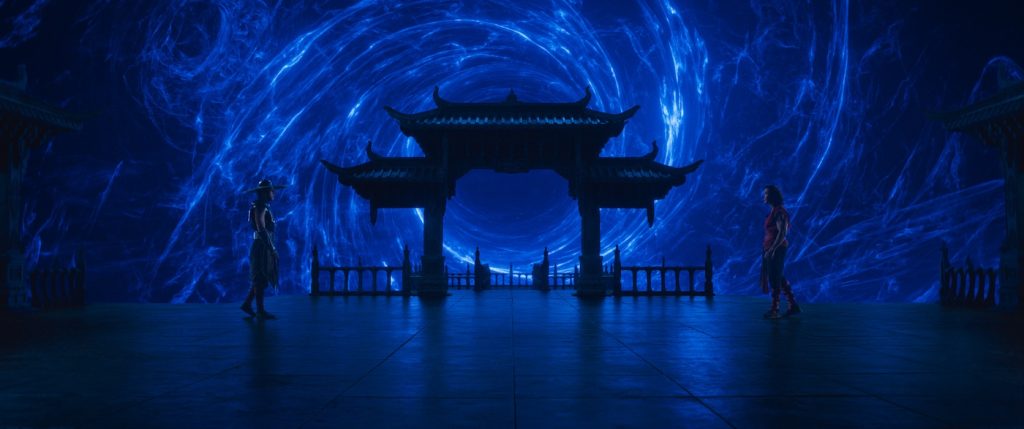
My first draft was probably 140; the version I handed in to the studio was around 126; and the version we ended up shooting was probably 98. It’s because of the budget. We do not have unlimited funds to go shoot everything and then figure out what we want to be in the movie. The reality is that fight scenes are expensive. They’re time-consuming, especially if you want to do them right. You can’t knock out that Liu Kang/Kung Lao blue portal fight in a day of filming. It’s going to be several weeks or months of hard work to get that fight where it needs to be.
Where did the action absolutely need to be?
We decided to put our focus and our efforts on making sure the action delivers. We wanted to make sure you walk out of the movie, regardless of what else you think, saying, wow, they had some great fights in there, and everything else kind of became secondary.
Any darlings you killed that you miss?
There was fun stuff with Shang Tsung, showing that he was probably a puppet master behind the scenes. Shang Tsung is no one’s lackey, so he’s always got a scheme in mind. We saw that Shao Kahn did love Kitana, in his own twisted way. He was this lonely figure who saw the fierceness and the anger inside Kitana. He was like, “That’s why you’re going to succeed me. I need to sand away your emotions so that you can be as ruthless as the job requires.” But I do think we made the right call in choosing to focus our resources on the areas that would be most impactful.
Mortal Kombat II is in theaters now.
Featured image: Caption: Caption: Adeline Rudolph as “Kitana” in New Line Cinema’s “Mortal Kombat II,” a Warner Bros. Pictures release. Photo Credit: Courtesy Warner Bros. Pictures