
“Ghost Elephants”: Werner Herzog’s Quest With Dr. Steve Boyes for Africa’s Most Elusive Herd
When conservation biologist and National Geographic explorer Dr. Steve Boyes met Werner Herzog, he recognized that the legendary filmmaker’s approach to documenting Boyes’ expedition into the remote forests of Angola would be characteristically unorthodox.
Herzog, said Boyes, asked crew members and trackers preparing for the grueling journey, “What would a world be like without elephants?”
“Then he started to talk about dreams, the nature of our dreams, unrelated to what we were preparing [for] in Angola,” said Boyes. “He’s pushing us into a different mode of thinking. There is an intensity and an interaction that he is cultivating. He is 82 years old, and he’s crouched with a camera—you feel the intensity start to build.”
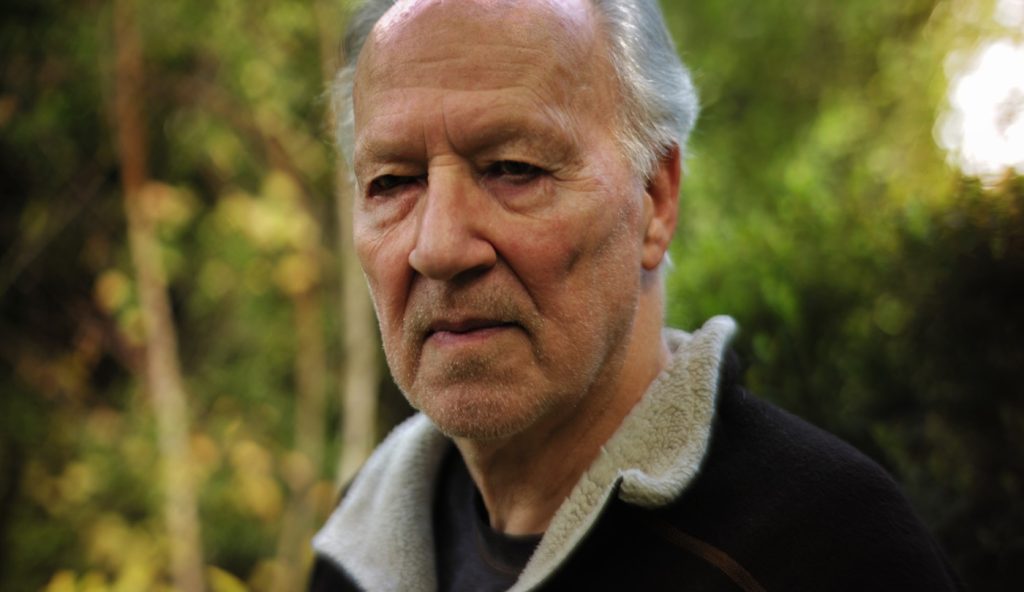
That intensity makes Ghost Elephants, distributed by National Geographic Documentary Films and streaming March 8 on Disney+ and Hulu, more than a nature film. It transports viewers into an otherworldly realm as Boyes continues his decade-long quest to track elephants so elusive and so remote that some believe them to be mythic.
Directed, narrated, and written by Herzog, Ghost Elephants follows Boyes and his team, including three KhoiSan master trackers, on their epic journey via canoe, motorbike, and on foot deep into the forests of Angola.
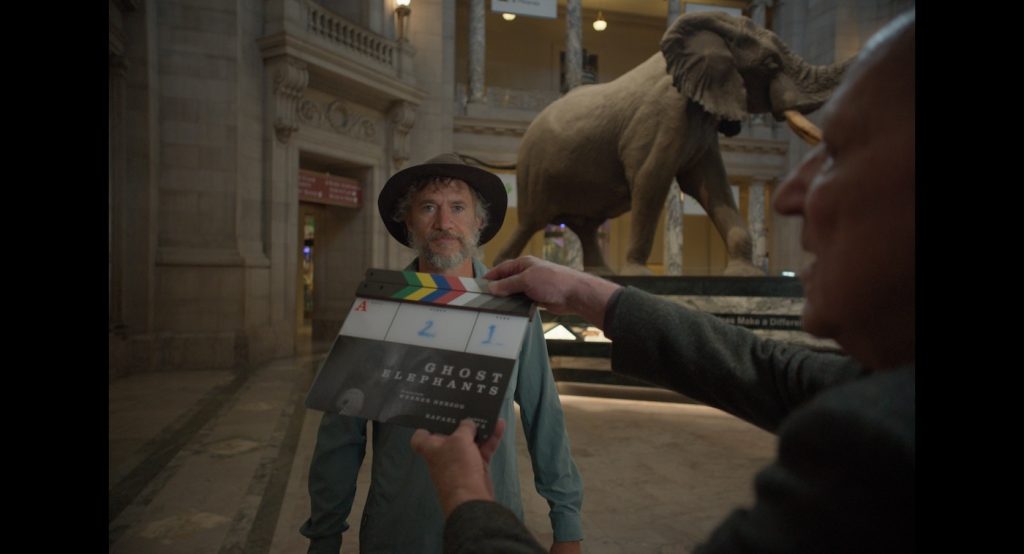
Ghost Elephants opens with Boyes at the Smithsonian Institution, which holds the remains of the largest elephant ever recorded. Nicknamed Henry, this massive animal was killed in Angola in 1955 by the Hungarian hunter Josef J. Fénykövi. Boyes believes Henry’s descendants live in the remote Angolan highlands and wants to establish a genetic link.
But just spotting them, let alone obtaining genetic evidence, is no small feat. “That forest is alive in footprints, not elephants,” said Boyes. Remote cameras and microphones installed in the wild help provide eyes and ears. But it’s the trackers—Xui, Xui Dawid, and Kobus—who are refugees from Angola’s war-torn past, marginalized in southern Africa, and who possess the ancestral knowledge and instincts to do what science cannot.
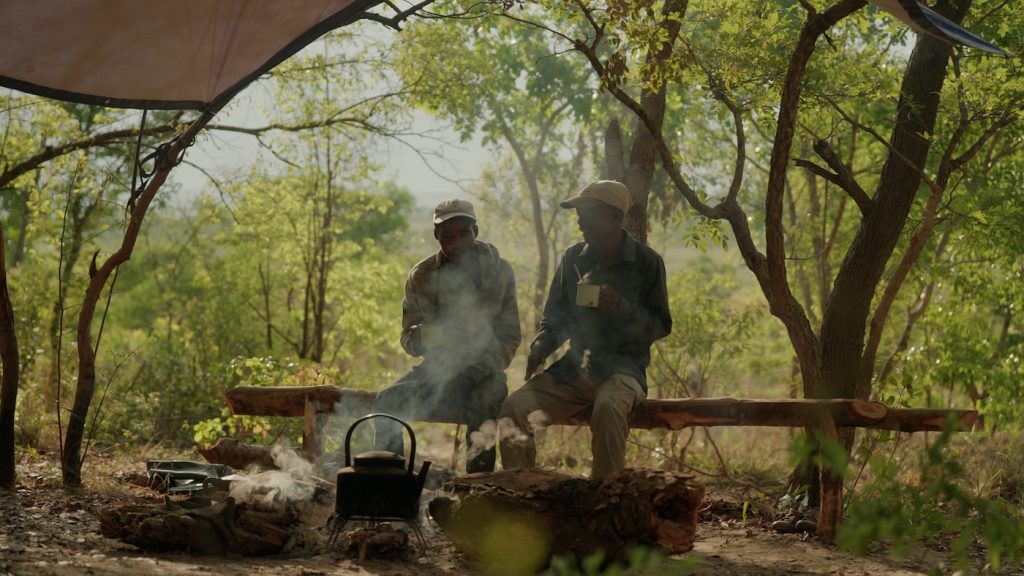
“Xui’s interaction with a footprint is the same as ours with a human face,” said Boyes. “Within three weeks in the valleys, he knows every elephant even though he’s never seen one. It’s just astonishing, the depth of connection to everything around him. I am focused on the tracks; he is looking at everything else for context, the whole time, computing so many variables. We measure things as scientists and tell the stories. He does the same, but it’s way beyond what science can do, no matter how good.”
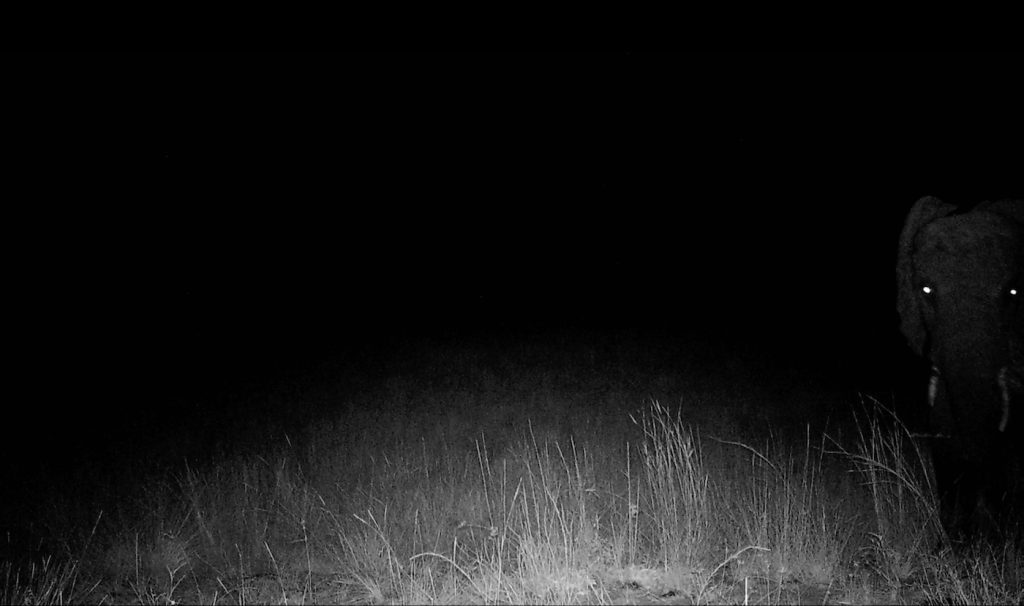
Shortly after meeting Herzog, Boyes was driving in Cape Town when he received a message from his fellow scientist and explorer, Kerllen Costa. It contained photographs of “elephants, with eyes glowing,” said Boyes. “I had to pull off the road. [Costa] had just pulled the cards from the 180 motion-sensing cameras we had out there, with 100 microphones. We’d been listening for seven years and nothing. We photographed every other animal, but not elephants. Now we get these pictures. I told Werner, and he could see in me that now this person is going to repurpose everything he’s doing and go live in those valleys.”
That single-minded pursuit is what makes Ghost Elephants fit within Herzog’s rich filmography of dreamlike, near-mythic portraits of obsession and humans interacting with nature, including Fitzcarraldo (1982), Grizzly Man (2005), and Cave of Forgotten Dreams (2010).
“We went off into Angola for three months searching. It is the most extraordinary place on earth, and I have been everywhere,” said Boyes, who’d just returned from the mouth of the Nile. “I’ve never experienced a place like those valleys.” The film documents the extraordinary difficulty of reaching the remote areas where the elephants might be, with the crew wading through rivers carrying gear, cameras, and motorbikes.
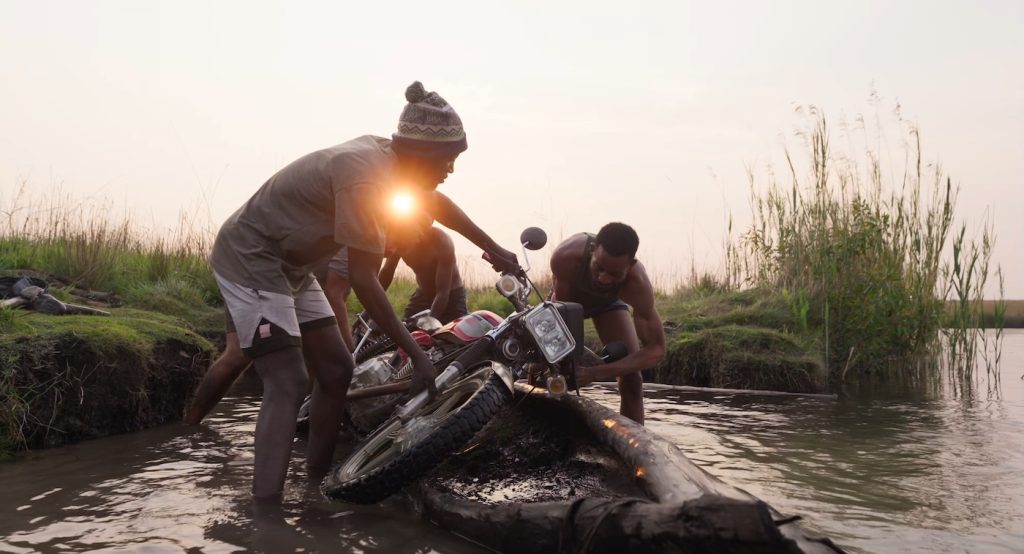
“It is a form of torture to spend eight hours on a bike. Canoes are made out of bark; when we explored in 2018, we encountered a crocodile that was 18 feet across the hull of the boat,” said Boyes. In the documentary, the trackers try to assure him that crocodiles only come out at night. But Boyes disagrees. “I’ve seen one the size of an SUV,” he said.
The trek into the forest is so arduous that Boyes was able to dispel Herzog’s concerns that adventure-seekers might attempt it after seeing Ghost Elephants.
“The truth is that even if you went by helicopter, you’d need someone on the ground to refuel. It’s so far away from anything, including an airport fueling station,” said Boyes. “I spent a huge amount of time in those valleys, and the only experience you are going to get with those elephants is an indirect one. The females, the breeding herds, the matriarchs — they are the ones that never left the valleys. The bulls come in and out. The one [glimpsed] in the film is strange,” Boyes said, citing dung samples that reveal this particular elephant eats a different diet and lives at a different altitude. “The true ghosts are the matriarchs, the old mums.”
In the end, Boyes hopes Ghost Elephants helps increase awareness, education, and support for ongoing conservation efforts. Angola lost between 50,000 and 100,000 elephants during the 27-year civil war. Our work is that we look at genetics to see where corridors exist — we’d love to see elephants moving back into Angola,” he said. “There were 10 million elephants in 1900 across Africa. We have fewer than 400,000 remaining. It used to be they were all connected; now it’s disjointed. Maybe we’ll be able to re-make connections.”
Ghost Elephants airs on NatGeo on March 7 and streams on Disney+ and Hulu on March 8.
Featured image: The first photo of a ghost elephant captured by a motion-controlled camera. The eyes glow in this night shot. (Credit: Courtesy of The Wilderness Project Archive)