
“The Bride!” Prosthetics Wizards Jason Collins and Scott Stoddard on Turning Christian Bale into Frankenstein
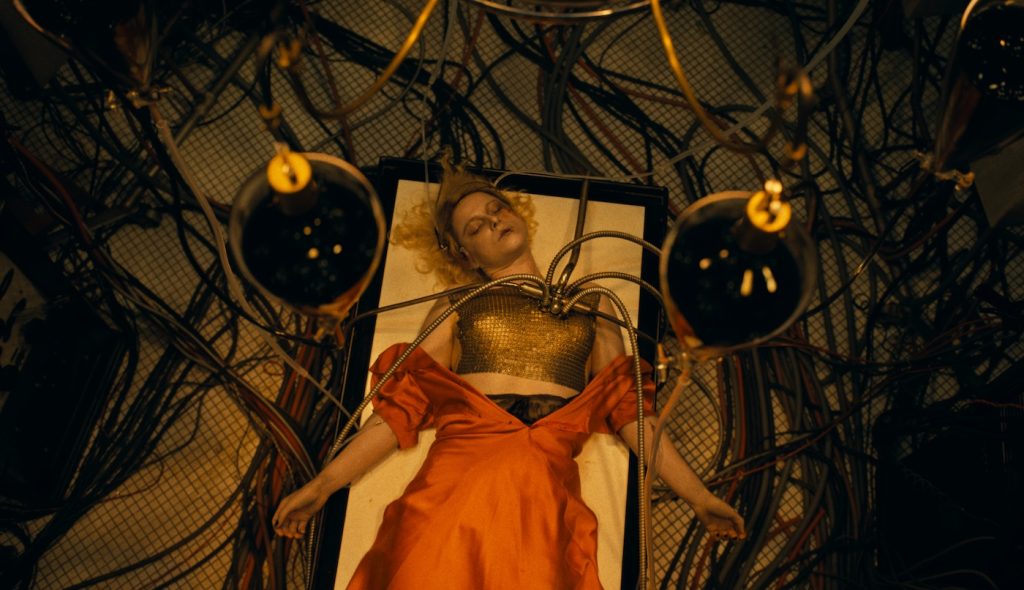
The Bride! (now in theaters) reanimates Frankenstein for another cinematic go-round in which he partners with Jessie Buckley’s title character, a dead party girl possessed by the spirit of Mary Shelley who’s brought back to life after Dr. Euphronius (Annette Bening) and Frank (Christian Bale) dig her up from a pauper’s grave. Together, Ida the Bride and Frank go to movies, kill bad guys, and dance their way through a crime spree stretching from Depression-era Chicago to New York.
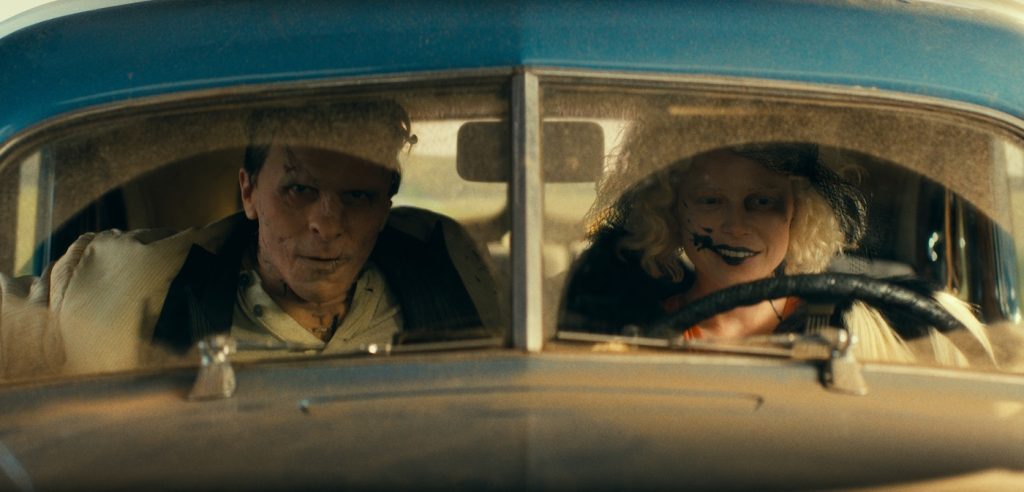
Buckley’s shock-blonde Bride sports a splotch of black vomit on her cheek, while Frank’s mangled face pushes iconic Frankenstein imagery to finely detailed extremes. To transform Bale into the iconic creature, writer-director Maggie Gyllenhaal enlisted Emmy winners Jason Collins and Scott Stoddard, whose collective credits include Pam & Tommy, The Mandalorian, and Weapons. “We didn’t want to go super monster-y,” says Special Effects Co-Designer and Applicator Stoddard. “We wanted it to feel like Frank’s living with what he has, as weird as it looks, and yet he’s still got this aura where you feel for him as a character.”
Special Makeup Effects Prosthetic Fabrication Supervisor Collins, speaking from his Autonomous F/X company in Los Angeles, joined Stoddard to talk about chewed-off ears, broken noses, and the challenges of designing a monster in California while filming him in New York.
The Bride! is more than just a fun monster movie; it’s also a ripping feminist allegory. What was your reaction when you saw it in its finished form?
Scott: It was exciting from beginning to end. There was no dead space in there—no pun intended. I think it’s fantastic how Maggie framed it all in terms of the feminist aspect. She snuck in a lot more than a normal horror film.
What was Maggie Gyllenhaal’s creative brief for what she wanted to see in Frank’s face and body?
Scott: From the get-go, Maggie said we never wanted to lose Christian or bury him in prosthetics. As we know from watching his beautiful performances in the past, covering him up and making Christian Bale somebody else wouldn’t have worked for her storytelling. There were so many layers that we could peel back.
For example?
Scott: At the start of the film, you see the back of Frank’s head with all these staples in the back of his neck going up into his hairline. Then you see a bit of his ear sticking out.
Jason: A little backstory there. We figured he was asleep in an alley when a rat started chewing behind his ear and took out a chunk of it.
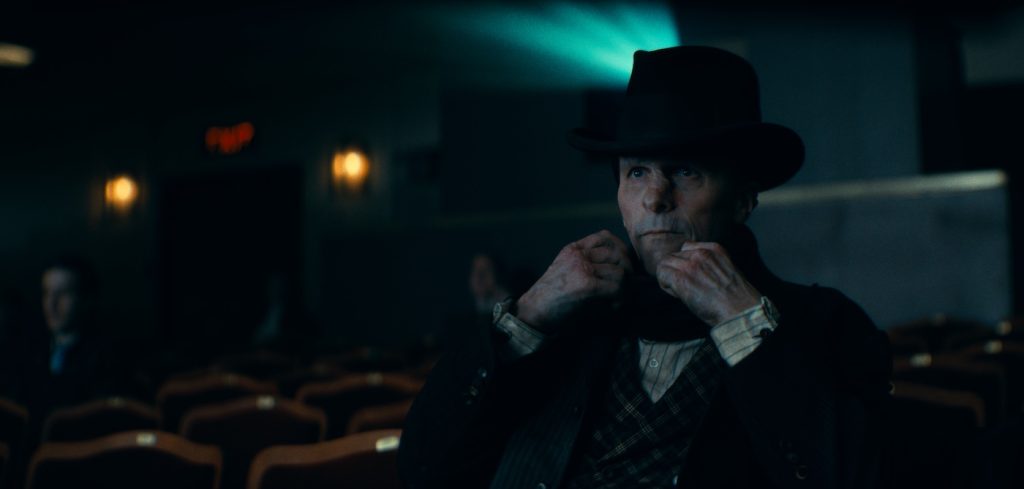
Scott: Then you see Frank’s brow and the bridge of his nose. Then he takes off his scarf and unveils himself, so you see more and more layers.
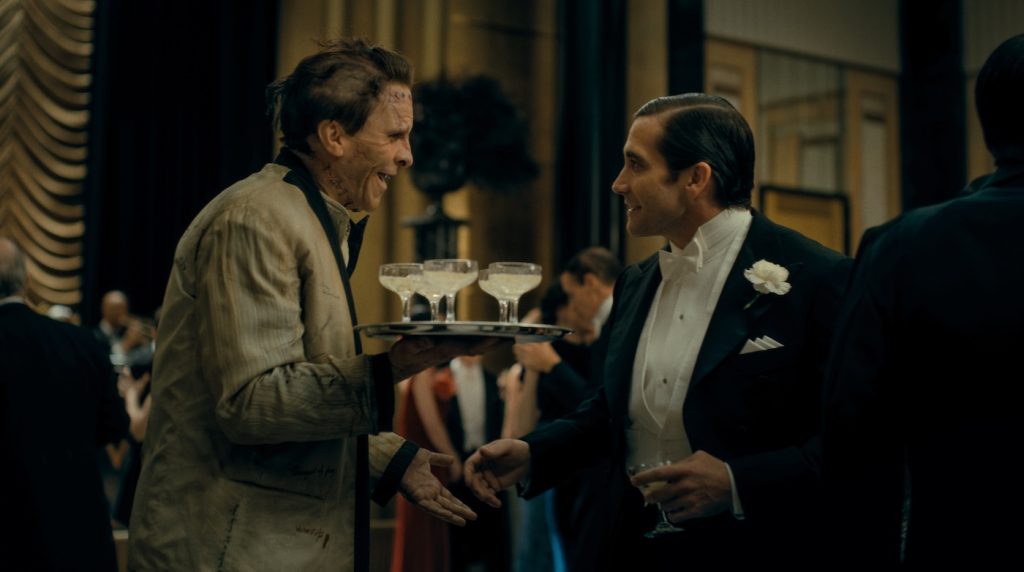
Jason: We needed to show the trauma that he’s been through over the years. The motivation for the nose going up into the forehead came from the fact that during World War I, a lot of soldiers got grafts done after portions of their skin and skull were blown away. Leaning into those elements, we wanted to evoke past turmoil and torture in this creature while also getting at the heart of the story, which is really about loneliness, humanity, and connection. I see Frank as being almost like a wounded animal running from something that terrifies him, and he’s wearing the war wounds.
Frankenstein’s stitched-up forehead has become iconic, featured in dozens of movies. Did Maggie have you look at specific films as a reference point?
Scott: No. Maggie told us she wanted it to be real, so we referenced a lot of medical information. There are different types of brackets [on Frank’s forehead]. Some are made of brass or copper, and some are just thatched twine, where Frank lost some brackets and decided to sew himself back up to keep his face together. There are also brackets that go down the trachea and suture lines from where his head was put onto the neck. And we decided that at one point, he had a badly broken nose that would have exposed the bone, so doctors decided to sew the skin back over and let it regenerate and grow.
All these silicone prosthetics had to be applied fresh on Christian every day. How did you make hundreds of separate pieces that match perfectly over the course of a 60-day shoot?
Collins: We used master molds to reproduce those appliances in silicone here in L.A. Then we would do weekly shipments to New York. We had about nine molds to run?
Scott: For the face, it was eleven prosthetic applications, and then the hands were another four. It’s a lot of pieces per day to put on.
How long would that take?
Scott: We were able to streamline it to about 2.5 to 3 hours each day, and then Lori Guidroz would spend another hour on top of that to do Christian’s wigs and cut his hair. He was incredibly patient, sometimes doing crossword puzzles with Lori to pass the time, because he knows that this is what we’ve got to do.
So Christian goes to The Bride! set wearing all these prosthetics, then comes back to Steiner Studios in Brooklyn, where you’ve set up the make-up rooms. What happens then?
Scott: At the end of the day, we would save the appliances—the dome, the face pieces, the neck—and give them to Kerrin Jackson to use as maps or guidelines so she could pre-paint appliances for the next day.
Before you even got to New York, how did you go about designing these looks?
Scott: We initially started doing a sculpture on a quarter-scale body from a scan of Christian that Jason did at his shop. From that 3D element, we blocked out the clay. Then Jason and his team created digital designs to make a color representation on Christian.
enJason: Yeah, in the beginning, it was all of us here in L.A., building everything, going over designs with Maggie, doing test makeup. Then we did an additional couple of test days in New York, which I flew out for, to make sure there was continuity in the overall design and quality being delivered to set on a daily basis. When a character’s involved in nearly every day of shooting, it takes a village to do this stuff.
The “dome” is freaky enough as it is, but then you reveal Frank’s torn up torso midway through the film during his love sequence with Ida, the Bride, and it’s quite a shock. How did you piece his body together?
Jason: We did a big chest piece on the front, a big back piece, separate pieces on the arms, different types of scars, and pieces of skin that were not healed under the armpits. And Christian wanted his shoulders to be askew for an off-kilter look, with boned-out shoulders, so we put appliances on his shoulders to fill out the costume.
Frank’s imperfect in every way, which kind of makes him seem vulnerable?
Jason: In the design process, Maggie kept pulling us back to intimacy, making the character less monstrous and more Christian. That’s why we didn’t go with a [prosthetic] suit. It wouldn’t feel as tactile as human skin; it’s not gonna move like human skin. In the love scenes, when you see these things, you want them to be horrific from the trauma that he went through. But to another extent, you want to feel for Frank, because there’s a lot of damage that’s been done to him.
Jason, your company is based in Los Angeles’ Van Nuys neighborhood, and Scott, you work there and live nearby. Were you guys mindful of the impact a movie of this scale has on the local filmmaking communities, both in L.A. and in New York?
Jason: For sure. If you’re shooting a film in LA, you have your team here, and it’s not a big deal. But when you work in New York, you have to transplant your lead artists. We brought Kerrin Jackson for the pre-painting, and Robert Pritchard, who was a co-applicator with Scott, and Lori Guidroz, who does Christian’s hair. But we still had to source local New York talent like [special effects make-up artist] Stella Sensel, who was invaluable because she knows the lay of the land and suppliers. And of course, when you need additional help, New York artists know everybody.
Where did you film in New York?
Scott: We shot some stuff on stages at Steiner, but we also traveled to a lot of locations. We went to Newark, New Jersey. We went to a bunch of different places on the Upper West Side, a couple of places right over the bridge in Brooklyn. In New York, it’s not like L.A., where there are empty parking lots everywhere. You’ve got to use the streets, and sometimes you have to squeeze in smaller trailers, like when Maggie and Christian shared a little two-by-two honey wagon trailer.
Working with Christian Bale must have been a trip.
Jason: You can’t say enough good things about actors like Christian who embrace the craft of makeup as something that helps their character. Christian doesn’t see [prosthetics] as a roadblock or a handicap. He sees it as a tool that will enhance what he does.
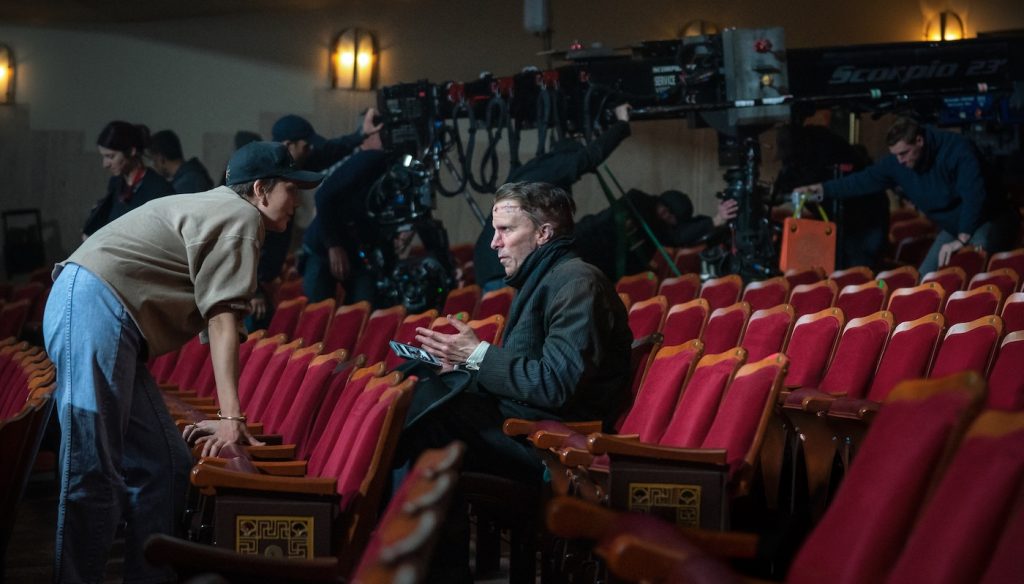
Featured image: Caption: (L to r) Jessie Buckley, Christian Bale and director Maggie Gyllenhaal on the set of Warner Bros. Pictures THE BRIDE! Photo Credit: Courtesy of Warner Bros. Pictures