
Oscar-Nominated “Sentimental Value” Editor Olivier Bugge Coutté Breaks Down the Film’s Most Devastating Scenes
With nine Oscar nominations — including four acting nods and one for Danish editor Olivier Bugge Coutté – Joachim Trier’s Norwegian-English feature has had an amazing awards season thus far. Most recently winning the international film prize at the BAFTA Awards, Sentimental Value is Coutté’s sixth collaboration with the Danish-Norwegian director, most recently working together on 2021’s romantic dramedy The Worst Person in the World (which also stars Renate Reinsve from Presumed Innocent). After decades of friendship and collaboration, the shorthand they have established translates well onto the screen. “We’re friends who have known each other for 30 years, and our families know each other. So, it’s very natural. I’m super happy and honored that he still lives in the illusion that I’m the only one who can edit his films. [Laughs] We have the same interest in films and how to make them,” Coutté remarks, adding that: “We’re interested in very stylistic films that are also strong dramas. We share the same playfulness with structure and narrative perspectives. It’s like playing in a band — I play with different musicians, but when I come back to this band, I know exactly what kind of music we’re playing.”
Exploring themes of abandonment, grief, and healing, the quietly powerful family drama spotlights generational trauma that many families have suffered in silence. Struggling with crippling anxiety, stage actress Nora (Oscar nominee Reinsve) still harbors bitterness against her estranged father and narcissistic film director, Gustav Borg (Stellan Skarsgård from Dune and Andor, also nominated for his first Oscar), for abandoning the family after divorcing her mother. On the other hand, her younger sister, Agnes (Oscar nominee Inga Ibsdotter Lilleaas), has found productive ways to deal with the trauma. The film begins after their mother’s death, when the sisters are forced to deal with Gustav, who returns for the funeral and takes over the family home (which he still owns) to shoot his next movie. In an effort to breathe life into his fading career, he offers Nora the lead role. But when she refuses it outright, he changes the project into an English-language film so that American actress Rachel Kemp (Elle Fanning), could inhabit the same role.
One of the film’s most distinct elements is how it weaves the bilingual element in Gustav’s film-within-a-film into the cathartic climactic scene (get your tissues ready, people!). [Spoiler warning] When Rachel reads the screenplay in English early on, it is very moving but different compared to when Nora reads the same portion in Norwegian later, when she realizes that her father’s script was about her all along. It was Gustav’s circuitous way of telling her that he understands the emotional knot that has held her hostage ever since he left the family in shambles. Joachim’s delicate approach beautifully highlights that translations, no matter how superb, may not always capture the full extent of particular emotions and sentiments that are most acutely expressed in the original language.
Days after scoring his first Oscar nod, Coutté spoke to The Credits about painstakingly crafting the emotional scaffolding of the Borg family’s trauma in Sentimental Value.
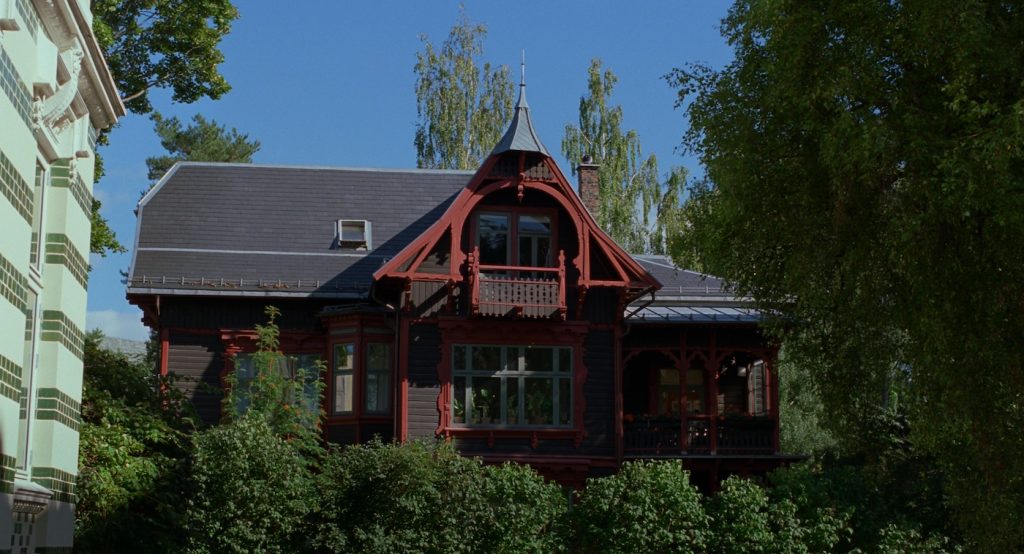
The Borg family home is a stunning Dragestil (or “dragon style”), which is crucial to the story. As Nora describes in the opening sequence, she thinks the house absorbs the joys and agonies from generations of Borgs who have lived there.
Voiceover-driven montages are a signature of Joachim’s films. In some, it is an untrustworthy narrator who switches halfway through and tells a different story. But sometimes, they’re just a poetic voiceover. In this one, Nora talks about her school assignment, describing the world as she saw it as a child and how people have moved around in that house through generations. But what she’s actually talking about is, exactly as you say, the breakdown of her family and the pain that has been inherited through generations, including how Gustav’s mother’s suicide has shaped his life.
There is a beautiful montage in which the faces of Gustav, Nora, and Anges morph into one another repeatedly as they rotate. Was that in the script?
No. The cinematographer Kasper Tuxen is super creative – he also plays music, draws, and paints. He did the same thing for The Worst Person in the World, but we couldn’t find a place for it. The whole thing is done in-camera — it’s not a trick. The actor sits in a chair while the lights are moved around, and Kasper shoots the camera, rewinds the film, exposes the same shot over it, then rewinds again for the next actor. So, everything is done in-camera. It’s amazing. Structure-wise, it’s a heightened, poetic moment that comes before a turning point, when everything has to change. The conflict is now out in the open and the final cards need to be played. Maybe it’s a warning, or a conclusion, maybe it’s a lyrical abstraction, but it’s very impactful. I wish I could take the credit for that, but I can’t.
[Spoiler warning] My favorite part is the bilingual element in Gustav’s script. What was it like to cut both Rachel and Nora’s scenes as they read through the same lines in Gustav’s script in English and Norwegian, respectively? What were you trying to mirror or contrast between their performances?
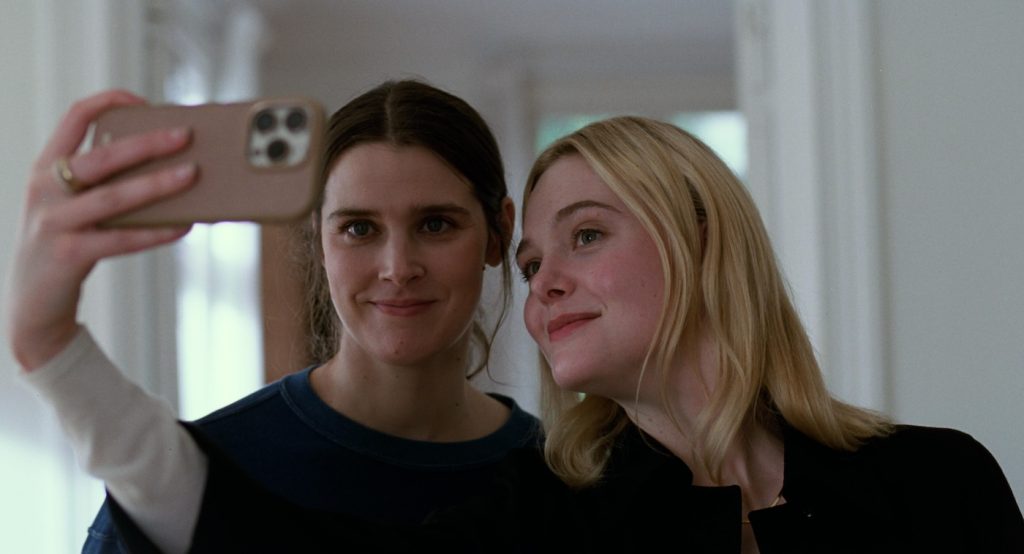
It’s an interesting scene. Rachel is extremely skilled but comes to the wrong project. When she reads it, you can see that she’s a really good actress and can bring out the emotions. But it’s a technical role for her, maybe that’s why her performance is a bit extroverted, even though she feels it. But it’s completely different when Nora reads it because she recalls her own feelings or experiences, since the script is actually about her, or at least a character with elements of herself. So, the pain becomes more internalized. It hits her on a personal level, whereas it doesn’t hit Rachel the same way. Both performances are amazing, I’m so happy that they are nominated because both parts are really difficult.
What were you aiming to emphasize in Rachel’s performance versus Nora’s? Did you have to tackle it differently?
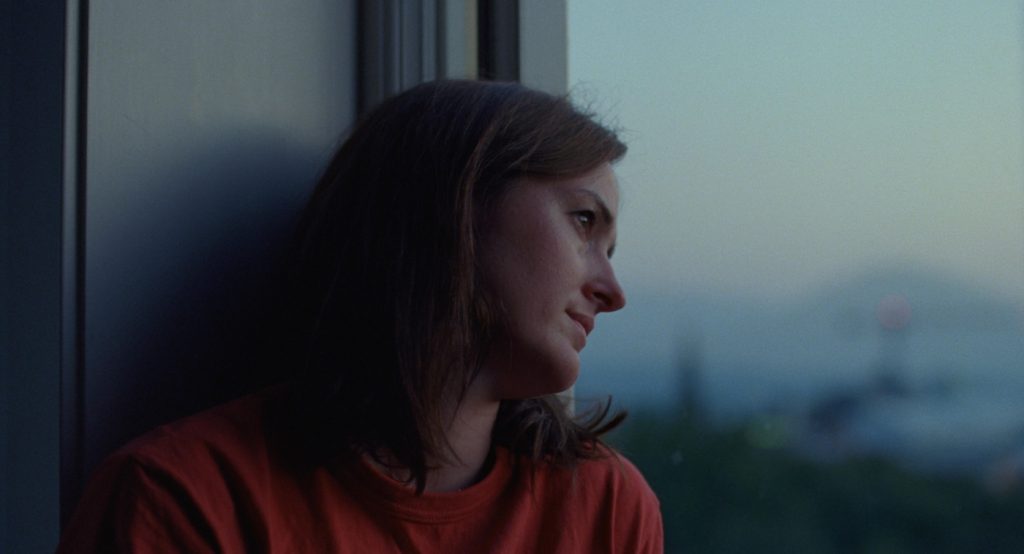
Not really, since I know what they’re trying to do. Joachim doesn’t do a lot of takes, maybe three or four takes, but he does a lot of angles. For Nora, there was a tracking shot from the side to capture the moment when she understands the script is about her. When she starts to break down, the camera moves all the way in. But that became too much of a visual, so I didn’t use it. It was beautiful, but would have been weird with that tracking from the side and then cut to Agnes in front of her [Nora]. It was much more intimate to stay with the two women. It was only two takes — one on Nora and another on Agnes. For Rachel’s part, it’s more fluid because it’s not internalized pain for her.
When Nora finally understands that Gustav’s script is actually about her, it’s very cathartic and gut-wrenching when the sisters hug each other and cry. Did that require many takes, which you had to piece together?
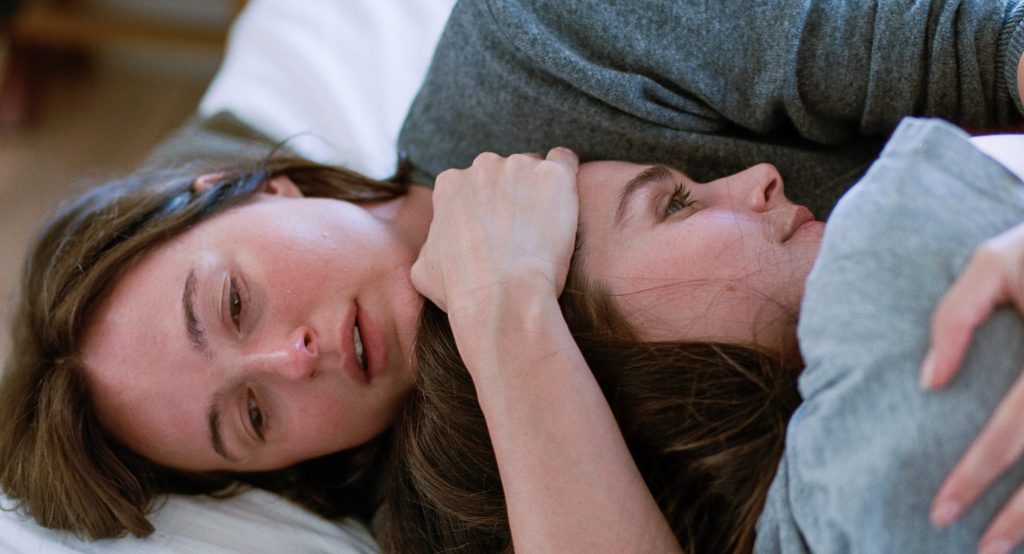
It was a much longer sequence. Joachim doesn’t believe in improvisation when it comes to big dramatic choices, and I don’t either. You can improvise up to a point, but if you improvise the whole scene, it often becomes chaos. So, Joachim lets the actors move around the text; some words are improvised here and there. Joachim brought them to that point of letting go and then playing with very different tones. You have to look at everything several times. Some of the words that don’t seem interesting the first time you watch it suddenly mean something completely different when you have the whole structure of the film and the character you’re working with. There are some improvisations, like when Agnes hugs Nora and says, ‘I love you, and then Nora replies, ‘I love you too.’ That was the only take out of several hours where they said that at the end.
Do you also speak Norwegian?
I’m Danish and don’t speak Norwegian, but I can understand it because Norwegian, Swedish, and Danish are very similar
Since the emotional catharsis hinges in part on language, I just want to confirm: Stellan is Swedish, but he plays Gustav in Norwegian?
No, he speaks Swedish in the film. That’s why we have this bit to explain why: Gustav’s father was Swedish and his mother was Norwegian, and after she committed suicide, the father moved back to Sweden, which is why Gustav grew up in Sweden and speaks Swedish. At the end of the day, it’s going to be subtitled, and most people won’t know the difference anyway.
So, Gustav speaks to Nora and Agnes in Swedish, but they reply in Norwegian?
That’s right. That’s how Joachim speaks to his father, who is Danish and speaks Danish to him, and Joachim talks to him in Norwegian.
[Spoiler warning] That’s so interesting! For the final sequence on the soundstage, it takes a few moments before we realize that Nora is playing a scene in Gustav’s movie. Until the camera pulls back, we might assume she is about to commit suicide.
We’ve seen part of it [in a flashback] when Gustav’s mother committed suicide. I feel emotional when I see it, even though I know it’s Gustav’s film-within-a-film. Nora is playing [a role], and her nephew plays her son (paralleling young Gustav), but still, I get very emotional. I’m like, ‘No, no, don’t go behind that door. Please stop. Don’t kill yourself.’ Originally, Gustav gives stage direction to Nora and the kid in this scene. But that took away a lot of the emotionality because it became very technical. When we took away his [stage] direction, that scene is painful to watch.
What was one of the most challenging aspects for you on this film?
The biggest challenge was balancing the four characters against each other. Since this is a multi-character play, when you add one character, you’re taking away from another. At some point, you can’t keep on investing in all of them — that’s the most complicated part in a psychological drama like this. Every scene, every take, every word, has to be examined on a micro level. What happens if we have the same scene but take away the last word? Where does that take us? It’s millimeter by millimeter by millimeter. It’s like you have a big, raw diamond with no shape, and you just polish it and polish it until you end up with a small, perfect diamond.
Sentimental Value is playing in select theaters for a post-nomination run and is available on PVOD.
Featured image: Stellan Skarsgård and Renate Reinsve in Sentimental Value. Courtesy Neon.