Diablo Cody Explores Female Rage, Late-Stage Capitalism, and Cult Legacies in “Forbidden Fruits”
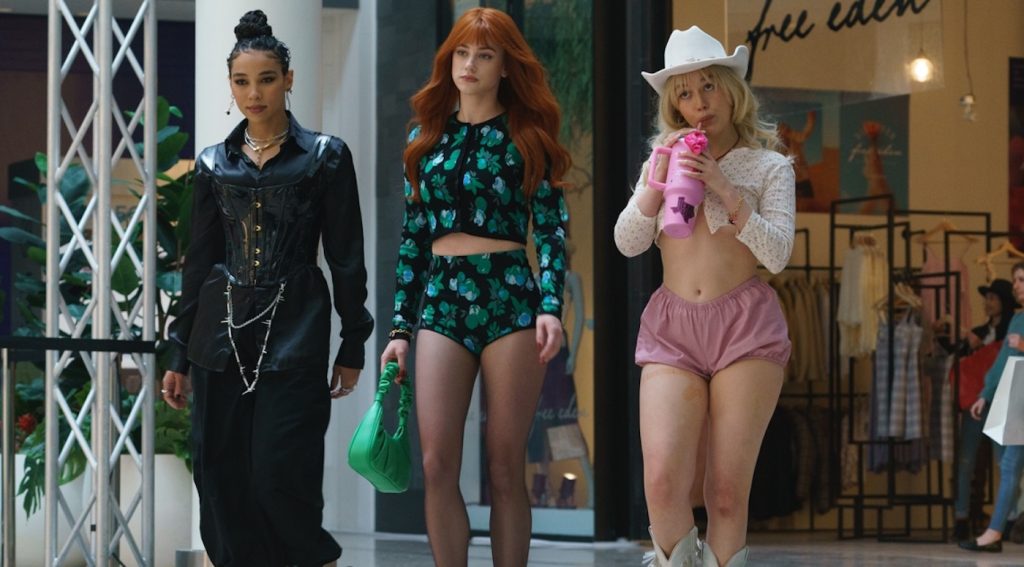
Diablo Cody has spent her career writing women who are too loud, too angry, too horny, too funny, and often far more honest than pop culture has often known what to do with. From Lisa Frankenstein to Tully to Jennifer’s Body and Juno, her work has examined the messy power dynamics of girlhood and desire long before the culture caught up. With Forbidden Fruits, a razor-edged horror-comedy set inside a mall and fueled by toxic female friendship, Cody finds herself working in a moment finally primed for what she’s been saying all along.
In conversation with The Credits, she reflects on being “ahead of her time,” the healing after Jennifer’s Body’s critical reversal, the enduring pull of queer subtext, and why the mall remains both a temple and a hell for young women.
Many of your films center on women. What drew you to this particular script?
This felt like a no-brainer to me. Even before I heard the pitch, I was informed of what the basic concept was going to be, and I was like, ‘A coven in a mall! Toxic female friendships!’ I already had a feeling that it might be up my alley. And then, when I heard Meredith and Lily’s pitch, I was immediately enthusiastic and just thought, “I see the vision.” And this is the kind of thing that I like to attach my name to. I like to be involved in projects like this. And it’s also — for many years, it was a struggle to get projects like this made and seen. And now I feel like we’re in a different zeitgeist, and so, it’s very rewarding to know that there is a place in culture for a movie like Forbidden Fruits, because I don’t know if that was the case 20 years ago.
It does feel like a lot of your movies, like Jennifer’s Body, were ahead of their time. Whereas now, people are calling them a cult classic.
That’s been really, honestly, astonishing. I was not expecting that to happen. That movie was such a painful memory for me for so long because it was just savaged by critics when it came out. It flopped. I mean, everything that could have gone wrong with Jennifer’s Body did until, you know, it was discovered by this new generation of viewers, and so that’s been very healing.
I wanted to talk about the queer subtext in a lot of your films, including Forbidden Fruits. Is that something that, within your creative process, you go into thinking, ‘I want this to be part of the film.’ Or does it just happen naturally?
It just kind of finds its way in. I would say, with the exception of the Jennifer’s Body sequel that I’m working on right now. I really made a conscious choice to have a lot of queer characters in that movie to salute our audience. But typically, no, it’s really just an organic thing. I mean, the writing process for me … I find that those themes tend to just kind of weave their way in. It’s almost like a mystical process for me. So there’s very little that happens that’s calculated.
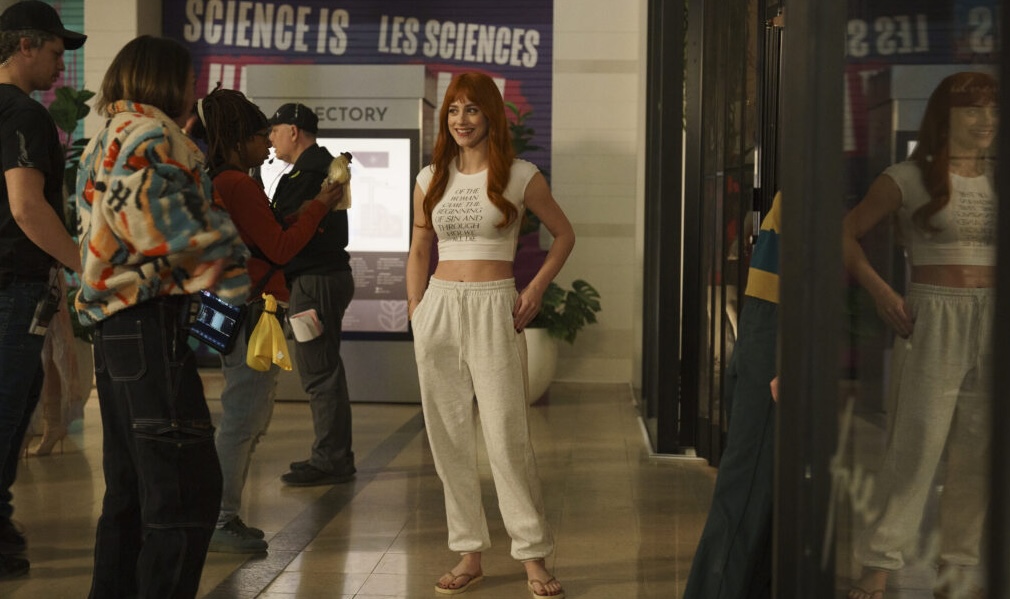
I saw that Forbidden Fruits was filmed in the same mall as Mean Girls.
I know—that was serendipitous. It’s so cool. I mean, even the, you know, the fountain for Mean Girls is gone now, but we rebuilt the fountain for Forbidden Fruits. So, yeah, there was definitely the spirit of Mean Girls among us.
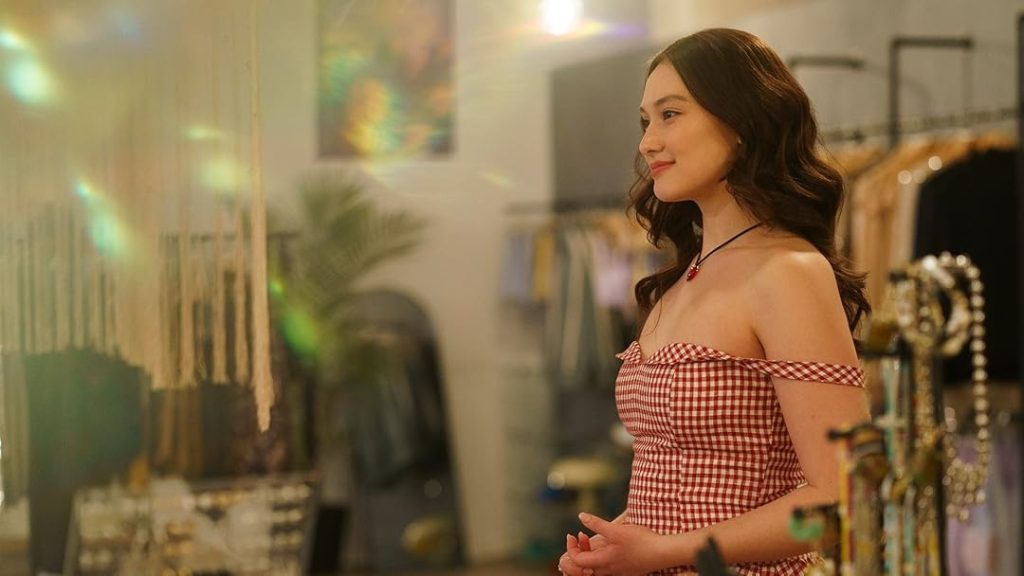
Can you talk about what the mall setting means for the film’s overall theme and how these girls are essentially trapped in their own reality?
I mean, the movie is about late-stage capitalism in a lot of ways, and the ways that — I think now more than ever, people connect through their possessions, which is strange, I guess I can blame social media for that one. And Gen Z, I think, is more fixated on aesthetics than any prior generation — at least in my observation, I’m sure somebody could prove me wrong. But yeah, the mall feels like an appropriate place for all this to go down, and also, just like the very intimate, heightened, charged setting of a dressing room. I love that they have those confessional moments in the mirror. I grew up going to the mall, and I feel like some of my most vulnerable self-hating moments went down in the back of mall stores. And so it’s kind of a temple and a hell for young women.
There were a lot of different themes in this film: female rage, toxic female friendships, late-stage capitalism — like you mentioned — what were the initial conversations like on the production end of what the end result message was going to be?
Well, I think, you know, this movie was based on a beautiful play that was written by Lily Houghton, and she had a very clear vision for what this movie needed to be both tonally and thematically. The question was whether they could pull it off. Because this is a very tricky tightrope to walk. When you have comedy elements, when you have horror elements, and you’re talking about feminism. But they pulled it off. But in terms of what we wanted it to be about, I mean, that’s the fun thing about making a movie like this—that’s a little bit offbeat. You’re not going, ‘Okay, this is what it’s about. It’s about this guy who needs to get home to his son.’ It’s about a lot of things. So, yeah, it’s a little bit messy, but it was also such a beautiful challenge.
One thing I thought was interesting was that you guys have Gabrielle Union in the film, but the audience never actually sees her. What was the thought process behind that decision?
Well, the character of Sharon has always been an enigma from the very first draft of the movie. It’s an interesting decision for sure. Sharon is — I think the metaphor is pretty clear — like a god-like figure, the manager. So I think having her be unseen is definitely like a choice.
I’m always interested to know what does and doesn’t make it into the final cut. Was there anything from your perspective that you felt strongly about including that didn’t make the final cut?
I don’t think there’s anything that didn’t make it into the cut that I wanted, which is surprising, because usually I have a laundry list that I’m angry about. Usually, I carry a lot of bitterness with me, but not in this case. For me, I wanted to make sure that all the micro moments between the girls stayed intact, because there are moments in this movie that may not push the story forward, but they push the relationships forward, and sometimes those are the moments that are hardest to protect. Because when you’re making cuts, it’s like, ‘Ok, would the movie still make sense without this scene?’ Yes, it would. But it would be a little less special.
Do you have a specific example?
A lot of the interactions between Cherry and Apple, I love. I love the relationship between them; it is so poisonous, and it is also, like, sexually charged. There are a lot of those moments between them where Apple is kind of degrading Cherry, and I’m glad that we have them all.
A lot of your fans admire that you tend to stray from the mainstream and pursue projects that interest you. Is that something you’ve always strived for?
I wish I could say that’s been deliberate, but it’s really just kind of wound up that way because I have tried to take on more mainstream projects, because financially that would make sense. So I’m certainly not like, ‘I refuse to sell out, I’m only going to make these weird ass movies.’ I have tried to sell out unsuccessfully. I couldn’t tell you how many movies… I think about eight movies I’ve written that have been produced. This doesn’t count stuff I’ve produced by other writers. But all the movies I’ve personally written that have gotten made have been on spec, meaning nobody hired me to do it; it was my own idea, and I was excited about it, and I did it because I was excited to write it. Whereas, none of the stuff I have ever been hired to write — and there has been a lot — has gotten produced. Which is nothing to be proud of. It means that I’m clearly failing at the assignment. But I do find that curious.
Is there a dream project you’ve always wanted to make?
I would love to write a full-on, balls-to-the-wall comedy, where it’s like, how hard can I make people laugh? I would really like to do that, and I think that I have the ability to do it, and I am kind of working on that right now.
Check out the full video interview here:
Forbidden Fruits is in theaters now.
Featured image: AUSTIN, TEXAS – MARCH 16: Diablo Cody attends the premiere of ‘Forbidden Fruits’ during the 2026 SXSW Conference and Festival at The Paramount Theatre on March 16, 2026 in Austin, Texas. (Photo by Marcus Ingram/Getty Images)