Shaken & Stirred: “The Testament of Ann Lee” DP William Rexer on Capturing Amanda Seyfried’s Fearless Performance
Intimate and uninhibited, director Mona Fastvold’s (co-writer, executive producer, and 2nd unit director of The Brutalist) The Testament of Ann Lee is a devoted biopic about the unusual founder of the Shaker movement, Mother Ann Lee (Amanda Seyfried). Considered a representative of God, Lee guided her offshoot of the Quakers into existence during a period of English Evangelical revival, but the group’s unrestrained dancing, curtailed sexual relations, and encouragement of gender equality were unique even within the broader religious resurgence. Unsurprisingly, these attributes together made the Shakers unpopular with Manchester’s 19th-century authorities, and religious persecution led Lee and her followers to emigrate to the New World. After a few years in New York, they settled near Albany, and their proselytizing efforts across the Eastern Seaboard swelled their ranks to a peak of around 4,000 in the mid-19th century.
Fastvold’s film follows Lee’s life from her early childhood until her death, making sense of the religious leader’s fervor through a depiction of her youthful aversion to sexuality, followed, devastatingly painfully, by the loss of all four of her children in infancy. In Manchester, both Lee’s life and her surroundings appear tightly limited, with cinematographer William Rexer’s camera work allowing the movement and the signature design it produced to open up as the Shakers flourished in America. Rexer also lensed Fastvold’s The Long Bright River and The Crowded Room, with Seyfried starring in both series. The Testament of Ann Lee is a fearless film and, as Rexer told us, would not have been possible without the trio’s trust in one another, built on their previous projects. We had the chance to speak with the cinematographer about Seyfried’s performance, the choreography, and the atmosphere on set, which all helped make this such an unparalleled project.
How did you convey such a natural sense of lighting?
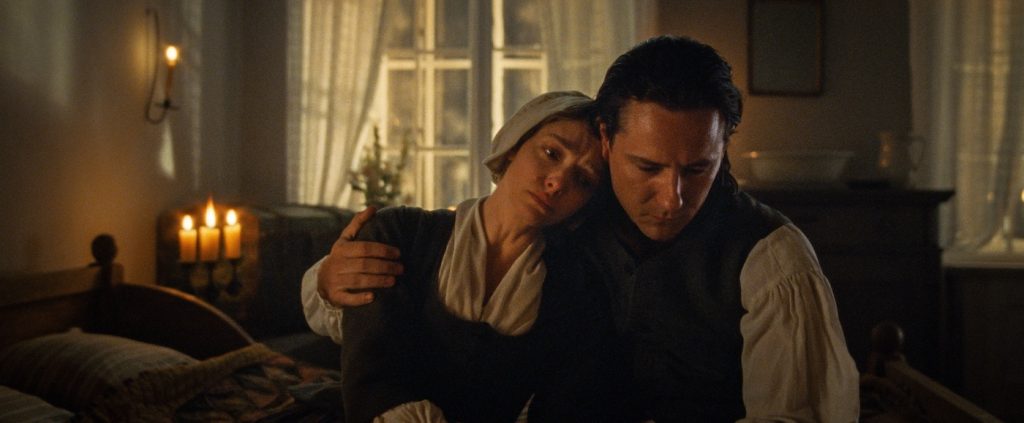
Mona and I talked at the beginning about creating a look that did not feel filmic, inspired by painting rather than traditional television looks. We wanted to make sure that everything felt justified, whether it was by a candle, a sun source, or a moon source. That was really critical to us because we wanted the audience to truly be transported to a different time. While you thought that was a candle and that was natural, quite often we were creating those environments and consistent sun or consistent moon [lighting]. We had a lot of tungsten fixtures hidden to emulate candles. Our references were Baroque paintings—Mona and I spent a lot of time looking through paintings.
Once Ann and her followers arrived in the New World, did your inspiration change?
Yes, because the New World was much more open. Their architecture was much more open and had much more light. But it’s still source-motivated. We went up to Pittsfield, Massachusetts, and walked through those spaces, and felt what they felt like with real light coming through. That took over as inspiration, really. So the early work was definitely Baroque, and then later on, it got inspired by the real thing.
How did you subsequently use the cinematography to separate Manchester and North America?
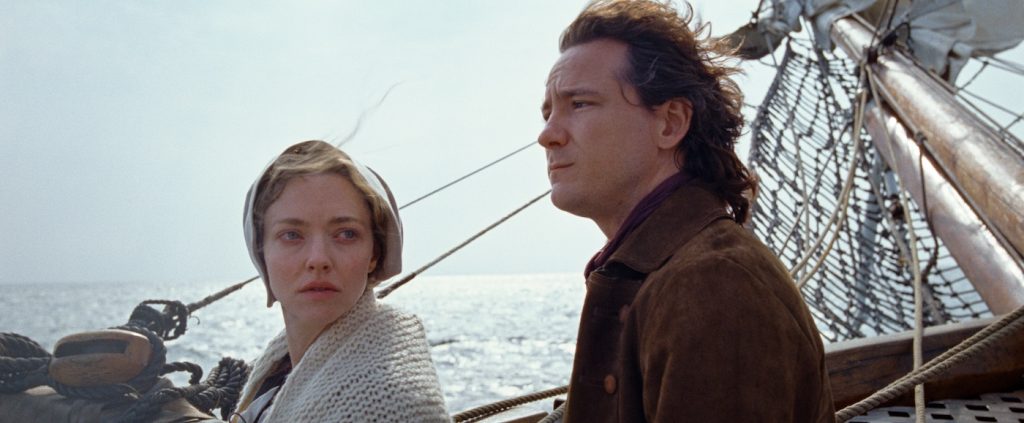
There are a lot of different things that are going on there. Some of it is the light, some of it is the architecture, some of it is how closed things were. We worked with Sam Bader, the [production] designer, to make those Manchester places feel tight, cramped, and small. But also, some of it is the psychology we played. At the beginning of the film, you are observing them, and you’re in those painterly compositions. As you get onto the ship and later, the cinematography takes on the persona of a believer, someone who’s joining the dance, someone who’s trying to follow her, someone who’s getting more and more inspired by her. The camera becomes much more of an active participant. The style of camera work changes.
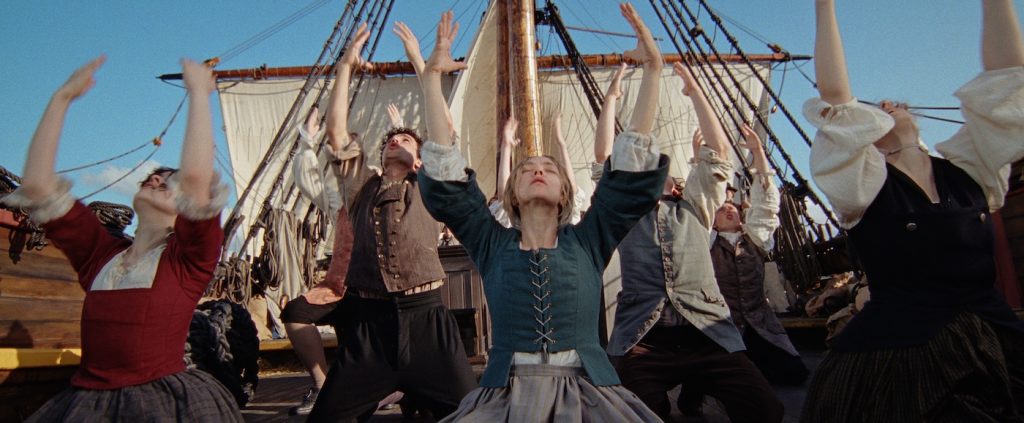
One both sides of the ocean, though, the characters feel close to the elements. How did you convey that in camera?
I began in natural history filmmaking, and Mona grew up on a farm. The connection to place is very important to both of us. We get possessed by a place, and we really try to make that place a major character. It’s always integral to what we do.
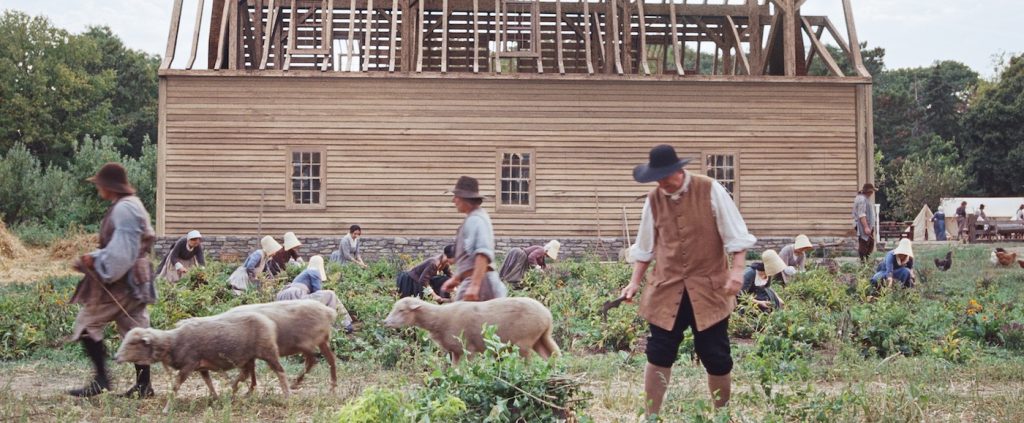
How did you handle the scenes in which Ann gives birth?
Amanda, Mona, and I had worked on three projects together, so we trust each other. I did those sequences handheld myself, cleared the room, and made sure there was nobody else. Amanda was willing to make herself that vulnerable, and I wanted to make sure that I respected that. We just had this trust. I don’t think it would have been possible if we hadn’t worked together. Mona creates an environment where everyone on set is so respected. And Amanda creates an environment where everybody feels heard. It’s a very safe place to work, and because of that, people make themselves very vulnerable. I wanted that intimacy, I wanted that closeness. I’m a father, I have two kids, I’ve witnessed birth with my wife, and I have five sisters who’ve all given birth. It was really important to me that that be told honestly.
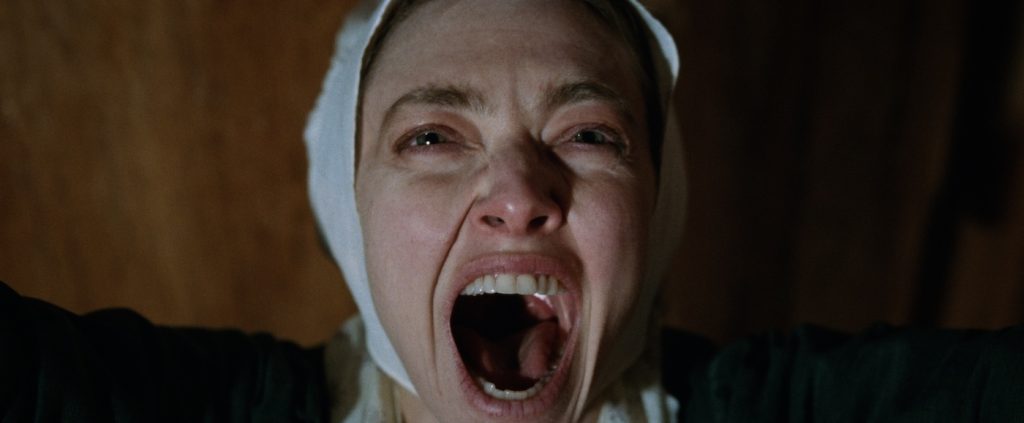
The shaking scenes are also so intimate. How did you use the camera to bring the audience into those moments?
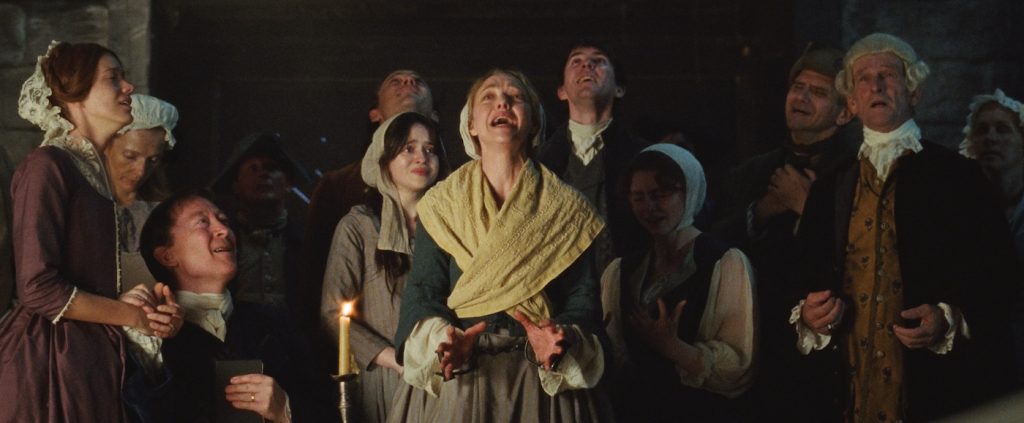
They were from the point of view of an observer at the beginning, who wants to join and then does join. The camera really does lose itself in every one of those moments. Possessed is the wrong word, but it is sort of possessed by the power of what’s going on. Celia Rowlson-Hall, the choreographer, created these beautiful structures to work with, and I wanted to make sure we respected those and captured enough for the audience to see the shapes and story that she was telling within the dance. And I wanted the audience to feel like one of the people, so [the camera] had to become an active participant.
What kind of equipment were you using on this project?
We were shooting on 35mm motion picture film. We considered shooting Vistavision, but the cameras were just too loud. Because we had so much singing and breathing, we wanted to capture those live performances. And we really wanted to be close. We chose the aspect ratio of 2.35:1 because while we were doing rehearsals with Celia, when we tried to be less wide, we were always missing something [in the dance structures]. The wide aspect ratio really captured it beautifully. We looked at over ten sets of lenses to find ones that could be that intimate and still let us use candles without weird out-of-focus areas. We chose these Sigma lenses that looked gorgeous and really enabled us to achieve close focus, with candles that looked very natural when they were out of focus. We didn’t want the lensing to be distracting.

The result is one of the most beautifully unique films of the year.
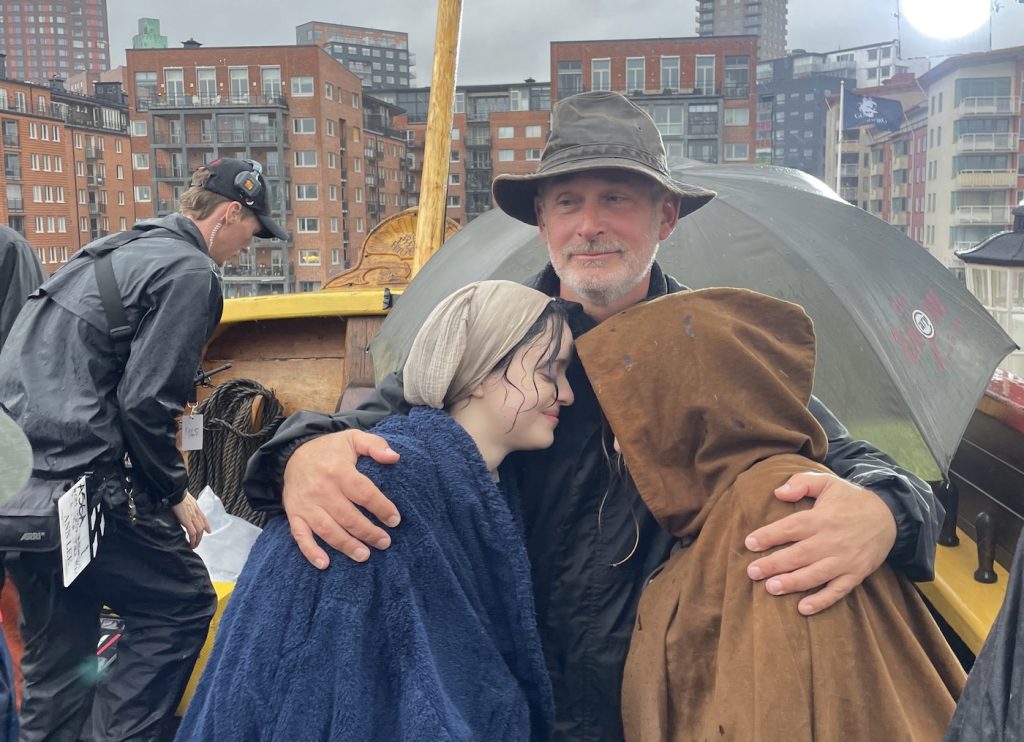
This was the most unique experience I’ve had on a project, one, because of Mona, and two, because of Amanda. Their style is to lead by inspiration. It’s very similar to what Ann Lee did. Even in prep, they came with an open heart, ready to listen to everybody’s contributions, but with a huge amount of focus and commitment that made everybody on set do their A-game. This film, on our budget, is fundamentally not possible. But somehow it was possible, because everybody wanted it to succeed.
The Testament of Ann Lee is in theaters now.
Featured image: Amanda Seyfried in THE TESTAMENT OF ANN LEE. Photo courtesy of Searchlight Pictures. © 2025 Searchlight Pictures All Rights Reserved.