Inside “Stranger Things” Season 5: DP Caleb Heymann on Will’s Visions, Vecna’s Mind-Maze, & Demogorgon Drones
The fifth and final season of Stranger Things may take place over the course of a few November days, but the Duffer Brothers’ ever-ambitious epic took almost a year to shoot. Volume 1, the season’s first four episodes, saw Eleven (Millie Bobby Brown) putting her powers to work in the Upside Down, Will (Noah Schnapp) telepathically connecting with demogorgons, and the youngest Wheeler sibling, Holly (Tinsley Price), taken prisoner by Vecna (Jamie Campbell Bower), aka Henry Creel, in a 1950s-inflected mind maze. Hawkins, meanwhile, is under military lockdown, but the more the show’s young heroes encounter the military, the clearer it becomes they’re not in town to protect the locals.
Of the many attributes that have made Stranger Things into a cultural juggernaut over the past decade is the show’s cinematographic commitment to filming as much in camera as possible. For cinematographer Caleb Heymann, that sometimes meant working on eight episodes at the same time, since nothing about this show allows it to shoot in traditional two-episode blocks. That meant lighting demogorgon stand-ins, shooting 100 stunt actors at a time, and finding creative ways to visually demonstrate Will’s heightened connection to the Upside Down. We spoke with Heymann about how he continued to develop new techniques to push the show forward, even as it recently reached its long-awaited finale.
You’ve done a lot in camera throughout the series. What’s an example, in this season, that might surprise viewers?
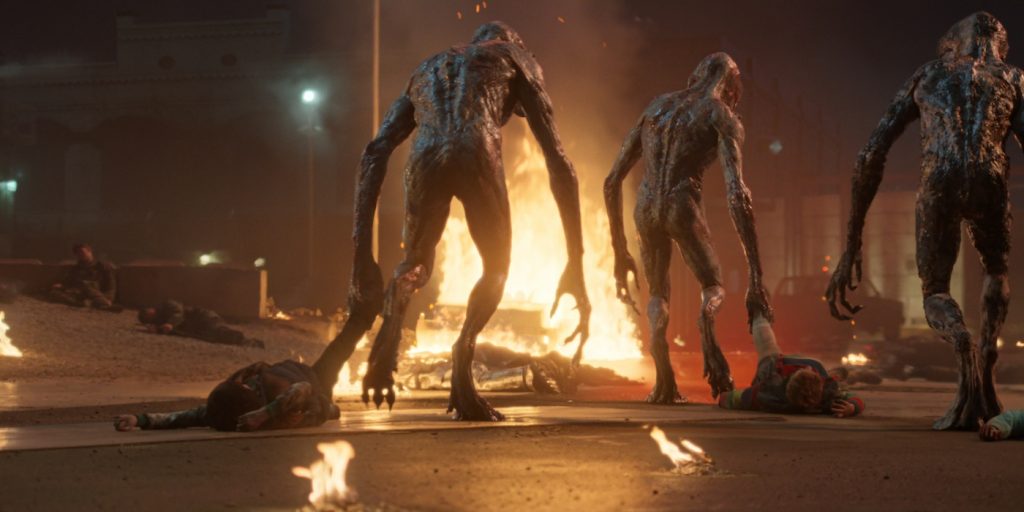
When you look at the big finale of episode 4, we have reference passes for what the demogorgons look like, and we have a stunt actor with a tennis ball on their head go out there, so all the other actors understand where their eye line should be, and so we understand what we’re framing for. Ultimately, we shoot it without a demogorgon, but everything else is real. In that battle, there were close to 100 stunt actors. All the background is real. The set is about 400 feet wide and close to 300 feet deep. Just the very deep background beyond the walls would be VFX. Even for the craziest sequences like that, we try to do as much in camera as we safely can.
How did you handle the demogorgons in other environments?
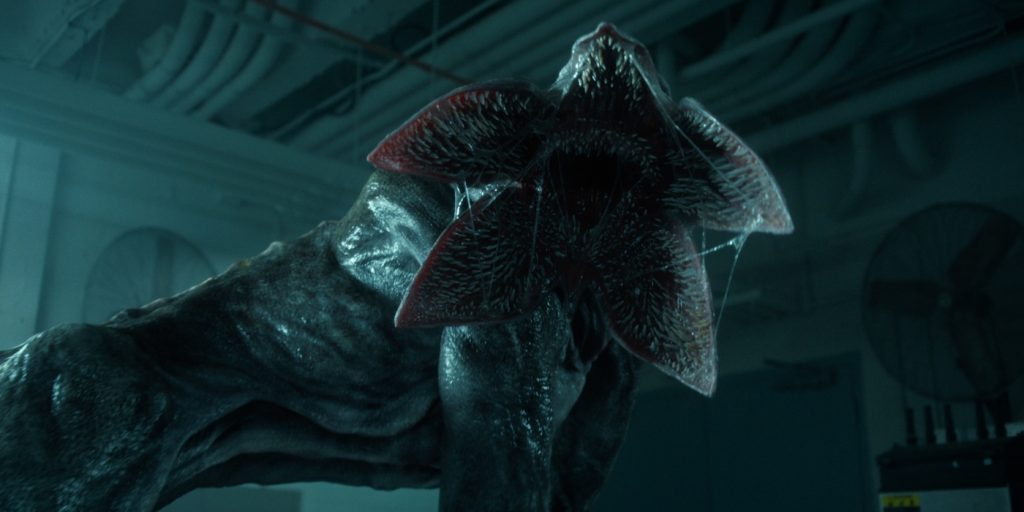
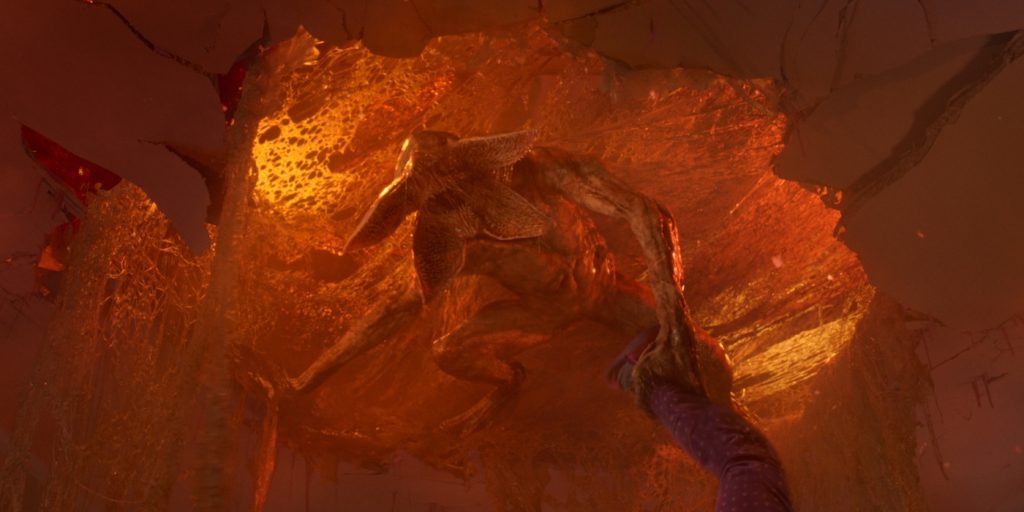
We have a lot of demogorgons in this season, and it can be counterintuitive—as the director of photography, for some shots, you’re framing and lighting air. But you’re still going about it the same way, as if it were there. It’s important to do that, so the VFX has integrity. It doesn’t look right if the set lighting isn’t right and they just make the asset look cool—you’ll sense something is off. So even with the demogorgons, we have a stand-in with all the shine and texture of that charred skin, and we can see how it behaves in the lighting.
There’s a lot of very active lighting in this show. How did you take that into account?
It was important for me, at the end of Volume 1, to feel like we were building toward a visual crescendo. You have that happening in several locations simultaneously. At the Upside Down military base, where you see the struggles among Hopper, Eleven, and Dr. Kay, there is its own visual progression in the lighting. Thankfully, there were clues for that in the script. Eleven hears the sonic weapon, and the red flashers start going off. I wanted to do something more dynamic than pulsing red on-off lights we’ve all seen a million times. I worked with our set decorator, Jess Royal, to find a more dynamic version that would actually spin and rotate, allowing me to create more energetic lighting because it’s actually bouncing around the environment. Then Hopper has his struggle with that big tail, and we were able to use the heat lamps to create a lot of tension around that.
Will takes on a new role this season. How did you approach conveying his experience through the cinematography?
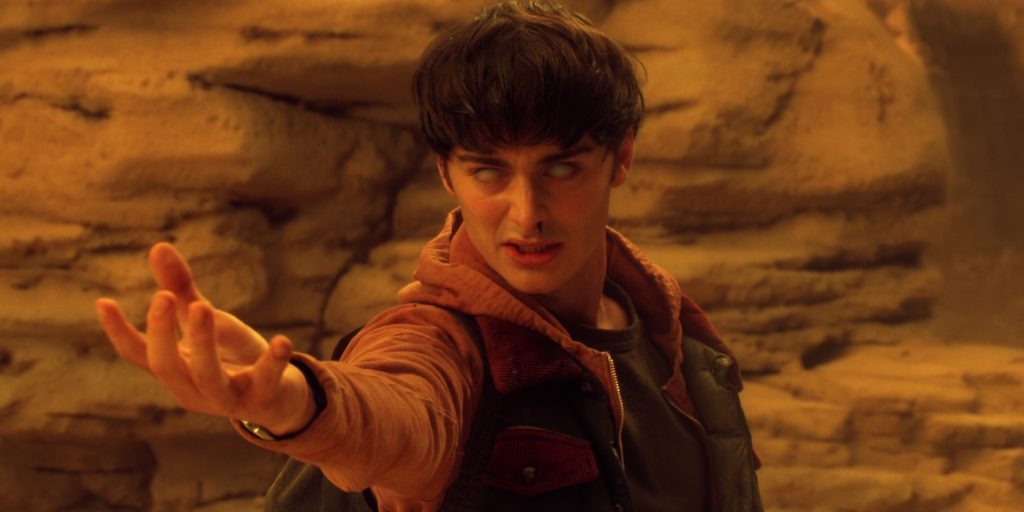
We realized his antennae to the hive mind was going to be front and center this season, and we experimented with how to represent that visually. We ended up finding this unique combination of filters that we put in front of the camera which were center spot diopter filters that we stacked. I was just holding it in front of the lens and shaking it back and forth, an extremely low-fi technique as we tracked in and out. We just stumbled upon it in our testing and that became Will’s tunnel vision that takes us into the demogorgon view. We also used, for the first time in the show, these first-person view drones for the demogorgon POV shots. We had an FPV drone operator who’s incredible, who’s actually able to move the camera at 30 to 40 miles per hour, using this drone, including the gallop of the demogorgon. Those were all done in camera as well. We had a good time experimenting with some new visuals around Will’s visions.
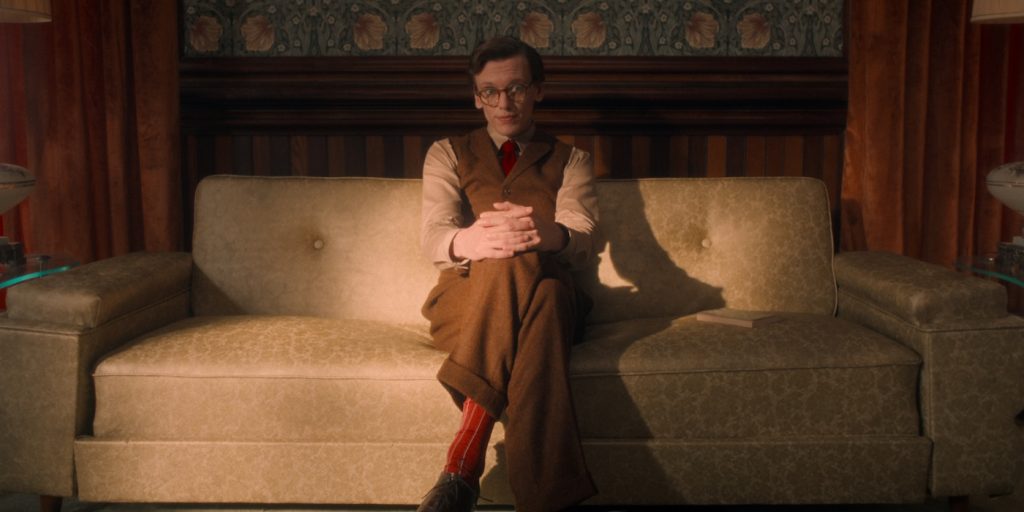
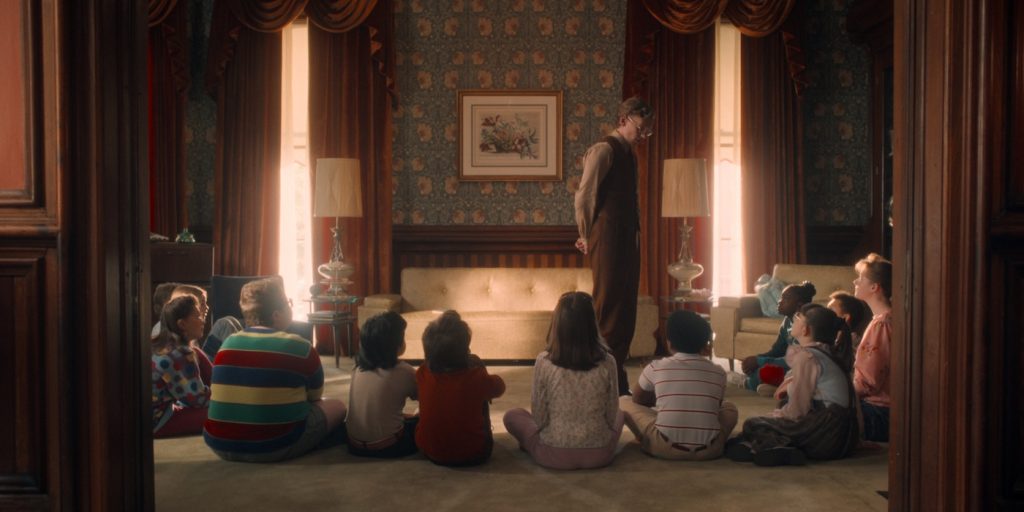
In contrast, Henry’s memories have a very different aesthetic.
We wanted to have a bit of a pastel, and Technicolor look, to be more saturated, and more appealing, because initially, you want to be drawn into that world. It was basically a mind-maze he’s created, made up of his memories. I didn’t want it to feel like it had too heavy a look imposed upon it. I was leaning a lot into what the sets wanted to be. We wanted it to feel inviting, and we were really going with a more colorful, poppy sense of that, that also connotes a lot of this is taking place in the 1950s.
In the show’s present, how did you bring a sense of reality and nostalgia to the family homes in Hawkins?
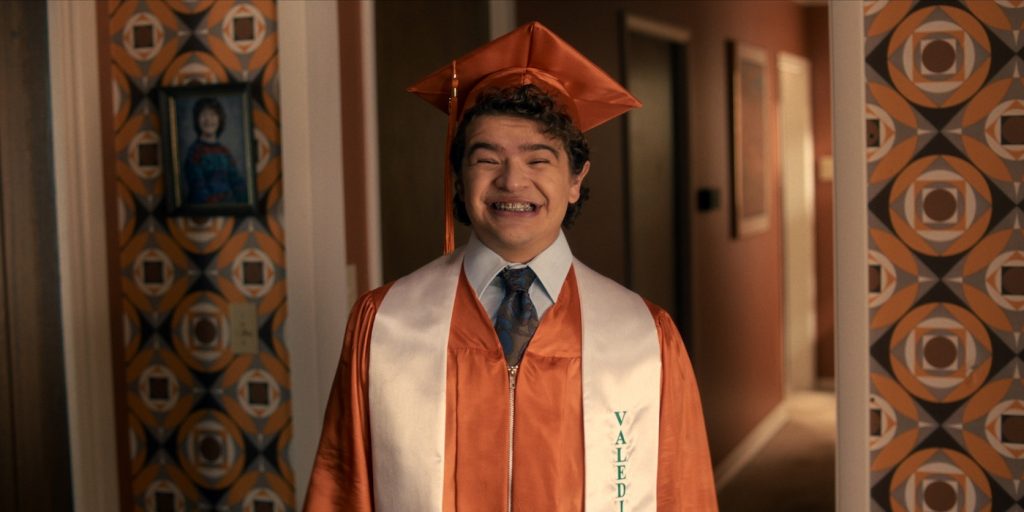
With the domestic stuff, it’s important that it feels grounded. Those scenes are so important to balance out all the crazy action we have in this season. Generally, I just try to do what feels emotionally appropriate for the scene and the performance, giving the actors space. But also, if there’s a poignant moment, we want that emotion to carry through with the visuals. If we have a crucial moment, we try to pick when sunset’s going to be and what’s going to be at dusk, playing with the warmth and cool light to go with what’s happening in the scene’s emotion, and hopefully striking that balance of it feeling real. They do such a good job with the detail of the sets, and I’d like all that to read and come through.
Featured image: STRANGER THINGS: SEASON 5. (L to R) Winona Ryder as Joyce Byers and Noah Schnapp as Will Byers in Stranger Things: Season 5. Cr. COURTESY OF NETFLIX © 2025