How “Predator: Badlands” Director Dan Trachtenberg Embraced Fear For His Franchise-Best Vision
Director Dan Trachtenberg credits fear, responsibility, and a crack team of contributors with enabling him to realize his vision for Predator: Badlands.
Audiences embraced his bold new chapter with even greater enthusiasm than they did his previous entries, Prey and Predator: Killer of Killers, making Predator: Badlands the highest-grossing entry in the iconic franchise.
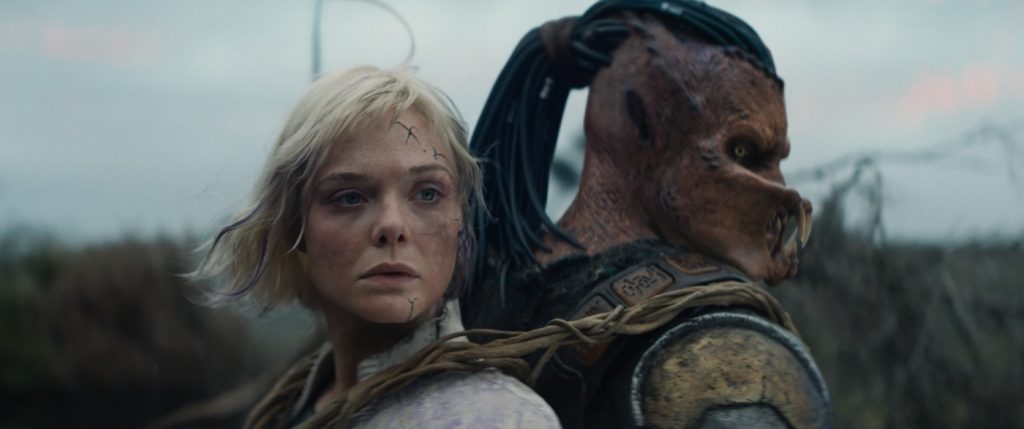
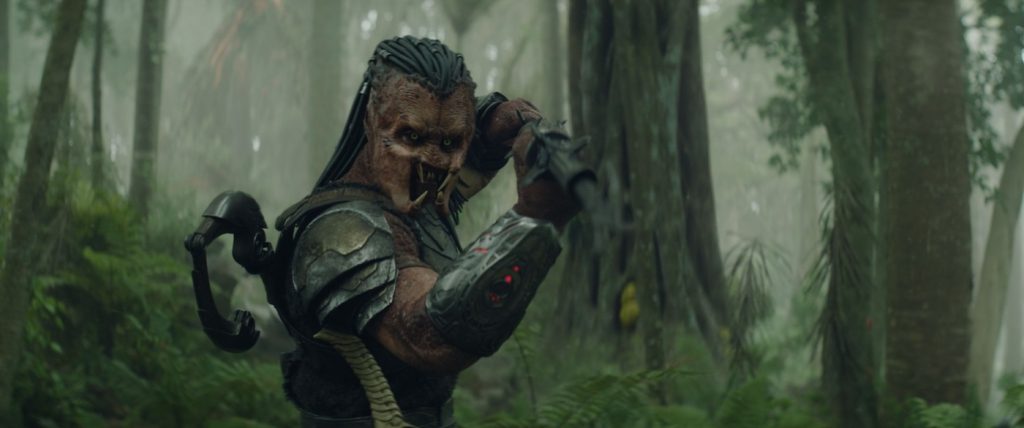
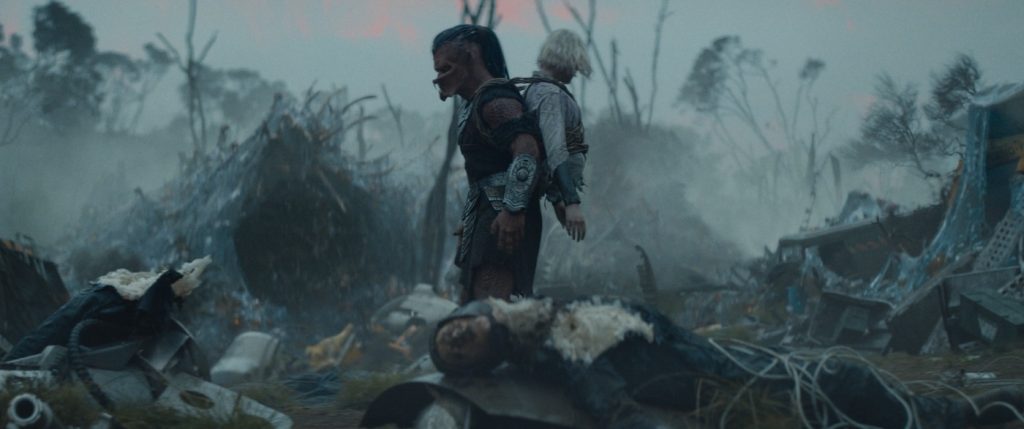
The first PG-13 entry in the 38-year history, Predator: Badlands follows Dek, a young predator outcast (Dimitrius Schuster-Koloamatangi) who travels to a deadly planet to track an apparently invincible beast, proving his worth as a warrior. There, he meets Thia (Elle Fanning), a sentient Weyland-Yutani synthetic android, and they form an unlikely alliance.
Now that Predator: Badlands is available to stream, Trachtenberg explains why he was worried he might be making his own Howard the Duck, discusses the dream team of creatives he assembles in LA and New Zealand, and what filmmakers need to do to help protect the future of movie theaters.
Predator: Badlands is officially the highest-grossing entry in the franchise and received rave reviews. What are your thoughts on that?
It’s a relief. I was blindly excited when we had the idea, we started figuring it out, and 20th Century Studios said yes to making it. I was really invigorated because this is what other people and I wanted, and we had things we hadn’t seen before. We started making it, and all the doubts crept in. I started to worry, like, ‘We could be making Howard the Duck.’ When they were making Howard the Duck, they built these incredible, tactile duck suits that were state-of-the-art for the time; they had ILM working on visual effects, and they were thinking, ‘This is a crazy movie, but Star Wars was crazy and that worked out.’ The warm reception is just like, ‘Thank God I’m not crazy, and the hard work everyone put in has been seen and validated.’ It feels exceptional.
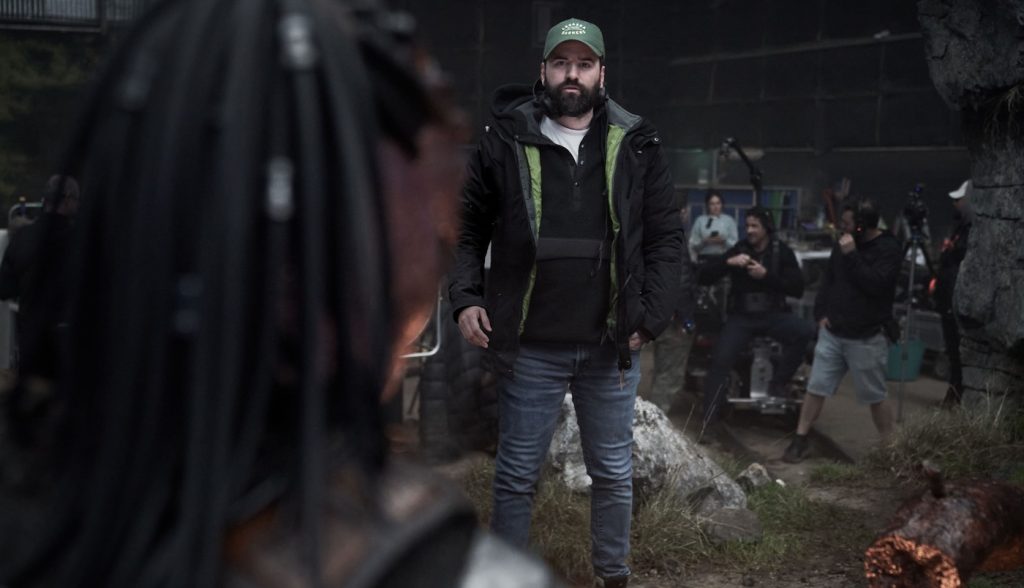
You’ve made three Predator movies now, so you’re effectively the new custodian of the franchise. Like with Fede Álvarez, who directed Alien: Romulus, the people pushing these franchises forward are the filmmakers who grew up with them.
It’s true. I remember being a kid and a little frustrated. Why was everything that Steven Spielberg did, like Back to the Future, set in 50s? It was when he was growing up. I was born in 1981, so when I was a ten-year-old in the 90s, I was like, ‘Why can’t there be a movie set in the 80s now?’ I had a meeting recently with an incredible actor who is a generation ahead of me, and all their references were—and why they got into the industry—were the movies of the 70s. As we get older, we are recapturing the things that first lit all of our fires. It makes perfect sense that people like Fede and I are making these movies from when we grew up. It feels right to bring them back and rejuvenate them. With Alien, he did it in the style, not of what was currently happening with Aliens, but in the vein of what he grew up adoring.
You have discussed extensively the films that inspired you as you put this together. One I haven’t seen you mention but wondered about is Enemy Mine.
I love Enemy Mine. It absolutely came up quite a bit in our creative discussions, although structurally it isn’t quite the same. That could be a movie that could come back around. I think this is the right time for that. I have referenced Enemy Mine on a few different projects. It’s a creative touchstone for something that we don’t see very often. It’s a great movie.
For Predator: Badlands, you reunited with creatives you’ve worked with on previous projects. For instance, you worked with your DP, Jeff Cutter, on Prey.
Jeff is one of the few DPs that I’ve worked with. I started working with him on 10 Cloverfield Lane, and we did The Boys pilot and Prey together. It wasn’t necessarily that we should have the same DP as Prey; it was more about Badlands being made with a creative collaborator that I trust wholeheartedly. Jeff is a huge part of my ideation process. We don’t just talk about the images; we talk about the story all day long. Whether he‘s pitching an awesome idea for an action sequence or a moment inside the film, he’s great to bounce off. If I’m thinking, ‘This is ridiculous?’ He’ll be like, ‘Yes, that’s ridiculous,’ or, ‘Dude, that’s awesome. Don’t throw that idea away. Keep going there.’ Jeff is just one of my most cherished collaborators, and he also knows how to shoot a real tasteful, elegant, muscular motion picture.
Do you try to use the same core creative team? You shot this in New Zealand, which has an incredible pool of local talent.
There are certain collaborators I must have with me, and one of those is my producing partner, Ben Rosenblatt. Again, he has been with me since 10 Cloverfield Lane, and he is incredible. We produced two movies during the three years it took to make Badlands, the other being Predator: Killer of Killers. That was only possible because of Ben leading the charge. We had an incredible crew in New Zealand, including Jacob Tomuri, our stunt coordinator, who concocted some incredible action sequences. He and I formed a great friendship and creative collaboration, and then there’s Ra Vincent, our production designer. We had the best of both worlds. Olivier Dumont, our VFX supervisor, joined us from LA, but Ngila Dickson, our costume designer, is based in New Zealand and has worked on The Lord of the Rings movies. On the post side, our editor and producer, Stefan Grube, has also been with me since 10 Cloverfield Lane and is always challenging me to find the heart of a story. There are people I’ve done some projects with who have been great, but there are also some where I’m like, ‘I want to grab onto your reins and have you take me further than I’ve ever gone before with each movie.’ I accumulate more and more of those folks, and I’ve always dreamed of having that.
How many VFX shots were there in this, and how does that compare to the kind of previous things that you’ve done?
There are maybe 1,450 VFX shots, which means there are about 1,470 shots in the whole movie. In a movie like Star Wars, you’d have the crazy VFX sequence, and then Luke and Han or Rey and Finn in the cockpit talking to each other. You shoot that against the set, and you’re cool. In our movie, our main character is a visual effect. His friend [Elle Fanning’s character] is a visual effect. Their walks and talks, or the sitting by the campfire conversations, still have the severed body with rigs to have her raised up. There was no break. That’s why I started to feel like, ‘Oh my God, is this Howard the Duck?’ It took forever to feel what the movie was really going to be once we had more effects.
How do you find the Predator’s look for this in the timeline and the species’ evolution?
In terms of the actual facial designs, I don’t think of that in terms of timeline. I think of that in terms of the ecology of a planet, and the way that all of us humans look quite different from one another. In terms of the wardrobe, armory, and weaponry, that does factor into the timeline. With Prey and Killer of Killers, I did two movies that were set in the past, and it’s always challenging to figure out how something meets the promise of the premise and be far more advanced, but at the same time, it has to feel prior to what we’ve seen before. Predator: Badlands was a wonderful release for me to finally make a movie that is furthest into the future. I could embrace all of the advanced technology for a limited period of time, because at some point, he loses it.
As a filmmaker, what are your hopes and aspirations for the industry in 2026?
It used to be that we were all going to the movies, and it was just a matter of which film you would see. Every weekend, the whole world was going to the theater, but that is not the case anymore. Now it is our duty as filmmakers to make something that grabs people away from the couch. Every bad movie is exponentially worse than it ever was before. Every time we fall short of that duty, it really hurts because it’s like, ‘I’ll catch it when it comes on streaming.’ Again, it’s why I was so freaked out that I was making Howard the Duck. I love that movie, but I do know what it represents in cinema history. We can’t control the zeitgeist, we can’t control the mood, we can’t control the quality of the theater experience or the concessions, but we’ve got to hold up our end of the bargain and make sure that what they’re going to see is kick ass.
Predator: Badlands is now streaming.
Featured image: A scene from 20th Century Studios’ PREDATOR: BADLANDS film. Photo courtesy of 20th Century Studios. © 2025 20th Century Studios. All Rights Reserved.