
Filming “F1: The Movie”: Stunt Coordinator Gary Powell on Brad Pitt’s Wild Ride From Abu Dhabi to Spa
In the first part of our conversation with stunt coordinator and second unit director Gary Powell, he talked about director Joseph Kosinski’s ambitious vision for Apple’s highest-grossing theatrical release to date, F1: The Movie, starring Brad Pitt (Sonny Hayes) and Damson Idris (Joshua Pearce). The film received unprecedented access to the Formula One organization and was filmed during the 2023 and 2024 seasons at several Grand Prix events, including the climactic race in Abu Dhabi. Now, we continue our conversation with Powell.
For all the cars used in this production, whether stunt cars, camera cars or the hero cars, were there extra safety features built into them that you wouldn’t find in an actual Formula One car?
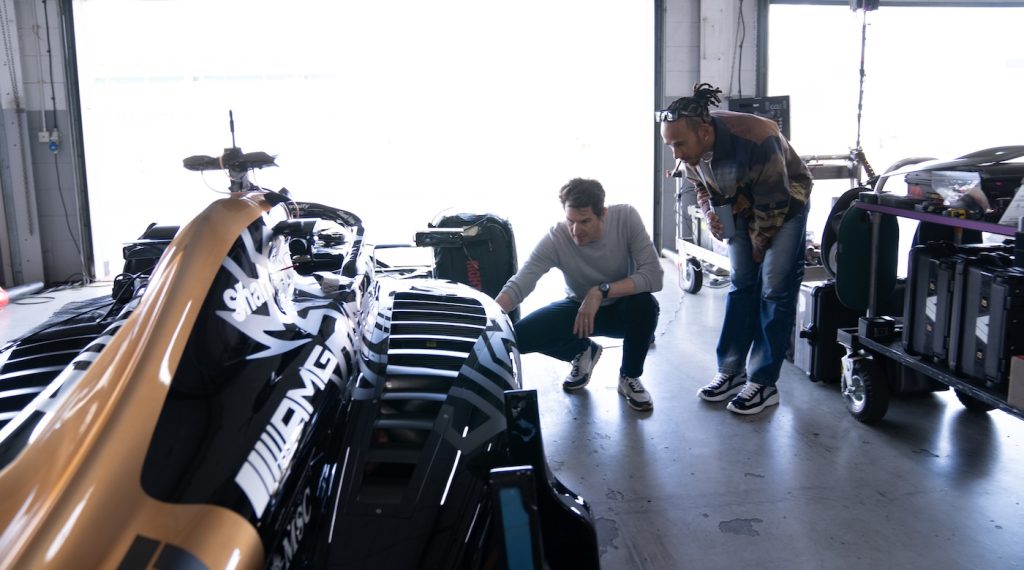
No, the Formula One cars are as safe as they physically can be because they’re designed to go as fast as possible and keep the driver inside. There was nothing we could add to enhance it. We didn’t need to because all the cars had to be FIA-certified [Fédération Internationale de l’Automobile]. Our cars were built by Mercedes, they were F2 cars with an F1 body on them. All the impact zones and everything are exactly as they should be on a proper Formula One car.
Even the stunt and camera cars had to be FIA-certified?
Yes, the cars that Brad drove were exactly the same as what the stunt guys drove. The only difference is each driver has their own seats molded to their body so you’re not moving around inside the cockpit. If you have an impact, that movement can cause injury. But when you’re locked in solid, it’s actually a lot safer.
How many cameras were mounted on each of car?
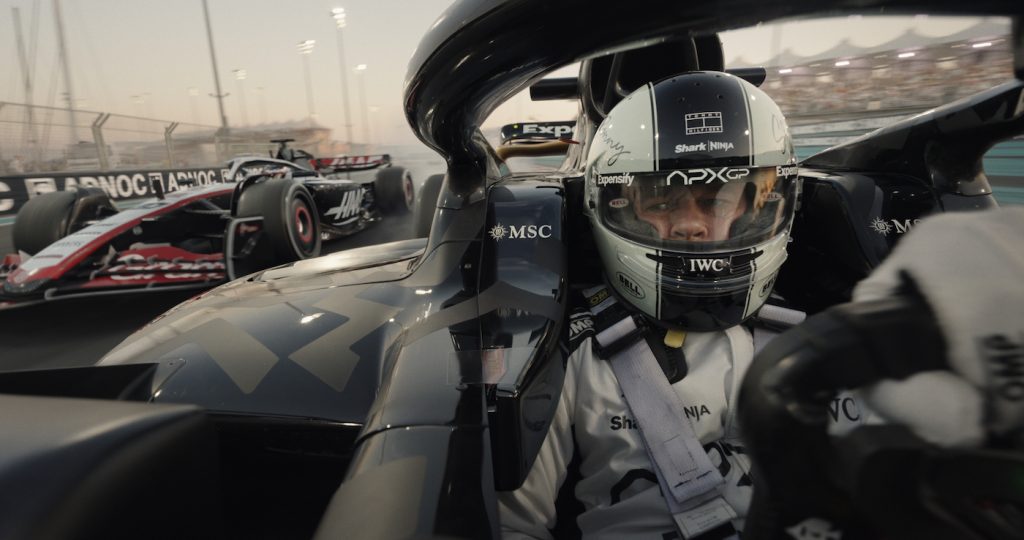
We could put eight IMAX cameras on each car, they were custom-built by Sony and Claudio. All the camera mounts were custom-made for each car, so it’s not like the ones bolted on stunt cars. Everything was crash-tested — things couldn’t be flying off if there was an impact.
For the climactic race in the Abu Dhabi circuit, how did your team prepare for that?
We were there testing for a few weeks and had the track to ourselves. On the last day, the heavens opened up and rain flooded the area. Fortunately, we were done by then and got out. When we went back to shoot during the Grand Prix, we had certain time slots and knew exactly what we had to do each time we went onto the track.
You also filmed there during their practice days?
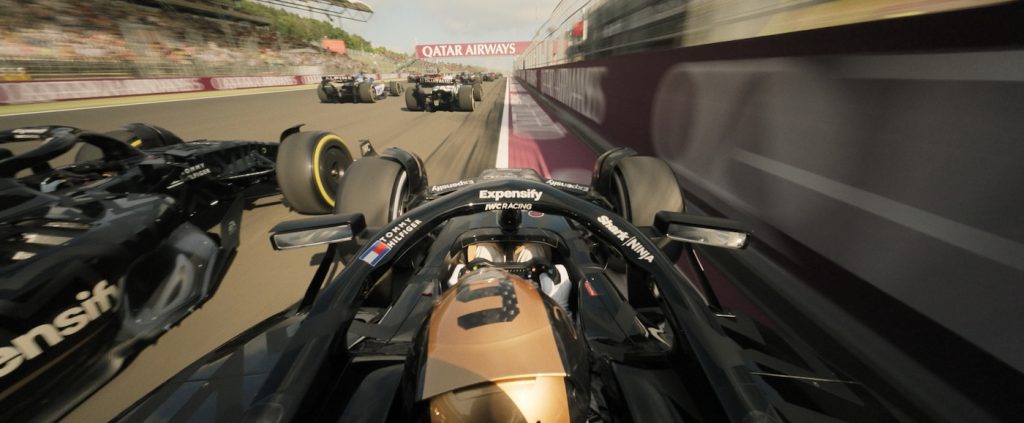
Yeah, which gave us the real crowd on the grandstands with the fireworks after the night race. It was spectacular. All the proper teams were in the pit lane when our cars pulled in as if we’re doing a pit stop. At the end, we also had [Formula One racing drivers] Charles LeClerc and George Russell, who started off a race with our drivers in main race. It was really nice having them come on board with us. At one point, we had Lewis Hamilton interacting with our actors during a pit stop. It was a great collaboration with the Formula One world.
How much time on the tracks did you have on practice days?
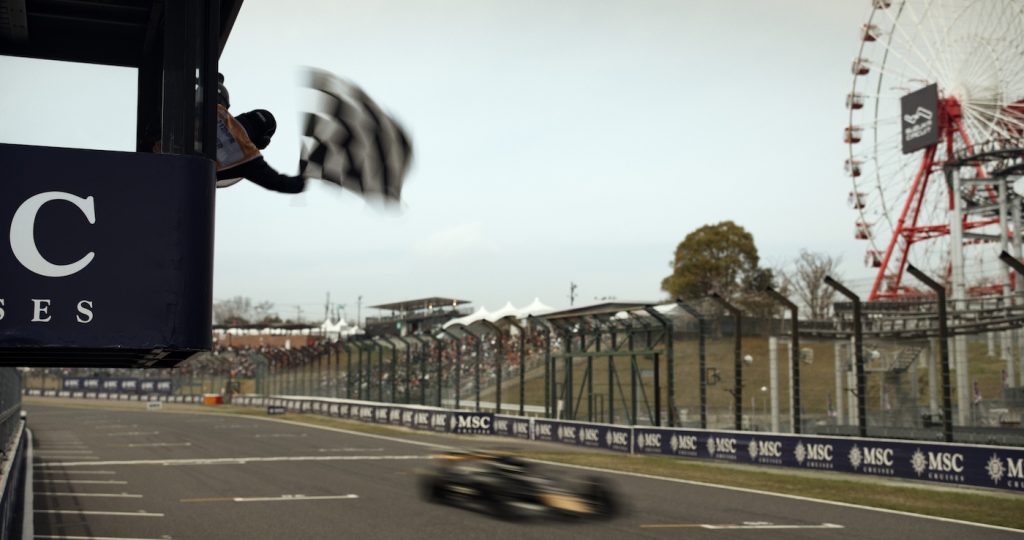
There are other races going on at the same time, Formula Two, Formula Three, and other championships. Generally, everything before the Sunday race day is all practice, whether it be Formula One or Formula Two, and the qualifying is generally on Saturday. The crowd is there with all the banners and all the screens up, so we didn’t have to do it digitally, which was a huge cost saver. After a Formula One race, we might have 15 minutes before the Formula Two race starts. As soon as their cars pulled in, we had to go out, do our bit and get in. It was very strict. There was no opportunity to do another lap that wasn’t planned. You’ve got four or five laps and that’s it.
What was the G-forces that the actors and drivers had to deal with at those speeds?
We had all ex-racing drivers, so they’re used to it. But that’s why we kept up with practice throughout filming. Formula One goes on a summer break, but we couldn’t just stop and come back into it, because your muscles would relax. Your neck muscles in particular take a lot of strain when you’re going around the corners at those speeds. So, it’s something you have to keep up with. If you’re not used to it and just got in a Formula One car and went around for 10 laps, you’d probably have a stiff neck for about a week.
All the stunt drivers are former racing drivers?
Some of them are still racing, but all have raced at a very high level in championships. Luciano is an F2 champion. Duncan Tappy teaches many drivers now, including Lando Norris. They’re all at the top of their game, which made my job really easy. When you’re doing 180 miles an hour inches away from each other, you have to be precise.
Finally, let’s talk about the Daytona sequence!
That was our first scene, so that was good fun. I remember the night I drove there after flying in from England, you come across the grandstand at this world-famous track, which just keeps going and going — it’s absolutely enormous! It was an amazing experience to interact with all the race teams and the thousands of people. Many weren’t in the stands but actually in the infield with hundreds of motorhomes, set up with little bars and hot tubs. All these people were having the best time, that was pretty impressive to see.
What was different about filming there?
The bank circuits are something that Grand Prix drivers and those from Europe don’t really come across anymore; we used to them back in the 60s. When you see it on TV, it doesn’t show how steep it actually is — it’s literally like walking up a brick wall. I remember going out there in a pickup truck and I had to speed up or I would’ve rolled over. It was amazing to be on that track. Porsche was very nice to give us a brand spanking new GT3 RS for us to learn the track. We were using the infield as well, not just going on the outside. Banking is something that not many people get to experience.
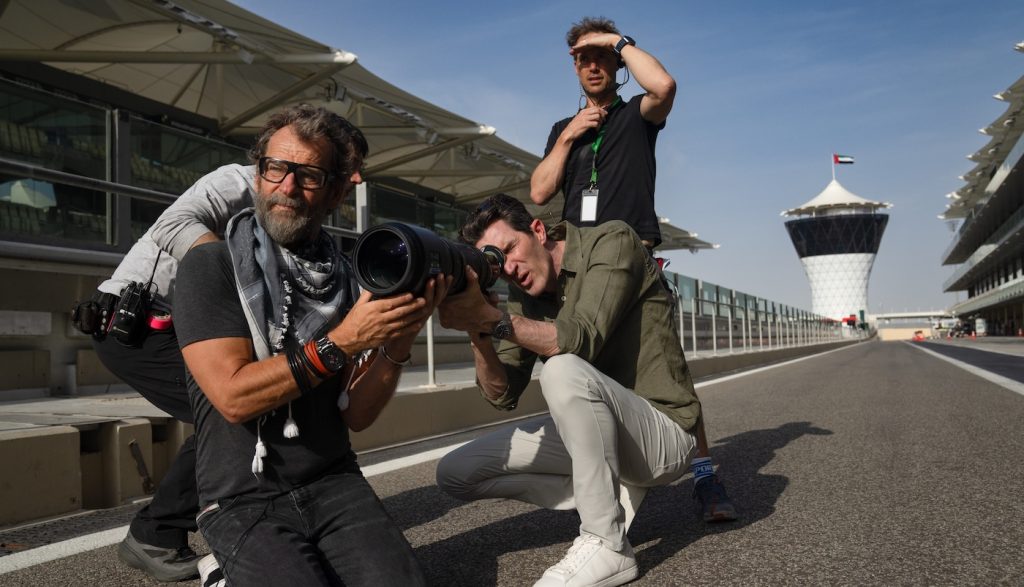
Approximately how many race cars were used in this film?
We had six cars in the Formula One races and about seven for Daytona, including two GT3 Porsches. Four cars were generally for Brad and Damson and the others were camera cars. What we used to do is swap cars around — one car would be rigged with cameras on the left, another would be rigged with the cameras on the right. On this film, rather than waiting ages to change the cameras, having extra cars allowed us to keep leapfrogging all the rigs. While we’re out filming, the next cars are getting prepped with camera angles that Joe wanted for the next setup.
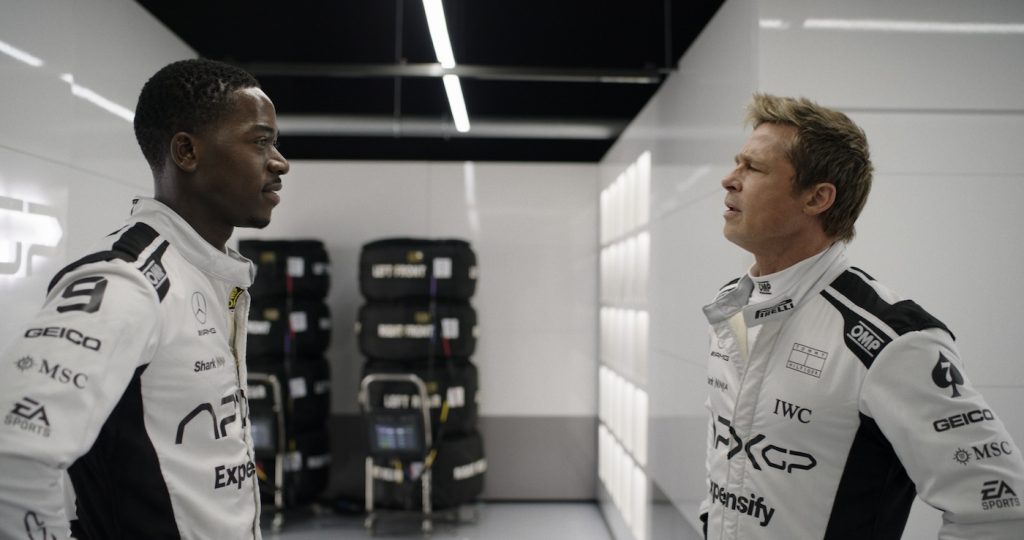
It all looks extremely difficult, but were there any filming days that were particularly challenging?
The tricky one was actually Las Vegas, because that was a night race on a street circuit, and it gets pretty cold there at night. So, we had trouble keeping the tires warm. Originally, there was a limit on how fast we could go, but that actually put us slightly into danger zone because we needed to go fast to keep the tires warm. Too slow and they would get cold, which makes them slippery. Since we were only allowed on the circuit for a few laps, it was hard to keep the tires warm.
How did you deal with that?
You keep the tires as hot as possible and try to go as fast as you can. But the circuit is not very forgiving because it’s lined with concrete barriers. If something was going to go wrong, that was probably it — you could just spin out on the corner. But we did a lot of Sim work and prepared for it. Obviously, everything worked out fine.
It’s such an ambitious production. Looking back now, what stands out to you the most?
One of the most impressive days was at the [Belgian Grand Prix] Spa [Francorchamps] Eau Rouge, it’s a world-famous bend. That was Brad’s last time driving and the last thing we shot. We were all enjoying the last four laps. Every time he went for it and came up the hill with the camera facing his face, his smile just got bigger and bigger. He was just totally enjoying himself! And probably didn’t want to get out of the car! To see someone enjoying it that much, we’re all lucky to be in this job! Every single person on the film, whether in front of the camera or behind the camera, put a lot of work into it. For it to pay off like this has been great for all of us, and great for the industry. So, I’m really happy for everyone.
F1: The Movie is streaming on Apple TV on December 12th.
Featured image: Caption: A scene from Apple Original Films’ “F1® The Movie,” a Warner Bros. Pictures release. Photo Credit: Photo by Scott Garfield Courtesy Warner Bros. Pictures / Apple Original Films