
At the Edge of the World: How Production Designer Denis Schnegg Recreated 1973 Rapa Nui for “Wild Horse Nine”
Premiering at the Venice International Film Festival with a 13-minute standing ovation, Oscar winner Martin McDonagh’s Wild Horse Nine is set in the months leading up to the 1973 military coup in Chile. Full of acerbic and hilarious zingers interspersed with flickers of violence, the dark comedy follows veteran CIA agent Chris (John Malkovich) and his junior partner—and his only friend—Lee (Sam Rockwell) on a mysterious detour to Rapa Nui (Easter Island) after they are done setting the stage for the upcoming coup in Santiago. As the cantankerous agent who has spent years “killing people in countries you can’t spell,” Chris is dying of a terminal illness and wishes to spend his remaining days on the island. Amidst scintillating debates with Lee about whether Nazis and dinosaurs get to enter Heaven and why the “gay” countries produce the best cheeses, Chris’ elegiac meditation on remorse, death, and friendship packs an emotional punch when you least expect it.
The story is vividly brought to life by production designer Denis Schnegg (supervising art director for Phantom Thread and Ex Machina), who couldn’t have been more thrilled to shoot on Rapa Nui to maximize authenticity and realism. “I was hoping we could do it in the real place rather than rely on CG, so I was super happy that we shot on Easter Island. Nobody’s ever built a film set there because it’s just not easy. Since we shot on location, you could just point the camera wherever you wanted. We created the worlds in the right places in the right conditions, and the film looks different for that reason.”
Schnegg recently spoke to The Credits about recreating Rapa Nui in 1973 based on very limited information and the Herculean task of transporting period-accurate vintage vehicles onto an island without a routine and timely shipping schedule.
What was your impression when you first read Martin’s script?
It’s extraordinary, isn’t it? You could see it all on the page—clear, minimalist, and precise. Everything is there for a reason; nothing is superfluous. It’s a dream to be involved in this.
How did you establish the color palette to evoke the visual aesthetics of 1973?
We settled on a style that made sense for the Ektachrome film stock. An Ektachrome palette means that red and yellow really jump out, so we were careful with assigning colors to key objects. This movie is essentially a western transposed onto a new landscape, so the vehicles are essential—they’re character pieces. For the vintage hero yellow car, we needed two matching vehicles, but finding two from that era is virtually impossible. So, we created them with functioning cars of the right model and changed the color and interiors. Picking the correct tone of yellow was a lengthy process. It was the same for the red car. They really stand out, you see them from a mile away. The red phone in Lee’s hotel room has a flare effect in the Ektachrome process; it really stands out, so the tension goes straight to it. The famous suitcase that Chris hides was a bit less red.
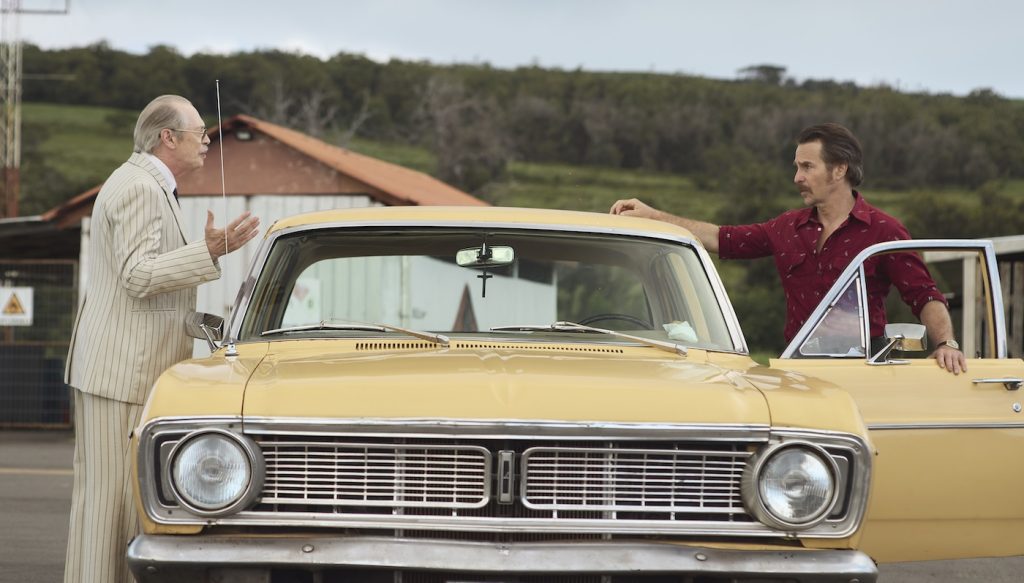
How did the colors compare to the period photographs and news footage?
There are many photographic references for Santiago because it’s such a momentous event in their history. They’re not so loud; there was less of a range of colors at that time, so the images are a bit cleaner generally. Some of the key images that impacted the color palette came from Chile from that period.
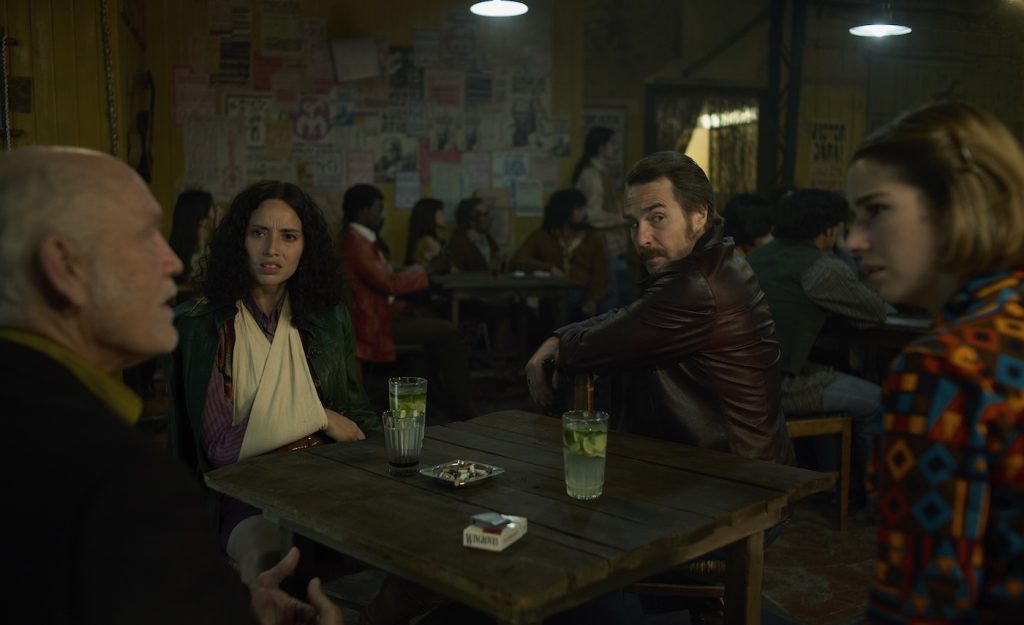
The opening sequence is in Chris’ CIA office in Santiago, which is across from the square where Pinochet’s forces bombed La Moneda presidential palace during the coup. Was that shot on location?
That was a glorious coincidence; we were able to shoot in the real place. One of the floors in that building was available to us. We had to move a few walls to get the sight line to work to show who can listen to what at what point in that scene. We changed the tone and colors to give it a slight edge. With the views towards the square, the natural lighting is priceless, and we didn’t have to CG anything. It’s almost too good to be true.
What research was done to depict Rapa Nui in 1973 as accurately as possible?
Everybody loves the look of the ’70s because it’s just cool by definition. But Rapa Nui of that time is virtually extinct—the Polynesian tribe is virtually gone—there’s only a handful of publications that go back 50-60 years. So, it’s a lot of reading between the lines. Some of the local places where we stayed opened up their personal family photo albums. We’re so used to finding everything online, but for Rapa Nui, you come across the same 10 images everywhere. Luckily, it’s a bit of a time warp: certain things are there because it’s a tourism hub, but it’s pretty much stayed the same. Our sources of information were people’s memories and people showing us the more authentic places. Then, we applied ’70s aesthetics to a world that’s almost virgin territory since it hasn’t been depicted on film that much. We tried to stay as truthful as we could in that extraordinary world.
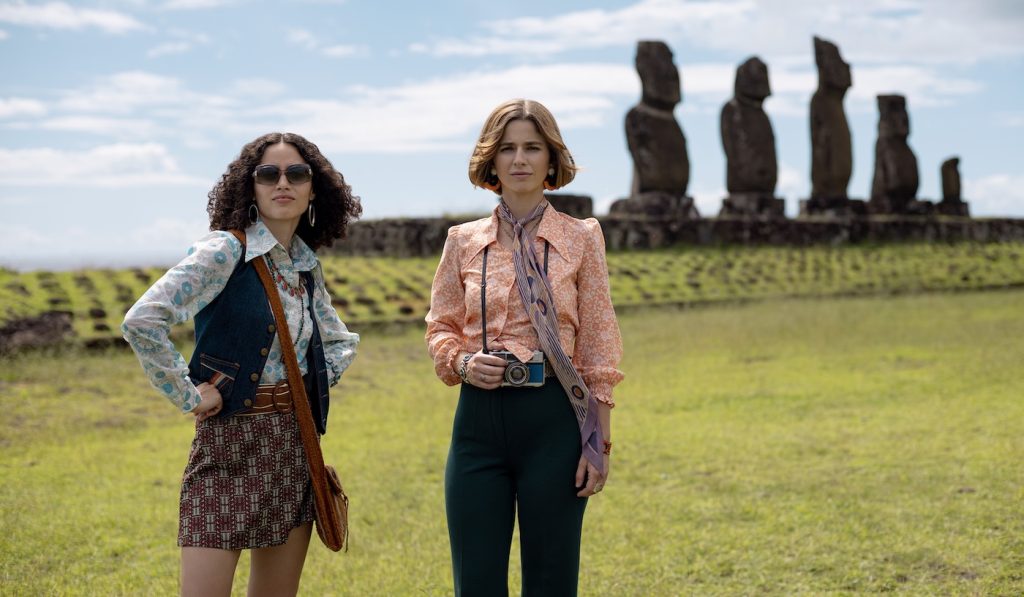
What was it like to source material and fabricate what you needed?
It was a lengthy process, and what’s on the island is very limited. We went to Argentina for certain things. We had a big furniture workshop to reupholster, change the colors, and make the drapes and curtains. We improvised a lot on the island after getting a better understanding of the local community.
What changes did you make to the hotel?
That’s a real family-run hotel from the ’80s. There were items in local storage that we ended up using. We built their wing at the end of the hotel with extraordinary views on site. The crucial thing was the sight lines – to have the sea down below and the road that we had to create for the cars to go past. These were really important to establish the relationship between the two rooms – what you can and can’t see from one window to the other or from the balcony.
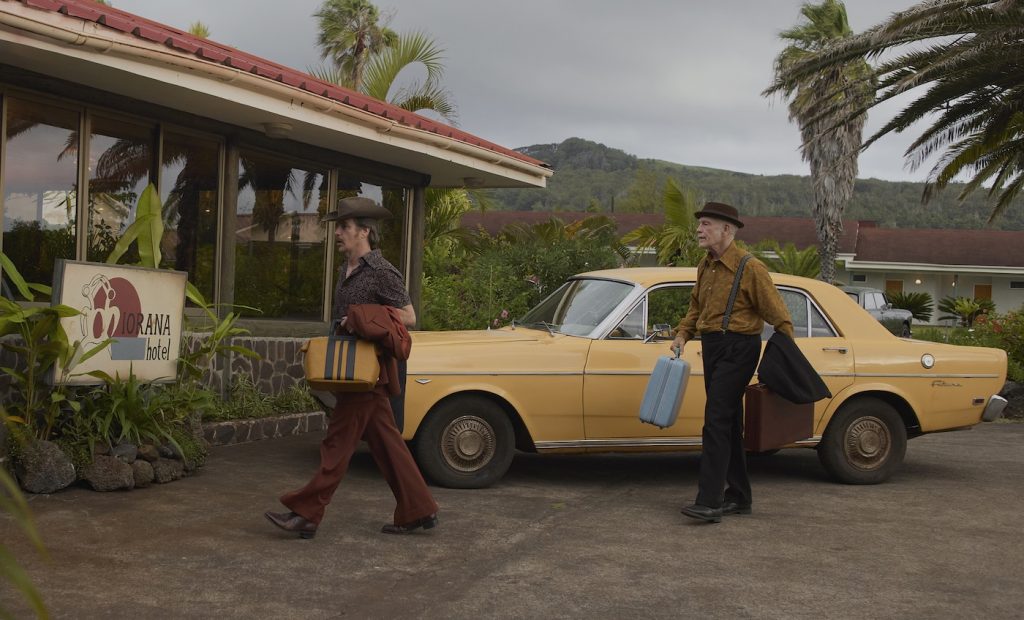
How were Chris and Lee’s personalities and state of mind revealed through their adjoining hotel rooms?
The layout may be identical, but we looked for subtle changes so you know which room you’re in. Due to his condition, Chris’ room starts to disintegrate as quickly as he does, and you see the bloody handkerchiefs hung up. We played with subtle color differences with the fabrics on the beds and sofas. We printed many carpets to create the restaurant and added glass partitions in certain colors and textures to enhance that ’70s feel.
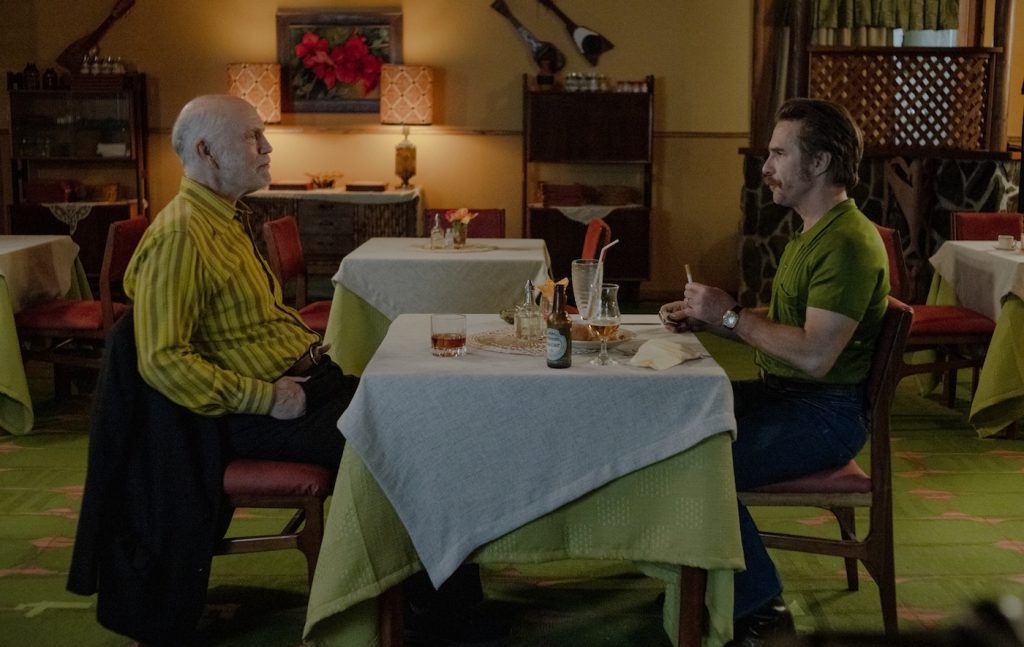
How big was your team?
It was tiny. We had three teams going at the same time. In Santiago and a six-hour flight away in Rapa Nui, then Mexico, and Georgia, plus Utah at the end. Aside from the set decorator, Niamh Colter, the construction manager, Steve Bohan, and the supervising art director, Mercedes Alfonsín, everyone else was from Santiago or local, since most of the film was shot on the island. The mosaics on the wall at Santiago Airport took a week and a half. The vehicles team was quite big.
A couple of emotionally charged scenes take place at Lee’s house in Utah when he calls his wife, Margie (Parker Posey).
The house was empty at the time. Originally, we wanted to be somewhere else, but we needed a location that worked for the three-day shoot in Utah. That was a very modern, beautifully designed prefab house. We only had to change certain things and introduce a bit more color to get away with a bungalow from the late ’60s. Visually, the landscape is absolutely extraordinary.
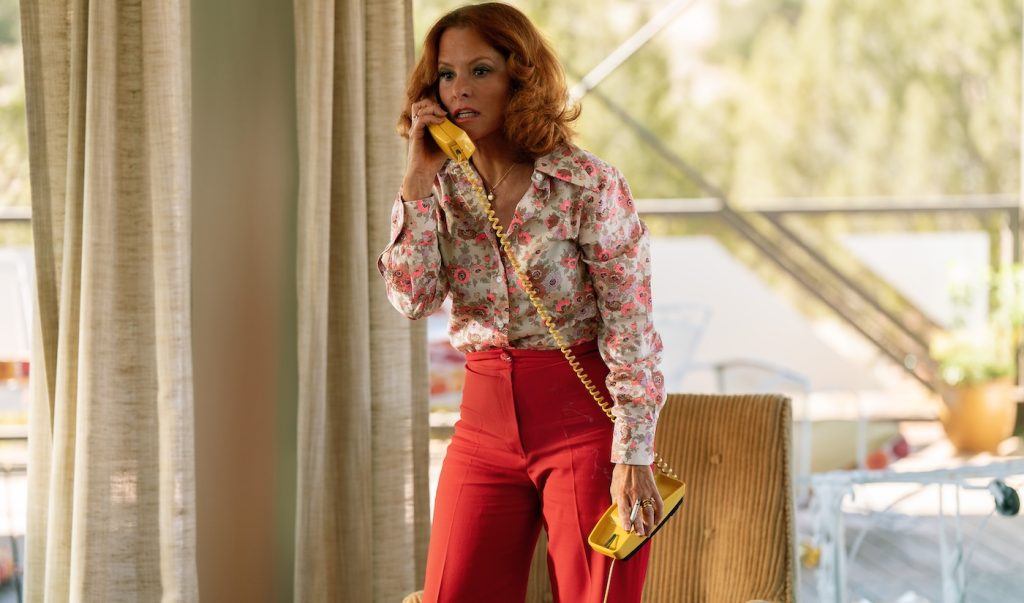
How did you customize it to Margie’s mercurial and eclectic nature?
She’s a playful, slightly paranoid, loud, and eccentric woman, so everything is loud and over-the-top. We see that in the lamps, the dressing, deck chairs and umbrellas outside, and her outfit. We had a great team in Utah. And then we built this garden, which would later be dug up by the people searching for something at the house. So that was quite a big number to install in the middle of the desert.
Let’s talk about what it took to transport the vintage cars to Easter Island.
The only way to get them there is by boat, but there is no proper [shipping] timetable, so we really had to plan ahead. It takes between 10 and 20 days for the bigger boats to travel, depending on weather conditions. The vehicles get craned off the boat onto the barge and brought to shore. At one point, we couldn’t unload due to weather conditions. So, we had to push some of the scenes. We needed two of each of the red and yellow vehicles plus 10 additional vehicles to the island, as well as production trailers, all the things that you don’t even think about on the mainland. There’s a bit of luck involved and a lot of trust. But we had the right combination of people with good humor who could work around every challenge.
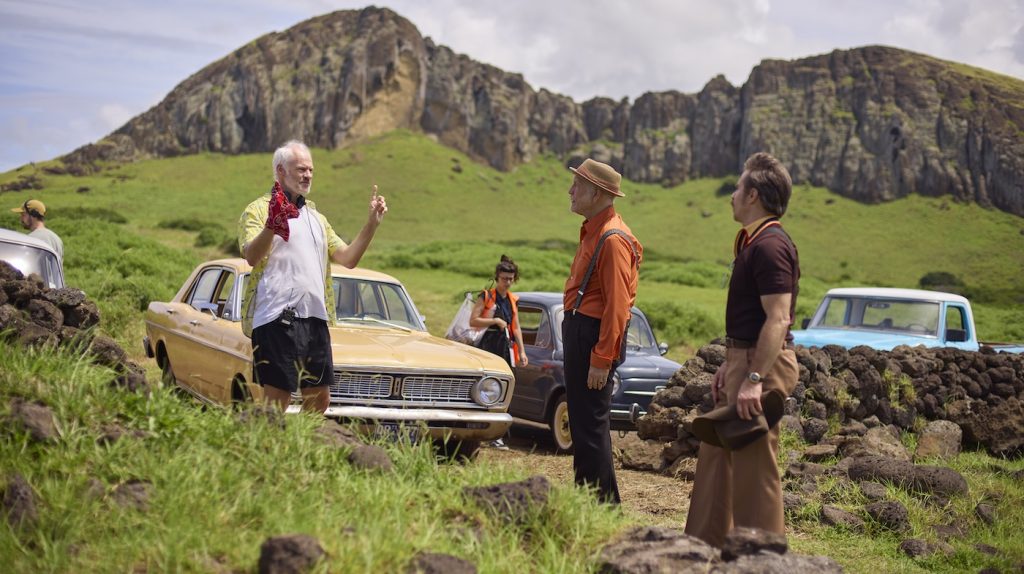
Released by Searchlight Pictures, Wild Horse Nine is playing in theaters nationwide.
Featured image: Sam Rockwell and John Malkovich in WILD HORSE NINE. Photo by Searchlight Pictures/Diego Araya Corvalán, Courtesy of Searchlight Pictures. © 2026 Searchlight Pictures. All Rights Reserved.