Georgia on Her Mind: How Steph Green Built the Emotional Landscape of “The Good Daughter”
Director Steph Green discusses adapting Karin Slaughter's The Good Daughter for Peacock, working with stars Rose Byrne and Meghann Fahy, crafting a character-first visual style, and balancing psychological suspense with an ultimately hopeful story of sisterhood and survival.
For director Steph Green, bringing Karin Slaughter’s bestselling novel The Good Daughter to the screen was an opportunity to explore the complicated bonds between family, trauma, and healing. The Peacock limited series, which Green directed in its entirety across six episodes, follows two sisters whose lives are forever changed by a devastating act of violence. Blending psychological suspense with an emotionally layered family drama, the adaptation required Green to balance the intensity of Slaughter’s storytelling with the quieter, deeply personal moments that define the sisters’ relationship. The sisters are Sam (Rose Byrne) and Charlie (Meghann Fahy), who deliver powerhouse performances as sisters forever bonded by trauma despite spending the past decade estranged. With Slaughter closely involved throughout the process, Green approached the project as a collaborative effort, drawing on the novel’s rich characterizations while developing a cohesive visual language that would carry the story from beginning to end.
Green was immediately drawn to the story’s exploration of sisterhood, particularly the tension and complicated affection between Sam and Charlie. As an older sister herself, she found an immediate personal connection to the material. “First of all, it’s a sibling story, a sister story,” she explains. “There are really impactful first events, and then it gives way, ultimately, to a story of reconnection between siblings.”
The opportunity to direct all six episodes was equally appealing. Having worked across both film and television, Green was particularly interested in the prospect of overseeing the series as a complete narrative rather than handing the story over to different directors as it progressed. “The opportunity to direct and to be holistic in my approach, to really understand beginning, middle, and end, and to take care of the actors and the series in its entirety, all the way through post, appealed to that core filmmaker quality of wanting to shepherd the entire story,” she says.
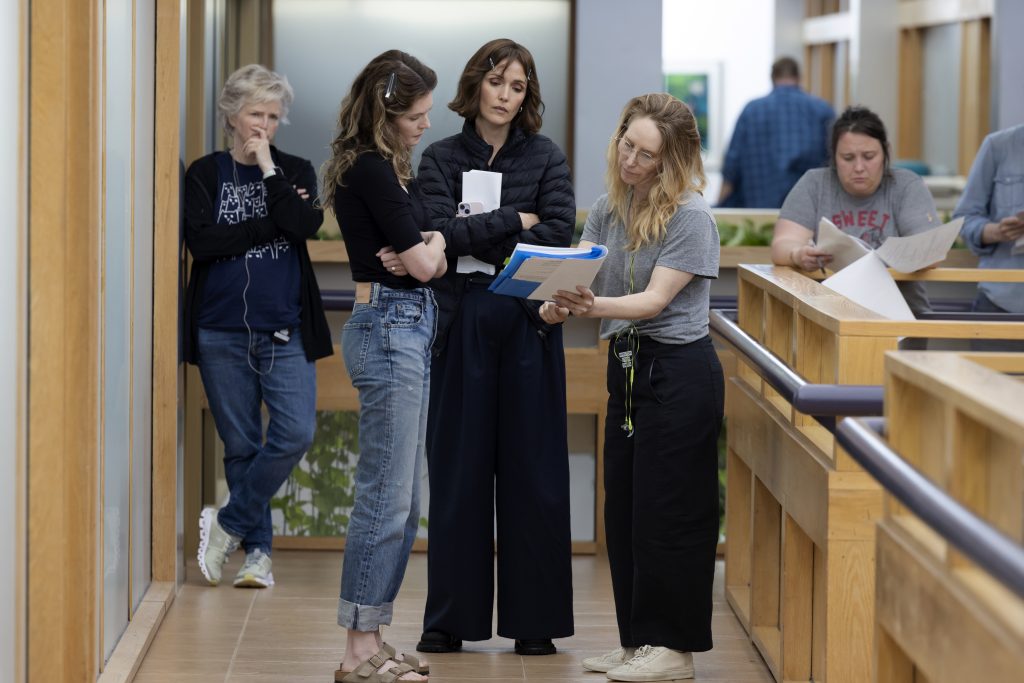
Additionally, Green was drawn by the opportunity to work closely with Slaughter, whose involvement as showrunner provided a direct connection to the source material. The collaboration began with an understanding that adapting a novel involves more than translating plot to screen. While the screenplay provided the foundation, Green frequently returned to the book for its additional layers of characterization, atmosphere, and internal detail. “One of the great benefits of working with Karin is that there’s only so much that fits on a screenplay page,” Green says. “I also had the book to refer to with so much nuance and detail and material about the setting and the characters and their internal thoughts.”
Green found herself bringing elements of the novel back to Slaughter, identifying moments that had not made it into the screenplay but could offer additional emotional or dramatic depth. “I would often go back to her and say, ‘Oh, this part didn’t make it onto the script simply because we didn’t have room. But I really love this, and this part’s really inspiring to me. Can we work with part of this getting into the script, or can I pitch you how I see this on the screen?’”
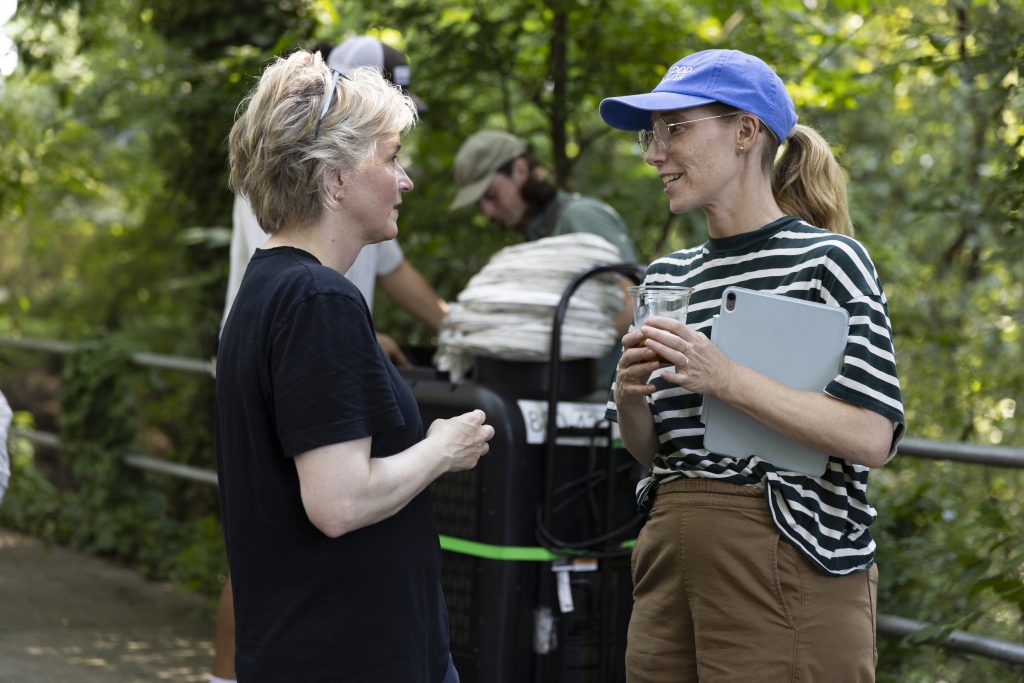
The collaborative process was strengthened by Slaughter’s ability to maintain a clear creative vision while remaining receptive to the contributions of her team. “She had that balance of wanting to be extremely clear in her vision, and she also wanted to be listening and open and hearing what everyone was bringing to the collaborative team,” Green says. “And she did a great job at both those skills.”
With a story spanning different periods in the sisters’ lives, establishing a consistent visual identity while allowing the characters and their circumstances to evolve was central to Green’s approach. Rather than leading with stylistic choices, she focused on the characters, using their emotional perspectives to guide the filmmaking decisions. “My personal style is to start with character at all times, which also fit with this project,” she explains.
One of the guiding principles was ensuring that the camera remained connected to the perspective of one of the sisters, whether following their younger selves or their present-day counterparts, Sam and Charlie. “The camera was always asking, ‘What are they seeing? What are they feeling? What are they thinking?’ That was our driving question at all times.”
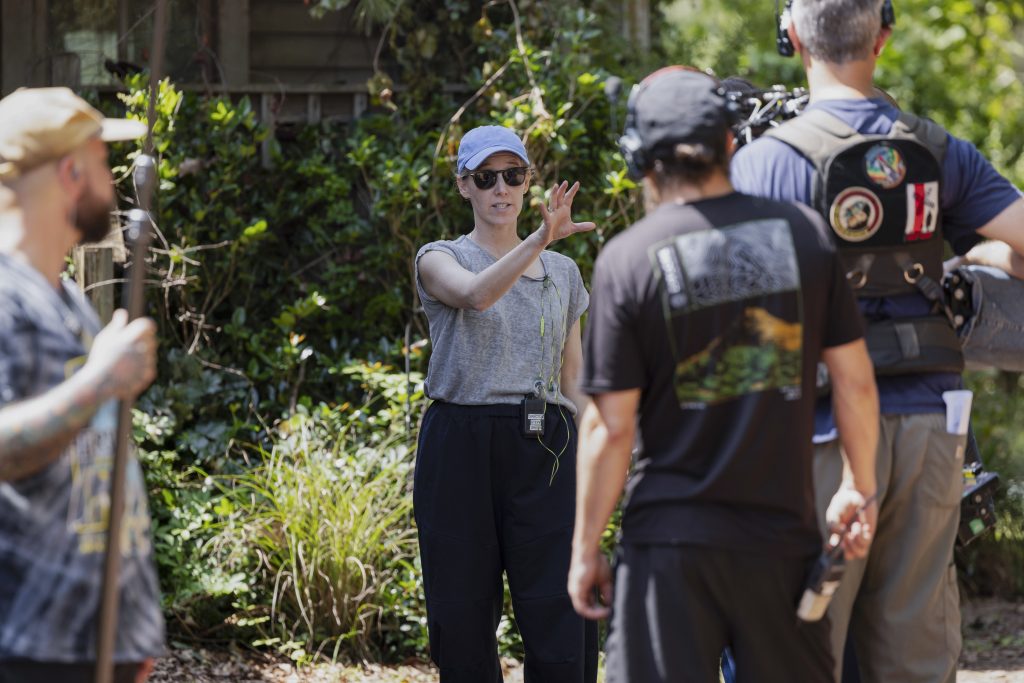
From there, Green and her team developed distinct visual approaches to the past and present. The earlier timeline was designed to feel warmer, reflecting a period when the family was closer, and the sisters’ world retained a sense of harmony. The present, by contrast, called for a different atmosphere, one shaped by emotional distance, decay, and the changes that had taken place over time. Green also considered how the visual language should respond to the story’s most significant turning points. Moments of violence, rupture, and eventual resolution each required their own treatment, allowing the audience to experience the emotional consequences of events rather than simply follow the plot. “Part of the great joy of this job is asking ourselves these creative questions,” she says. “Ultimately, we’re trying to do justice to each moment and to the story.”
This thoughtful approach was particularly important in balancing the series’ psychological suspense with its emotional core. Although The Good Daughter contains disturbing violence and deeply unsettling events, Green was equally interested in the humor, lightness, and possibility of healing that emerge throughout the story. For her, those contrasting elements were essential to capturing the full range of Slaughter’s writing. “We want you to feel shock, impact, pathos, but not to turn violence into spectacle or to celebrate it, or align in any way with the perpetrators of the violence,” Green explains. “We want you to align and stand with the survivors of that violence.”
The intensity of the opening episode was therefore a deliberate creative choice. Green understood that the difficult events experienced by the sisters needed to carry their full emotional weight if the audience was going to appreciate the strength, resilience, and eventual healing that followed. The mystery needed room to develop, allowing the story to move beyond its traumatic beginnings into a more complex examination of family relationships and buried truths. “If you don’t feel that impact and the incredible difficulty of what happens, then you can’t experience the moments of strength, coming back from that, healing and coming together or learning incredible new information that is revealing and explosive and entertaining,” she says.
Establishing the right environment was another essential part of bringing the novel to life. Set in Georgia and filmed in Atlanta and surrounding areas, the story’s small-town setting plays an important role in shaping the characters’ experiences. Green approached the locations as an extension of the sisters’ emotional journeys, particularly the contrast between Charlie, who has remained in her hometown, and Samantha, who fled and never expected to return.
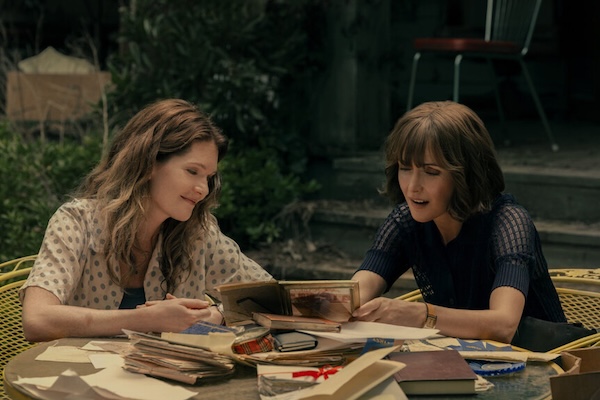
The production involved extensive location scouting, with Green and her team working to assemble a town that could feel both authentic and dramatically expressive. They needed a place that could become suffocating for the characters at certain moments while still representing home, familiarity, and refuge at others. “We looked for a farmhouse that we could transform, something that we could move through time so that it was serving them in a certain way as children, then we would see it evolve,” Green explains. Slaughter’s familiarity with North Georgia proved invaluable during the process, providing an important measure of authenticity when evaluating locations and their suitability for the story.
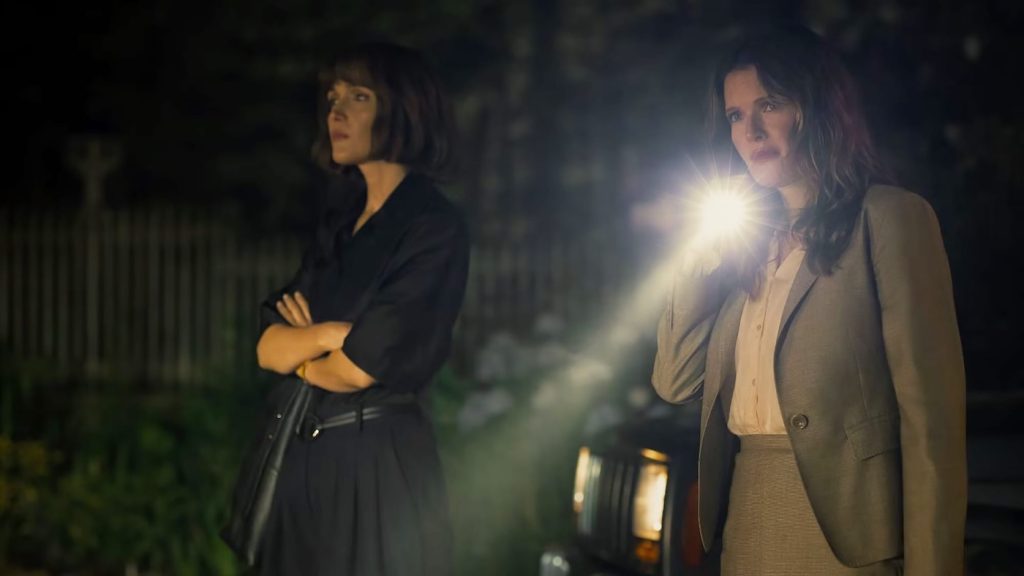
Green was also interested in how the characters experienced each environment. Charlie, for example, is deeply connected to nature and animals, and has managed to create a sense of sanctuary within her surroundings. Samantha’s return, meanwhile, brings an entirely different emotional perspective. “When she does come back, how that can feel like an assault on her senses,” Green says. Ultimately, every location was considered in terms of its psychological effect. “Again, it all starts with character and how we want our characters to feel in the space, and by extension, how will our audience feel in the space.”
The production also faced unavoidable challenges beyond the creative demands of adapting such emotionally difficult material. Green placed particular importance on maintaining a safe and supportive environment for the cast, especially the young actors tasked with portraying disturbing events. She was careful to distinguish between what an actor needed to communicate on screen and what they actually needed to experience during filming. “Even though a young actor is portraying a deeply troubling event, it doesn’t mean that they are directed to be experiencing that event while they perform it,” she says. Green would often use unrelated scenarios to guide performances, telling young actors to imagine receiving a bee sting during a close-up rather than asking them to draw on genuinely traumatic emotions.
Less emotionally demanding, but equally unpredictable, was the weather in Atlanta, where sudden thunderstorms and rain could interrupt major scenes without warning. The production had to remain flexible, sometimes shifting between entirely different scenes depending on the conditions. Green credits the cast with being particularly accommodating. She recalls one memorable instance involving Jake McDorman, who plays the character of Huck, who was delivering an emotional monologue outside the farmhouse when the weather abruptly shifted from sunshine to thunder and rain. Rather than allowing the interruption to derail the production, he adapted and moved on to another scene. For Green, these moments reinforced the importance of having a cast willing to embrace the unpredictable nature of filmmaking.
As audiences discover The Good Daughter, Green hopes the series will satisfy longtime admirers of Slaughter’s work while introducing new viewers to the author’s distinctive storytelling. Above all, she wanted to honor a novel that explores the experiences of women who have endured profound trauma and the difficult process of finding a way forward. “I hope what we’ve done here has done justice to Karin’s incredible book, and to her voice in general,” Green says. “I hope we’ve met and elevated her incredible voice.”
She is equally enthusiastic about the performances at the center of the series, singling out Fahy and Byrne for the emotional range they bring to their roles, as well as Brendan Gleeson, who plays their father, Rusty, for portraying a character audiences may not have seen him play before. “The actors and the range and breadth of what they show in this series are incredible.”
For Green, the ultimate goal was to create a compelling mystery without losing sight of the human relationships that give the story its emotional resonance. By combining Slaughter’s intricate storytelling with a character-driven visual approach and a strong collaborative spirit, she has sought to bring a complex story of violence, family, and reconciliation to the screen in its fullest form.
Watch The Good Daughter limited series, now streaming on Peacock.
Featured image: Rose Byrne and Meghann Fahy in “The Good Daughter.” Courtesy Peacock.