“The Only Living Pickpocket in New York” Writer/Director Noah Sagan on Capturing John Turturro in His Element
The Only Living Pickpocket in New York is a throwback to classic character-driven thrillers—in an interview at the Toronto International Film Festival, director Noah Sagan name-checks The Friends of Eddie Coyle as an inspiration. The Only Living Pickpocket is a modern relative of Peter Yates’s iconic film, as well as desperate and sweaty crime films like Straight Time and Cutter’s Way.
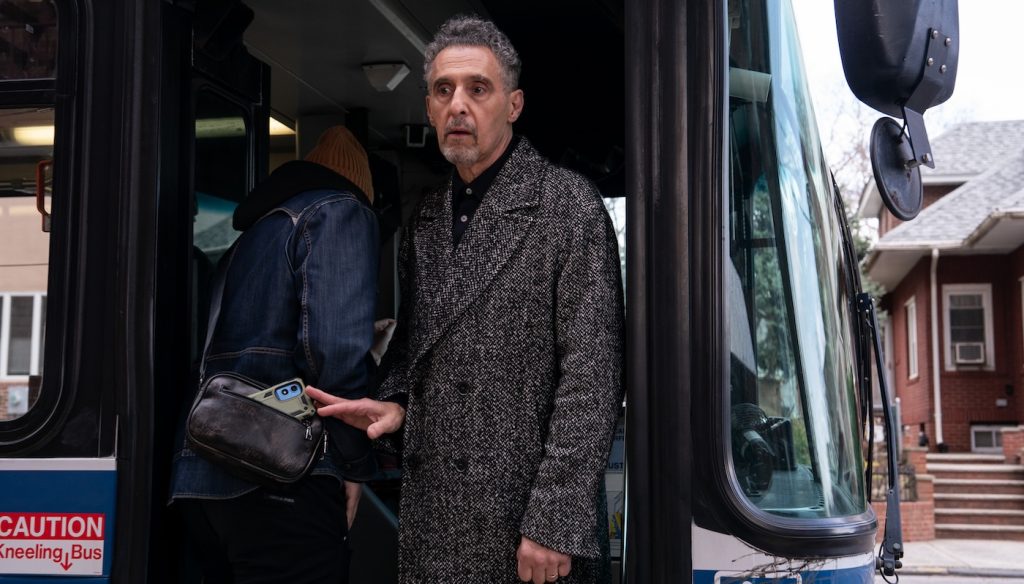
Sagan’s anti-hero, Harry Lehman (John Turturro), is a man running out of time, literally and metaphorically. The ace pickpocket, a man who views his profession with the meticulousness of someone sculpting bonsai trees, finally picks the wrong pocket and finds himself in a world of trouble. The pocket belongs to a snotty kid with family ties to the mob. Lehman has snatched the kid’s hard drive, and he’d already sold it by the time he realizes he desperately needs it back to save himself, his wife Rosie (Karina Arroyave), and his partner-in-crime, Ben (Steve Buscemi).
The Only Living Pickpocket in New York has both urgency and the confident, lived-in quality achieved by pitch-perfect performances across the board and a setting that provides ample character itself. Sagan’s film is more than a love letter to New York, but a study of time and how we cope with losing it. With Turturro in every scene, Sagan had one of the best faces in show business, if not New York, to tell his original story about a city that means the world to the filmmaker.
Given how old-school this movie is, what feeling did you want The Only Living Pickpocket in New York to evoke?
Just the tiredness of the hustle. I think there’s a physicality, there’s a tactile sort of thing that we’ve maybe gotten a little further away from in terms of just what it takes to go through a day.
When you have a layered face like Turturro’s with a full history of moviemaking and life, how do you want to light him?
I’ve got the best face of all time. Cinematographer Sam Levy knew John a little bit. Everybody in New York knows each other. I don’t think they’d ever worked together, but they’d met. And Sam is, again, sort of a non-mutual exclusivity guy. He’ll mix digital photography with ancient lenses, and he doesn’t overdo it when it comes to lighting. We actually used some of his mentor Harris Savides’ (Zodiac) lenses. They were lenses that had aberrations, and they were a little clunky. We left all that in there just to, I think, lend as much as we could to a face like John’s or a city like New York.
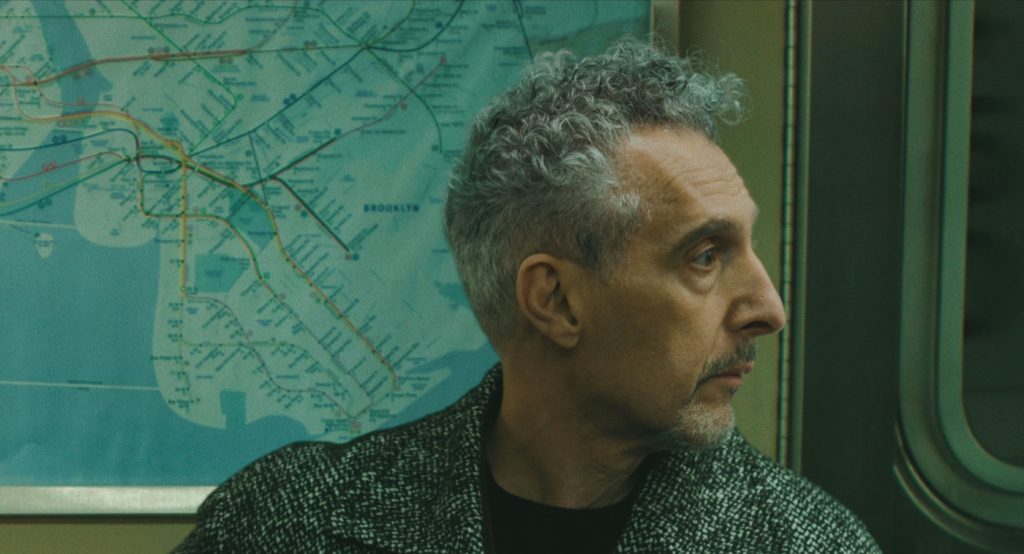
You can see the Savides connection – just having that sense of stillness and observation with the camera.
I didn’t want to make a movie that gave you anxiety. I have enough anxiety. I thought that there was enough genre in the movie to really let the actors shine. John, Steve, and Giancarlo [Esposito], these are people we’ve known our entire lives. Let them cook. Obviously, it is a genre movie. It’s a crime movie. It’s a mafia movie. It’s a New York movie. I think it has all those things going for it. As a result, I took advantage of, okay, we’re protected within the genre box. Let’s let these actors act.
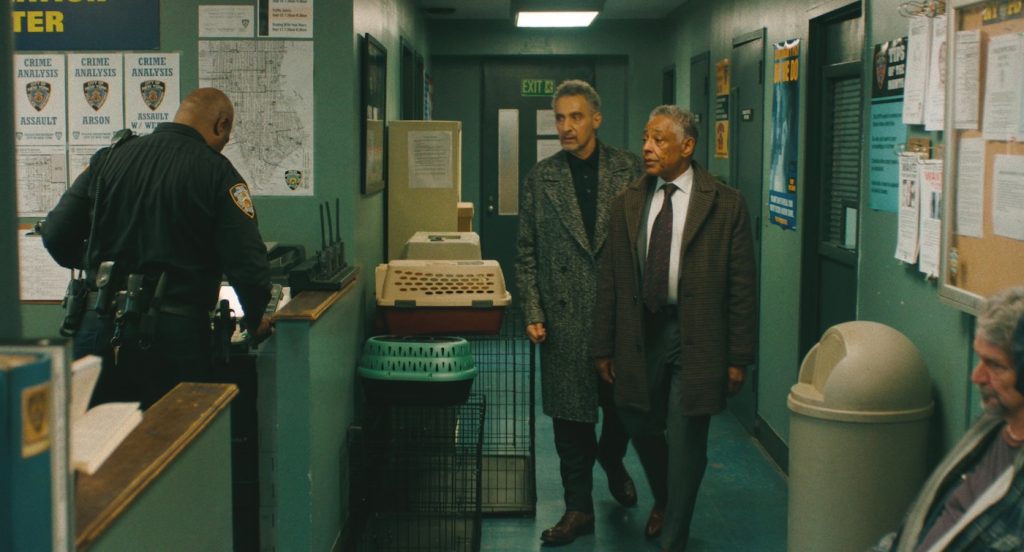
Only Living Pickpocket in New York.’ Courtesy of Sony Pictures Classics
When did Harry Lehman first come to mind for you? What about him interested you as your protagonist?
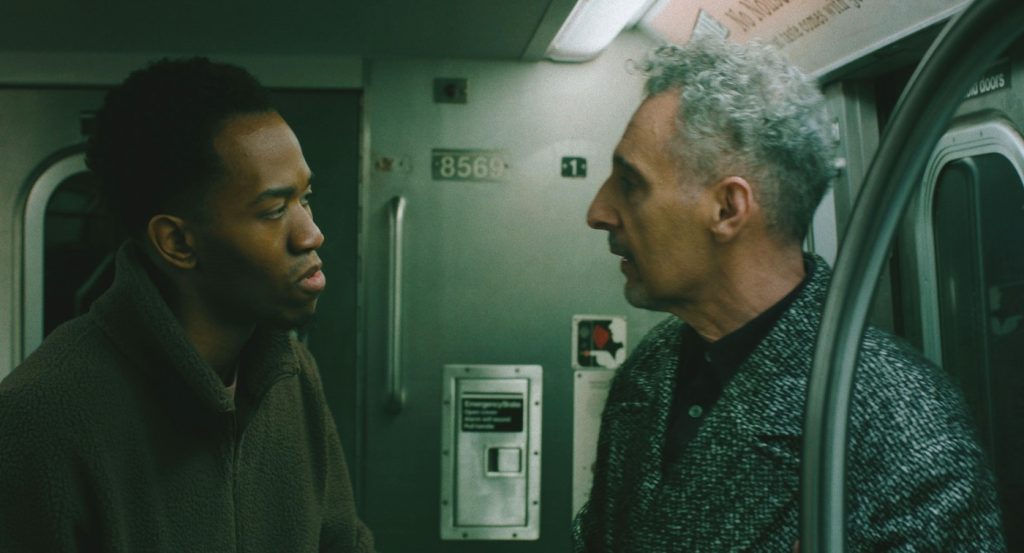
Honestly, it was the first scene of the movie. It was the idea that this guy is in the background of your subway car, and he’s innocuous, and he’s just another rider that you don’t even realize until it’s too late. I think that concept gave me the battery in my back to keep moving forward and keep coming up with the necessary mechanisms to further the story. There’s sort of nothing there until you have something that means something, which is why that scene with Tatiana [Maslany] is so crucial because if that scene doesn’t work, he’s not a real person. He doesn’t have a history. What are the stakes?
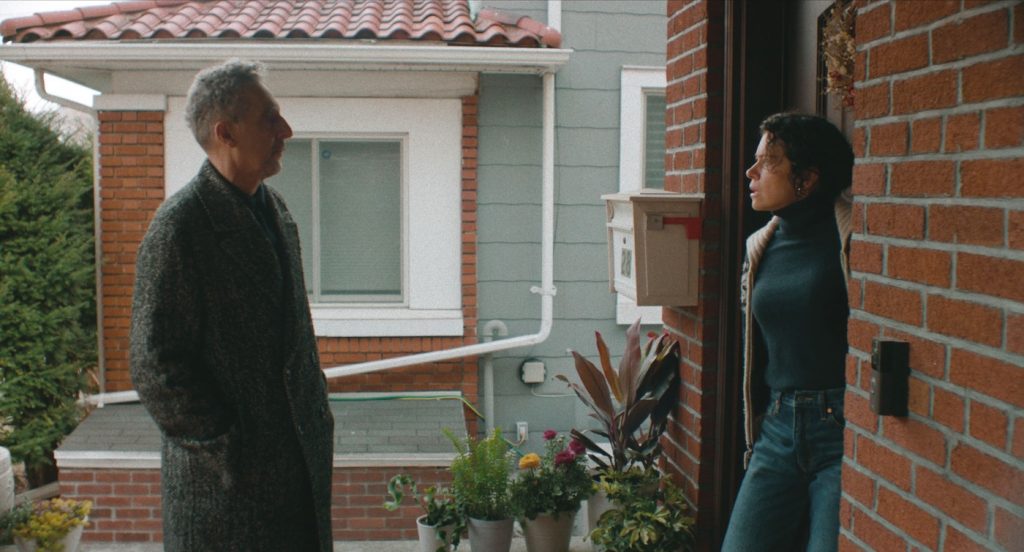
Pickpocket in New York.’ Courtesy of Sony Pictures Classics
How does John’s experience as a director influence how he works with a filmmaker?
My lead actor is a very accomplished writer and director. John and I were able to communicate on every single aspect that was available to us because of his experience. Same goes for Giancarlo Esposito, actor/director, and Steve Buscemi. Steve directed the best episode of television of all time, The Sopranos‘ “Pine Barrens.”
Incredible episode.
I mean, that is probably the best episode of television of all time. I was spoiled to have access to these guys, not just as actors, but as filmmakers.
Turturro’s Romance & Cigarettes is a great movie, too.
I know, I know. Mac, his first movie, is great too.
What key lessons from your directorial debut, Blood Relatives, did you bring to this film?
Time. Just try and get as much time as you possibly can. There’s never enough time. The fish will grow to whatever size fishbowl you put it in, but always ask for more time.
There’s such a long history of great New York City movies, but are there any sides of the city you don’t always see on film or television that you wanted to highlight?
We shot in all five boroughs, which is rare. Going through New York City with John Turturro is like traveling the savanna with a lion. People are shouting, “I love you, John.” There’s actually one of the first scenes when he goes to the Bronx; you actually see him cross the street, and you long-lens across the street. If you look closely, you can see that there’s a little kid who daps him up as he walks past, who is not an extra. This is not a professional. This is some kid who’s like, “John Turturro, all right.” So, I think it was just nice to show parts of the city that we don’t see that often and to really embrace the boroughs. There is a reason that it is the most diverse place on Earth. It’s not just Lower Manhattan.
Is there pressure in making a New York movie, given the history of great New York movies?
It’s not just the history of New York movies. There’s my great-grandma and my great-grandpa who sold tires on 18th Street. Is he going to come back from the dead and throttle me for disrespecting our city? We’ve been in New York a long time, my family. It’s pressure. New Yorkers don’t question their crib. Although I will tell you a funny story.
Please do.
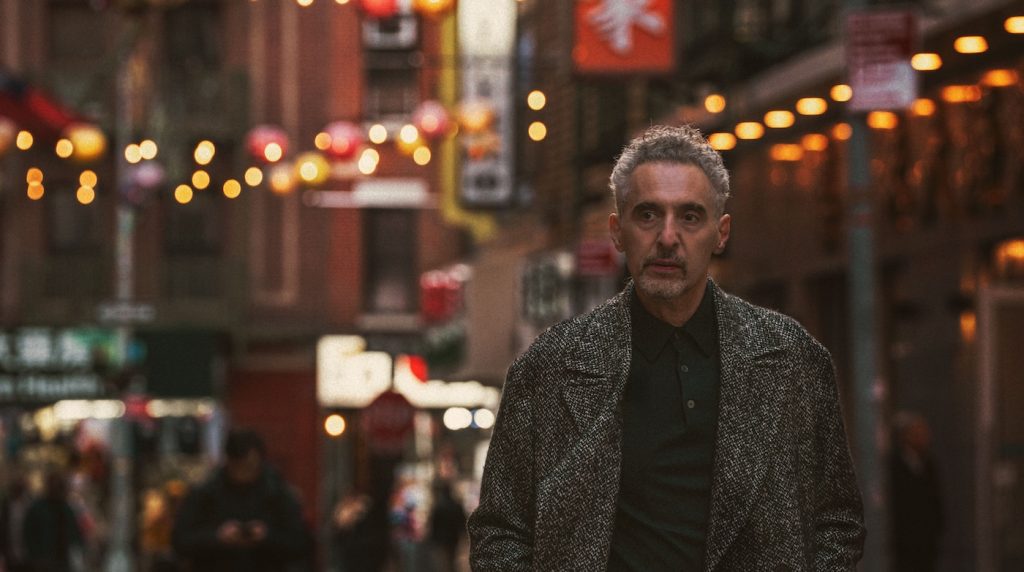
We shot down in Chinatown a couple of days. Every block in New York has a guy who sits on the stoop outside. The guy who sat outside on the stoop on this street, Catherine Street in Chinatown, was named Eddie. And Eddie was not in a good mood. Eddie didn’t like us shooting on his block. I don’t think Eddie liked anything. But I think Eddie found his path in life, which was to kick it on the stoop. You do you, Eddie.
But?
But the thing was that Eddie did not want us shooting in front of the block. And so, people were like, “Eddie, can we shoot here? Your music is…” “No, you can’t shoot.” This was early in the shoot, the first week of the shoot. Finally, I said, “Eddie, Eddie, if you walk around the block, I’ll give you $20.” He said, “All right, give me $20.” I said, “No, Eddie, walk around the block, and then you get your $20.” John Turturro looked at me, and he said, “Wow, you really are a New Yorker.”
[Laughs] That is a great story. How are New York crew members?
It’s the best crew of all. We had the best group. I mean, everybody is based out of New York, but not necessarily from New York. I mean, everybody had a New York vibe. It’s a very tough crew. You have to have a tough crew.
The Only Living Pickpocket in New York is in theaters now.
Featured image: John Turturro in “The Only Living Pickpocket in New York.” Courtesy of Sony Pictures Classics.