Palm Trees, Production, and Possibility: Screenwriter & Producer Jaimie Engle on Florida’s Filmmaking Future
Right now, Miami Vice ’85 is filming in the only place it should, and it’s right there in the title. It’s a major production that will ripple through the broader Miami economy. Directed by Top Gun: Maverick helmer Joseph Kosinski from a script by Andor creator Dan Gilroy and starring Michael B. Jordan and Austin Butler, Kosinski’s adaptation of the iconic mid-80s series is appropriately filming in the 305.
This is the type of location filming that screenwriter and producer Jaimie Engle, a proud Floridian, would like to see more of. As Congress considers the Motion Picture and Television Entertainment Revitalization Act (MPTERA), advocates nationwide are making the case for policies that help keep film and television production in the United States—which could put Florida, a state without its own production incentive program, on the map as a filming destination. Engle, a member of Film Florida’s Legislative Committee, has projects that are rooted in the communities she calls home.
Engle joined a recent discussion with industry stakeholders to share a writer and producer’s perspective on why incentives matter. For her, the issue isn’t simply about where a project gets made. It’s about supporting local economies, creating opportunities for workers, encouraging film tourism, and giving filmmakers a fighting chance to tell stories where they actually take place. It’s also about a simple concept: making the United States, the spiritual and cultural birthplace of the film industry, competitive with countries that currently offer extremely favorable incentives to capture projects that could, and often should, be made in the U.S.
We spoke with Engle about Film Florida’s advocacy efforts, the economic ripple effects of production, and why she’d love to see more homegrown stories stay in the Sunshine State.
You’ve spoken about the broader economic impact of production. What do you wish more people understood about it?
Sometimes people think these discussions are about helping Hollywood, but that’s not really the point. A production supports an entire ecosystem. It’s the crew, the transportation workers, the construction teams, the local vendors, the hotels, the restaurants, the coffee shops. All of those businesses benefit when productions come to town. And today that ecosystem lasts much longer than it used to.
You start building an audience before a project is even produced. Then the movie or show comes out, and years later people still visit locations, buy merchandise, post on social media, and engage with the story. The economic impact doesn’t end when filming wraps.
How did you get involved in conversations surrounding the federal production incentive proposal?
John Lux from Film Florida asked me to participate and share my perspective as a screenwriter. I’m on Film Florida’s Legislative Committee, and I think the goal was to help connect some of the conversations happening at the state level with the discussion around a federal [production] incentive. I’ve got a feature film called Just Jake that was shot in Colorado, but I actually wrote it to take place in Cocoa Village, near Port Canaveral. That’s a community I know well, and it’s a place with a lot of character. When productions leave, you lose opportunities not only for local workers but also for the communities that could benefit from that exposure.
And that’s one of the major goals of this legislation: giving communities where stories are set a fair chance to host the productions themselves
Absolutely. I have another project, Metal Mouth, which is being developed as a potential television series. The story is set in Brevard County, Florida. That’s where it’s from, that’s where my roots are, and of course I’d love to see it filmed there. I’m realistic. That doesn’t mean it will happen. Productions make decisions based on a lot of factors. But if incentives help make Florida competitive, then at least I can bring that argument to the table. Right now, too often, projects end up going wherever the incentives are strongest.
Film tourism is also often overlooked, but it’s very, very real. I’m from suburban Philadelphia, and I’ve run up those Rocky steps myself a few times.
It’s very real. People don’t just want to watch stories anymore. They want to experience them. One of my friends recently spent two weeks in New Zealand doing a Lord of the Rings tour. People visit the Rocky steps in Philadelphia. Fans travel to locations they’ve seen on screen because they want to feel connected to those stories. I experienced that myself when a friend visited the town where Just Jake was filmed and sent me a tote bag from a local coffee shop that appears in the movie. Those kinds of connections matter. They create lasting economic value long after production ends.
How has that filming ecosystem changed in recent years?
People consume stories differently now. My son is 19, and when I look at how his generation interacts with entertainment, it’s not just about watching a movie. It’s social media, travel, fandom, merchandise, events. Stories exist across multiple platforms and experiences. When fans love something, they become super fans. They want to visit locations, stay in themed hotels, share experiences online, and be part of that world. That’s something policymakers sometimes underestimate when they’re looking at the economic value of film and television production.
From what I’ve heard from filmmakers, the idea is less about making America the cheapest option and more about making it competitive with other countries.
Exactly—it just has to be competitive. If the difference in production costs is reasonable, filmmakers can argue for shooting where the story actually takes place. But if the gap is too large, those decisions get made for you. We’re competing not only with other states but with countries around the world that have built very strong incentive programs.
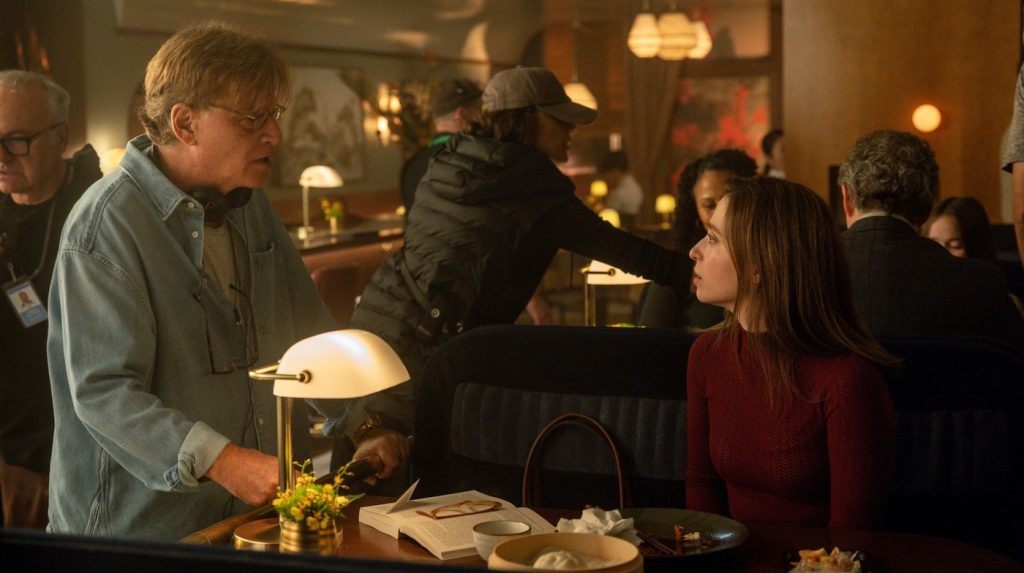
That’s the point Aaron Sorkin made to us when we were deciding where to film The Social Reckoning. They ended up filming in Canada because it was so much more cost-effective; he just wanted California to be competitive with Canada, and he might have filmed there.
I’m gonna have to quote you that you just said that me and Sorkin said the same thing!
You did! You grew up seeing production activity in Florida firsthand. What was that time like?
When I was younger, there were a lot more opportunities in Florida. I acted, had an agent, appeared in commercials, and worked on productions shooting in the state. I was in Happy Gilmore. I was in Matinee. I even played an alien on seaQuest. So, we’ve done this before. Florida had a thriving production ecosystem. That’s one reason I feel strongly about these conversations. We’re not trying to create something that never existed. We’re talking about rebuilding opportunities that once existed here.
What makes Florida a uniquely valuable production destination?
Every state has something distinctive to offer, and Florida certainly does. There are visual elements you simply can’t recreate somewhere else. The palm trees. The coastline. The atmosphere. The communities. When you watch something like Bloodline, it feels undeniably Floridian. The setting is part of the story. That’s true of many projects. Some stories belong to a particular place, and there’s real value in being able to film them there.
You write, develop, and produce projects while living in Florida. How does that shape your perspective?
I work with creators from all over, helping them develop projects from the earliest stages. I landed a DreamWorks deal, developed Just Jake, and worked on current projects from my laptop in Brevard County. If I can write the project here, build relationships here, and develop the project here, it makes sense to ask why the final production can’t happen here too. Again, it doesn’t mean every project will stay home. Filmmaking is a global business. But we’d like to have a fair chance.
Is there anything else you’d like people to understand about this issue?
I think the biggest thing is that industries have to evolve. Technology changes. Distribution changes. Audience behavior changes. The companies and communities that adapt survive. We can’t afford to be a locomotive in an airplane world. People have more choices than ever for how they create and consume entertainment. If we want professional film and television production to remain strong in the United States, we have to make it possible for productions to compete here. At the end of the day, I don’t think that’s an unreasonable goal. We’re not saying every project has to be filmed in Florida. We’re just saying it should be competitive enough that it’s part of the conversation.
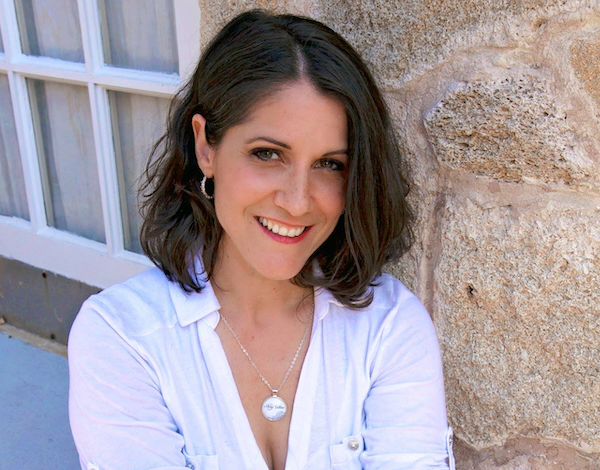
Featured image: Jaimie Engle.