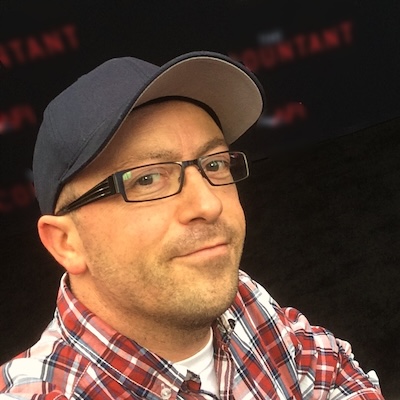
The Soul of “Wildwood”: Travis Knight on Portland, Artistry, and the Power of Human Storytelling
Director Travis Knight says LAIKA Studio’s sixth feature, Wildwood, is not just a love letter to Portland, the Oregon city it calls home. Still, it’s a clarion call to the industry: keep community, sustainability, and humanity at the heart of storytelling because it’ll be better for it.
Wildwood, based on the bestselling novel by The Decemberists’ lead singer Colin Meloy, tells the story of headstrong teenager Prue McKeel, voiced by Peyton Elizabeth Lee, whose baby brother is abducted by a murder of crows. Accompanied by her nerdy friend Curtis Mehlberg, voiced by Jacob Tremblay, she heads off on a desperate rescue mission into the enchanted forest on the outskirts of Portland known as the Impassable Wilderness. There, they encounter a world of talking animals, bandits, and powerful figures, and find themselves caught in a fight to save Prue’s sibling and the Impassable Wilderness from the grief-stricken, vengeful Alexandra, the Dowager Governess, voiced by Carey Mulligan. Wildwood‘s voice cast also boasts Mahershala Ali, Awkwafina, Angela Bassett, Jake Johnson, and Charlie Day.
Here Knight, who is also LAIKA’s CEO, tells The Credits why so many of the world’s best animators and artisans are flocking to his Oregon studio, how the studio supports the community, and how AI can never replace the human experience.
Wildwood is a great fantasy movie, but it’s also an incredible love letter to Portland, the studio’s home, and that’s a first for the team.
It helps that I’m a Portlander, born and bred. Our studio is based in Portland. A Portlander wrote the book this movie was based on. A Portlander illustrated it. It could not be a more Portland movie, and that was a great joy for me personally. As a big fantasy geek, I have always loved extraordinary stories set in far-flung places, but the idea that Portland could join those great fantasy realms like Middle Earth, Oz, or Westeros was crazy to me. We brought this place we know and love so intimately to life on the big screen, along with the people who live in it. Portland has its own unique idiosyncratic character, its own personality, just like every place does, although Portland’s probably a little weirder than most, and it was so much fun to bring that to life on the big screen.
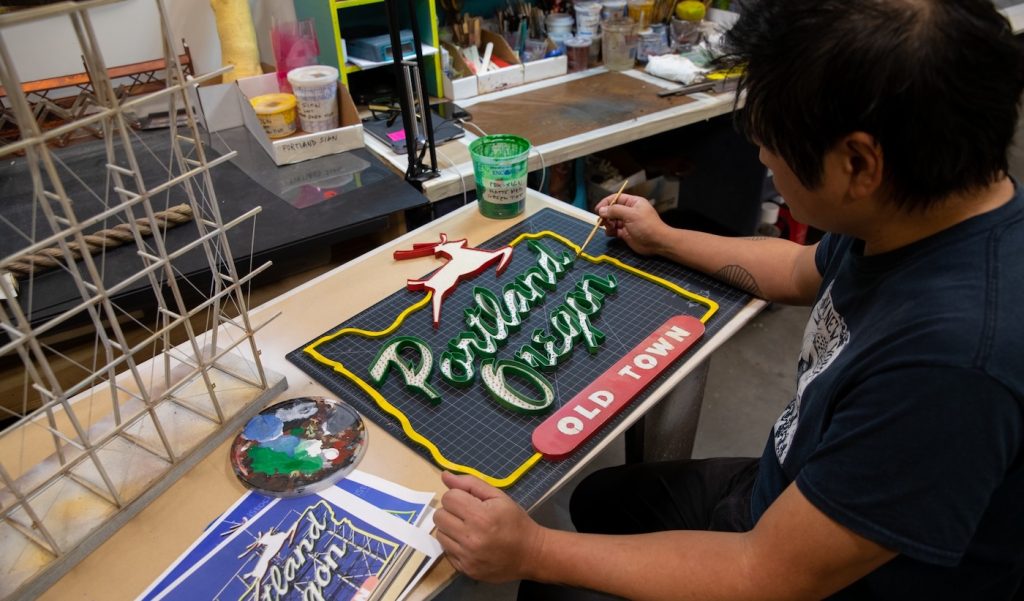
Portland and Oregon have infrastructure that supports filmmaking. How important is that to just being able to do what LAIKA does daily?
I would say this: It’s hard to make any movie, and the more supportive and robust the infrastructure around you, the easier it gets. Portland is definitely not one of the planet’s central film hubs. It is not Los Angeles, New York, or London, so I’m very proud that we have set up shop there and become something of a magnet for people who do this kind of work. We scour the planet for the greatest artists and craftspeople who can do this kind of work, and we bring them to Portland. We’ve created this really wonderful community, and I’ve been really proud that other people have seen this community we’ve created and have come to Portland to try to take advantage of that, because the more of this sort of thing that happens, the better.
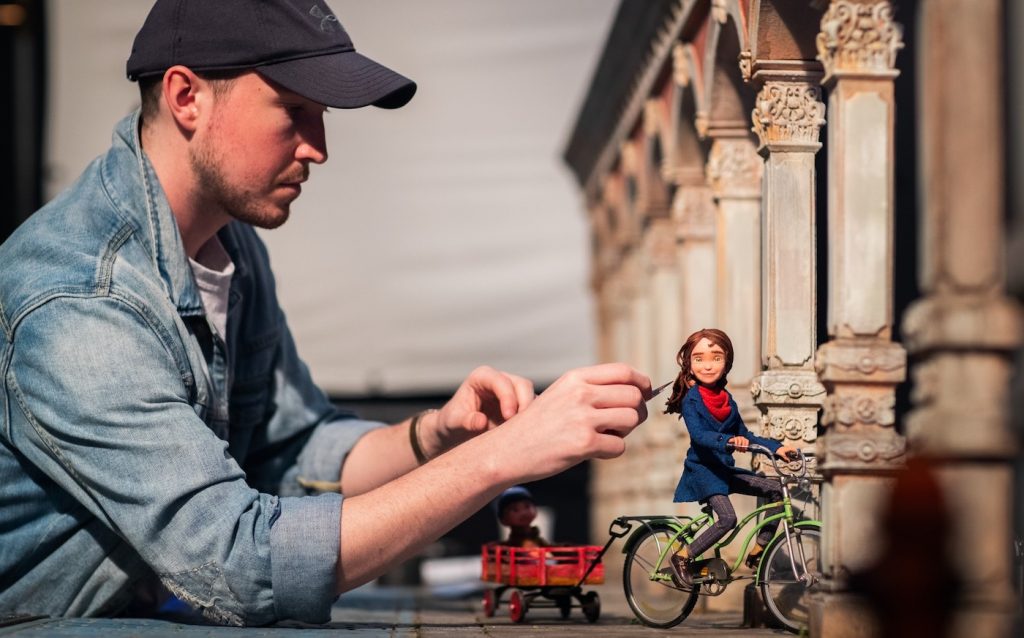
You’ve described many of the key people involved in Wildwood. Screenwriter Chris Butler is from the UK, and so are animator Tom Carey and costume designer Deborah Cook, while lead animator Rachelle Lambden is from Canada, and the list goes on.
One of the things I love most about filmmaking is the collaboration. You bring together people from different parts of the world and cultures whose upbringings aren’t like your own, and everyone brings their own life experiences. When we make a movie, what comes out is unique and distinctive because of the group of people who made it. LAIKA is like an accent stew when you wander around the studio, so we embrace it and bring it into our storytelling. It’s absolutely critical to telling interesting stories.
When it comes to things like federal and state funding, you are very open to having conversations with political power players, whether it’s at the local level or in Washington, D.C. Why are you so proactive?
We’re definitely increasingly seeing a conversation about that sort of thing. Something that’s made the news recently is the national tax credit being discussed, which has never been seriously considered before. These things are important to think about because the film communities give so much back to the wider communities they make these movies in, more so than most people think about. They think about the celebrities, the glitz, and the glamor, but they don’t think about the hundreds of thousands of jobs that support the community that benefits from these productions. Film is one of the great gifts this country has given the world, and I think it is important we don’t lose it. If we don’t fight for it, we will lose it.
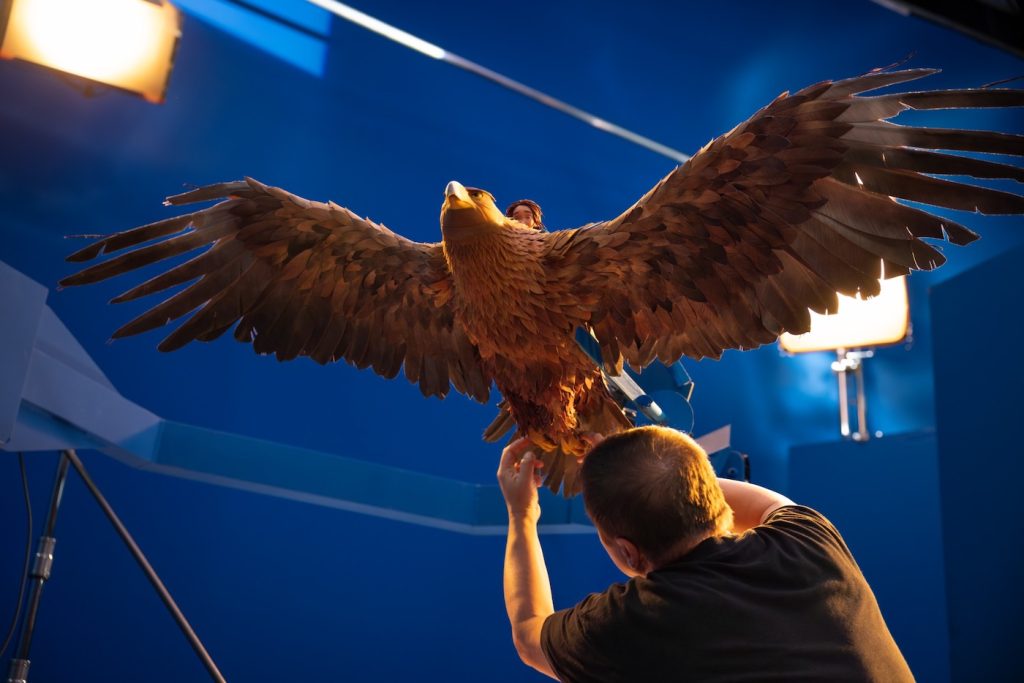
Something a lot of people don’t think about is a studio’s environmental impact. Why does that matter to LAIKA, and should more studios take a lead from what you are doing?
It’s very important for us. Sustainability is a huge part of what we do. Films take a lot of energy and resources, and we absolutely do not want to be wasteful. We want to be good stewards of the planet that we’ve been given. I’m very proud that, over the years, we have been awarded multiple awards for our sustainability. It’s a huge part of what drives us and what we do. We don’t advertise these things blatantly, but they’re important. Hopefully, if you care about our legacy and the world we leave behind for the people we love, you’ll see it as important too.
Is that empathy part of why you can attract the level of talent you do? People do think about the impact of the companies they are working for.
It’s hard to know why anyone wants to work with me (laughs). I have no idea, but I feel very blessed when anyone says yes. That wasn’t my high school experience, but I think people want to be part of something beautiful. When I look at the history of what we’ve done at the studio and what we stand for, we want to make movies that matter, tell stories that mean something, and create things of great beauty that connect with people. When I look back at the amazing artists who have worked with us over the years, I see that this work means something to people. I consider myself blessed because we’re not a multinational media conglomerate. We are a small independent studio based in Portland, Oregon, and the fact that we’ve been able to attract these world-class artists to our little shop in Portland shocks me on some level, but I’m very grateful for it. I do think people want to make things that matter.
You’ve been very vocal about AI. A lot of people in the industry say, ‘Travis, it’s inevitable. You’ve got to open the crack for the wolf at the door.’ Do you? How long do you think you can genuinely hold off?
I think both things can be true. It is inevitable. It’s not going away, and the genie is out of the bottle. The hope is that as a society, we can be responsible stewards of this extraordinary technology. I can see why people fear it. I am. It represents an extraordinary achievement in what technology can do. Still, like every piece of technology, it has no soul behind it, especially when you’re talking about storytelling and film. That’s a distillation of what storytelling is. It’s one human mind, soul, spirit, and imagination going from one human to the next, and AI has no humanity. It has never lost someone, had its heart broken, fallen in love, or lost a brother, so it can’t speak to those things. It can ingest a bunch of things and regurgitate an approximation, but there’s no soul behind it. Only a person can tell those types of stories. The hope is that no matter where this goes, people have a right to be cynical and pessimistic. However, by nature I am an optimist; I’m hopeful that people see the value in human creativity, ingenuity, human art, in humanity generally, and try to find a reasonable balance. At LAIKA, we’ll do what we can. We always put the human artist at the center of everything we do, and we hope others will follow our lead.
Featured image: Wildwood. Courtesy of Laika.