
No Saints, No Saviors: Zoe Kazan on Florence Pugh’s Incendiary Performance as Cathy Ames in “East of Eden”
In the opening seconds of East of Eden, writer/executive producer Zoe Kazan gives voice to the story’s prime mover, Cathy Ames, when Florence Pugh speaks softly over a scene of horrific violence. “A child may be born perfect of body but without kindness,” she purrs. “To a monster, the norm must seem monstrous.” The trailer for the 1955 movie, based on Nobel Prize winner John Steinbeck’s sprawling novel and directed by Kazan’s grandfather Elia, put it more bluntly, describing the pitiless Cathy as “The most wicked woman you’ve ever seen!”
Kazan’s seven-episode adaptation (now streaming on Netflix) re-affirms but also complicates that judgment, thanks to Pugh’s incendiary performance. Her Cathy starts out as a teenaged New England schoolgirl in the late 19th century and ends up running a brothel in World War I-era Central California. Along the way, she employs poison, fire, guns, and blackmail to get what she wants. Yet thanks to Pugh and Kazan’s shaping of Steinbeck’s magisterial, sweeping material, Cathy is very, very hard to hate. She is a force of nature who won’t bend to the wills and whims of the men who assume the world is theirs alone to shape.
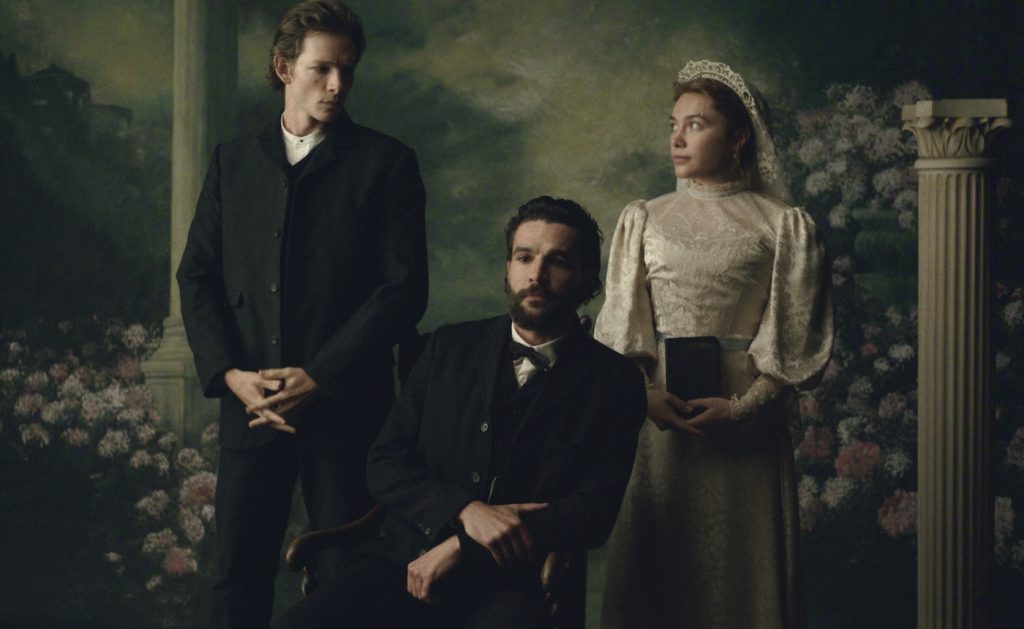
East of Eden co-stars Christopher Abbott (Poor Things) as Adam Trask, who falls in love with Cathy after nursing her to health and becomes so depressed he can’t even be bothered to name his two adorable fraternal twin babies when he loses her. The cast also includes Mike Faist as Adam’s steely older brother Charles, Tracy Letts as their imperial father, Hoon Lee as the wise, caring servant Lee, Ciarán Hinds as the unlucky, plucky Irishman Samuel Hamilton, and Martha Plimpton as the brothel owner Faye. The multi-generational family drama culminates in a Cain-and-Abel-like clash between Adam’s sons Aron (Joe Anders) and the tormented Cal (Joseph Zada), originally portrayed on screen by James Dean.
Speaking from a London hotel, Kazan, who previously wrote the Carrie Mulligan-starring housewife drama Wildlife and played a frontier woman in the Coen Brothers’ The Ballad of Buster Scruggs, revisits her fascination as a teenager with Steinbeck’s trauma-drenched saga, names the movie that sold her on Florence Pugh, and explains how a pair of immigrant characters serve as the story’s moral compass.
Congratulations on your East of Eden adaptation. It’s beautifully disturbing.
Ooh, okay. I can live with that.
You first read John Steinbeck’s novel when you were like thirteen or fourteen years old, right?
Yeah. Fifteen.
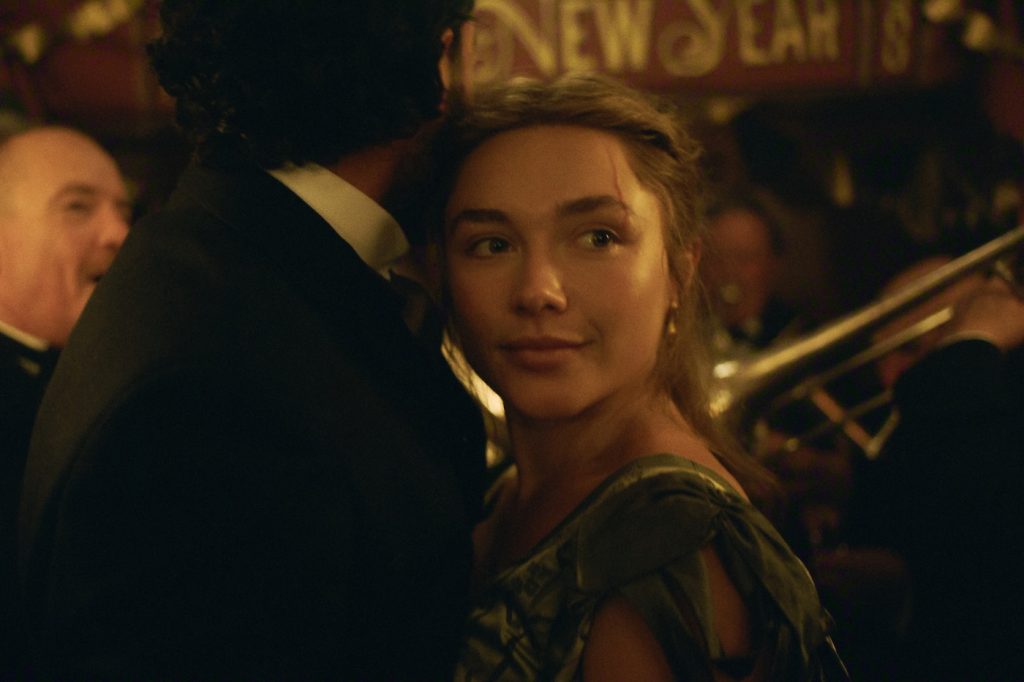
Fifteen, so it’s easy to understand how you might get obsessed with these characters as a teenage reader. But as a grown woman, many years later, does the story, and particularly the character of Cathy, hit you in a different way than when you were in high school?
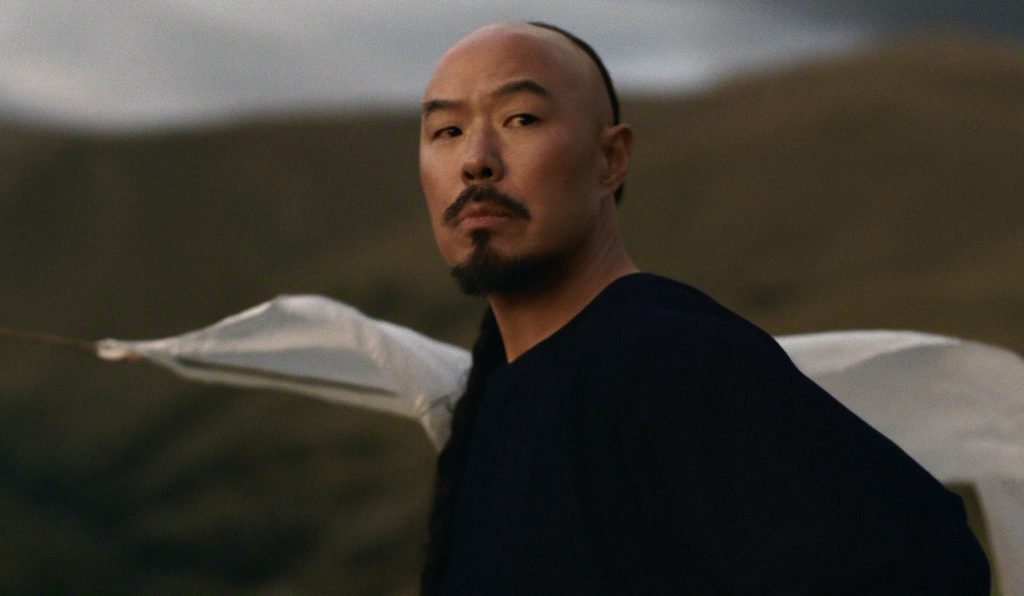
Yeah, it does. I mean, actually, Cathy’s story doesn’t change as much for me. I was repulsed by her, and compelled by her, and attracted to her, and curious about her all at once at fifteen, and I still feel that way. But I do think my points of identification have changed over the years, because reading “East of Eden” as a fifteen-year-old, Cal really spoke to me. Coming back to it again now, as a young mother, Lee speaks to me. I’m really moved by him.
And the overall story?
The intergenerational aspect of the story has always been compelling to me: the way the stories we tell about ourselves inform the way that the next generation receives them, and what do we do with our shadow selves, and what do we do with the difficult things in our past, and are we capable of change?
It’s a lot.
And I was formed by this book, so it’s a little hard to know if I was already thinking about those things, which is why I love this book, or do I love this book because it taught me how to think about these things?
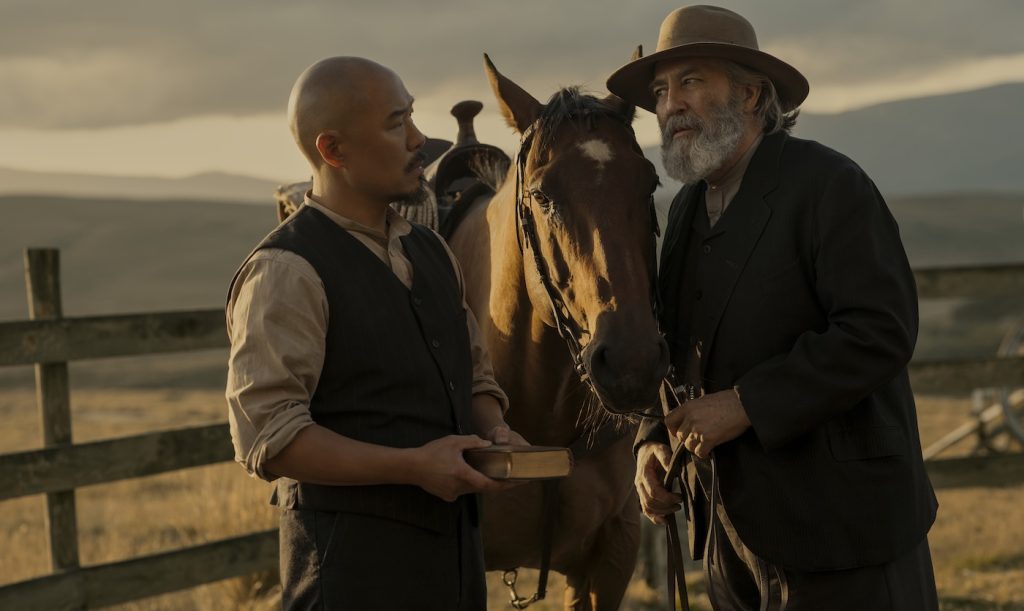
You mention the Chinese-American cook Lee, played with so much warmth by Hoon Lee. As a viewer, it’s almost a relief when Lee and neighborly Samuel Hamilton, played by Ciarán Hinds, enter the story after Adam and resentful Cathy move to Central California. Finally, we see a couple of characters acting out of compassion. How did you picture Lee and Hamilton within the East of Eden universe?
I think they provide a moral compass that helps shape and change this family, but I also love Lee and Hamilton because they’ve both had to contend with a lot. Samuel Hamilton is an Irish American immigrant living on a tract of land given to him by the U.S. government, but the land turned out to be impossible to farm. And Lee’s an Asian American man who’s experienced incredible discrimination. He sort of inherits these children and learns how to be a parent to them, and chooses to stay in their lives. That’s very moving to me. Even though we don’t go as deeply into their stories as we go into the Trask family stories, it was important to honor their experience.
When Adam falls in love with Cathy, his brother Charles shakes him by the shoulders and screams, “She’s going to rip you apart!”
Yeah.
It’s one of several great lines in the series, as if Charles were speaking for the audience: “Wake up, Adam! Snap out of it.” In writing the script, what did you want to express about the way Adam moves through the world?
It’s a great question. I think that this book, this material, is very pro “the fall of man.” It’s very pro having to leave Eden, and I think part of what [Steinbeck’s story] is saying is that stasis is not conducive to change, and that change is good for us as people.
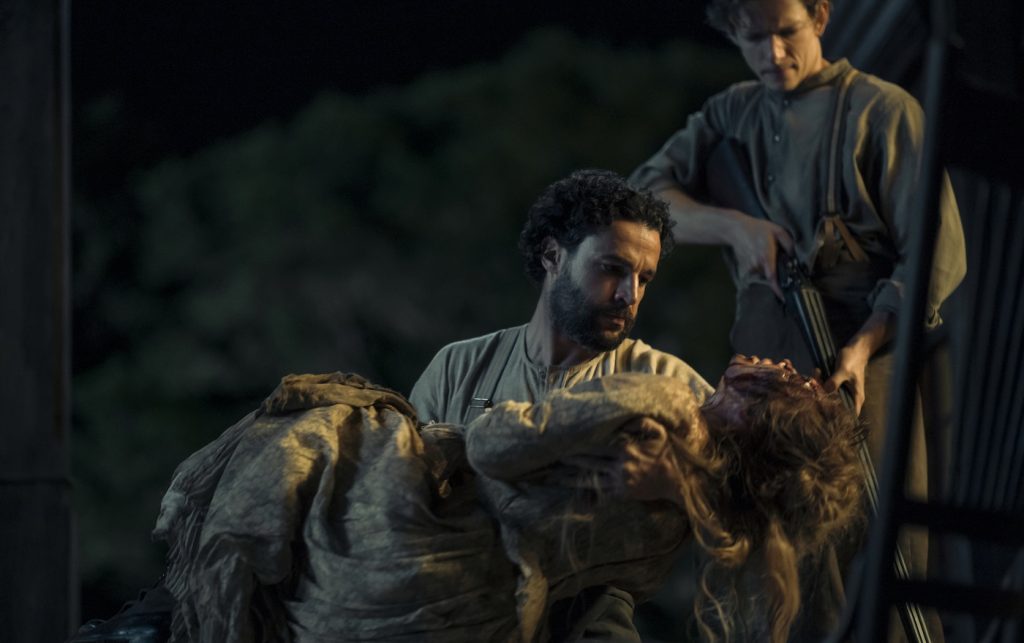
Well, Adam seems to hate change.
But what I love about all these characters is that they are actually so human, even when they do things that make you want to shake a person… like, haven’t you ever felt that way about a friend?
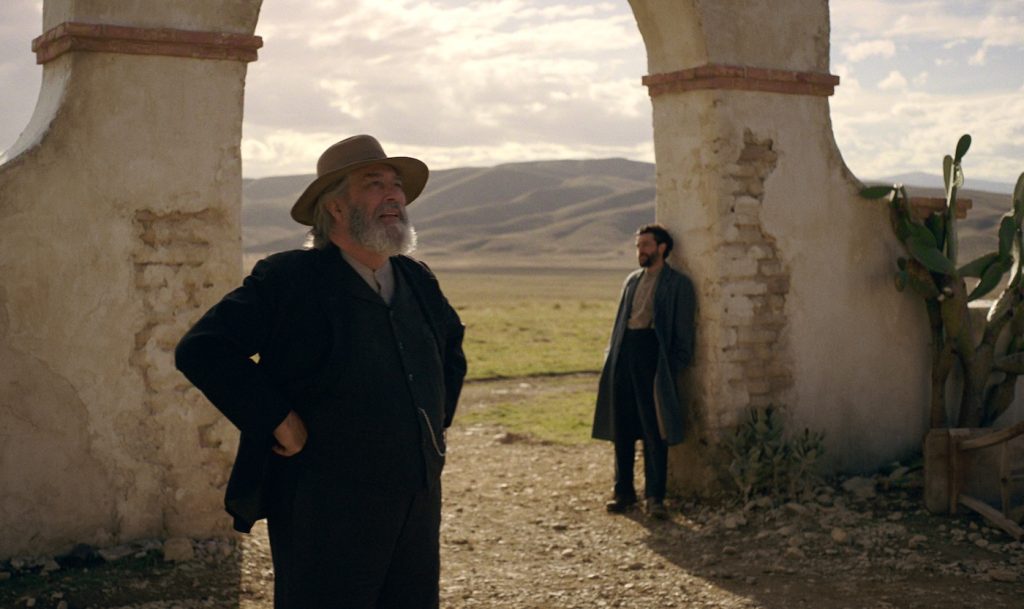
Sure.
There’s this kind of frailty with these people and their foibles and the things that make them vulnerable. I think Adam has this idea of the life he wants, and he projects that onto Cathy, even though she says to him over and over again, “This is not for me.” He refuses to hear her, and I find that to be really human.
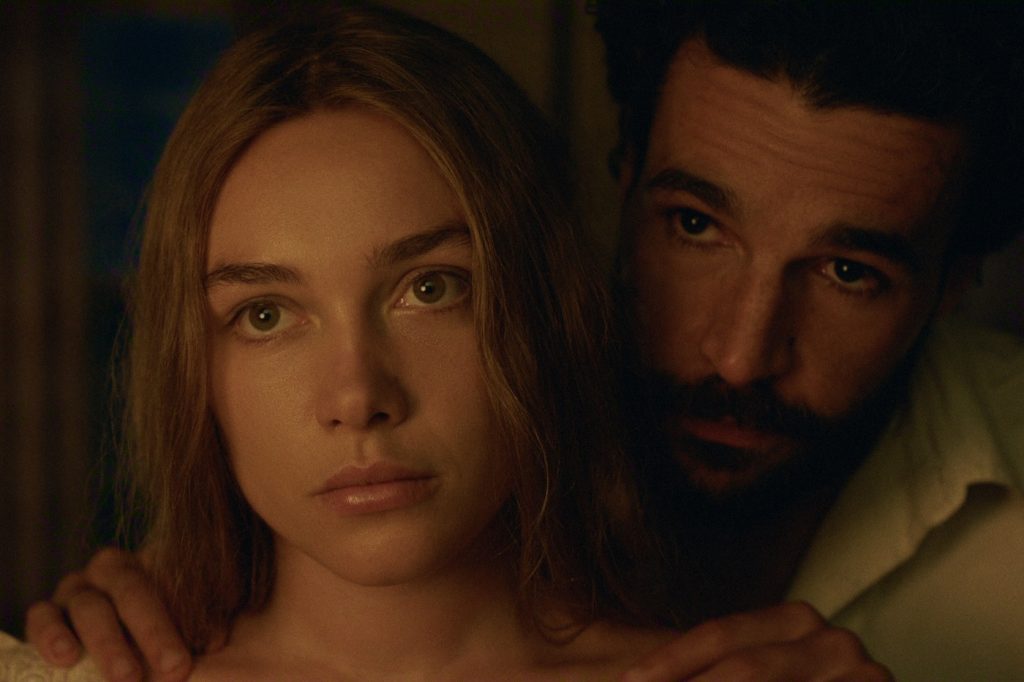
Florence Pugh delivers an electrifying performance, sometimes sullen and dead in the eyes, sometimes aggressive and articulate. How did she come to your attention?
I saw her in Midsommar and was completely blown away. I felt like I was witnessing the birth of a generational talent and thought, okay, this Midsommar character Dani is nothing like Cathy, but if Florence can play that, she can play this. I needed an actor who was capable of carrying a lot of empathy for the character without softening anything about her.
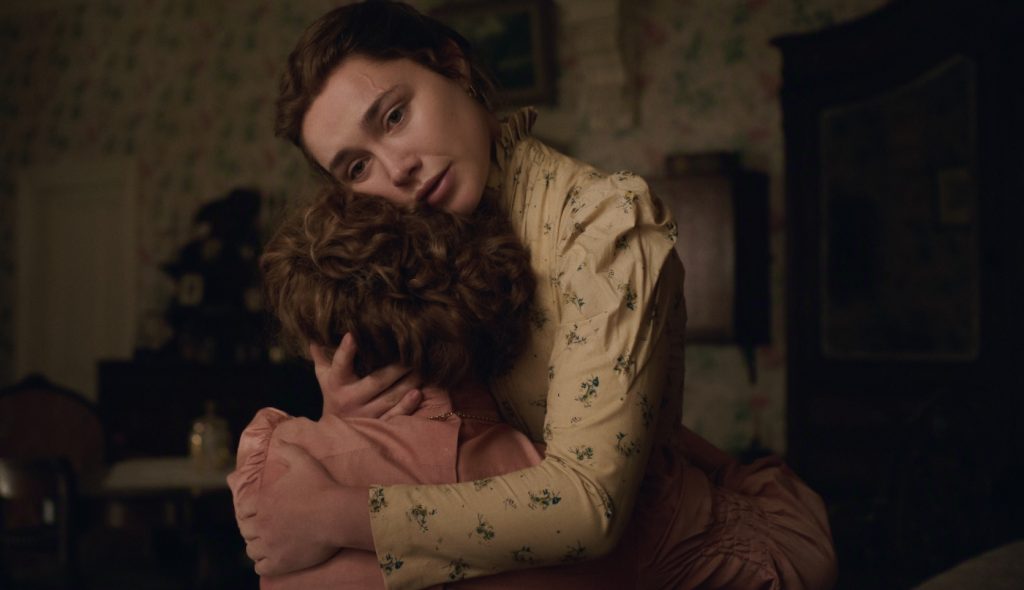
Right up to the end, Cathy remains ruthless. Was there ever any temptation to make her more likable?
No, because human beings do terrible things to each other, and I wanted Cathy to feel human. If we think about people who do terrible things as being not human, then we don’t learn anything about ourselves. I think this book was trying to explore what it means to be human. I had to let Cathy exist in all of her contradictions and complexity and do all the terrible things she does, while still trying to find her humanity.
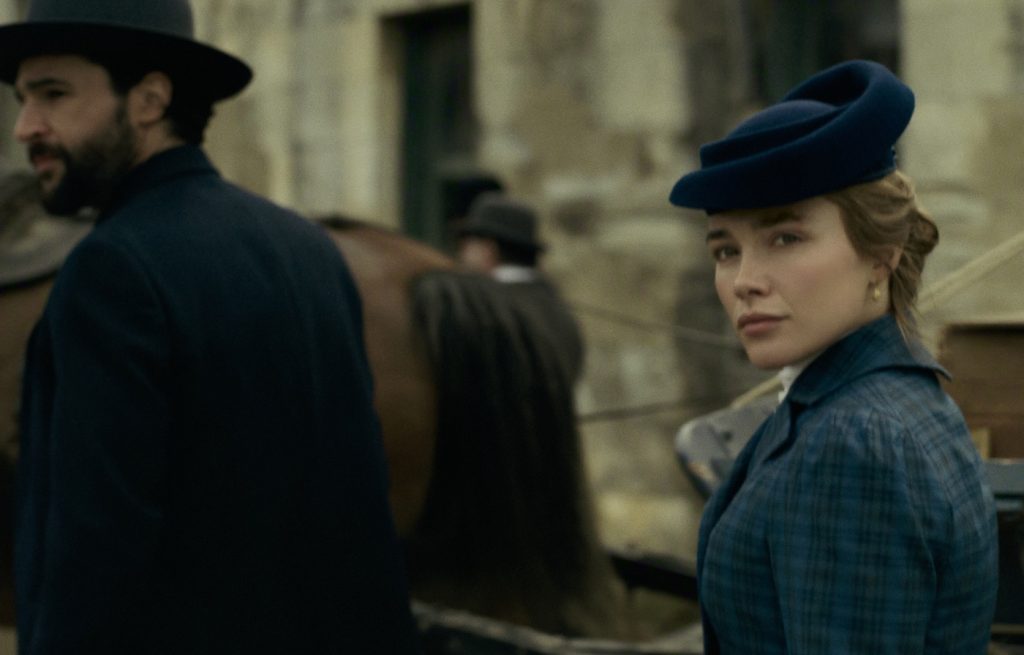
Cathy is simultaneously evil and mesmerizing. How did you collaborate with Florence to get her into that headspace?
We had a lot of conversations about the material, but honestly, I don’t know how Florence does what she does. I really do think she’s a genius. We didn’t need to talk that much about the character because Florence really understood Cathy from the get-go. She was curious about her in the same way that I was. She had compassion for her in the same way that I did. It’s a very complicated part, and I’m just lucky that Florence Pugh wanted to do this with me.
Featured image: East of Eden. (L to R) Christopher Abbott as Adam Trask, Florence Pugh as Cathy Ames in episode 103 of East of Eden. Cr. Courtesy of Netflix © 2026