
Making His Own Odds: 2026 MPA Creator Award Winner Francis Lawrence on Building Blockbusters With Heart
Interviewing director Francis Lawrence causes a strong desire to insert, at one point or another, the iconic line from The Hunger Games—“May the odds be ever in your favor.” The impulse is understandable (I’ve gone ahead and given in to it), but in the case of Lawrence, he largely made his own odds favorable through considerable hard work and some good timing.
Starting out directing music videos for a friend who ran a record label out of his apartment, Lawrence’s rise from first-time filmmaker to one of Hollywood’s most trusted blockbuster directors has been almost Katniss-like, minus the bloodshed. He’s now spent the better part of two decades directing stories about ordinary (and a few extraordinary) people confronting harrowing circumstances that test their resolve yet strengthen their humanity. From Constantine and I Am Legend to five films in the Hunger Games franchise, Lawrence has built a remarkable blockbuster career without ever losing sight of the emotional core of the stories he’s telling.
Lawrence is the 2026 recipient of the MPA Creator Award, and he spoke with The Credits about his journey, what drew him to The Hunger Games: Catching Fire, the challenge of directing massive ensembles, and why he believes The Hunger Games: Sunrise on the Reaping may be one of the franchise’s strongest entries yet.
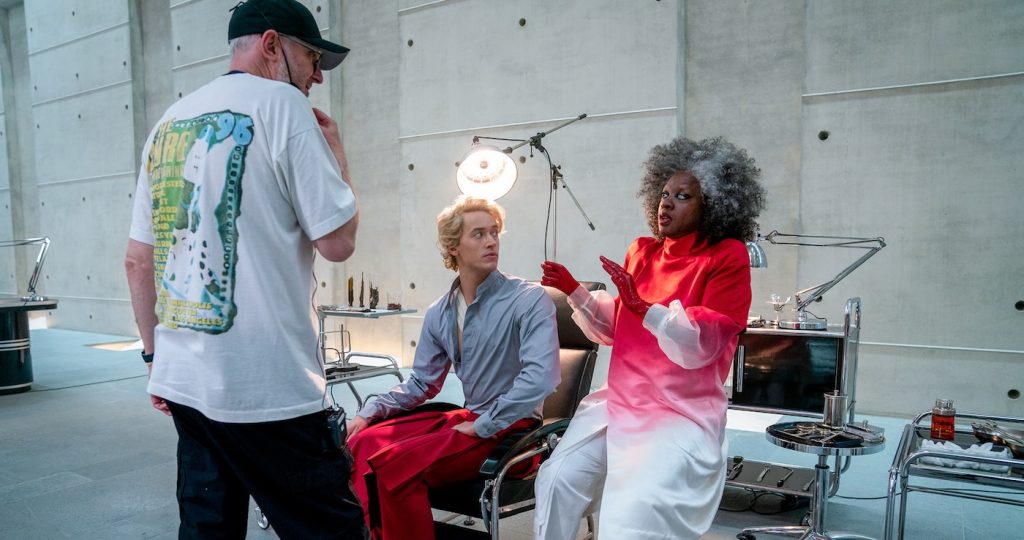
Director Francis Lawrence, Tom Blyth as Coriolanus Snow, and Viola Davis as Dr. Volumnia Gaul in The Hunger Games: The Ballad of Songbirds and Snakes. Photo Credit: Murray Close
First, congratulations on receiving the MPA Creator Award. Looking back, how did you develop your visual storytelling instincts, and how did you successfully transition from music videos into filmmaking?
The music video thing was actually a little bit of an accident. I fell in love with movies as a kid. My parents split up when I was a teenager, and when I hung out with my dad, we basically watched movies all the time. I started seeing everything and really fell in love with films in a different way. I discovered they were an art form, not just entertainment. I’ve always been drawn to the visual side of filmmaking, making images and figuring out how to tell stories and build worlds through images. I’m not really sure where that came from, but I think I’ve always had an eye for photography and an interest in painting and art in general. When I got out of film school, it became clear nobody was going to hand me a movie at 21. I worked for a director, became a camera assistant, and then a friend who had a tiny record label asked if I wanted to help make a video for one of his bands. We did that, then I got another job, then another, and eventually got representation.
What was great about that period was that I was doing it during a bit of a golden era for music videos. Artists were still making money, labels were spending money, and people wanted to do interesting things. It became a fantastic place to experiment. I could tell little stories, build worlds, try different techniques and effects, learn equipment, deal with crews and schedules. By the time I made my first movie, I had hundreds and hundreds and hundreds of shooting days under my belt. From a practical standpoint, that experience was incredibly useful. I’m really grateful for that time, but I was very happy to eventually get to do what I’d wanted to do all along, which was to make films.
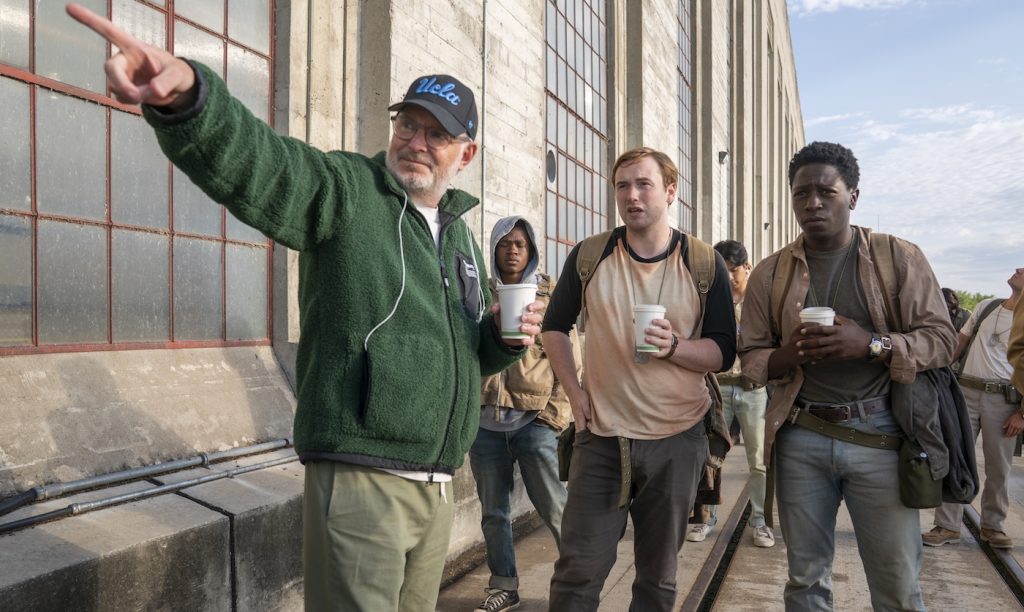
Whether it’s Constantine, I Am Legend, or The Hunger Games, your films often put characters in extraordinary circumstances, yet they’re deeply human stories. How do you approach that balance?
I think some of it is instinct. I’ve always understood that a story needs emotional truth, no matter the circumstances. Whether you’re making something realistic or building a world that’s completely outlandish, you still have to search for emotional truth. My anchor is always figuring out how to make the lead character feel human. Ideally, when a movie works, audiences can put themselves in that character’s shoes. They start imagining what they would do in that situation. How would they respond? How would they feel? Would they be able to handle it? To do that, the people have to be relatable somehow. That’s always been really important to me.
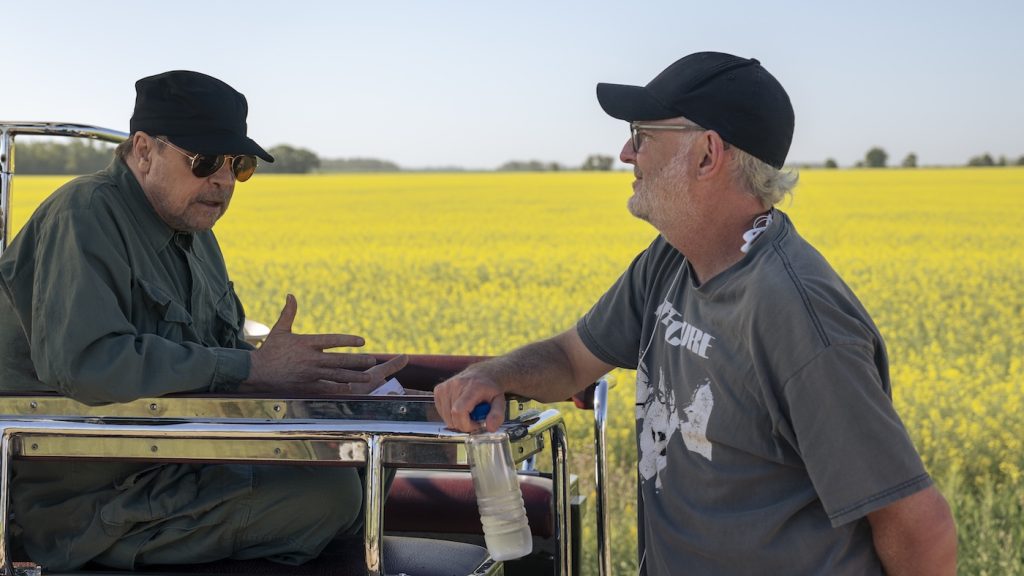
I still have vivid memories of I Am Legend. What stands out most when you think back on making that film?
It’s interesting because the zombie side of it was of almost absolutely zero interest to me. What fascinated me was the idea of the last man on Earth. That’s what I thought audiences really wanted to see. The scary elements are great, and there are sequences I’m very proud of, but the first hour of that movie, where it’s Will Smith and his dog alone in New York, is the part that interested me the most.
What would it be like if you were the last person alive? What gives you hope? What keeps you alive? What prevents you from putting a gun in your mouth? The relationship with the dog, the loneliness, the survivor’s guilt, even the wish-fulfillment side of having New York City entirely to yourself. All those things fascinated me.
A huge part of that movie’s success was that the studio allowed us to shoot on the actual streets of New York. Initially, we discussed doing it on blue screens, but I felt strongly that we needed to be there. Doing it practically made a huge difference for me as a filmmaker, for Will as an actor, and for the movie itself. It gave everything a level of authenticity that audiences could feel. We were incredibly lucky. Our line producer was very connected with the city, and the mayor’s office, police department, and film commission gave us extraordinary access. We were shutting down huge sections of New York.
When you first came aboard The Hunger Games: Catching Fire, what convinced you there was enough creative room for you as a filmmaker?
That was actually my biggest concern. I got a call from my representatives on a Thursday asking if I’d be interested. I said, “Let me reread the book.” I loved the series, and I loved the cast from the first movie, but I had never directed a sequel to somebody else’s first movie before. I wanted to make sure I had enough to do creatively. I didn’t want to simply inherit a cast and return to somebody else’s locations. That felt a little bit like directing an episode of television 15 episodes into a run, where everything is already established, and you’re joining a machine that’s already moving. When I reread the novel, I realized, “Wow, this is really different.”
There were a lot of new characters I could cast. The arena was completely different and could be designed from scratch. Even the Capitol elements were different because it was a Quarter Quell and needed to feel special. Other than inheriting some great actors, it felt like I had a lot of creative freedom.
I also had very specific opinions about how I would approach it. When I met with Nina Jacobson, I didn’t put together a big presentation. I just told her what I liked, what I didn’t like, and how I would make the movie. It was very matter-of-fact. Everything was happening so quickly that I could be completely honest about how I wanted to approach it. The timeline was crazy. I got the call on a Thursday, reread the book over the weekend, met with Nina on Tuesday, met with someone from the studio on Wednesday, met with the entire studio on Thursday, got the job that afternoon, and was in the production office on Friday.
You’ve now directed five Hunger Games films. Why do you think the series continues to resonate so strongly with audiences and actors alike?
I give a lot of credit to Suzanne Collins. Especially in the young-adult space, some stories can feel relatively shallow. Suzanne’s work isn’t like that. Everything she writes is built on a thematic foundation. She doesn’t tend to write unless she has an important idea she wants to explore. That means there’s real meat on the bone for actors. They understand they’re making something that has something meaningful to say. They’re not just participating in a story about high school dynamics or romantic triangles. They’re engaging with themes that feel relevant and important. We’ve always felt fortunate to make movies that are, in many ways, thematic and message-driven films wrapped up inside huge commercial packages. The fact that so many people show up to watch them has been really gratifying.
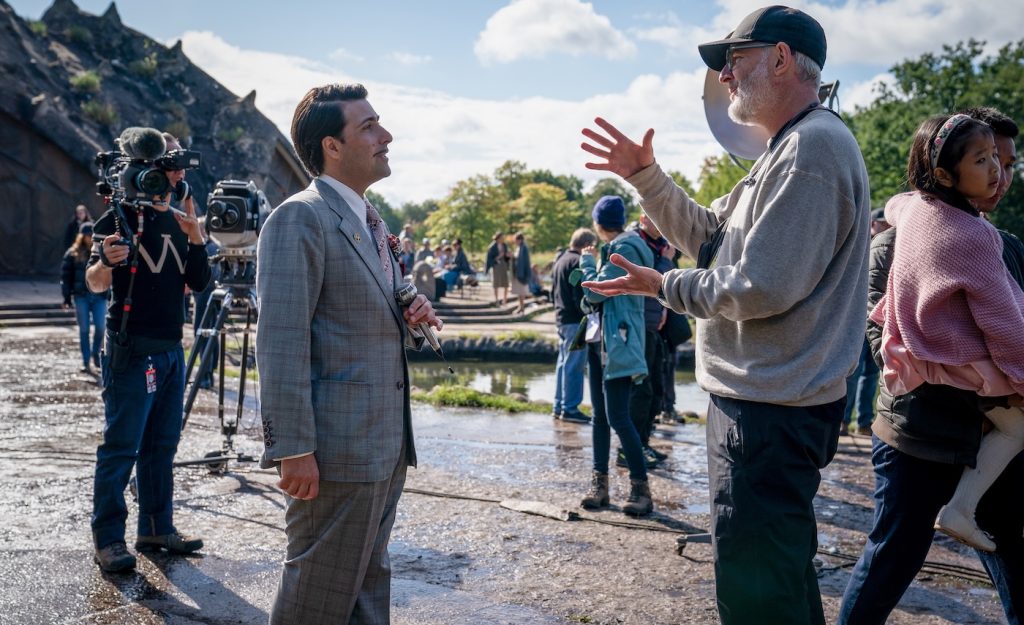
One thing that’s always impressed me about the Hunger Games franchise is the caliber of talent you’ve assembled. What’s the challenge of directing such large ensembles?
The larger the group, the more complicated things become. That’s just a fact. I actually learned some of that during my music-video career. If you’re shooting a video with a group, you learn very quickly that attention matters. If you give one person more coverage than another, people notice.
And on The Hunger Games, you have an absurd abundance of acting talent.
On the Hunger Games films, you end up with situations where a seemingly simple scene becomes incredibly complicated because of who’s in it. There’s a scene in Mockingjay where Katniss is standing in a control room watching footage of Peeta. On paper, it’s very simple. She’s watching a screen and reacting emotionally. But in the room are Philip Seymour Hoffman, Julianne Moore, Mahershala Ali, Woody Harrelson, Liam Hemsworth, Jeffrey Wright, and a number of other incredible actors. None of them have dialogue.

What could theoretically be a scene you shoot in 30 minutes becomes something much larger because every one of those actors is a serious artist. You need to spend time discussing the scene, talking about blocking, behavior, motivation, and what they’re reacting to emotionally. To be clear, they were all complete professionals. This isn’t a complaint at all. It’s actually the opposite. You just have to respect the work they put into their craft. A simple scene becomes much more involved because you’re surrounded by extraordinary talent. I’ve been incredibly lucky. Not only have these actors been phenomenal performers, but they’ve also been wonderful people to work with.
Beyond the cast, you’re also overseeing massive crews and productions. How has your approach to leadership evolved over the years?
Interestingly, because of the size of the music videos I was doing, the scale itself never really intimidated me. The day-to-day work isn’t all that different. You’re still dealing with crews, performers, schedules, extras, equipment. The real difference is duration. If you’re doing a music video and somebody isn’t working out, you can probably muscle through it because you’re only together for a few days.
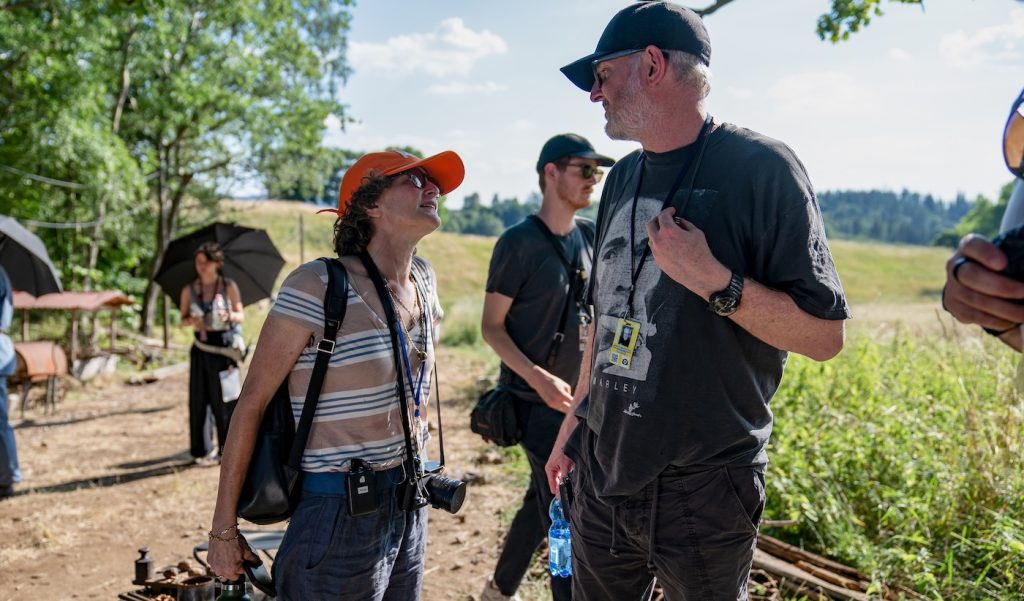
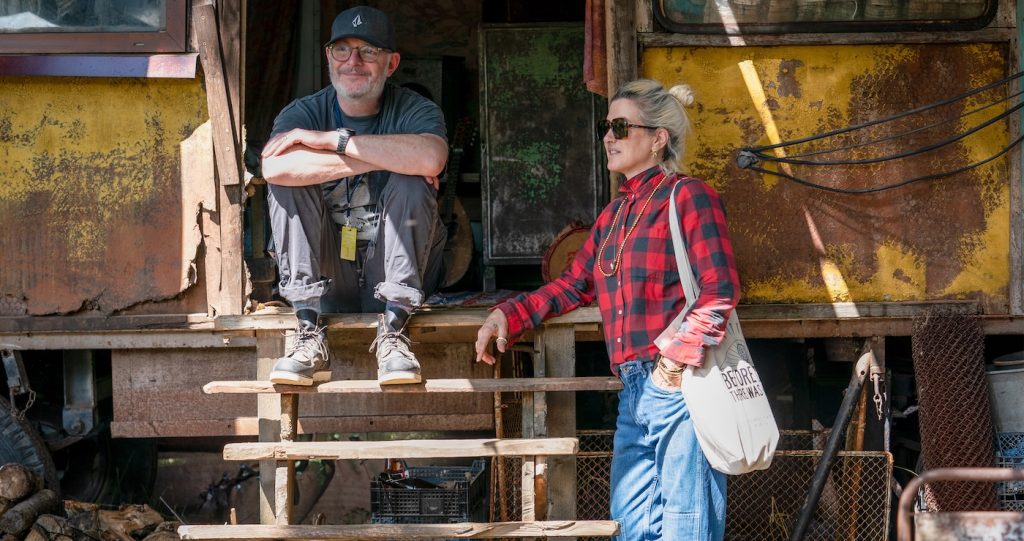
On a film, it’s completely different. On Sunrise on the Reaping, for example, we’d already been developing the script and doing research. Then I moved to Berlin for prep. We prep and shoot for the better part of a year, and then I’m in post-production for another year. You’re talking about a huge portion of your life. Because of that, the management side becomes much more important. If there’s a genuine problem, you can’t ignore it because you’re going to be living with it for months. One advantage of doing so many projects is that I’ve built strong teams. Many department heads and collaborators carry over from one project to the next, so there’s shorthand and trust built over years of working together.
Finally, The Hunger Games: Sunrise on the Reaping arrives this November. How are you feeling now that the film is nearly finished?
I’m very excited about it. The movie is essentially done. The picture is locked. The score has been recorded. The mix is finished. We’re basically down to a handful of visual effects shots and a few finishing touches. What excites me most is that I felt very strongly about it from the moment I read Suzanne’s manuscript. I immediately thought she’d done something special. In a lot of ways, it reminded me of how I felt when I first read Catching Fire. That book had a certain energy and ambition to it, and I had a similar reaction here.
You compared your reaction to Sunrise on the Reaping to the way you felt when you first read Catching Fire. What struck you so strongly about it?
What’s exciting is that it feels like a return to form. Catching Fire is, for many people, the version of The Hunger Games they think of when they think about the franchise. It has the scale, the spectacle, the emotional investment, the Capitol, the Games—all of those elements people connect with. This film has that again. We have a central character you can really get behind and empathize with. We have the scale, the emotion, the levity, the world-building. And then there’s this entire additional layer of nostalgia because audiences are encountering younger versions of characters they’ve loved from the original series. The cast is amazing. They all did a fantastic job. I think the story is terrific. Honestly, I think it’s one of the strongest of the bunch.
The Hunger Games: Sunrise on the Reaping is in theaters on November 20.
Featured image: Jesse Plemons and Director Francis Lawrence in The Hunger Games: Sunrise on the Reaping. Photo Credit: Murray Close