A Commonwealth of Stories: 2026 MPA Industry Champion Honoree Senator Robert Stivers on Kentucky’s Production Future
For generations, when people around the world thought of Kentucky, they imagined horse country, bourbon, coalfields, Wildcats basketball, and manufacturing might. Increasingly, however, another Kentucky industry is becoming central to the Commonwealth’s future and earning a place in the broader cultural imagination: entertainment.
Few have been more committed to expanding that vision than Senator Robert Stivers, whose support for Kentucky’s film incentive program and broader creative economy reflects a belief that the Commonwealth’s future depends not only on its traditional strengths, but also on diversifying into industries where its landscapes, workforce, and communities can compete and thrive.
Kentucky certainly has the production value. The Commonwealth is almost absurdly cinematic: rolling farmland and horse country, mountain peaks and river valleys, small towns and growing cities. Then there’s its namesake bluegrass, which, when it flowers, transforms pastures into sweeping stretches of blue-green. As Stivers notes, Kentucky offers a “wide variety of looks within one state.”
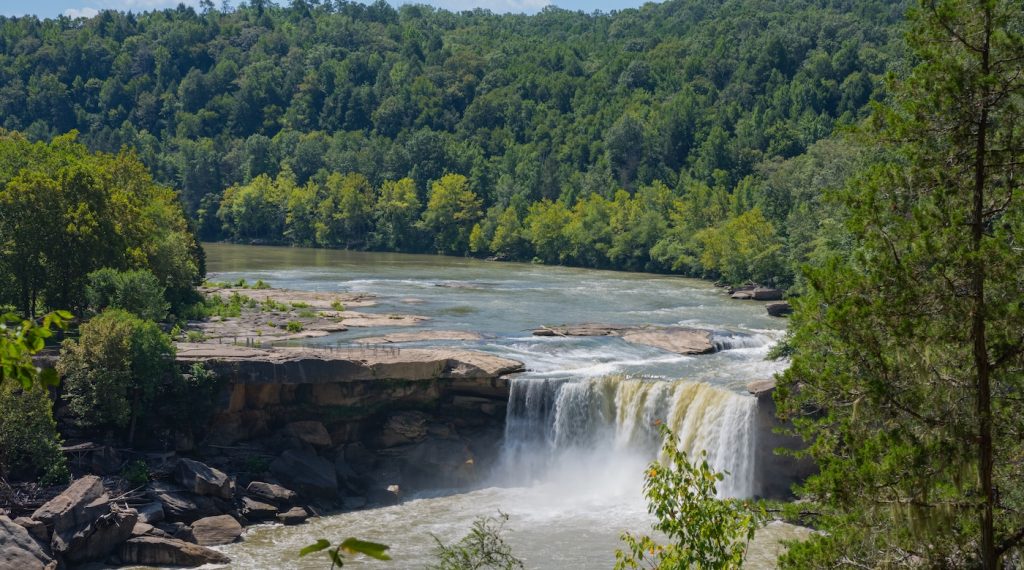
But Stivers’ argument for investing in film and television goes beyond scenery. Kentucky has spent generations building industries that power, move, and manufacture. He believes the Commonwealth can also become a place where stories are made, creating jobs, growing tourism, and opening new career paths for Kentuckians while further diversifying the state’s economy.
Those efforts have earned Stivers the Motion Picture Association’s 2026 Industry Champion Award, which recognizes policymakers whose leadership promotes and protects the creative community. While Kentucky’s scenic landscapes and competitive incentives have attracted productions from around the world, Stivers views the industry’s value more broadly: workforce development, tourism, economic diversification, and opportunity for Kentuckians in every region of the state.
Speaking with The Credits, Stivers discussed why the entertainment industry matters to Kentucky’s future, the often-overlooked workers who make productions possible, and why access to the arts remains a priority both economically and personally.
Congratulations on receiving the MPA’s 2026 Industry Champion Award. It recognizes not only your support for Kentucky’s film incentive program, but also your longstanding commitment to economic development. That’s been a throughline throughout your career. Can you talk about your broader vision for creating economic opportunity across Kentucky?
When people have opportunities for upward mobility through economic and educational opportunity, they’re generally less likely to engage in things they shouldn’t. It’s not a 100 percent guarantee, but creating jobs and educational opportunities helps build pride, self-worth, and stability. People want to know they can provide for their families, own a home, have health insurance, retire someday, and feel secure about their future. Those opportunities make people’s lives better and improve the communities around them. At the end of the day, it comes back to the economy. People want opportunity, and when they have it, their lives are generally better.
You’ve been a strong supporter of Kentucky’s film incentive program. For some people, supporting film and television production might not seem like an obvious economic development priority. How do you explain the value of the entertainment industry as an economic driver?
First of all, I believe entertainment, whether it’s film, music, live performance, theater, the arts, or even video games, is a growing and important industry. States should want to participate in it. One reason is diversification. Think about retirement planning. Every financial advisor tells you to diversify your portfolio because it helps smooth out market swings. The same principle applies to a state’s economy. Kentucky has historically been strong in manufacturing and natural resources. At one time, we were a much larger minerals-based economy. That’s a lot of eggs in one basket. We needed to diversify. Film, music, and the arts create new sectors where people can work. Someone who wants to be an electrician can choose between working for a utility company or working on a film set. Those kinds of opportunities didn’t really exist here before. The industry also supports tourism. I always use the example of Rocky running up the steps in Philadelphia. People still go there and take photos because they saw it in a movie. The same thing can happen in Kentucky. Someone watches Seabiscuit and decides they want to see horse country for themselves. Film creates a different way for people to experience your state. It generates jobs and promotes tourism at the same time.
That’s a fascinating way to think about it, viewing economic development through diversification. Why is that especially important today?
Because so many industries are affected by factors beyond our control. Take energy. Kentucky remains a major energy-producing state, but global events can dramatically affect those markets. When something happens in the Middle East, gasoline, natural gas, and coal prices change. Those things affect Kentucky. The same is true for manufacturing. We’re one of the nation’s leading states for automobile production, but supply chain disruptions or economic downturns can impact those jobs. If you diversify into industries like film, music, and production, you create opportunities that aren’t necessarily tied to those same global forces. That makes your economy more resilient. We’ve never really had that kind of diversification through the arts before, and I think it’s important.
One thing people often overlook is how many jobs exist beyond the actors and directors. Film and television productions require electricians, construction workers, caterers, drivers, and countless others. Kentucky already has people with those skills.
Absolutely. Merry-Kay Poe, who will be attending the awards with me, helped me understand that years ago. She said, “Robert, everyone knows the names of the stars. But if you want to see the people truly impacted by the industry, watch the credits.” Now I actually do that. My kids think I’m crazy sitting there watching the credits at the end of a movie. But when you look at those names, you see editors, sound technicians, assistants, production staff, and all the people who make a project possible. Those are real jobs. The stars leave when production wraps. The people in the credits are the ones who stay and build careers in the industry. Those are the jobs we want to create.
Beyond the economics, you’ve also supported efforts to expand access to the arts across Kentucky, particularly through programs like the Louisville Orchestra‘s statewide performances. Why is that important to you personally?
There’s tremendous appreciation for the arts in rural Kentucky. The challenge is access. Several years ago, during discussions about pandemic recovery funding, I encouraged the Louisville Orchestra to travel throughout the state. If public dollars were going to support the orchestra, I wanted people across Kentucky to have the opportunity to experience it. The response has been incredible. Communities absolutely embrace these performances. I’ll never forget an event in Beattyville. A woman came up to me afterward and said, “I can’t afford to drive my children to Louisville and buy tickets to see the orchestra. But because of this performance, they’ve had a wonderful experience tonight.” She told me she hoped it would instill in them the same appreciation for the arts that she had. That’s why you do these things. When people appreciate the arts but haven’t had access to them, helping create that opportunity is incredibly rewarding.
Those are the kinds of benefits that don’t show up in an economic-impact study. You can’t really assign a dollar value to that experience.
Exactly. You can’t. There’s value in helping people experience something they otherwise might never have had the opportunity to see or hear. Some benefits simply can’t be measured financially.
Looking ahead, Kentucky is a beautiful state with a wide range of locations and stories to tell. How do you envision the future of Kentucky’s film and television industry?
No program is any better than the people responsible for executing it. We’ve had incentives in place for years, but we didn’t always have the structure around them to maximize their effectiveness. That’s changing. We’ve established a dedicated film commission, and Meg Fister is doing an outstanding job leading those efforts. Having someone who can actively promote Kentucky is critical. It’s not enough to say we offer incentives. You need someone who can tell productions, “We have mountains. We have rivers. We have farmland. We have horse country. We have cities and small towns. Whatever setting you’re looking for, Kentucky can provide it.” You also need crews, locations, and support systems ready to go. Kentucky offers tremendous geographic diversity. We have mountain peaks, river valleys, farmland, metropolitan areas, and small-town settings. We can provide a wide variety of looks within one state. Meg has also helped broaden the conversation beyond film. She’s emphasized the importance of sound production, scoring, commercials, and related industries because those projects help sustain a workforce between major productions. When she first explained all of this to me, I didn’t fully grasp every aspect, but through conversations with people in the industry, I’ve come to understand how interconnected it all is. Building that complete ecosystem is what will help Kentucky continue to grow.
Finally, what does receiving the MPA’s 2026 Industry Champion Award mean to you?
Honestly, I don’t know that I deserve it. What matters most to me is recognizing the people who helped educate me and who worked alongside me on these efforts. I’ve got enough plaques and awards on my wall. What gives me satisfaction is knowing that people who care deeply about this industry are receiving recognition through this award as well. The real reward is seeing opportunities created for people who want to work in this field. It’s knowing that someone came to you with an idea, trusted you to listen, and together you were able to build something that creates jobs, promotes the state, and opens doors for people. That’s what this recognition means to me. It’s less about me and more about the people who helped make it happen.
Learn more about the 2026 MPA Awards at motionpictures.org/awards
Featured image: Senator Robert Stivers. Courtesy Robert Stivers.