
How the Team Behind HBO’s “U.S. Against the World” Captured the USMNT’s Golden Generation—Up Close
America is having its global soccer moment. The USMNT has advanced to the knockout stage of the 2026 World Cup for the second Cup in a row, led by players Christian Pulisic, Folarin Balogun, Weston McKennie, and Tim Ream. How they got here is a much bigger story – one that plays out in the HBO Max docuseries U.S. Against the World: Four Years with the Men’s National Soccer Team.
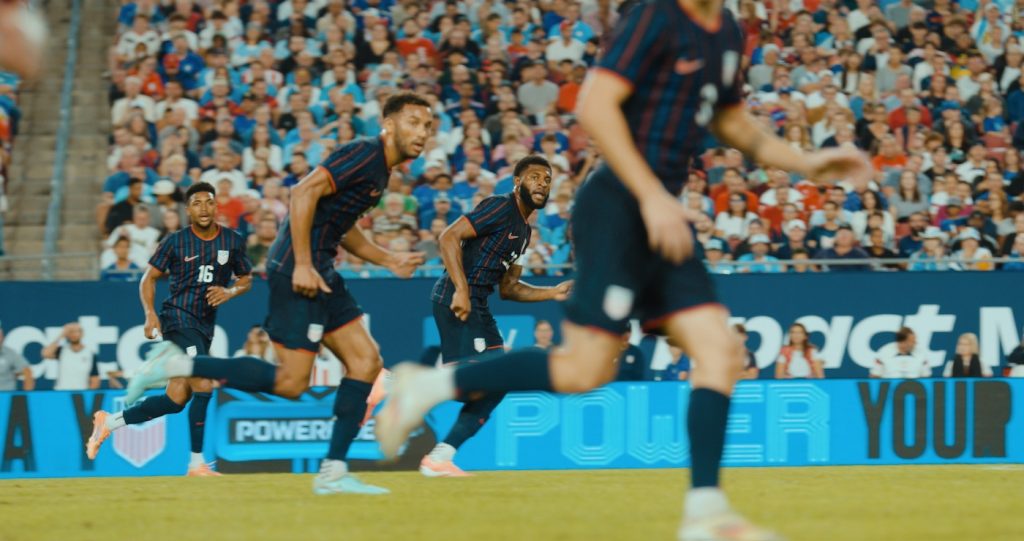
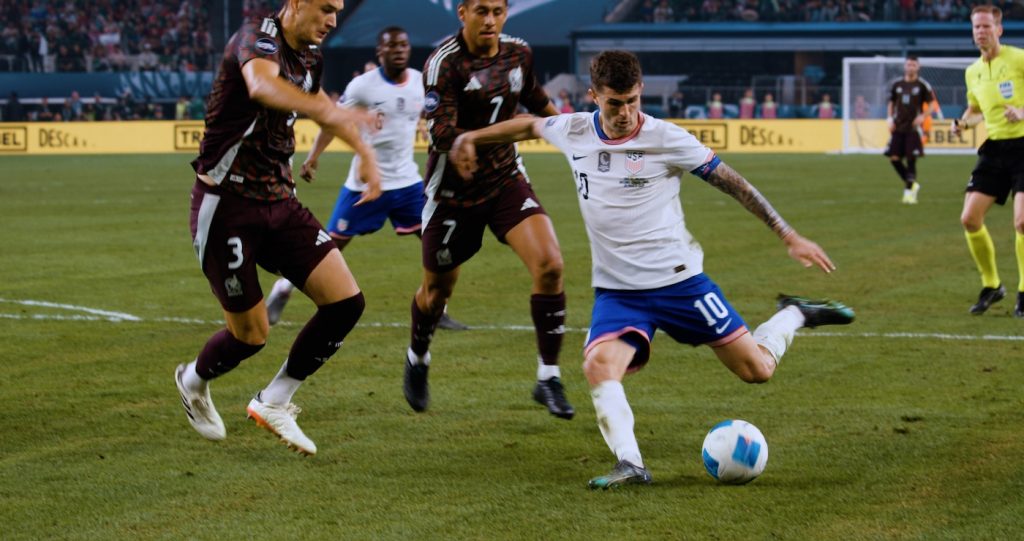
Taking place over four transformative years, the five-part series takes viewers inside the USMNT’S “Golden Generation,” from the 2022 World Cup in Qatar to the road to 2026, capturing the highs and lows of a squad trying to establish itself in the world’s most popular sport and what it truly takes to wear the U.S. crest.
The show might never have made it to the screen without Park Stories stepping in to spearhead the project before a distributor was attached. “At the beginning, we were deficit financing everything,” says executive producer and co-director Rand Getlin. “We’ve had to be entrepreneurial from moment one and put it all together ourselves. There were no cosigns and we were the only production company on the project, so we didn’t have any assistance, access or financing.”
Fueling their belief was their previous project, Prodigy, which profiled athletes on the verge of stardom for the short-form streaming platform Quibi. One of those athletes was Tyler Adams, who has since become a fixture on the USMNT roster. “There’s a direct connection between what we did with Tyler on Prodigy and where we are today,” notes Getlin. “We had such a great experience with Tyler that we were then introduced to people at U.S. Soccer and the U.S. Players Association, and we were able to build a series from there.”
The two series also share a similar creative personality. “You can see the narratives in Prodigy, whether it’s camera operating, interview development, or editorial style, and see the DNA woven throughout,” says series editor and creative director Lucas Harger. “But with more time, from a storytelling mechanics standpoint, an emotional standpoint, a depth of interview standpoint, we’re able to flex across five hours.”
Below, Getlin and Harger reflect on finding a distribution partner, embracing a smaller production footprint, and capturing the decisive red-card moment that may have altered the trajectory of the USMNT.
How did you approach selling the series?
Rand Getlin: We approached all buyers in town before the 2022 World Cup and tried to sell the show, and everybody said no. So it’s easy to be like, okay, we lost, let’s go home. But we were like, no, we have to go. We were deficit financing at the time and went to Qatar with no guarantee that the team would perform well enough to change the town’s mind. Thankfully, they did, and we ended up in a competitive process to sell the show.
Why HBO?
Getlin: We chose to go to HBO for a variety of business reasons. Most notably, they gave us a lot of creative control and IP ownership. And we’re grateful that we ended up at HBO, a gold standard for storytelling across so many realms.
The main title sequence sets the show’s tone with graphics superimposed over game footage and a song from composer Hannah Parrot and musical artist Muhammad “Mvstermind” Austin. How did that collaboration come about?
Lucas Harger: We started working with the graphics team on the title sequence, which is very gritty, raw, tactile, and textural. And then we paired that with what Hannah had done at the time, which was this sweeping orchestral sound, and they both worked well, but there was something missing to pull these two worlds together. And it just so happened that Mvstermind is a friend of our other editor, Jazzy Kettenacker, and she suggested we should see what he can do. So it became this collaboration between Hannah and Muhammad, going back and forth on this song, and it wound up in a pretty magical place.
How did you want to approach the story?
Harger: The perspective of the whole series is told by the players, which makes it unbelievably difficult to do that when there isn’t a narrator. But we also wanted it to be intimate. We wanted to take this global sport and make it feel like you’re on the inside of this very intimate experience.
With the docuseries spanning several years, how did you approach the look and style of the interviews?
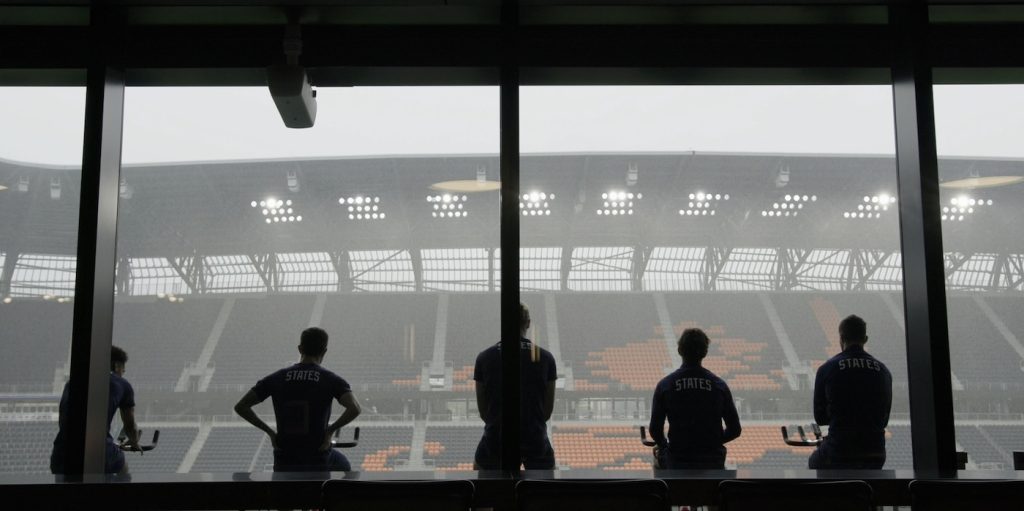
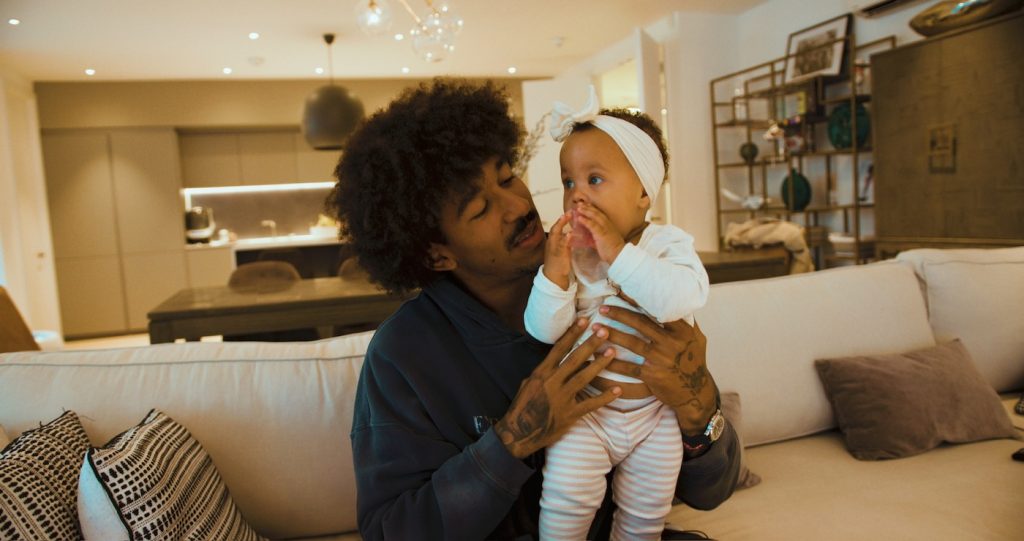
Getlin: We had a dual approach. When you’re looking backward and reflecting, it’s on a backdrop. Then when you’re in the moment, wherever that moment exists, we do these on-the-fly interviews on the pitch or in the stands and those kinds of things. We also have home interviews with the players and their families, and we needed to make sure everything felt connected. So we’re very intentional. The reason why the intimacy exists, if you feel it in the series, is because we have a very small production team.
How small is the production team?
Getlin: We have five people in the team camp. Three producers, Janina Pelayo, Bryce Cyrier, and myself. Then co-director and cinematographer Luke Kover and our production sound mixerAaron Bittikofer.
Is that the same-sized production team as when you travel outside the USMNT practice camp?
Getlin: When we would do those long European swings on the road, there were actually three of us. It’s me, Janina, and Luke.
Besides the potential cost savings, is there a reason for such a small team?
Getlin: For team camp, five is the max we feel comfortable with. But in a family setting, it can’t be more than three. The families need to forget about us for the most part and live their natural lives, which allows us to capture all of the robust intimacy that exists. So, with the smaller team, we have to work a little harder to make it easier for them to be as human as possible. And we hope that shines through in the series.
Paul Tenorio, a senior writer covering soccer at The Athletic, becomes a type of narrator in the series, providing progress updates and explaining what’s at stake. How did his role come together?
Getlin: The first time I remember sitting down with Paul was in Spain for the two friendlies before the World Cup kicked off in 2022. That’s really how it started. There was no intention to make him the narrative throughline, but as we started capturing things, Lucas and his team began to pick up on how good he was.
Harger: As the series was developing, we were noticing Paul’s measured approach and his ability to break down tournaments, matchups, or challenges from his years of reporting. It allowed us to share all that information from the perspective of an in-camp insider rather than just some talking-head soccer intellectual. We didn’t want all of these expert voices sprinkled throughout the series, but rather to focus it on Paul to reinforce the series’ intimacy.
The documentary covers a lot of ground and personal stories among the players. To that, you made it a point in episode two to show a hype speech by then assistant coach B.J. Callaghan before the Panama game during the 2024 Copa America, which included him saying, “If someone wants to go toe to toe with us, they better be prepared that we’re going to throw the first punch.” It’s a moment that, unfortunately, foreshadows USMNT player Timothy Weah receiving a red card for what appeared to be a strike to the back of the head of a Panama player. The USMNT lost that game and the following game to Uruguay, leading to the firing of manager Gregg Berhalter. How did you want to approach that moment and the aftermath?
Harger: I think the thing that we wanted to express in that moment was the complexity of competition at this level. These players have to walk onto that field with a gladiator mentality, but you also have to be smart. It’s a very fine line you have to be at physiologically, but maintain composure through the game in order to win. It’s not an easy thing to beat these teams, so it was intentional to leave that in there to show the duality of competition at this level.
Getlin: Timothy is one of the best humans on the planet, and after that happened, he received horrendous abuse. Everyone has to remember this is a human being. He made a mistake, but it just so happens that when they make a mistake, it’s in front of many millions of people. And so for us as storytellers, it’s very important that we tell the truth, but we do so with a tremendous amount of compassion and empathy, and we keep in mind that these are human beings first, not disposable units of storytelling.
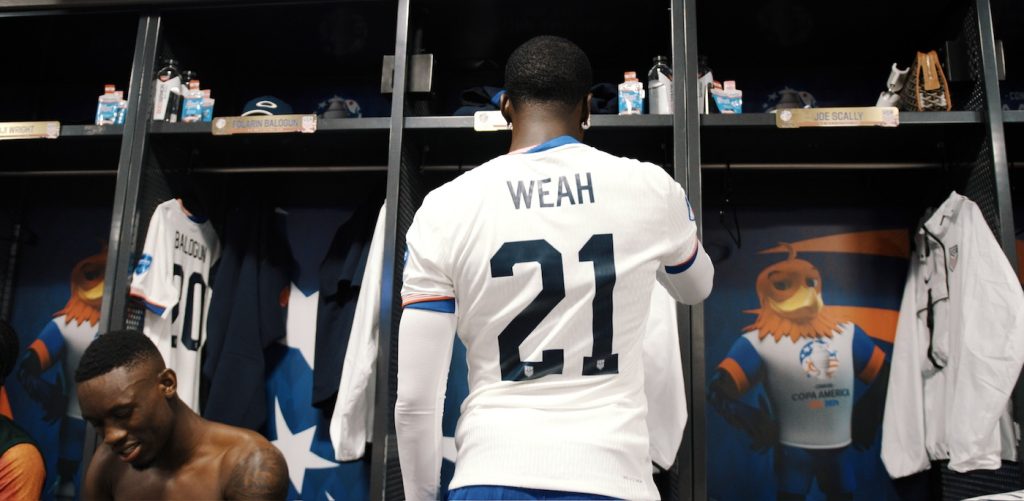
You also show Weah’s apology inside the locker room – footage fans may not have seen before – which tells a different story from the one portrayed in the media.
Harger: From an editorial standpoint, it’s to juxtapose what the outside world perceives with what’s happening inside the locker room. We get to see how emotional it was for the team when Timothy apologizes, and he’s getting hugs and all of that stuff. And then you see what the players say in the media line. The point we’re trying to make to fans is that whatever you see in the media line, there’s a human behind that, and there’s something else deeper going on.
With how well the USMNT is doing in the 2026 World Cup, do you see a possibility of a Season 2?
Getlin: We are cameras up and at team camp right now. And through the group stage games of the World Cup, they’ve made the country proud. So we’re hoping they keep it going, and maybe on the back end of this, there will be something special to share with people about what it looked like after the tournament.
U.S. Against the World: Four Years with the Men’s National Soccer Team is currently streaming on HBO Max. The USMNT plays Bosnia and Herzegovina at 8 p.m. on Wednesday, July 1.
Featured image: Tyler Adams, Christian Pulisic, Timothy Weah, Weston McKennie, Yunus Musah, Matt Turner, Ricardo Pepi, Tim Ream. Photograph by Park Stories/Lukas Korver/HBO