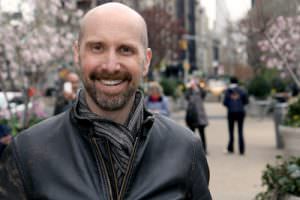
“Leviticus” Writer/Director Adrian Chiarella Reimagines Exorcism as a Weapon of Queer Erasure
June, the symbolic start of Gay Pride in the U.S., is upon us, and so is the release of Neon’s gay-themed horror film Leviticus in major markets (premieres on June 19). The film is the brainchild of Australian writer/director Adrian Chiarella and is co-produced by Causeway Films, the outfit behind Australian-import horror classics The Babadook and Talk to Me.
The timing resonates. “In Australia—and I guess over here in the U.S.—we sort of saw this regression in the rights for the LGBTQIA+ people, and a lot of homophobic rhetoric in the political space as well,” Chiarella says while doing press in L.A., “And that’s sort of what inspired Leviticus.”
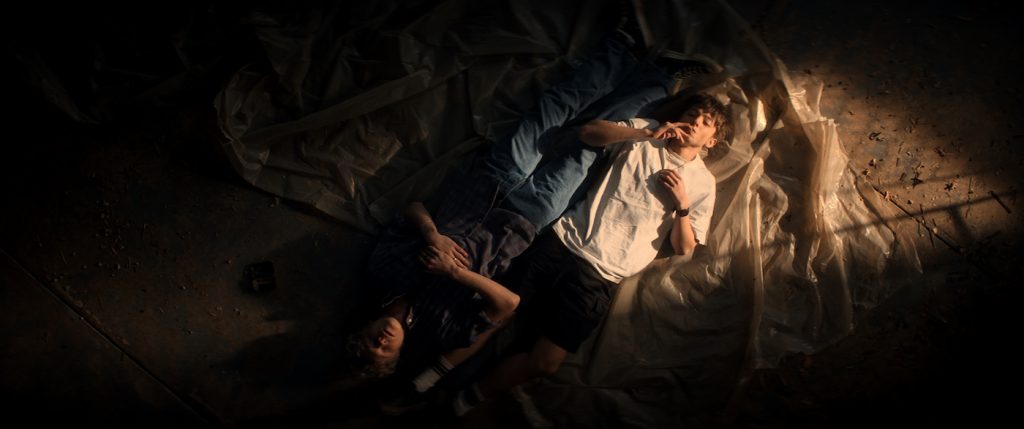
Set in a creepy rural, industrial Australian Christian community, Leviticus tells the story of two teenagers, Ryan (Stacy Clausen) and Naim (Joe Bird, the possessed youth in Talk to Me), who secretly begin a relationship. When Naim’s and then Ryan’s homosexuality is discovered, both are subjected to harrowing exorcism-style rituals to rid them of their sinful inclinations. For each boy, the exorcism unleashes a terrifyingly violent demon that no one else can see and takes the form of the person that they each most desire – for Ryan, that’s Naim, and for Naim, that’s Ryan. It’s a diabolical, forbidden love story.
Leviticus reads as a pointed critique of the trauma and violence that conversion therapy, often religious in nature, inflicts on queer people and, more generally, of attempts at queer erasure. However, first and foremost, Leviticus is a peep-through-your-fingers horror film. A lifelong horror fan, Chiarella took pains to both follow recognizable tropes of the genre and reinvent them.
One of those tropes is the idea of a transgression—say, building a condo on an ancient indigenous burial ground—that unleashes unspeakable, supernatural violence and mayhem on the transgressors. In his Leviticus script, Chiarella ingeniously intertwines multiple possibilities.
Leviticus’ transgression could be the main characters’ homosexuality, point blank, or the simple fact of their sexual fumblings. Or the transgression could be the moment in which Ryan, in a fit of jealousy, betrays Naim and sets off the chain of “exorcisms.” Or the transgressors are the parents and the religious leaders who traumatize the boys with their savage form of “therapy.”
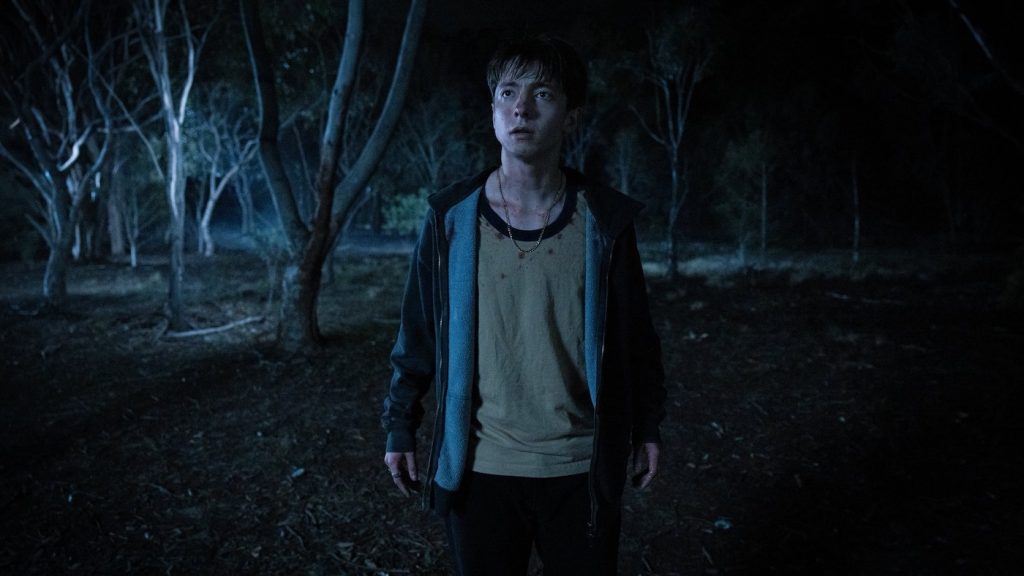
“The best horror movies in my mind are the ones where that transgression is a little bit of a grey area. It becomes a tension of, ‘Well, who did the thing that caused all of this to happen?’ ” Chiarella says.
That multiplicity of possibilities creates a giddily disorienting sense of not knowing who, why, or how characters might ultimately be punished. In the writing process, that disorientation applied to Chiarella himself.
“It took me forever to find the ending. I had endings that were quite sad, endings that were overly sweet and happy. That took many drafts to figure out,” he says.
Chiarella’s script also upends the horror trope of exorcism itself. When he set out to write Leviticus, he knew he wanted to explore the idea of conversion therapy as exorcism.
However, he says, “Everything I came up with seemed to perpetuate this myth that conversion therapy groups were putting out there, that there’s a gay demon inside of you. And so I started developing what I really thought was happening, which is actually they’re planting something, a demon inside of these people.”
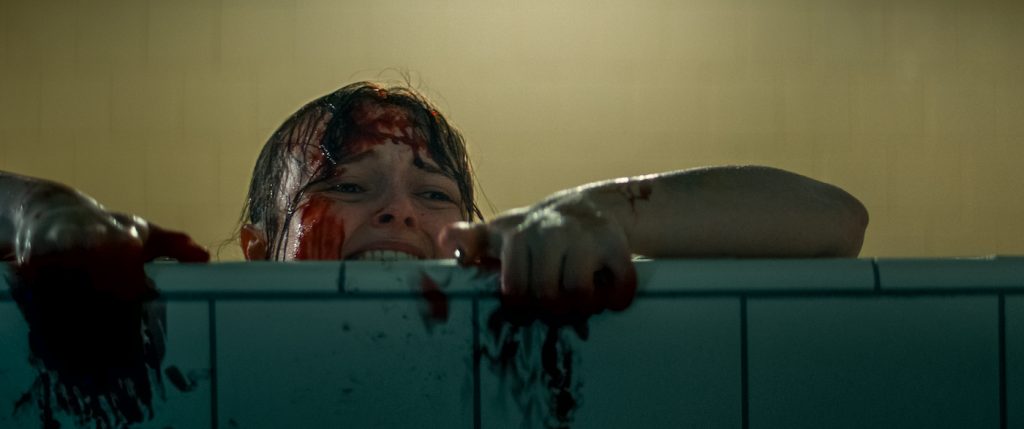
This savvy reframing of exorcism allows Chiarella to make both a pointed political statement about conversion therapy and also push the boundaries of queer cinematic representation in horror. Queer relationships in horror are nearly always coded, not literal – think Interview with a Vampire. In slashers, only straight teen characters get to have all the bloody fun. In Leviticus, actual human gay boys face off with conversion demons from hell.
“Growing up, I noticed that American horror movies were always about sex,” Chiarella says. “In some way or another, there was always that trope of, as soon as someone had sex, they were doomed to die. I did want to tap into that, but just bring that queer spin to it. I think that was a really important ethos of the process.”
While a deep horror-concept ingenuity anchors Chiarella’s storyline, the notable economy of his characters’ dialogues intensifies the film’s moment-by-moment ratcheting up of tension, a testament to the years he spent honing his craft. Chiarella has been writing and directing shorts for more than a decade, while also writing and directing for Australian TV.
For all the complexities of plot, supernatural and otherwise, Leviticus’ characters’ dialogues tend to be short, even choppy, in keeping with the characters’ confusion and sense of urgency. The evolution of Ryan and Naim’s relationship comes as much from horrified observation and soulful exchanges of eye contact as from actual conversations.
Chiarella worked to tame his natural wordiness. “I look at other filmmakers’ stuff, and I think, ‘How did they get away with that line?’ If I put that in there, everyone would be telling me to take it out,” he says good-humoredly.
Now he prides himself on his minimalism. “I’m always questioning, what’s the least amount of words we can get away with. It’s like a game, right? What if we take this out and this out and this out? That is something that I’m very, very conscious of all the way through to the end of the edit. I think it’s become something of my style.”
Leviticus played widely on the film festival circuit—including as a notable standout of the Sundance Film Festival’s midnight slate—and Chiarella had the gratifying experience of meeting survivors of conversion therapy who said the film reflects what they went through.
“They shared this idea of trying to explain how they felt or how they identified to their parents and their community, and just no one believing them, and that was the hardest part,” Chiarella says. “They said they really connected with this rule of the monster in our film that no one else could see. They felt that part of the metaphor was really capturing something in their experience.
Featured image: L-r: Joe Bird and Stacy Clausen in “Leviticus.” Courtesy Neon.