
“Landman” Co-Creator Christian Wallace on How Texas Became Film’s New Frontier
With last year’s passage of Senate Bill 22 (“SB 22”), the Texas Moving Image Industry Incentive Program saw its most robust expansion in years. Increased by 50%, from $200 million to $300 million for every two-year cycle, the program’s funding is guaranteed until 2035, injecting much-needed stability into the state’s film production landscape. Many notable Texas-native filmmakers rallied for the expansion, including Oscar-nominated showrunner/creator of Landman, Taylor Sheridan, who has shot many of his shows in the state. With production budgets ranging from $150 million per season on ‘Landman’ to $250 million on the Yellowstone spinoff, 1923, Sheridan makes it clear that none of his shows would have been able to film in Texas without the production incentive.
“This tax credit is very competitive with other states; it will take a while to see the results, but it will benefit many productions,” says Landman co-creator Christian Wallace, whose 2018 Texas Monthly article on the West Texas oil boom and his Boomtown podcast serve as the basis of the Paramount hit series. “SB 22 passed with a big push not only from the people and media industry, but also private business and lawmakers. It was a really cool coalition that came together to get the narrative out about why it is important to have film and TV production in Texas.”
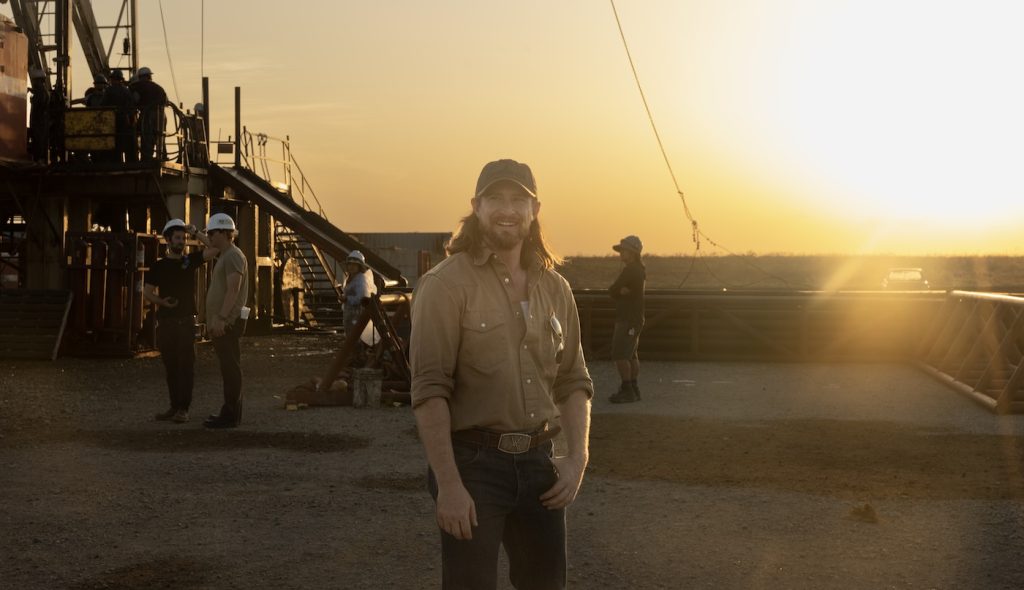
It was often disappointing for Wallace to see stories set in his home state filmed elsewhere due to budgetary and production infrastructure constraints. So, the West Texas native is thrilled with the recent production boom, especially since it also lays the foundation for a sustainable film industry within the state. “Taylor Sheridan, 101 Studios [producer of Yellowstone and Lioness], and Paramount have multiple projects like Landman in the Dallas-Fort Worth area. In Austin, we just had an Apple TV show [Brothers] with Matthew McConaughey and Woody Harrelson. So, it’s a really exciting time in Texas for film and TV. There’s a sense that you can really have a filmmaking career here.” He adds, “There’s never been a better time to be a filmmaker in Texas, whether you’re a grip or a writer.”
In a wide-ranging discussion with The Credits, Wallace shares his thoughts on what makes Texas more conducive to filming, the collaborative effort with the state to build a steady talent pool for below-the-line crafts, and the significant economic benefits that film productions can bring to a community.
What are some of the filmmaking-friendly aspects of shooting in Texas compared to other states?
There’s genuine excitement to host productions here, whereas some places that have had a lot of production might find it bothersome. The communities here have been supportive of us, whether it’s small towns or cities like Austin and Fort Worth, which makes a big difference. Right now, we have people from all across America working on these crews, but more and more, we have homegrown Texas crews. Another important factor is how diverse, topographically and environment-wise, Texas is — we have everything from rolling plains and swampy bayous to desert mountains and intense piney woods, and everything in between. Parts of the Hill Country look like Tuscany in Italy. So, Texas offers quite a range of options.
Let’s talk about growing the local talent pipeline to sustain production growth – what have you seen on this front?
The [Richard Linklater-founded] Austin Film Society and Tarrant County College in Fort Worth offer programs to train the next generation of film crews, which is super important. 101 Studios’ founder, David Glasser, and Taylor have worked with TCC to develop the film development workforce certificate and other programs in collaboration with the Fort Worth Film Commission. The Austin Film Society offers a three-day workshop for grips and cinematographers. These are really important to develop the skills they need outside of your typical film studies programs. There is no show, no feature, without a great crew. We have a lot of buy-in from film commissions in different cities — they’ve been great allies. We also have an initiative across Texas for towns to apply to be film-friendly communities — they submit photos of locations, a rundown of amenities and things they can help provide, such as community members who might be helpful if a production sets up there.
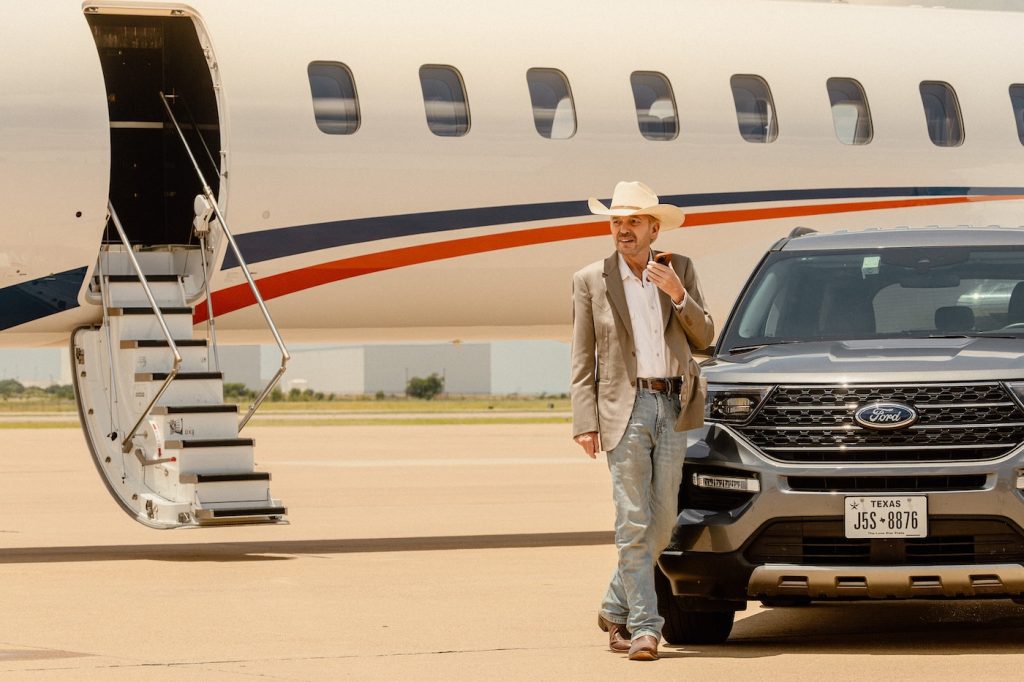
Since Landman is anchored in Fort Worth, I assume most of the crew is local? How big is the crew on an average day?
It ranges from 150 to 300 people. Over 50% of our crew is from Texas, and we’ll probably continue to grow in that direction.
Some people may not understand how much of an economic impact large productions like these can have on the local community. Can you talk about working with the local businesses in Fort Worth?
That’s been one of the best parts of working on Landman: engaging with the local community. We shoot in blue-collar neighborhoods and corporate offices in downtown skyscrapers, and buy tons of flowers and greenery from local floral shops and lawn and garden stores. We’re obviously buying lumber and supplies for our construction crews. In a small town like Jacksboro, we’ll go in early in the morning and let them know we’re coming, and the little hamburger shop makes 300 burgers for our crew, which could be more burgers than they sell in a week.

That volume of business can really make or break a small business.
Absolutely. One of our producers has a great story from before he was on Landman. While on vacation, he came across this guy who owns a lumber company. He was so appreciative of the film business because that was the first vacation he’d ever taken in his life, and it’s because a film production in their town bought so much lumber and supplies that they’d had the best year, which allowed him to go on this vacation. So, it can make a huge economic impact for these businesses in a town like Fort Worth.
For a Texas-centric story like Landman, I’d imagine a large portion of the materials for set design and costume is sourced locally?
The Fort Worth Stockyards is a historic area that’s kind of a great cowboy hub. We buy a lot of Western furniture from the stores there – one of the stores was thrilled that our set designer almost bought everything there the other day. So many of our costumes are from M.L. Leddy’s in Fort Worth. I can’t imagine how much gas the entire crew purchases there locally. So, they love to see us coming. It’s quite symbiotic: we have a great place to film and form great relationships with the city, and they benefit from us being there as well.
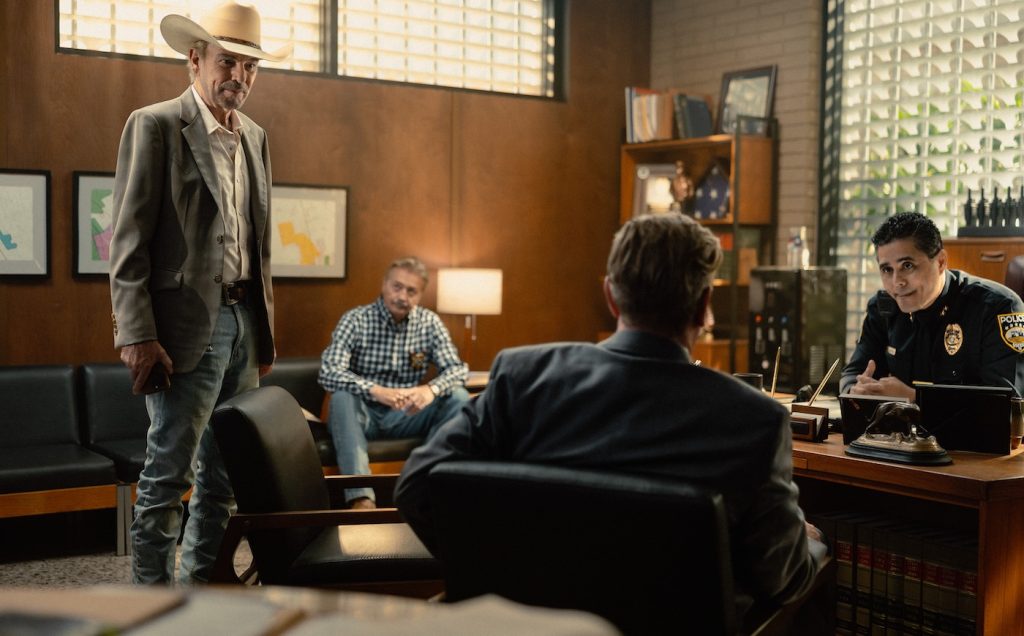
Landman is streaming on Paramount+.
Featured image: Billy Bob Thornton as Tommy and Sam Elliott as T.L. in Landman episode 10, season 2, streaming on Paramount+. Photo Credit: Emerson Miller/Paramount+