“The Thing Under Threat Was a Friendship”: Creator Annie Weisman on Reframing the Thriller in “Imperfect Women”
In a television landscape of high-concept thrillers and prestige adaptations, Imperfect Women distinguishes itself by grounding its mystery in something far more intimate than institutions or conspiracies: friendship. Created by Annie Weisman and adapted from the 2020 novel by Araminta Hall, the series transforms a literary source into a layered, emotionally resonant story about three women whose bond is as fragile as it is enduring.
When speaking with Weisman, her enthusiasm for the series’ creative journey was unmistakable. In conversation, she revealed not only the mechanics of adapting a novel into a tightly constructed limited series, but also the deeper philosophy guiding the show: that friendship, especially among women in midlife, can carry the same narrative weight as love, family, or power.
From the outset, Weisman identified the central challenge of adapting Imperfect Women. For Weisman, preserving the emotional core of the original story while translating it into a limited series with far less room for the comprehensive exposition of a novel was a creative opportunity. “I was very intrigued by the book when it was sent to me,” she explained, “and I could definitely see that the really key thing in it…was that the thriller was really rooted in the friendship.”
In so many thrillers, the stakes revolve around external systems. A crumbling empire, a looming societal collapse, or a relentless pursuit for power, money, or control dominate the genre. But here, the “edifice,” as Weisman describes it, is far more personal. “Instead of a marriage or a family or a business or a country or a civilization,” she said, “the thing under threat was a friendship.” That choice reshapes the entire storytelling framework. The mystery is not just about uncovering what happened, but about understanding how relationships fracture, and whether they can be repaired. “You develop this beautiful, meaningful friendship,” Weisman said, “smash it apart, examine how it got smashed apart, and then put it back together, broken, but mended.”
It’s a structure that demands emotional investment from the audience almost immediately, especially given the constraints of a limited series. Unlike a novel, television doesn’t have the luxury of lingering in a character’s inner thoughts. Instead, it must communicate depth quickly and efficiently. “You have a very limited amount of time to establish that depth of friendship,” Weisman noted. “You have to say that these are people who love each other; this is a key foundation of their lives.”
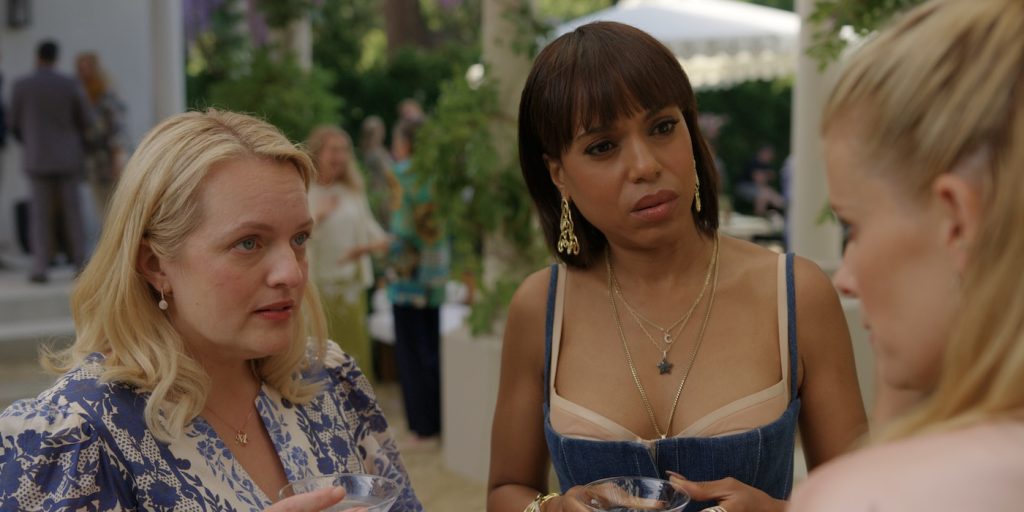
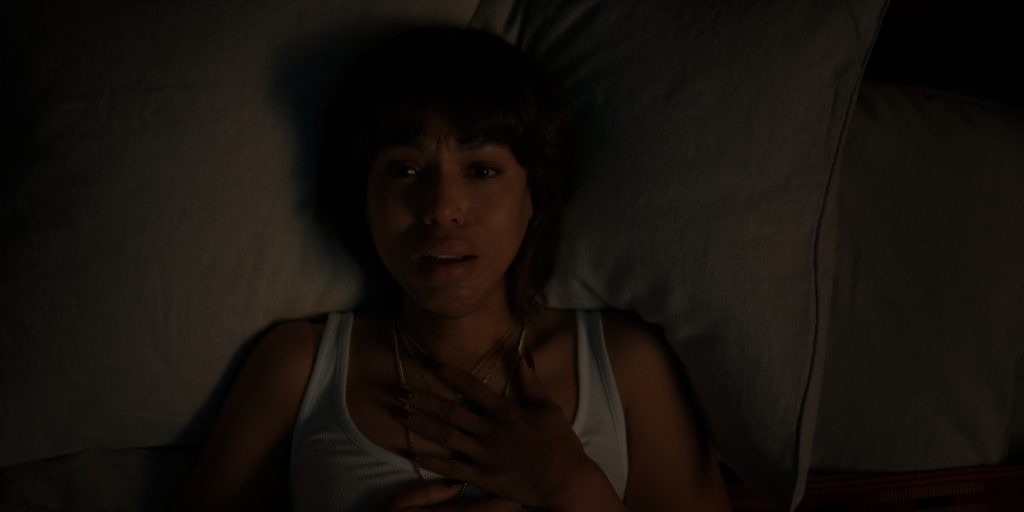
To meet that challenge, Weisman leaned heavily on collaboration, particularly with the show’s visual departments. Where prose can spell out a character’s psychology, television must imply it. “One of the wonderful things about collaborating in this medium,” she said, “is that you have all these visual storytellers to help you—through environment, through the way the camera moves, through color schemes.” These visual cues become a kind of shorthand, allowing the show to convey complex emotional truths without explicit exposition. Nowhere is this more evident than in the construction of Eleanor, played by Kerry Washington. “In the middle of the season, creating Eleanor’s world…we had a lot of fun with that,” Weisman explained. “Her work environment, her home environment, the way she dresses out in the world, the way she dresses at home, those were nice shortcuts.” Through these details, the audience begins to understand the layers of her identity: what she presents to others versus what she keeps hidden. It’s a delicate balance, one that rewards attentive viewers without overwhelming them with information.
Adaptation also gave Weisman the freedom to reshape certain characters for the screen. One of the most notable changes involves the character of Nancy (Kate Mara), whose backstory takes on new complexity in the series. “In the book, she was very much like a sort of beautiful, blonde, rich girl,” Weisman said. “And I thought when I was developing it, we’re not going to get to spend a lot of time with her…so it would be more interesting…to make her someone who had really invented herself.”
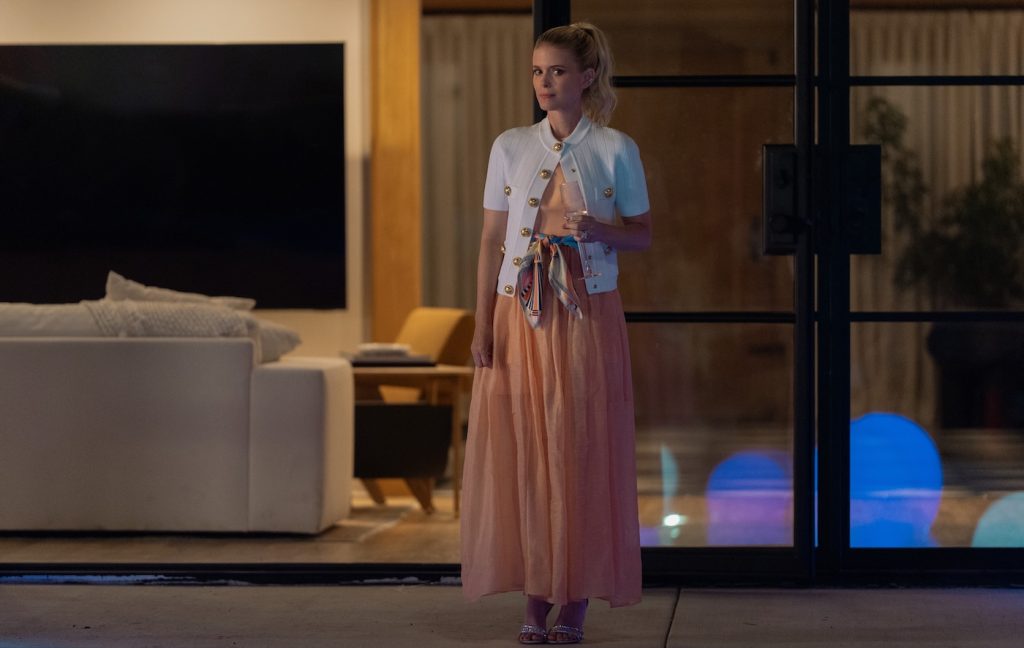
Nancy’s reinvention adds both intrigue and thematic resonance. Nancy becomes emblematic of a broader cultural phenomenon, particularly in Southern California, where reinvention is practically a way of life. “It’s a very Southern California thing,” Weisman observed. “People come here to reinvent themselves…a lot of people walking around looking like they just grew out of the ground looking like that. They are completely from somewhere else.” And by giving Nancy a hidden past, the show deepens its exploration of identity and performance, ideas that echo across all three central characters.
One of Imperfect Women’s most impressive achievements is its tonal balance. The series functions as both a gripping mystery and an emotionally grounded character study, never tipping too far in either direction. “We wanted to have both a pretty fun thrill ride of mystery and whodunit and suspense. But it was just important to all of us to ground it back to that idea that friendship is at the core of it.” Weisman said. “You really wanted to earn your connection to them.”
For Weisman, the key lies in authenticity. Suspense without emotional investment is hollow, while intimacy without stakes can feel inert. “You’re not just creating suspense for the sake of suspense,” she explained. “It’s got to be earned and believable.” That philosophy extends to every aspect of the production, from writing to performance to direction. Even as the plot introduces twists and revelations, the characters remain recognizable and relatable, anchoring the story in emotional truth.
Unlike some showrunning experiences where a single creative voice dominates, Imperfect Women was shaped by a notably collaborative team. This included executive producers and stars Elisabeth Moss and Kerry Washington, both of whom brought their own perspectives to the project. “I was coming on board with something that Elisabeth and her producing partner had already been with,” Weisman said. “And Kerry comes with a lot of opinions and ideas and a sense of herself and her audience.” And rather than resisting input, Weisman embraced it. “It was really just about collaborating from the beginning. We are all stirring the batter and adding things and subtracting things and tasting it and making sure we all feel good.”
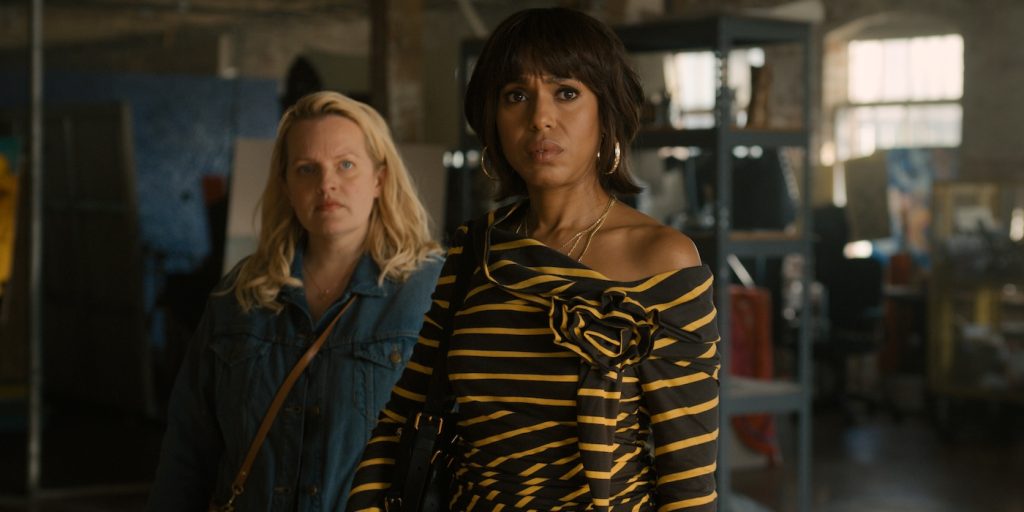
As a showrunner, Weisman believes that collaboration involves negotiation, compromise, and occasional friction, a combination that, for her, is part of what makes it meaningful. “You have some of that that is fluid and easy, and sometimes there’s friction and disagreement and compromises, and so it’s all that kind of beautiful stuff of making something with other people. And when they’re bringing their really hard-earned, awesome experience. It’s like a team of equals, in a really cool way.”
The show’s multi-perspective narrative structure further supported this approach, allowing different directors and creatives to bring distinct sensibilities to various episodes. “It’s not supposed to be one point of view,” she said. “It’s supposed to be multiple points of view.”
While the creative process was rich and rewarding, the production itself was not without challenges. The series was filmed in Los Angeles at a particularly difficult time, in the aftermath of industry strikes and devastating wildfires. “Shooting in LA is a huge privilege,” Weisman said, “and it’s challenging. We were just coming out of the fires. It was everyone’s first job afterward. We had a lot of crew members who lost homes, a lot of people were affected.”
The emotional toll was significant, but it also fostered a sense of unity. “There was such a sense of camaraderie and purpose and desire to get back to work,” she recalled. In many ways, the circumstances mirrored the show’s themes: resilience, connection, and the importance of community. “You always have limited time, limited money, limited light—limited everything, you know, limitations are what artists thrive on,” Weisman added. “You have to have just not enough of everything you need to really do it and band together and make it.”
The series’ filming locations across Los Angeles, ranging from polished, aspirational neighborhoods to more grounded, lived-in spaces, helped reinforce its tonal duality. The city becomes both a backdrop and a character, reflecting the tension between surface and reality that defines the story.
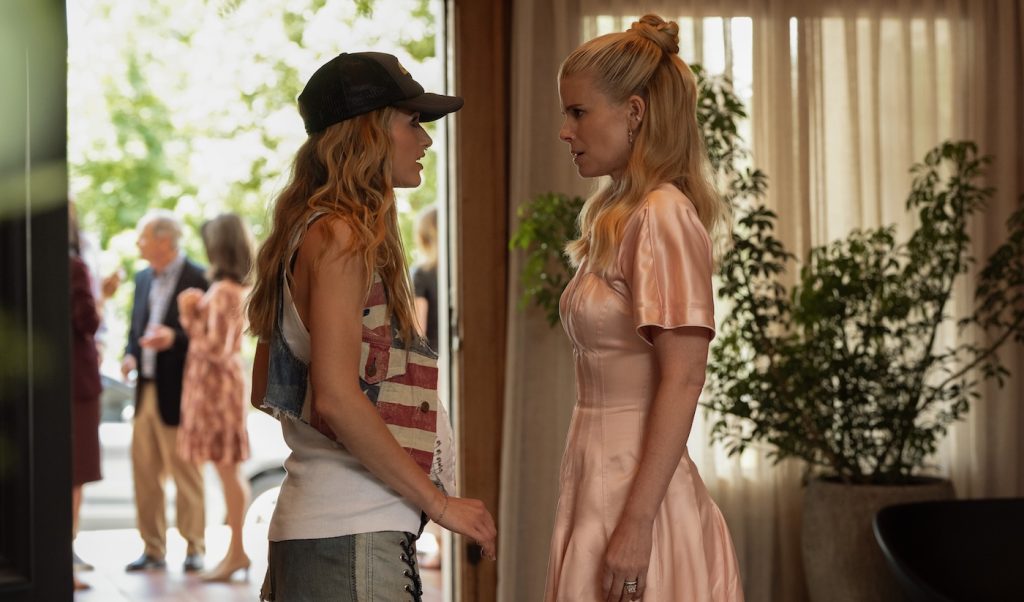
If the writing, direction, and backdrop provide the foundation of Imperfect Women, its cast brings the structure to life. The trio of Moss, Washington, and Kate Mara creates a dynamic that feels both natural and electric. Interestingly, Washington was Weisman’s first choice for Eleanor from the very beginning. “I have the receipts,” she said with a laugh. “I wrote ‘Kerry Washington.’”
Moss, meanwhile, was already attached to the project before Weisman came on board. “When I first read the book, I didn’t know which character she wanted to play,” Weisman recalled. “And then she told me it was Mary. And I was really interested in that. It wasn’t what I expected.”
The casting of Mara as Nancy completed the trio, resulting in what Weisman describes as an unusually seamless process. “That is very unusual,” she admitted.
Beyond their individual talents, what sets these performances apart is their collective chemistry. “It’s very unusual to have an ensemble of leading women,” Weisman noted. “They’re usually the only one of them in whatever project they’re doing.” Here, however, they share the spotlight, creating a sense of camaraderie that translates directly to the screen.
As showrunner, Weisman occupies a unique position: part storyteller, part manager, part translator of creative vision. Her approach is rooted in clarity rather than control. “I see my role as communicating intention,” she said. “I never want to dictate because I don’t want to limit anybody else’s contributions and creativity. So focus on story, focus on who the characters are…And then allow everyone to interpret that into their language.”
This philosophy allows each department, cinematography, production design, costume, hair and makeup, to interpret the story in their own way while remaining aligned with the overall vision. Maintaining that cohesion requires constant communication, particularly during the prep phase. “It’s all about prep…concept meetings, tone meetings, production meetings,” Weisman explained. “Keep everyone on the same page in terms of what we’re trying to do.”
It’s a balancing act, one that demands both leadership and flexibility. Or, as Weisman put it with a laugh, “It is a lot of hats. But I like hats.”
At its core, Imperfect Women is designed to entertain. “First and foremost, this show is meant to be a fun ride,” Weisman emphasized. But beneath the twists and suspense lies a deeper message about connection. “It’s about the value of female friendship,” Weisman says. “How we need one another, how we kind of save each other.” In a culture that often prioritizes romantic or familial relationships, the series makes a compelling case for friendship as an equally vital bond. “Friendship can have the status of other relationships in our lives,” she said. “It’s really important.”
That message resonates long after the final episode, lingering in the spaces between the show’s more dramatic moments. It’s what elevates Imperfect Women from a well-crafted whodunit to something more enduring: a story about the ways we shape, and are shaped by, the people we choose to keep close.
As Weisman succinctly put it, the goal was always to create something that feels both exciting and believable. “It’s a fun ride,” she said, “but you’re never going to get off…you have to believe it.” And in Imperfect Women, belief is everything.
Imperfect Women is streaming now on Apple TV.
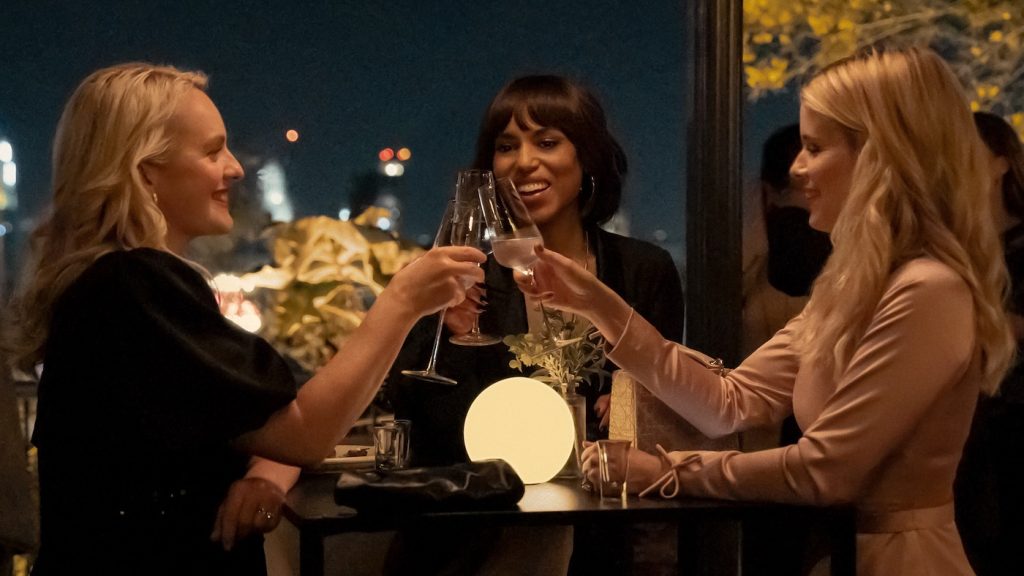
Featured image: Kerry Washington, Kate Mara and Elisabeth Moss in “Imperfect Women,” now streaming on Apple TV.