Inside the Global Casting Search for “Pluribus”: Non-Actors, Secret Scripts & Perfect Fits
In Pluribus, showrunner Vince Gilligan’s third critically acclaimed project set in Albuquerque, novelist Carol Sturka (Rhea Seehorn) finds herself angry and adrift after an alien virus takes over Earth. One of only 13 immune people worldwide, Carol sets out to find a cure for the virus while working against the irritatingly pleasant Others, who do everything they can to please her as they try to get her to join them. Isolated in New Mexico thanks to both her unwillingness to join and her inability to get along with the rest of the global cohort that makes up the immune, Carol’s communications are frequently limited to the member of the Others assigned to care for her, Zosia (Karolina Wydra), and one-offs like John Cena (John Cena) and Tim Keller (playing himself as the mayor of Albuquerque).
Gilligan wrote the project with Seehorn, who starred as Kim in Better Call Saul, already in mind, so for casting directors Sharon Bialy, Sherry Thomas, and Russell Scott, the challenge in casting Pluribus lay in working around the show’s plot, which remained a secret throughout their process, and finding talent for both speaking and non-speaking roles worldwide. The Others came from all over, and for Gilligan, authenticity took precedence over experience, which entailed unusual casting methods for the casting team and time spent working with the non-actors they found to prime them for the audition process. We spoke with two-thirds of the team, Bialy and Scott, about the search for non-actors and finding the right people for the crucial roles in the Unjoined.
With Pluribus written with Rhea Seehorn already in mind, how did that jumpstart your process?
Sharon Bialy: We had cast her in Better Call Saul. So we knew how much Vince loved working with her, as everybody did. Given what a strong actor she is, you know you have to surround her with really strong actors so they don’t get wiped off the screen. However, in this instance, we were also going all over the world and hiring people who weren’t acting, who had never acted. And people rose up to the occasion.
What was behind the non-actor casting?
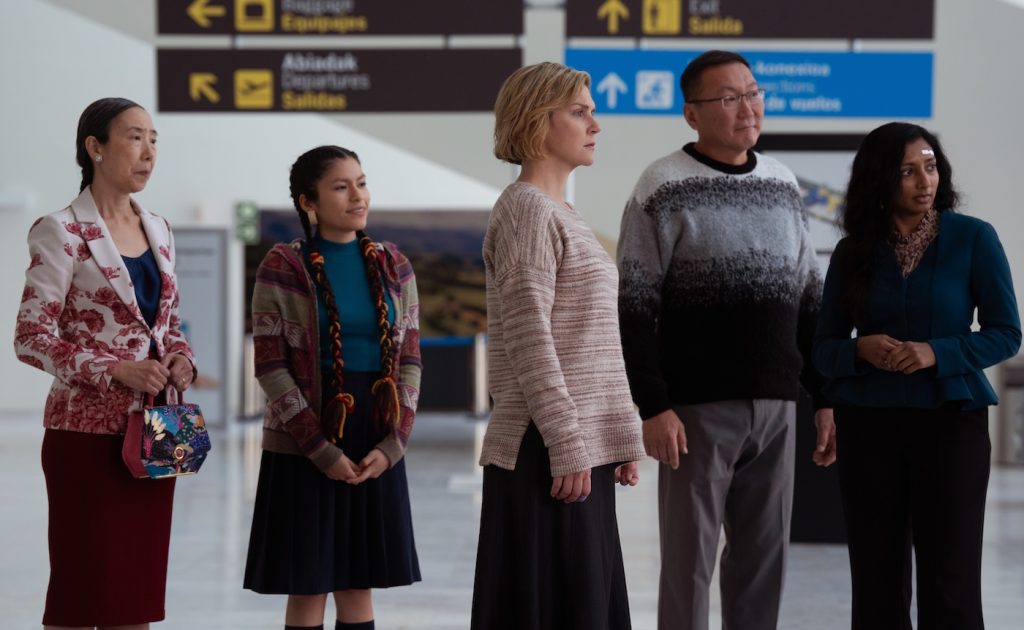
Russell Scott: A couple of the Unjoined were non-actors. I believe [Amaraa Sanjid, who plays Otgonbayar] used to be an opera singer in his home country, but now he was working as a truck driver. We were very lucky to find him, and I thought he was fantastic. We had to do a lot of research, outreach, and open calls, just trying out all kinds of people who weren’t actors. We wanted to be authentic.
SB: We had to find people who could speak Quechua, so we reached out to the colleges because we heard from someone that NYU had a class on it. We found somebody taking the class, and [Darinka Arones, who plays Kusimayu] ended up getting the role.
RS: She’s a student at NYU and had not acted before. The finale in which she joined was so poignant.
What kind of material did you ask the non-actors to use to audition?
RS: There’s an element of teaching how to audition for the camera, which is the title of Sharon’s book, I believe. But it was like a regular audition that anybody else would do. There were sides, and we Zoomed and worked on it with them.
SB: We had the time, and that’s what Vince wanted. We were really trying to get them to relax and understand to use their own voice and who they are with somebody else’s words, because when you’ve not acted before, you think you have to do a whole thing. And in particular with Vince’s style, it’s very low-key and naturalistic.
Did Vince have particular directives for either the Others or the Unjoined?
SB: He wanted to be authentic to wherever they were from. He also had some ideas—the mayor, Tim Keller, he went with the real mayor. For John Cena’s role, he really wanted somebody like a Tom Hanks, that people would trust, who would be instantly recognizable, which is not his usual way. Russell came up with the idea of John Cena. And it just clicked.
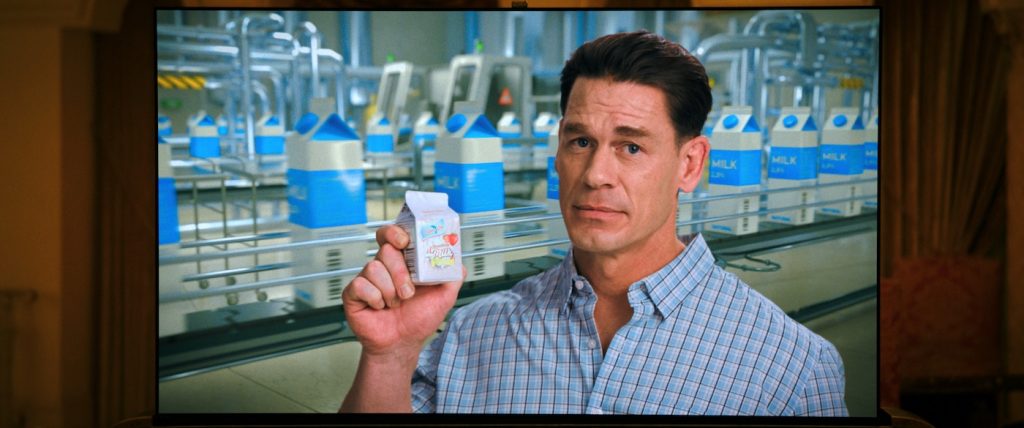
RS: We had done a whole list for Vince. We needed it to be someone recognizable to the entire audience, very trustworthy, and someone you don’t mind hearing about cannibalism from. It was exciting to get John. And it was a lot of work on production on that one to get him in front of the camera. They actually went to where he was shooting his show in Florida and shot it on the weekend on his day off, which was great.
SB: He got it in the first take. He’s a pro.
How did you find Manousos?
SB: That was a huge search. We hired a South American casting director who sent us a lot of tapes. We all responded to [Carlos Manuel-Vesga]. He was extraordinary. He also fit in with our aesthetic. And he’s done a lot of theater in Colombia; he’s really well known there for his craft. He knew how to be quiet on camera and have so much inner life without speaking, which was so important because he had almost a whole episode with no lines.
And what were you looking for to cast his temperamental opposite, Koumba Diabaté [played by Samba Schutte]?
RS: It was a big search. Samba [Schutte] actually lives in LA and is from Mauritania. I believe the character was originally from somewhere else, but Vince adapted it for Samba once we cast him. Vince had very specific qualities in mind—he had to be very likable and sweet, because he does some things that are questionable, and might be creepy if it was from another person, you know? But Samba’s just so wholesome and sweet in his essence, that I think it really clicked for Vince as soon as we found him.
SB: He’s really funny. And in fact, when he went out for his costume fitting, which was way before he was about to shoot, the costume designer wrote, everybody wrote, “We’re all in love with Samba.” He had that thing where you fall in love with him right away.
How did you find Carol’s complement and foil, Zosia?
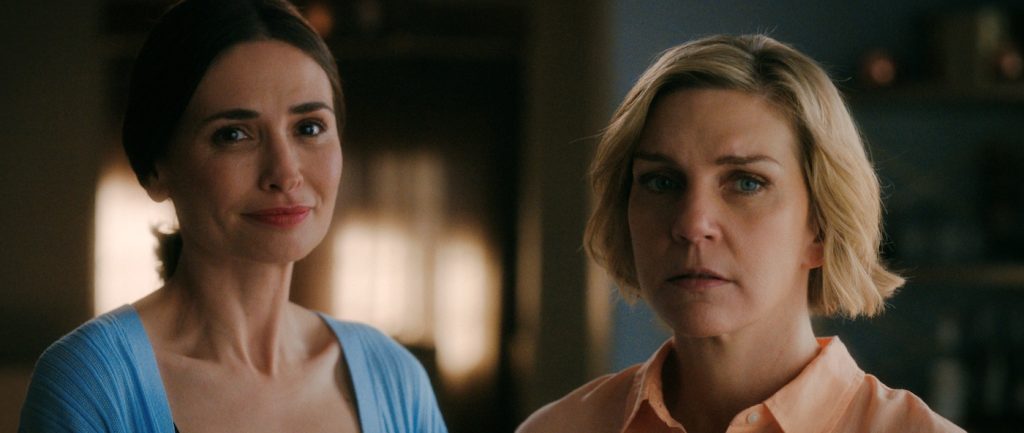
SB: It was a long search, but when we were banging our heads against the wall one night, somebody said, “Oh my God, where’s Karolina Wydra been?” We’d cast her before and used to bring her in a lot. She didn’t have an agent or a manager, and somehow, through a commercial agent, we got a message to her.
Was casting background actors difficult, given that they had a lot to do to represent the Jointed?
RS: We have an amazing local casting director, Marie McMaster, in Albuquerque, who handles much of the local casting for smaller roles. I’m sure she cast a lot of those people as well. A lot of the people in the show were in the background, but it was important to Vince and the directors that they could direct them, because they were integral parts of the scenes. Marie did a lot, and our background casting did a lot. I thought it was really well done, but all the credit for that goes to those folks.
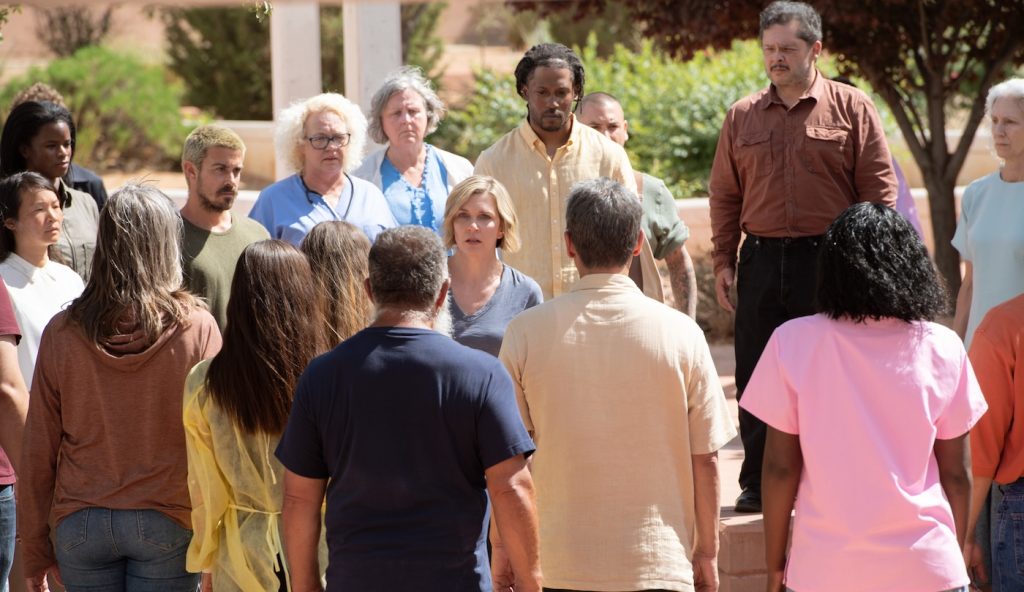
How did the plot affect the casting process?
RS: No one knew anything about the show. No one knew what the sides were about or what they meant. It was a lot of working with them to try to explain what was going on without actually telling them. I remember Zooming with Jeff Hiller [who plays Larry], and the sides are fake, so I’m like, “Okay, well, you’re not really talking about paintings. You’re talking about something else, and you can’t lie to her.”
SB: We took our NDAs seriously. None of the agents was able to read a script. They were all freaking out.
Featured image: Rhea Seehorn and Karolina Wydra in “Pluribus,” now streaming on Apple TV.