How Editor Jake Roberts Cut the Thrilling Iron Maiden Sequence in “28 Years Later: The Bone Temple”
28 Years Later: The Bone Temple—which is available on digital now and arrives on Netflix on March 31—is a cinematic joyride for horror fans. The sequel is a visceral experience with substantial thematic weight crafted by filmmaker Nia DaCosta, who captures the beauty and terror of screenwriter Alex Garland’s post-apocalyptic England. What will go down as one of the most exhilarating horror movies of the year was edited by an artist whose personal taste doesn’t lean toward horror: Jake Roberts. Roberts is the editor behind Brooklyn, Hell or High Water, and two previous Garland projects, Civil War and Devs.
The themes of 28 Years Later: The Bone Temple ultimately struck a chord with the editor, who always aims to put himself in the audience’s perspective. Roberts cut this middle chapter in Danny Boyle and Garland’s proposed trilogy with precise, character-focused chutzpah, giving it its own steady pace and kinetic feel. Roberts framed the chaos of the battle between man and infected, as well as between belief and science, by ensuring every scene was informed by the energy and performance of the talented ensemble cast.
28 Years Later: The Bone Temple follows atheist survivor Dr. Kelson (Ralph Fiennes) and satanist Jimmy (Jack O’Connell) as they go toe-to-toe in an existential, pestilential battle royale. Their feud is amplified in all its glory during a musical set-piece in which Dr. Kelson performs a fiery show as the devil to convince Jimmy’s young followers that their leader is the son of Satan. Iron Maiden’s “Number of the Beast” blasts in the skull temple. It’s a metalhead’s dream sequence, in which dance and horror become one with graceful bombast.
Recently, Roberts spoke with The Credits about editing the crowd-pleasing sequence, which has left audiences clapping in pure satisfaction.
What was your first impression of the Iron Maiden dance sequence?
Sometimes you read a script, and you think, God, it’s going to be so exciting to see how they do this. In this case, it was exciting, but also, how the hell do you pull off the expectation that Alex is writing into the stage directions? One of my first questions to Nia when I met her was, “Can Ralph actually sing?” In the script, it was staged that Kelson would be singing this falsetto over the track, and Nia was like, “Actually, I don’t know.” As it turned out, we didn’t lean into that aspect of it too much. We blurred the lines between the extent to which he’s lip-syncing or singing along with it. It was a complicated sequence to cut. I think it was shot over three nights.
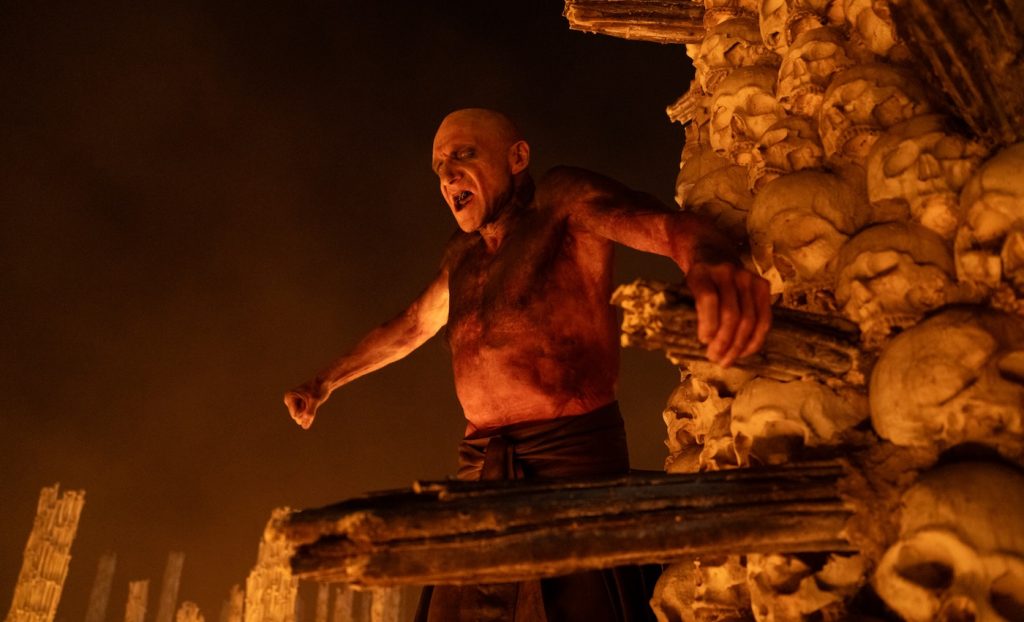
DaCosta and the crew shot Ralph Fiennes’ perspective for that sequence first, right?
We shot Ralph’s direction first, so you got the performance first. I didn’t actually know what the look was going to be like. The look was very different from what was written. He was supposed to be in a white suit, but the look was instantly very strong. Then, the extent to which he threw himself into it and his commitment, I was like, “Okay, great. We’ve got a performance.” What I was trying to do with the performance was not cut too much, so it felt authentic in the edit.
What plays as authentic to your eye in that instance?
I’m trying to let as many shots be unbroken for at least five, six, or ten seconds so the performance comes through. It’s not about editorial trickery. But when we cut back to Jimmy’s shots, I was trying to squeeze in as much narrative as possible because you’ve got five perspectives in play at once.
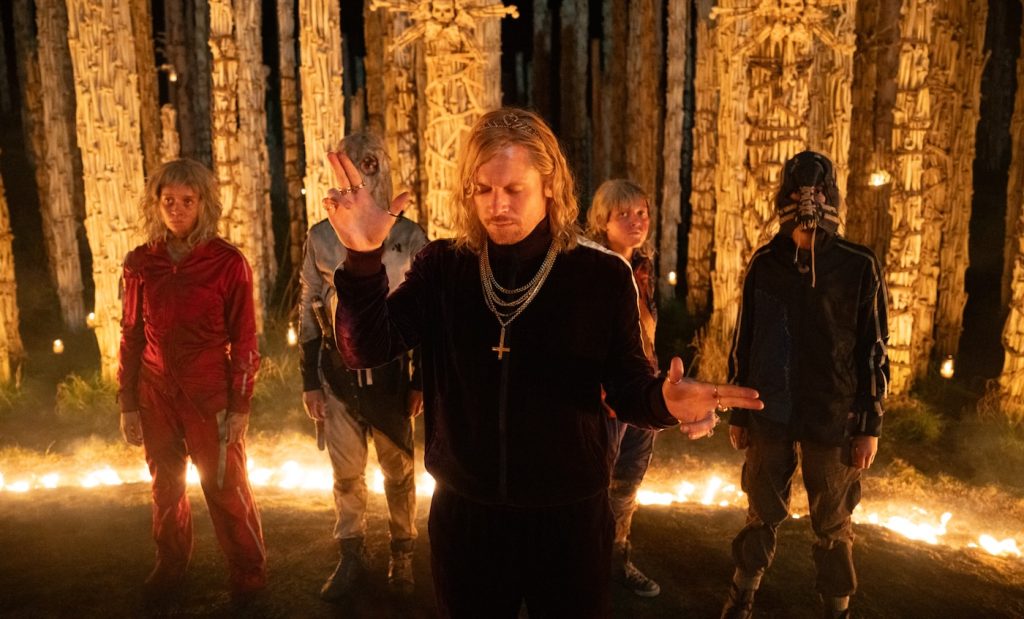
You also have to help create an almost transcendent experience for Jimmy’s young followers.
It’s about selling an idea written into the script: in Alex’s mind, these kids have never even heard amplified music in that way. The spell being created for them is more profound than it would be for a modern audience. You’re trying to tell all of those stories while working within a strict time base. Kelson has to throw the torch and the fire by this point, so there are only 38 seconds to work before that.
So you’re spinning many plates.
Yes. You’re trying to spin all the plates simultaneously and keep it overwhelming enough that the audience doesn’t start asking questions that pile up too quickly. You’ve got to keep the suspension of disbelief alive. The goal was to maintain shock and awe, putting the audience in a position somewhat similar to the Jimmys. Even if you’ve seen some images or marketing before, it should still feel like a shock.
You cut music videos for a few years. How did your expertise there inform the Satanic dance sequence?
I saw a comment saying, “Best music video I’ve ever seen.” I did cut music videos for a couple of years, so I treated it like that in some ways. It wasn’t a live performance; it was played to the same track each time. We had two cameras pointing in Ralph’s direction for each run, and they probably ran it six times. I’d have 12 takes of varying lengths of Ralph performing just for the first section, and then a similar number for the other shots. Probably two of each lens size.
What are you looking for in those takes?
I’m looking for where Ralph is best in time and with the body movement that matches the camera movement. We’d have 12 to 14 takes in various sizes. Sometimes there’s one section of the track where only one take was perfectly timed with the camera. Decisions are sometimes made for you in that sense; other times, you have 12 good bits all vying for the same moment. You choose based on: Have we been this wide yet, and is this a good moment to be this wide? Some editorial choices are dictated by practical considerations. Then you build the other shots around areas where you have more choice to create variance or impression. For the mega wides, the big top shot with the fire rings, there were just two drone takes.
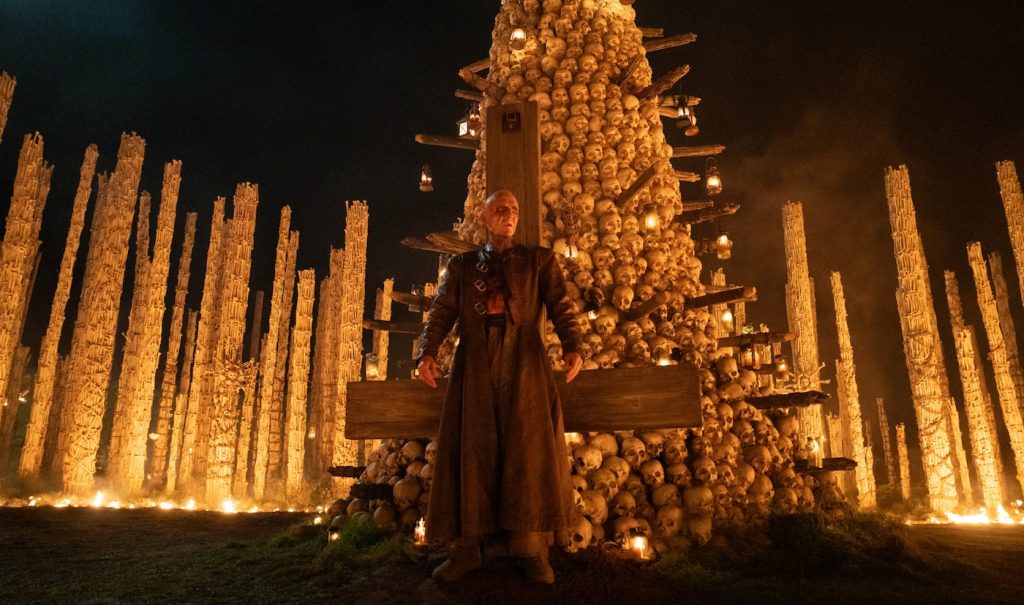
How did cutting during production help the sequence reach its full potential?
It was vital to know that it worked while we were still on location at night. If something had been missed or didn’t work, there was a chance to pick it up. It was the hardest sequence, and it was relatively early in the shoot. Being able to send a cut to Nia and the producers and say, “We’ve got this in the can, and it works,” was a morale boost. I worked hard on it during the first four days of the shoot. Nia and I refined it together, but it didn’t change much from the first assembly because I’d done a thorough job the first time to reassure everyone we had it.
Did the Iron Maiden song itself, “Number of the Beast,” inspire you through the process? Was the bass or the guitar ever driving certain cuts?
I was taking my cues from Ralph. I focused on finding the absolute best bits of his performance and framing those to showcase them. That informed the other choices. The guitar was part of it, but the editing was based on where Ralph’s energy and the camera energy matched best. Ralph was the guitar I was getting into.
28 Years: The Bone Temple arrives on Netflix on March 31.
Featured image: Ralph Fiennes and Jack O’Connell in “28 Years Later: The Bone Temple.” Courtesy Sony Pictures.