Oscar-Nominated “Hamnet” Producer Nic Gonda on Building the Creative Village Behind Chloé Zhao’s Vision
In bringing Hamnet to the screen, producer Nic Gonda helped shepherd a project that feels at once intimate and epic, a meditation on grief, art, family, and the invisible threads that bind them together. Adapted from Maggie O’Farrell’s acclaimed novel and directed by Chloé Zhao, the film has resonated with audiences around the world, earning eight Academy Award nominations, 11 BAFTA nominations, and a Golden Globe win for Best Picture. Yet for Gonda, the true measure of success lies somewhere far less quantifiable. Speaking with him about the journey from page to screen reveals not only the logistical complexity of mounting a period drama of this scale, but a philosophy of filmmaking rooted in trust, community, and the courage to leave space for the unexpected.
A Perfect Storm
For Gonda, the path to Hamnet began with a creative partnership rather than the novel itself. “To be honest, it was Chloé,” he says simply. “I’m the type of producer who really is driven by… ultimately, sustained by the passion that a director has in a story that feels irresistible to them.” Gonda and Zhao had founded their company together a few years earlier and, rather than aggressively chasing projects, they found themselves in a holding pattern, what he calls “acting as storm chasers,” waiting for the right material to pull them both into its vortex. “We were waiting for inspiration to strike, for something to present itself that we knew we would jump into full force,” he recalls. When Hamnet entered their orbit, it felt like “that perfect storm.” It was a story with deep roots and urgent relevance, but also a creative ecosystem flexible enough to become something distinctly Zhao’s.
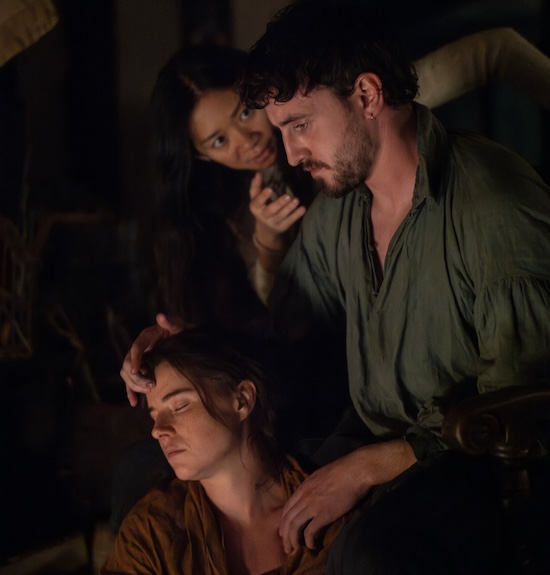
Often, producers develop projects extensively before bringing them to a director, expecting the director to execute a pre-existing vision. That was not the case here. Instead, Gonda describes an atmosphere of openness among the producing team and studio partners that allowed Zhao to sculpt the adaptation into something wholly personal. “It had the root system of something we knew was so timely and timeless,” he says, “but also had an open-mindedness from all of the collaborators… for Chloé to help sculpt it into what would then become a Chloé Zhao film.” That distinction mattered. With partners including Amblin and Focus, the team built an environment grounded in trust and creative freedom. For Gonda, the combination of substance and support provided the propulsion needed to transform a beloved novel into an immersive cinematic experience.
Supporting the Structure
If Zhao was the animating force, Gonda saw his role as structural. “I was kind of… think of it as scaffolding on the building,” he says. His job was not to dictate tone or impose structure, but to support Zhao’s process, acting as a conduit between her and other collaborators, including O’Farrell, while navigating geographic distance and time zones. In Gonda’s estimation, a great producer knows when to apply gentle pressure and when to step back. “It was a lot of lean forward, lean back, based on intuition and my relationship with Chloé,” he explains. “Understanding when she wants and needs more structure and when she really just needs space.”
The timing added another layer of complexity. Emerging from industry strikes, the team faced a finite window in which to write the script in time for budgeting, greenlighting, and pre-production so that filming could begin in the U.K. during a seasonally appropriate time. “There was a ticking clock that was very useful,” Gonda says, choosing to view the production team’s constraints as a spur for creativity rather than a daunting deadline. “Sometimes decisions can linger, processes can extend. But with us, we had a really great container of time and a sense of urgency.” Within that container, Gonda’s producing instincts kicked into high gear. He helped devise structures that honored Zhao’s organic writing process while keeping the project aligned with practical milestones. It was less about control than calibration. It was about building a framework sturdy enough to support spontaneity.
Maintaining Momentum
The strikes themselves presented a particular emotional challenge. “Inspiration strikes and you want to follow it,” Gonda says. Yet loyalty to the creative community required stepping away. For a filmmaker newly inspired by casting conversations with Paul Mescal and Jesse Buckley, that interruption demanded restraint. “To not work on that for that time took a lot of restraint,” he reflects. “But also to hold on to that core inspiration.” The danger, he notes, is that creative momentum can dissipate over long pauses. Some artists might pivot to something new. Maintaining continuity of inspiration and keeping the spark alive through months of stillness became its own quiet battle.
When production finally moved forward, Gonda found his favorite phase: prep. “That’s my favorite part of the process,” he says. “It’s where I think producers can be most impactful. Not just in the moment, but laying a framework that can be supportive of the filmmaker and ultimately the department heads downstream.”
Building “The Village”
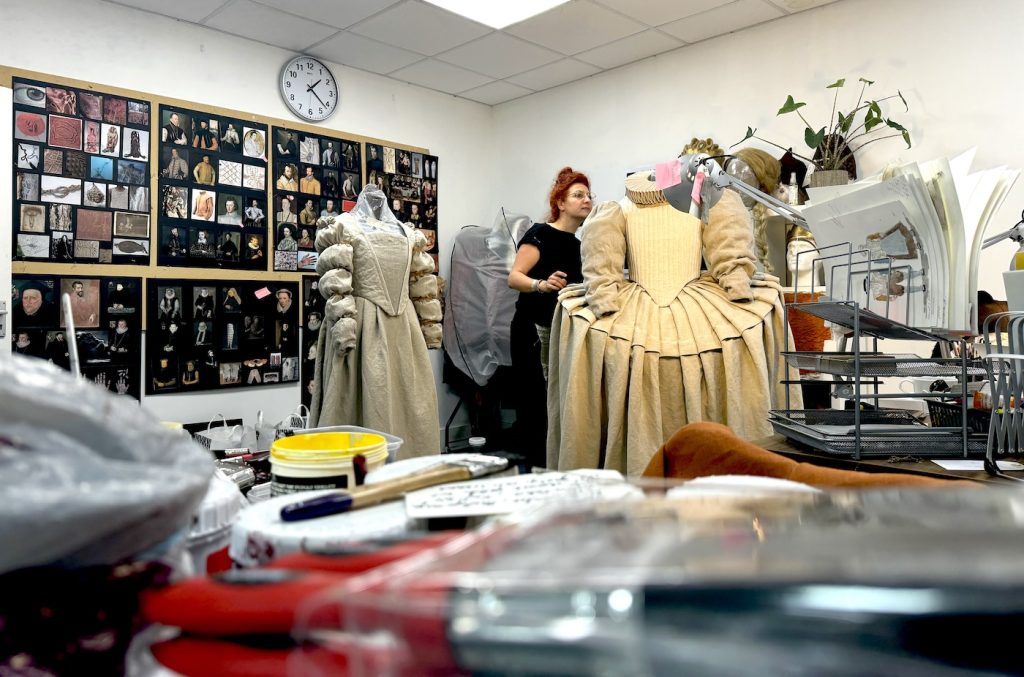
For Hamnet, prep meant not only assembling a roster of accomplished department heads but also a community willing to challenge themselves. “There are so many great department heads that can be perfect on paper in terms of their résumé,” Gonda says. “But many fewer than may be at a place in their life, in their career, where they want to work in a different way.” He distinguishes between artisans who repeatedly apply their mastery and those eager to step outside comfort zones. The latter, he felt, were essential to Zhao’s process, which invites unpredictability. The resulting crew formed what they affectionately referred to as “the village.”
“A lot of times, you could see silos on set,” Gonda explains. “Camera departments will go eat with themselves… tucked into their own corners.” On Hamnet, that fragmentation dissolved. “There was this feeling of not just support, but of true community.”
The stakes, he suggests, were partly responsible. Working on a Zhao film carries an implicit expectation to create something lasting and meaningful. “There is this implied invitation to do something that you’ll remember for the rest of your life, and that may even be remembered after you’re gone.” Such stakes can breed fear, which, according to Gonda, was deliberately replaced with trust. “When you remove fear as a catalyst and replace it with support and trust… it creates an environment that is magical in every sense of the word,” Gonda says. In that magic lies room for daily discoveries. In his words, “something that you didn’t plan on, but you then couldn’t live without.”
The Film Comes Alive
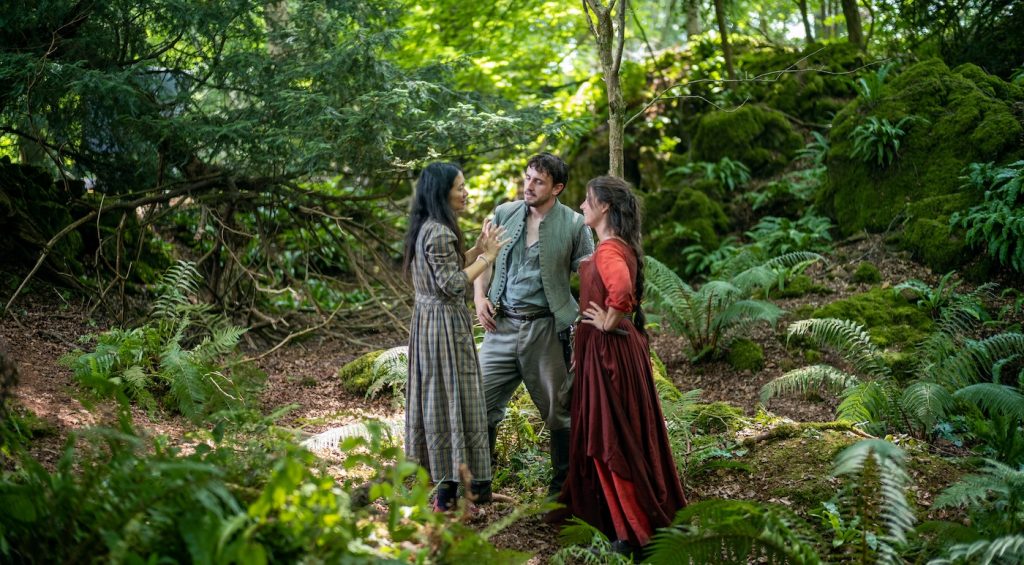
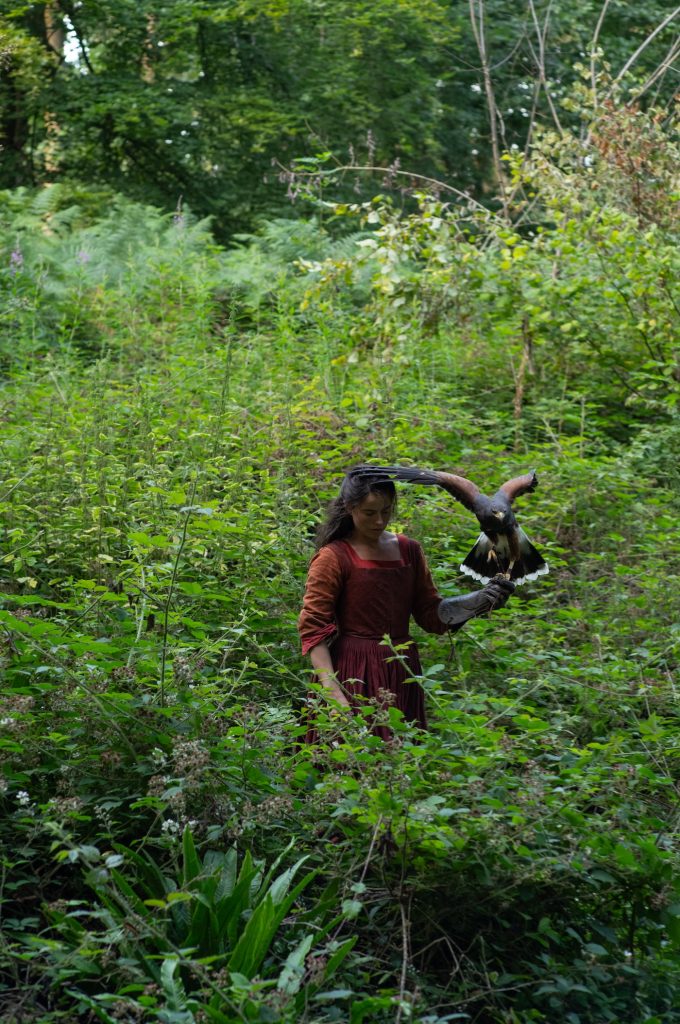
For all the careful planning, the true test came in week one of production. “We shot all of the forest shots, particularly the funeral scene for the hawk,” Gonda recalls. It was a moment loaded with expectation. Would the cast’s chemistry hold? Would the artifice dissolve into authenticity? Gonda and Zhao quickly realized the answer was yes. “It really was that way,” he says. “It set the stage for everything else.” The emotional coherence between actors and director signaled to the crew that they were part of something special. “We’re rowing this fantastic boat in a direction that we’ll be proud of,” he remembers thinking.
From there, the process became one of controlled improvisation. Zhao’s mornings often began with 10-to-15-minute voice notes outlining overnight revelations, ideas dreamt up with Jesse Buckley, or sparked in solitary reflection. “Every day, we were pivoting,” Gonda says. On many productions, such last-minute shifts would trigger resistance. Here, they were anticipated.
As producers, he and his team worked behind the scenes to create enough financial and logistical latitude for surprises. Boundaries existed, and Zhao actively sought to understand them. But within those lines, the crew remained agile. One sequence in particular tested that philosophy: the Globe scene.

Credit: Agata Grzybowska / © 2025 FOCUS FEATURES LLC
Zhao resisted pre-visualization tools, refusing to storyboard what she instinctively knew had to be discovered in the moment. The first days were disorienting. “It was really challenging, frankly, really demoralizing,” Gonda admits. Zhao herself felt lost. But he trusted the process. “You hear the thunder, and you’re waiting for the next lightning bolt.” Patience paid off in late-night conversations that reframed the sequence and led to a pivotal creative decision. The return of Jacobi Jupe’s character into a haunting, cathartic void, coupled with Max Richter’s music playing on set, crystallized the scene into something transcendent. “Those days in the Globe felt surreal,” Gonda says. “It felt like we were awake inside of a dream.”

Recognition Beyond Accolades
With its extraordinary run through awards season, including eight Oscar nominations, 11 BAFTA nominations, and a Golden Globe for Best Picture, Hamnet has secured its place in contemporary film history. Yet accolades are not what Gonda cites first when reflecting on pride. “It’s the variety, the diversity of people that are engaging so emotionally with Hamnet,” he says. The film has become, for many, a space for healing, a safe environment in which to confront grief, forgiveness, and love.
He describes reading social media comments and user-generated content from viewers who found the film catalytic. “Whether that was healing, whether that was forgiveness, whether that was catharsis, or love, or a new creative pursuit of their own.” For Gonda, this is the dream: to produce something “of service in the world.” Often, films achieve such resonance decades after release. That Hamnet is already meeting audiences in this way feels rare and deeply fulfilling. “It gives us all a sense that that’s the true success indicator,” he says. “When people meet a film in that way.”
Devastating and Empowering
Though the film’s heartbreak has been widely discussed, Gonda is quick to add that its emotional palette is broader. “Yes, crying, devastating, heartbreaking,” he acknowledges. “But hopefully… a lot of people are finding it to be empowering and enlivening.” The tears, he hopes, are energizing, a release rather than a depletion. In transforming private grief into communal art, Hamnet becomes a story of resilience and creative rebirth rather than simply a story of loss.
That duality of devastation and vitality mirrors the production itself. A film born in interruption, shaped by constraints, and realized through communal trust ultimately stands as a testament to collaboration. From waiting like “storm chasers” for the right story, to waking each morning to voice notes that might reshape the day, Gonda’s journey with Hamnet underscores a particular kind of producing ethos, which is one that values intuition as much as infrastructure.
In the end, scaffolding disappears. The building remains. And in darkened theaters around the world, as audiences lean forward into shared catharsis, the village that built Hamnet continues its quiet work: offering a space to feel, to heal, and to remember the enduring power of storytelling.
Featured image: Director of photography Lukasz Zal, director Chloé Zhao and actors Jessie Buckley and Paul Mescal on the set of their film HAMNET, a Focus Features release. Credit: Agata Grzybowska / © 2025 FOCUS FEATURES LLC