Inside Stage13: The Rigging Experts Behind “The Mandalorian,” “The Fantastic Four: First Steps” & More
Rigging equipment may not be a glamorous topic, but it is the backbone that keeps productions in the entertainment industry running safely and smoothly. It is, quite literally, the infrastructure that keeps your favorite sets standing, makes massive bluescreens possible, and turns a simple camera move into something visually arresting. That’s why it’s important for productions to partner with savvy architects in the field who can align critical department demands while keeping safety uncompromised. Stage13 Rigging Rentals is a leader steering the industry’s future.
Headed by Jason Selsor, the California-based company has over 30 years of experience, supporting everything from big-budget epics to indie passion projects, including The Fantastic Four: First Steps, The Mandalorian on Disney+, Netflix’s Jay Kelly, Apple TV’s The Studio, and the soon-to-be-released film Outcome, starring Keanu Reeves.
“My father was part of the rigging industry before retiring, and my grandfather is Leonard Chapman’s uncle of Chapman Studio Cranes, and he worked there for 50 plus years, so our family has been in this industry for generations,” says Selsor, who also serves as the current vice president of IATSE Local 80, the union representing grips, crafts service, marine, first aid, and warehouse workers. Stage13 carries on the family-run charm with Selsor’s mother, brother, and son part of the team, blending legacy with passed-down expertise. The dynamic allows them to coordinate sophisticated stage builds and technical rigs for sets, lighting, and stunts with confidence and care.
Below, Selsor breaks down the company’s inner workings, the realities of navigating industry challenges, and how social media is redefining the rigging playbook.
What separates Stage13 from other rigging rental companies?
First, we take real pride in our equipment. Every piece of gear that comes back from a production is thoroughly inspected by hand. While some companies simply count, bundle, and shelve their returns, we make sure everything that leaves our facility is fully functional and ready to perform the moment it arrives on set. Second, we bring decades of hands-on industry experience to every rental. When a client places an order, we don’t just pull gear — we ask questions. We work to understand what you’re trying to accomplish and confirm that you have the right components for the job. More than once, we’ve caught missing or overlooked items on a materials list before the gear ever ships, saving productions valuable time, money, and frustration.
What’s one significant shift that has shaped your field in recent years?
One of the biggest changes we’ve seen is the scale of productions. They’ve grown significantly over the years. But the most important shift has been the dramatic increase in safety emphasis over the past 15 years. Today, safety is central to everything we do. We focus not only on educating IATSE members about proper build techniques and safe practices, but also on supporting projects with formal engineering reports. Any build of substantial size now goes through an engineering review and receives an official stamp of approval. Years ago, much of this was figured out on the fly; now, these standards ensure that everyone involved feels confident, protected, and aligned on set.
Stage13 offers productions all the standard rigging equipment, but what about customized pieces?
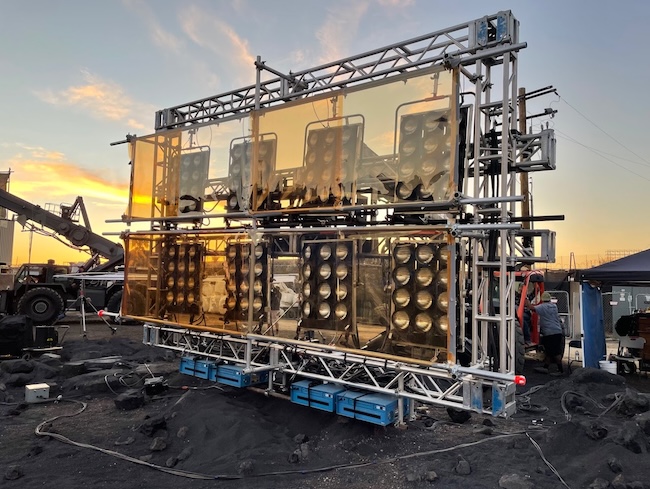
We do quite a bit of custom work, and it’s actually become an essential part of our business. Not every production can be solved with off-the-shelf equipment, so we often need to build pieces that accommodate offset heights, unusual load paths, or very specific clamping or grabbing requirements. We have a fully equipped shop with welders, mills, lathes, and other machining tools, enabling us to fabricate custom parts in-house. That kind of customization happens pretty regularly when we’re designing and installing rigs.
Beyond custom pieces, have you seen recent shifts in rigging equipment?
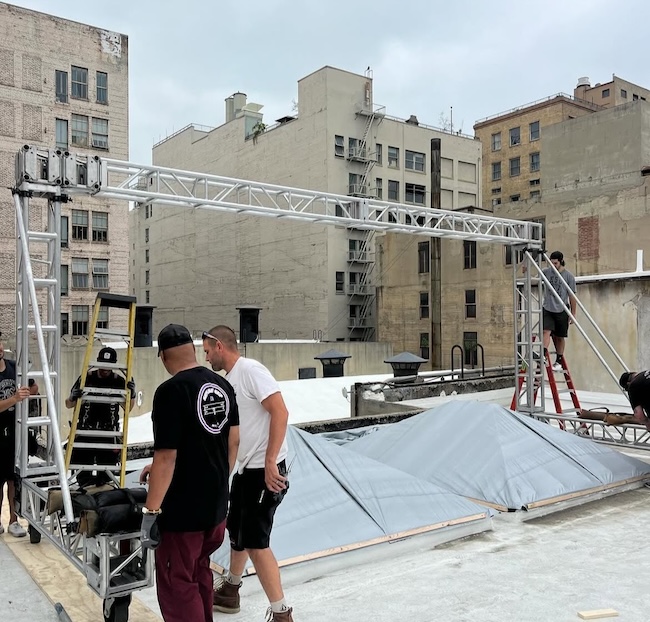
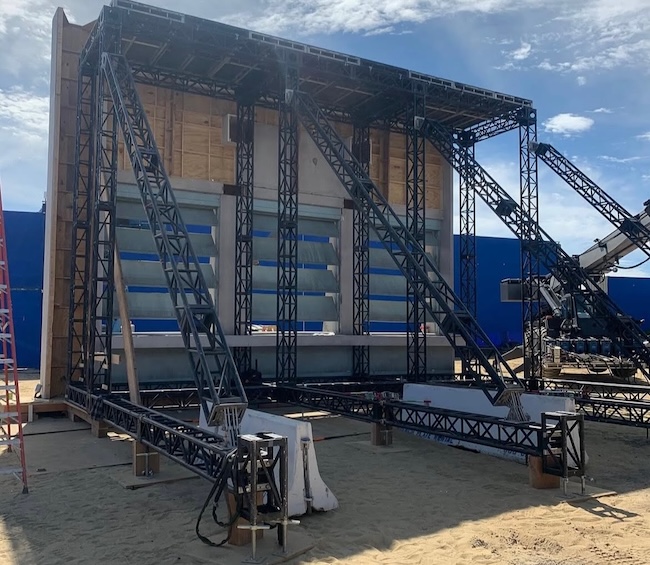
One noticeable shift we’ve seen is the increased demand for ModTruss products. They’ve been gaining a lot of traction lately and are being requested more frequently by productions. Compared to a traditional box truss, ModTruss has a distinct visual profile, making it appealing to designers who consider aesthetics as much as function. You’re seeing it used more creatively, especially in setups designed to photograph well or to be featured on social media.
Oh, that’s interesting. Is social media growing in your space?
It really is. The social media aspect has grown significantly over the last couple of years and has made a noticeable impact on our field. Productions are thinking more about how rigs look on camera and in photos, not just how they function. That shift has influenced both design choices and the types of equipment being requested.
Stage13 provided support for The Mandalorian. What does it take to collaborate on a production of that scale?
Collaborating on a production like The Mandalorian requires very close coordination across multiple departments, including construction and art. During my first season (Season 2), we worked closely with those teams to understand their needs in real time. When the show returned for other projects like The Book of Boba Fett, Ahsoka, and Skeleton Crew, we were able to take what we’d learned and create a more consolidated gear package. Instead of handling individual orders, we provided a dedicated set of equipment that they carried for the duration of the show. It was a challenging project, especially with late-stage changes and a strong emphasis on creative flexibility, but that’s where adaptability becomes critical. Our role is to make those ideas work within the realities of rigging and execution.
Stage13 has long supported major studio productions. Are your services also accessible to smaller-scale projects?
Absolutely. We work with projects of all sizes, from major studio shows to very small productions with extremely limited budgets. If a project genuinely doesn’t have the resources, we’ll step in however we can; sometimes that means delivering gear at no cost just to help them get the shot. We also work closely with film students who have specific creative goals but aren’t always sure how to execute them. In those cases, we’ll design and build rigs for their needs and donate them. Encouraging new filmmakers is important to us, and we always want people to feel comfortable reaching out if they have an idea but aren’t sure how to pull it off. We can help solve the technical side, so the creativity can happen.
With decades of rigging expertise, what advice would you offer producers and filmmakers when selecting equipment?
Every project is different, but one thing I’ll say very clearly is that rigging is not the department to cut corners on. When productions chase the cheapest option, they may end up hiring someone who isn’t fully qualified, and that puts people at risk. If something goes wrong, it’s not just equipment that’s damaged; people can be seriously injured. It’s critical that producers and decision-makers fully vet the rigging grip position. That standard seems to have slipped a bit over the years. At the very least, they should review a person’s IMDb credits to make sure they’ve worked on projects of similar scope. The last thing anyone wants is a condor tipping over, or something far worse.
This article is part of an ongoing series that raises awareness about businesses in the film and television community. Stage13 Rigging Rentals is a member of the California Production Coalition. The series includes:
From “Dune” to “The Last of Us”: How Formosa Group Elevates Storytelling through Sound
Featured image: (L-R): Grogu, Din Djarin (Pedro Pascal) and Greef Karga (Carl Weathers) in Lucasfilm’s THE MANDALORIAN, season three, exclusively on Disney+. ©2023 Lucasfilm Ltd. & TM. All Rights Reserved.