
“Wuthering Heights” Production Designer Suzie Davies on Building Emerald Fennell’s Fever Dream
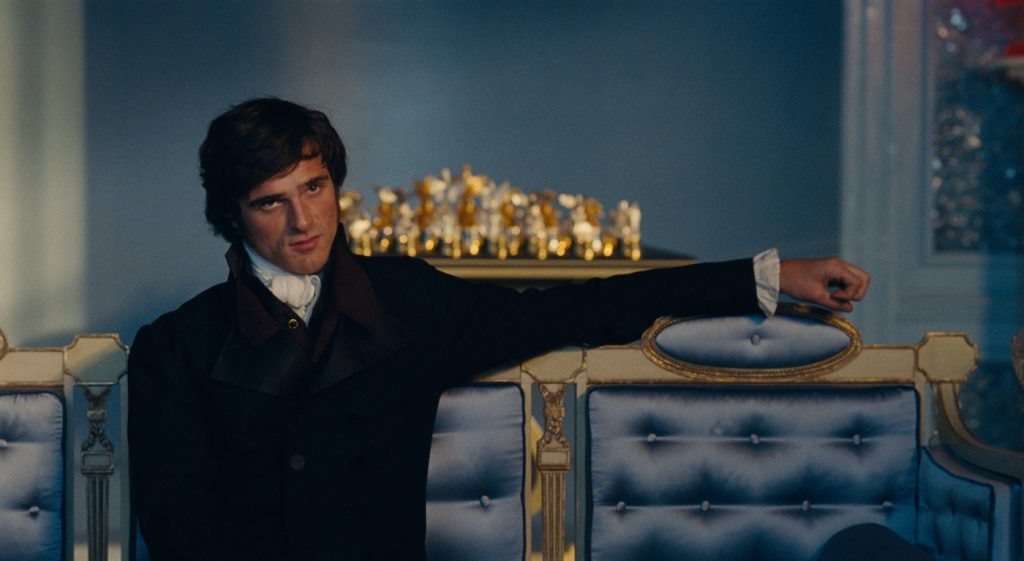
A sumptuous visual feast about class distinction, obsession, and destructive love, Emerald Fennell’s ambitious, boldly sensual adaptation of Emily Brontë’s 1847 novel, Wuthering Heights, happily sidesteps period accuracy in favor of amplifying the emotions between star-crossed lovers, Catherine Earnshaw (Margot Robbie) and Heathcliff (Oscar nominee for Frankenstein, Jacob Elordi). “It was most important to distill how Catherine felt, rather than doing your classic period drama. It was about finding the accuracy of that feeling,” says Oscar-nominated production designer, Suzie Davies (Conclave, Saltburn), of the Gothic tale of forbidden love set in 19th-century England. As Heathcliff is but a servant at Mr. Earnshaw’s (Martin Clunes) dilapidated farm — the eponymous Wuthering Heights — the lovers’ affection for each other was doomed from the start. Torn between her insatiable love for Heathcliff and financial pragmatism (hence the novel’s famous line, “It would degrade me to marry Heathcliff ….”), she marries aristocrat Edgar Linton (Shazad Latif) from the extravagant neighboring estate, Thrushcross Grange. In contrast to Earnshaw’s bleak and tattered farmhouse atop a hill in the windswept West Yorkshire moor, Edgar’s property is luminous, colorful, and lavish.
With this hyper-stylized and hyper-sexualized interpretation of the literary classic, Fennell has said that she “wanted to make something that was the book that I experienced when I was 14.” Davies was intrigued as soon as she read the script. “When I read her stage directions, I remember thinking, ‘Oh my God, I can’t believe she wants to do this! How am I going to do it?’” Davies’ second project with Fennell, after Saltburn, has been “one of the most exciting experiences as a production designer. There were so many unusual yet wondrous ideas on every page, from the dollhouse to the skin room [Catherine’s bedroom]. I felt immensely privileged that we were going to try to create that subconscious vision that everyone has when they read a book or listen to a story. Everyone has their own visuals in their mind, but very rarely do you get the opportunity to bring that to life.”
Davies recently spoke with The Credits ahead of the film’s release this past weekend. Warning: spoilers ahead.
What was the color palette through the different stages of Catherine and Heathcliff’s relationship?
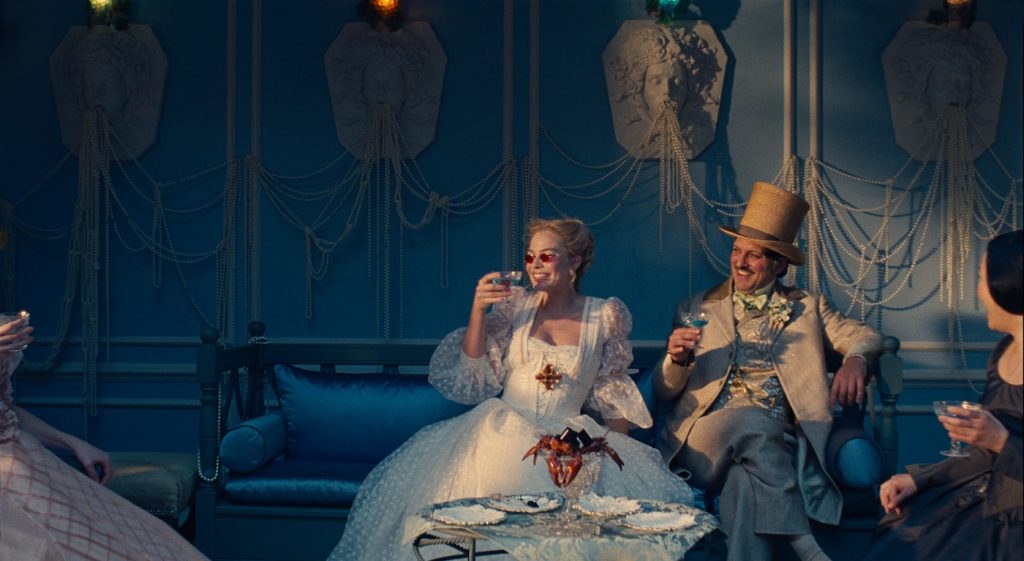
We were pretty restrictive with our colors at Thrushcross Grange — they’re all very bruised, natural colors, apart from red, which is a theme that runs with Cathy. She only wears black, white, neutral, or red, which served as our color boundaries. Everything’s there for a reason.
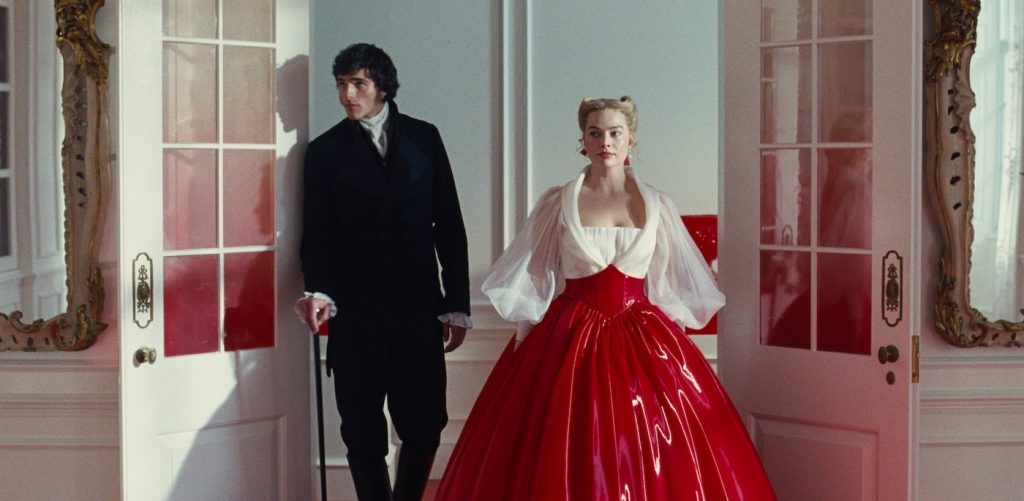
How did you emphasize the swelling emotions in their tumultuous and destructive love affair?
The accuracy of feeling was on all the senses – if only we could have Smell-O-Vision. [Laughs] We wanted it to feel overwhelming because it’s slightly uncomfortable. We wanted people to almost smell that farmyard, to play with those textures and feel that nature is overtaking — you’re never going to stop nature from forcing its will onto that man-made structure. It feels like that mountain is slowly pushing into that property. Thrushcross Grange is a little prison within nature — everything is caged or encased — the flowers are pressed, the gold fish are in vases. It looks wonderful until you realize it’s actually a prison. Cathy’s room feels uncomfortable. You’ve got a wonderful color, but something’s not quite right. It was great to give that feeling of unease in both properties.
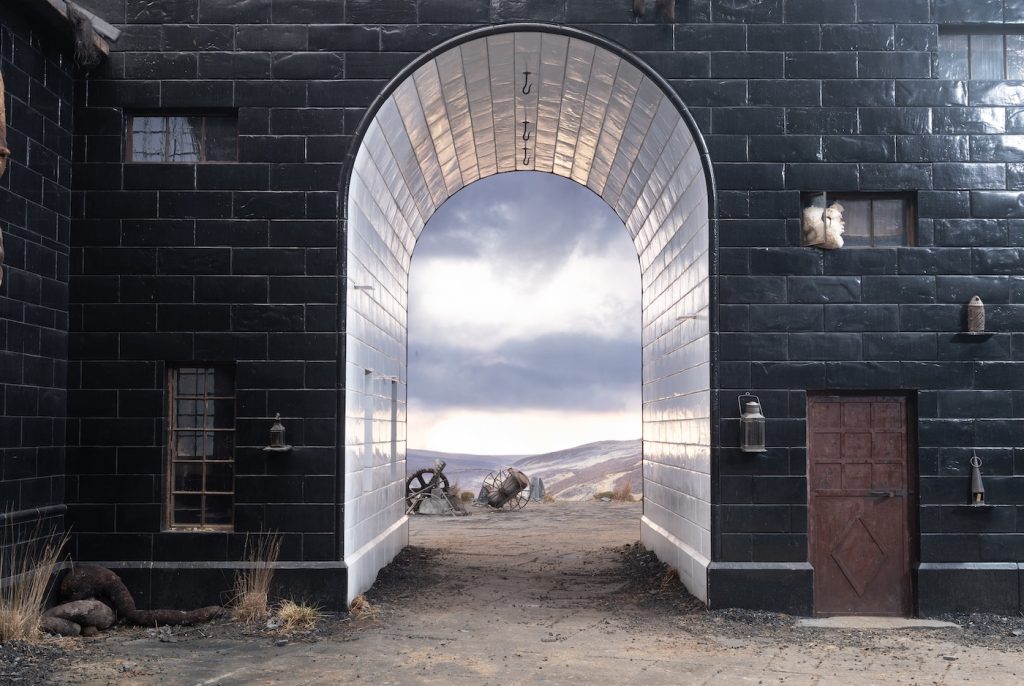
What does the prominent archway in Earnshaw’s property represent?
The archway is in the Gothic style, with many symbolic meanings, and it is a great way to bring us into the back of the house. This is a composite set built on a soundstage — we built a bit of the Moors, the drive up to Wuthering Heights, and the path into the backyard so that we could control that area with the rain and wind. The arch gets us into that hidden space behind the house, which enables us to film on the soundstage. We had 360-degree lights, so we could look every which way on that stage.
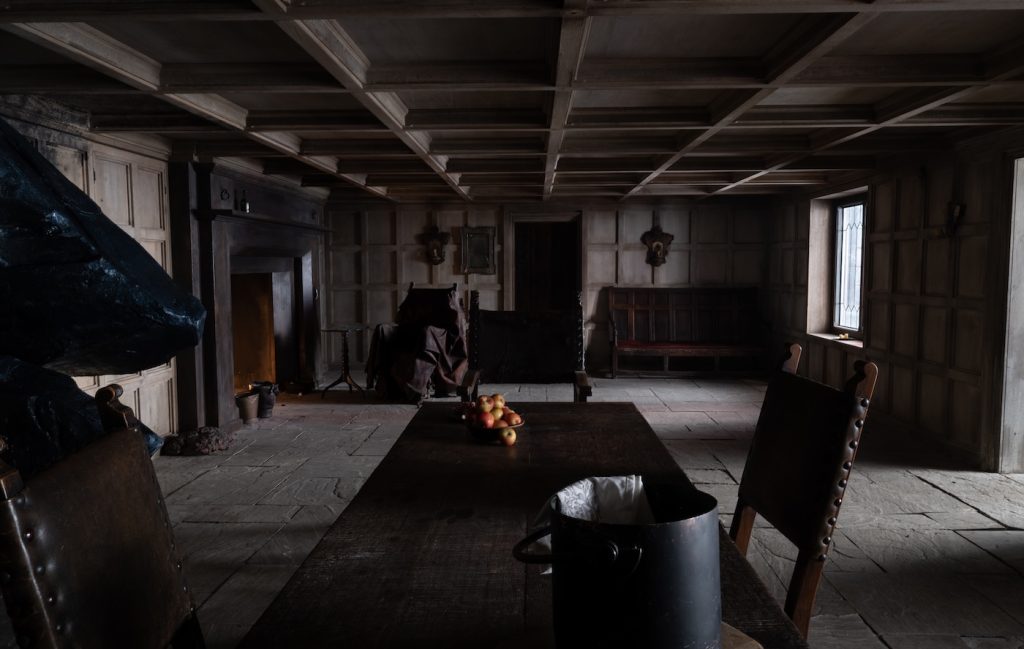
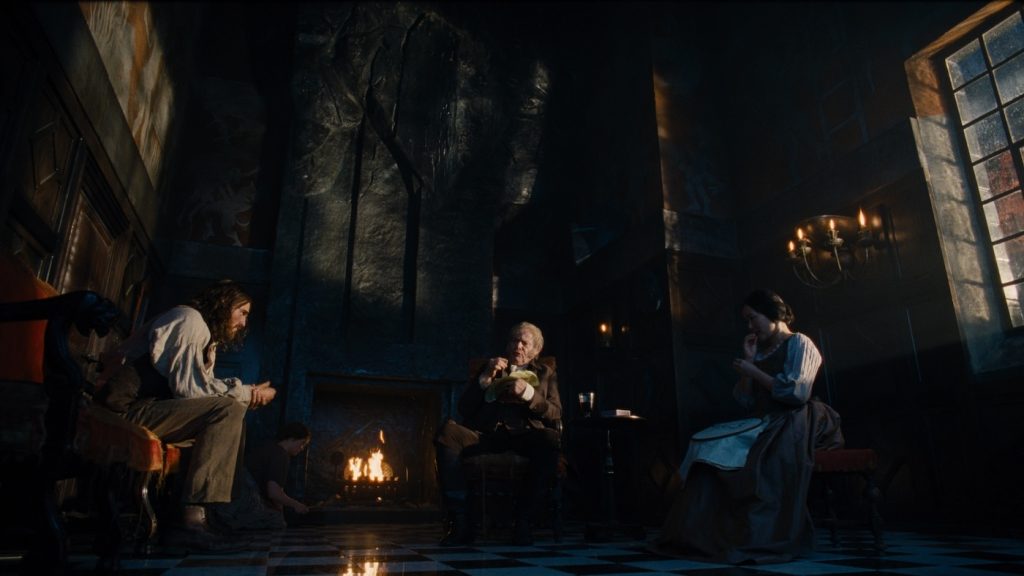
Every inch inside Wuthering Heights feels oppressive and ominous. How did you evoke that perpetual sense of despair?
I played with different architectural tropes, such as compression and expansion. We made sure the kitchen didn’t quite fit Heathcliff — Jacob Elordi is six-foot-five, so we built that ceiling at six-foot-four. He doesn’t belong in that house; he’ll always feel out of sorts, and he can’t stand upright and be a man in that house. Then we expand into the triple-height parlor, with a painting depicting the seven deadly sins. That fireplace was influenced by brutalism, which obviously isn’t period-accurate, but we wanted that heaviness. We honed it out of the rock that is encroaching into the house, so it’s layers upon layers. There are pops of red in the wonderful silk curtain that we aged. When Earnshaw dies, we’ve got two piles of bottles [on each side of him], which is surreal and heightened.
By contrast, Edgar’s estate is opulent. What were some of the design inspirations for Thrushcross Grange?
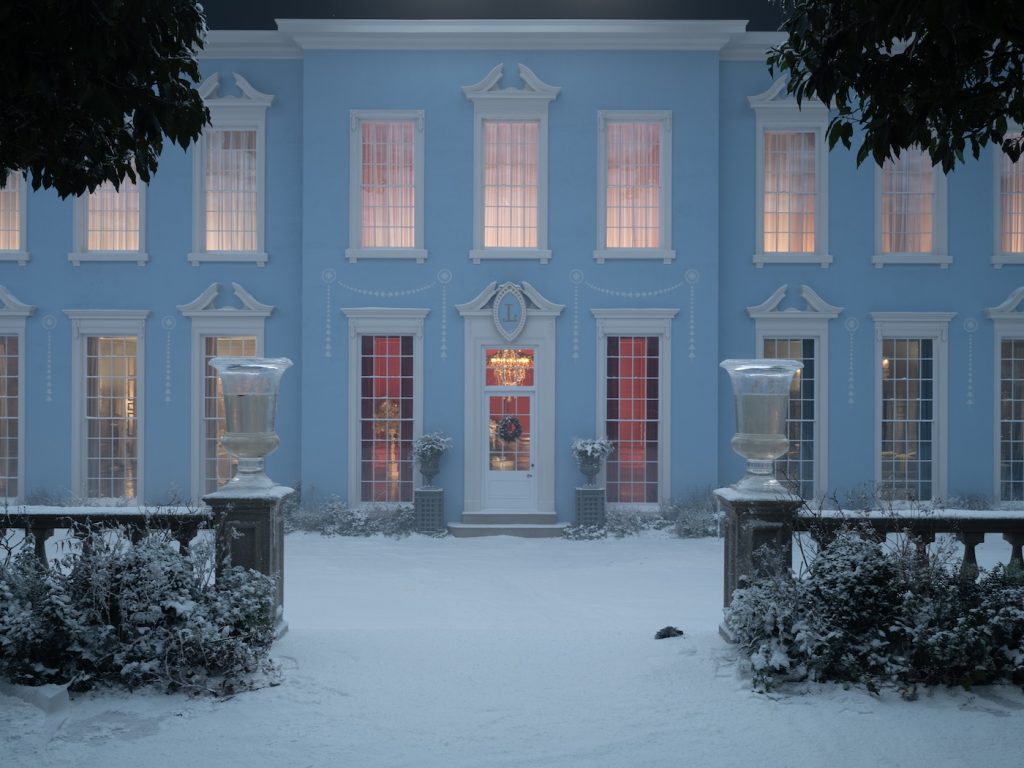
We built the front façade, the garden, and the rooms on a soundstage. The dollhouse comes up pretty swiftly, so I based it on the dollhouse, rather than building the dollhouse off the estate. That made the proportions slightly off-kilter, so it feels uncomfortable — the windows are slightly too big, and the panels in the rooms are of unusual proportions. At Wuthering Heights, everything is wonky and off-kilter, and the rule of thirds and their odd numbers, whereas at Thrushcross Grange, everything is symmetrical and even — the windows are in even numbers.
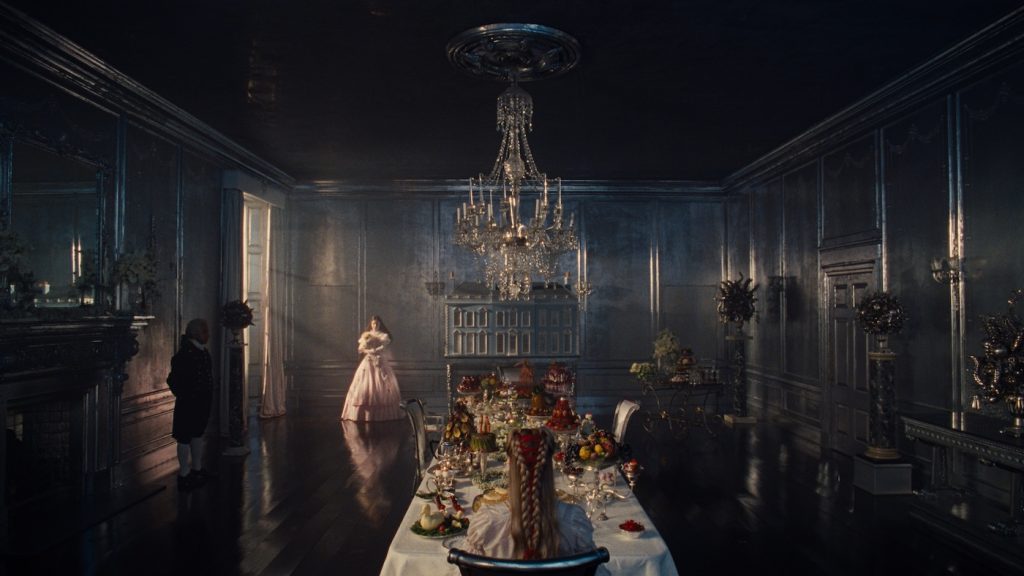
When Catherine looks down into the valley onto Edgar’s sprawling estate, was that filmed on location?
Once we built the dollhouse in Edgar’s dining room, it traveled with us to Yorkshire. We dropped that onto the side of a moor and, with brilliant visual effects, made it look as if it sat in that valley. So, it’s a combination of old-fashioned moviemaking and VFX. That location was off the beaten track, and we set the doll’s house up on a rostra at a certain angle to get that shot.
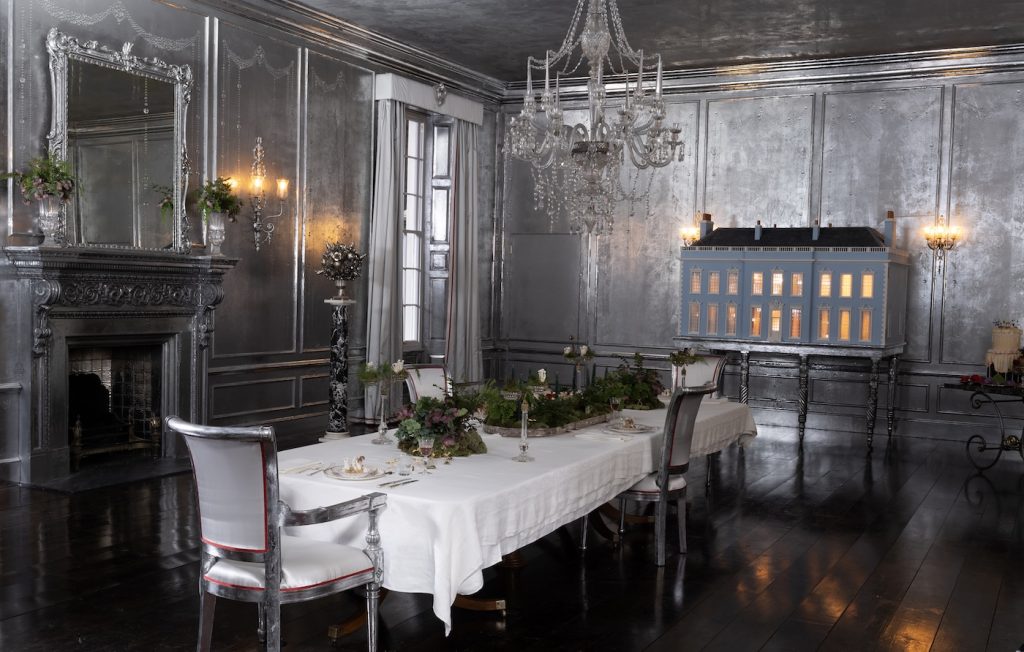
That’s fascinating! Was it always the plan to use the dollhouse for that shot?
We’d made that model by then. So, when we were trying to work out how to get that shot, we thought why not bring it? It’s pretty huge and delicate, so you can imagine trying to get that across the Moors.
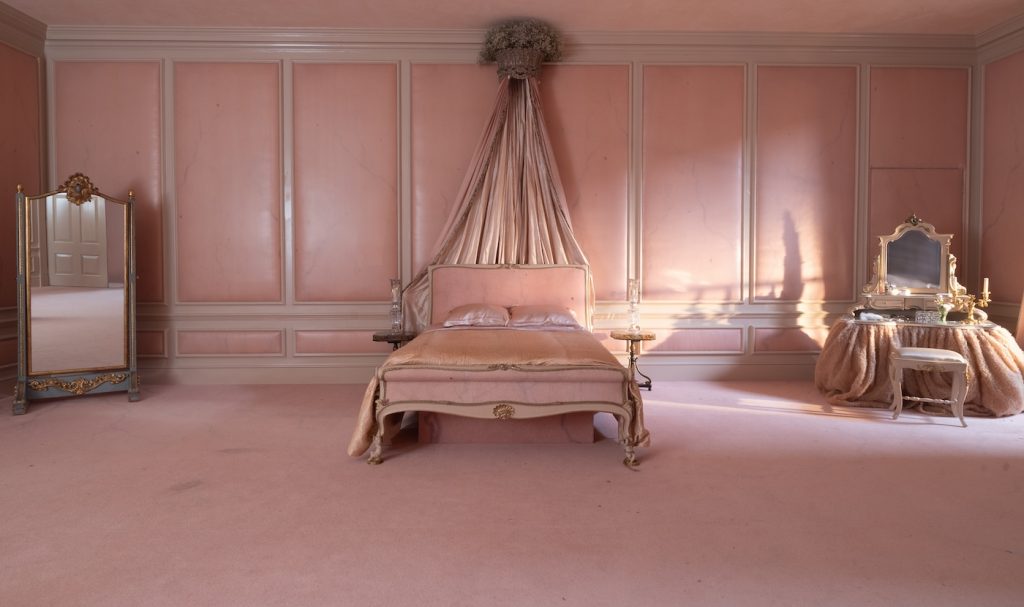
The light pink walls in Catherine’s bedroom evoke skin and veins. Is that really modeled after Margot Robbie’s complexion?
When I read that stage direction, I thought it was a designer’s gift! In another film, I’d used latex to make a screen. So, I had big swatches of latex in different colors, and one of them was skin-toned. When you stretched it, it became opaque. My brilliant graphics team printed some images or photocopies of skin onto it, and it worked. So, we got Margot Robbie to take some high-res images of her arm. I think the inner crease of her elbow made the veins stand out a little more. Then, we stretched the latex and blew it up to three or four times its scale. It was quite extraordinary.
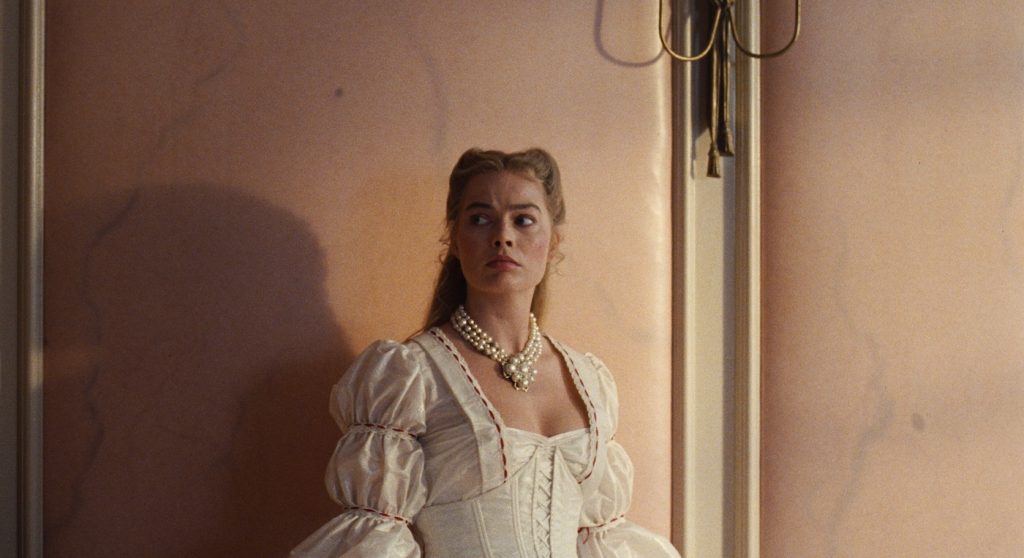
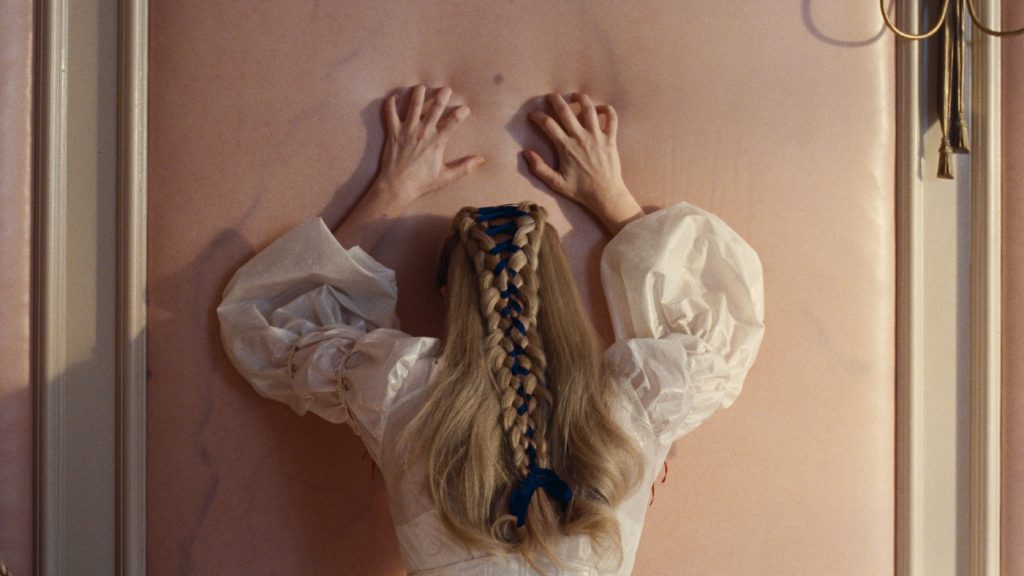
When Catherine dies, blood streams onto the bedspread and the carpet. How was that top shot done?
We knew about the top shot, so even the carpet was printed with her veins and freckles. That flow of blood feels like she’s leaving, dying, which was really powerful. We also made the walls sweat, that “skin” starts to sweat as her fever intensifies. That latex was really fine and tactile. We wanted everyone to get all their senses involved; there’s something really tactile about it.
Water drips from the walls in several rooms. What emotions are we trying to evoke with that?
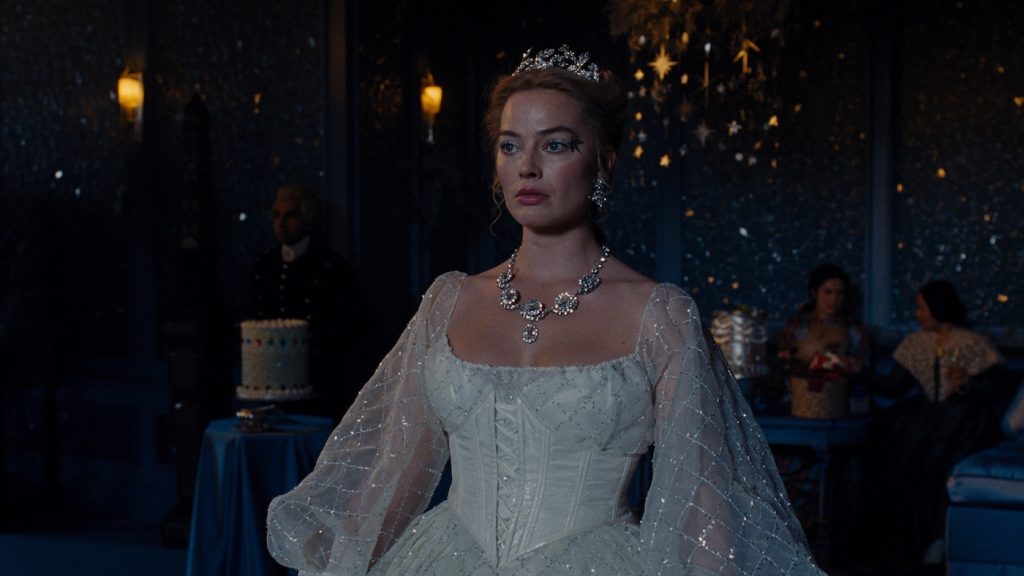
Anything that twinkles or sparkles makes it feel alive, like the walls are breathing, they’re not just dull and flat. So, we wanted every surface to have some sort of twinkle. Sometimes you get a twinkle from reflection; sometimes water and perspiration add to it, because there’s movement in it. So, we just played with those panels, whether it’s high-gloss paint or the beads in the silver room.
There is a very potent anachronistic style in the costumes, music, and set design. What is behind the mix of modern and old?
We used modern materials in a traditional way, and traditional materials in unconventional ways, constantly swapping processes to make the audience feel uneasy. In Thrushcross Grange, water is always dripping down that rock face from the hills above, and those tendrils start growing through. We’re playing with ugliness and beauty side by side. It’s a beautiful composition of something uneasy—we’re constantly pushing those boundaries with textures and lighting.
What is it about that anachronistic combination that evokes a sense of unease?
It’s easy to watch a movie and expect to feel one thing or another, but when you feel multiple things at the same time, it becomes really interesting. Do we like the character? Hate them or empathize with them? We feel all those things at different times in this film. I like the juxtaposition of visuals, so the characters feel comfortable or uncomfortable in the environments I create. Jacob’s six-foot-five frame can’t fit in a six-foot-four kitchen, so it’s not his to have. The authenticity adds another layer.
That ornate fireplace where Catherine fires her menacing housekeeper Nelly (Hong Chau) is so unique – are those hands coming out of it?
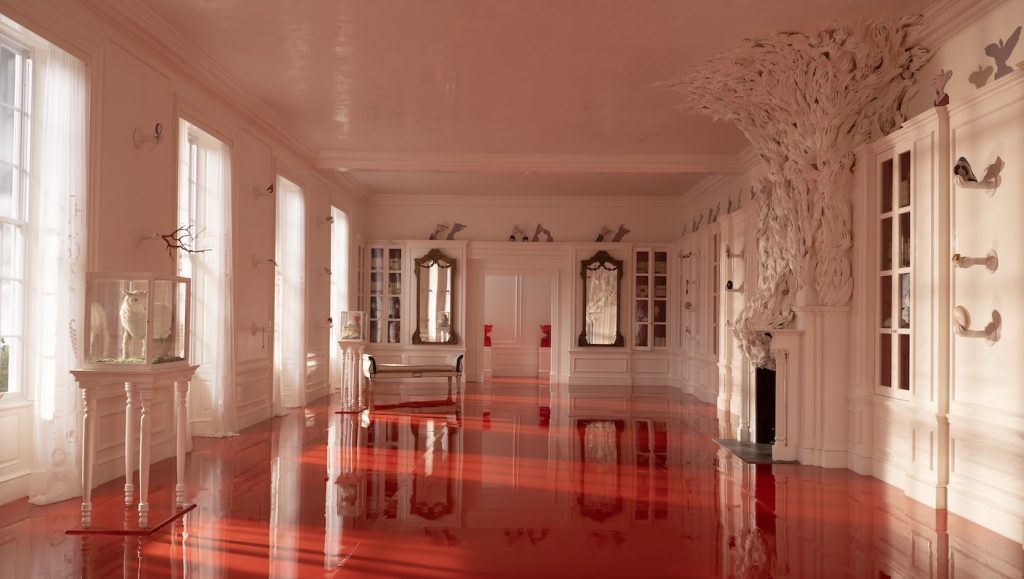
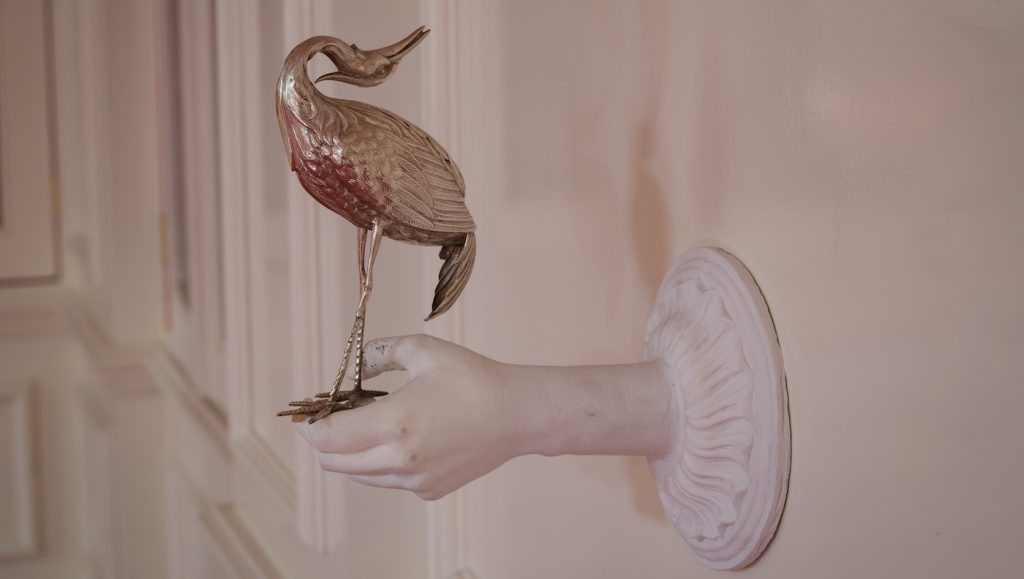
That library was just going to be filled with books, which would be boring. By then, we knew we had this theme of hands throughout Thrushcross Grange: the ceiling roses are made from molds of the art department and prop guys’ hands. Emerald and I had seen an image of a fireplace with plaster leaves of fire coming out of it. I think Alexander McQueen’s house had an interesting plaster fireplace. So, we built it with hands coming out of the fire and up the wall to create this wonderful effect.
That top shot when Heathcliff goes to see Catherine after she dies is beautifully shot, as he lumbers up that rectangular staircase to her bedroom. What does that symbolize?
We nearly didn’t do those stairs. I could’ve gone with a Regency or Georgian-shaped staircase; a spiral might’ve been the obvious choice. But in this case, necessity being the mother of invention, I had one space where I could build that staircase, and I wanted to fill it as much as possible. The rectangular staircase is really unusual and makes you feel uneasy. It’s a white marble staircase with red fur hanging from the bottom to give it different textures. He slowly goes up those stairs to find Cathy dead — the power of that scene. As [Cinematographer] Linus [Sandgren] and Emerald held that shot, you hold your breath until you can’t hold it anymore. As he walks into the light at the end of the bedroom, up those stairs, that’s such a powerful moment.
Wuthering Heights is playing in theaters nationwide.