Oscar-Nominated Sound Team for “Sirāt” on Editing the Sounds of the Desert, Raves, and War
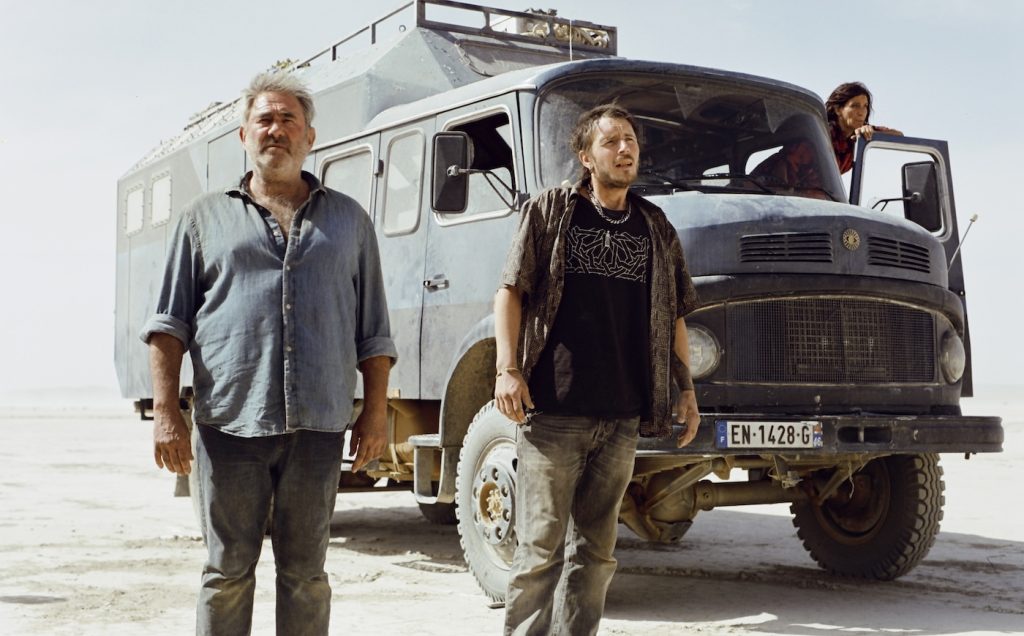
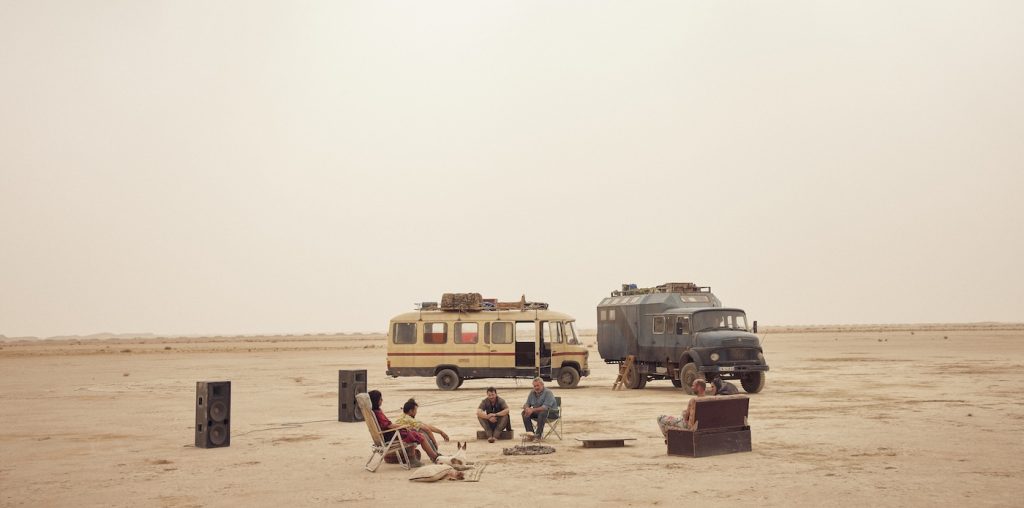
Director Oliver Laxe’s Sirāt opens on a clutch of happy ravers in the Moroccan desert, getting down to a beguiling techno beat. But when the music stops, the camera’s focus shifts to Luis (Sergi López), an out-of-place, middle-aged dad searching for his missing daughter, Mar. Nobody seems to recognize his daughter’s picture, but a few partygoers tell Luis about another rave, farther into the desert, where they think she might be found. Against a backdrop of war, observed through radio broadcasts and the Moroccan army’s sudden arrival and evacuation orders, Luis, his son Esteban (Bruno Núñez Arjona), and their dog, Pipa, follow two trucks of ravers across an inhospitable landscape.
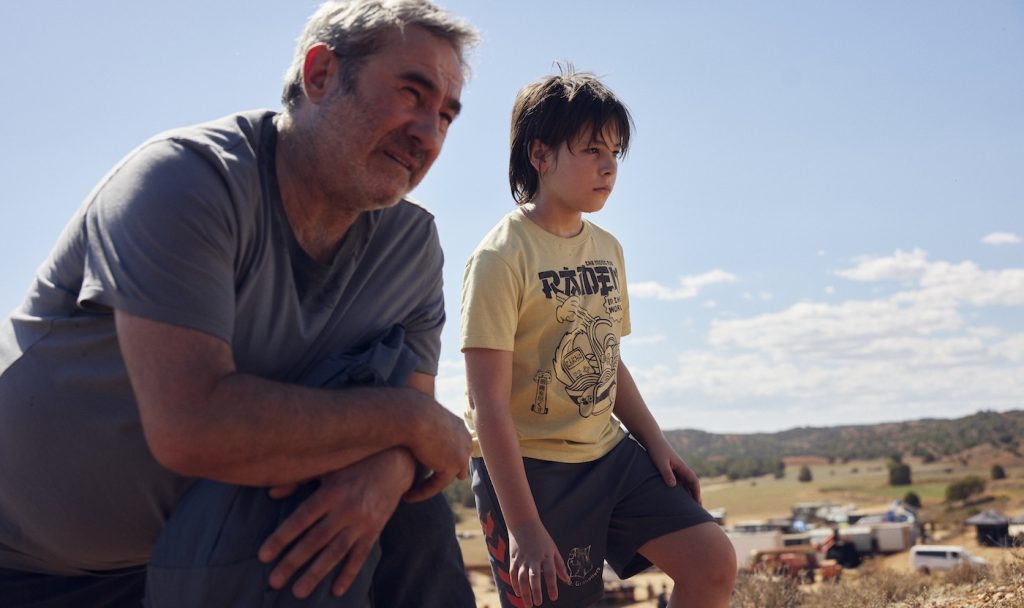
The experience of watching Sirāt, which is Spain’s Oscar entry for best international feature, feels more like a happening than a mere theatrical event, thanks to cinematographer Mauro Herce’s sensational desert photography, an addictive score from experimental techno producer Kangding Ray (David Letellier), and the precise, moving sound design by a trio of Oscar-nominees themselves; supervising sound editor Laia Casanovas, re-recording mixer Yasmina Praderas, and production sound mixer Amanda Villavieja. The nonstop partiers who reluctantly agree to let Luis and Esteban trail them in their compact van aren’t exactly welcoming, but the motley crew forges an unexpected bond, anyway, as war and the unforgiving nature of desert travel catch up with them. The sound team’s work transports viewers into this vivid landscape by highlighting the natural world and carefully offsetting it with the film’s music, a masterful balance we got to discuss with Casanovas and Praderas*:
[This interview contains light spoilers.]
What was the creative plan going in? How did the soundscape evolve?
Laia Casanovas: We had the idea that the sound of Sirāt needed to be very tactile and immersive. But the way we were working, it was more like trial and error. There are several emotional intensities, and it was quite difficult to find suitable sounds. We needed to make decisions more with our emotions rather than our heads. We had lots of different options in every scene, and we then decided which one was better. I enjoyed the process a lot, and it was so enriching, because we worked in a different way than I’m used to.
Did sounds come from on-set recordings, or were they created later?
LC: Amanda did a lot of recordings of the atmosphere and ambiance in the desert. She also recorded all the trucks, the engines, some recordings from the cabins of the trucks, and all the rattling of the trucks going through the desert. It’s a mixture, because Oliver has that kind of style of filmmaking, more documentary, based more on truth and reality. But we needed to highlight all that and be more explicit, so we used several recordings we made afterward. We recorded different trucks, different kinds of wind in the desert. In the mountains, you have a big palette of sounds. [We] also used some libraries. It’s difficult to say, because there’s no scene without production sound, and there’s no scene without elements created in post.
How did you make sure the music came across as sound you’d hear at a rave, rather than a soundtrack?
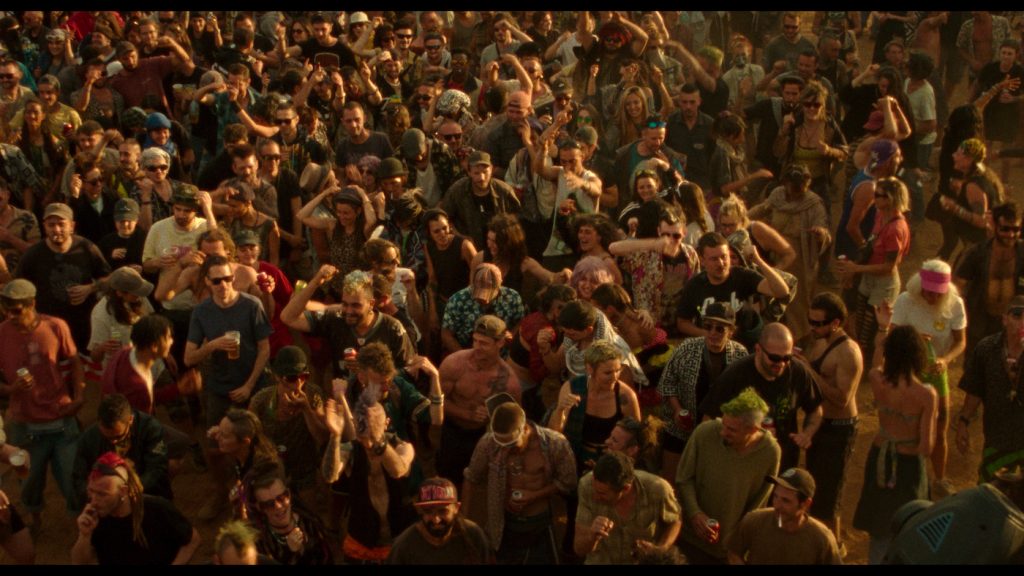
LC: All the scenes of the raves are recreated. When we had the music, we felt that it wasn’t as authentic as the image, so we re-recorded all the music with the microphones from the production, through a sound system like the one they had on the production. Then we mixed it.
Yasmina Praderas: I think that the feeling you have comes from the entire process, [in which we found] a balance between diegetic and extra-diegetic music, in a very subtle way. This turns into something that’s truly organic. Together with the dialogue, it occupies a third space where the images change. Then you include the loudspeakers, and you find yourself truly immersed and surrounded by the whole third space and dynamic. I think that’s what creates that feeling of truly being on set.
How was dealing with so many different languages?
LC: Before the music started at the rave, Amanda recorded a lot of atmosphere. They are Europeans who speak French, Italian, English, and Spanish. Also, we had actors from Portugal, Italy, and Germany, and we recorded sentences they spoke in the studio individually, and created a puzzle with all the different voices and different languages to have that palette of languages. Also, [for] the characters who speak French, Spanish, and some Arabic, Oliver speaks all these languages, so it was very helpful, because he told us if you could understand them or not.
Was it always the intention to cut the music off abruptly during certain scenes?
LC: We knew the music and the sound pushed the audience. Oliver was very concerned with creating a kind of therapy for the audience, and he wanted, when you see the film, that you turn off your thoughts and feel it. The way we found to evoke this was that kind of extreme change in the dynamics. It doesn’t have the perfect end. Just cut out the music and the sound, and be more aggressive and sharper with it.
Were there any emotionally heightened scenes that were more of a challenge?
LC: I think the most difficult scene is the one with the van falling down the cliff. It was very difficult to find the perfect balance between the emotional and [realistic] aspects of the sounds. It was the first scene we worked on and the last scene we worked on, because it was difficult to find how the van must sound and how many hits you hear. How do they sound if it’s more emotional or more realistic? It was a fragile scene to work on. From that point in the film, we needed to have a difference in the sound and twist it and be more emotional, because the character goes on a journey to his inner world. I think the other scene where it was quite difficult to find that balance was the minefield scene. It was difficult to find the dynamics, the rhythm, to have this balance between the emotions of the characters, and the anxiety of the scene, also.
It’s not a cliché of explosions, and much more complex.
LC: The first explosion occurs while the music is playing. The other ones are in silence. So it was difficult to find the balance in the mix.
YP: I would define that as the calm before the storm. What was challenging was to create this distance between the different environments and the trucks. Then there was a rhythmic need in each part of the work we were doing in terms of the mixing, because we wanted the audience to perceive this pretty significant impact. But in terms of mixing, we also wanted to find the right sound pressure, so we could place those explosions at the right time. We were always playing with the need to have a realistic kind of work, but at the same time, we wanted the viewer to have a perception of this experience in the most impactful possible way.
Sirāt is in select theaters now.
*Praderas’s responses were translated from Spanish during the interview.
Featured image: Sergie López and Bruno Núñez Arjona. Courtesy Neon.