
Co-Writer Emily Mortimer on Balancing Agony and Hilarity in Noah Baumbach’s “Jay Kelly”
Emily Mortimer jokingly credits the quality time she spent with Noah Baumbach on the set of his 2022 film White Noise to “a kind of nepotism in reverse.” Her two children played Adam Driver’s kids in the movie, so Mortimer spent several months in Ohio as their chaperone. After getting to know each other during the shoot, Baumbach asked the Oxford-educated British actress/writer to help him write Jay Kelly, featuring George Clooney as a movie star as flawed as he is charismatic. The film (streaming on Netflix) co-stars Adam Sandler as long-suffering manager Ben (both were recent Golden Globe nominees for their work), with Laura Dern, Billy Crudup, and Jim Broadbent alongside Riley Keough and Grace Edwards as the famous actor’s estranged daughters.
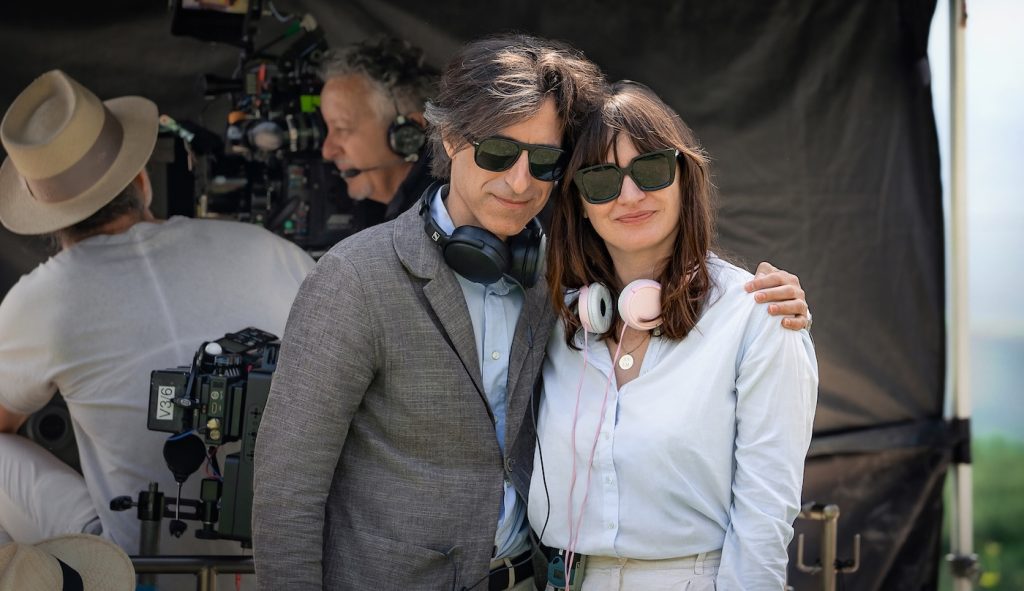
Mortimer, who acted in Hugo and The Newsroom before co-creating her own HBO series Doll & Em, followed by The Pursuit of Love, which she wrote, directed, and starred in, says she reveled in the chance to collaborate with Baumbach. “The way Noah depicts the world as this combination of agony and hilarity, showing the absurdity and pain of it all in equal measure—I’ve always held up as a kind of gold standard.”
Speaking from her home in Brooklyn, Mortimer talks about finding inspiration in a Paul Newman documentary and the lengthy talk-and-write process that eventually yielded their actor-bait screenplay.
You’ve written several scripts before on your own…
Yes, and it can be exhausting because you’re going to get it wrong day in, day out, for months, if not years, until you finally just hand something in. You have a much better time if there’s someone to talk to about the story, especially if that person is as brilliant, seasoned, and good a collaborator as Noah Bambach.
What did you learn from Noah Baumbach about screenwriting?
What Noah taught me was to be okay with not being good at the beginning because it’s gonna be a mess, and you just have to let yourself off the hook. Otherwise, you’ll be sorely disappointed, and you’ll never get anywhere.
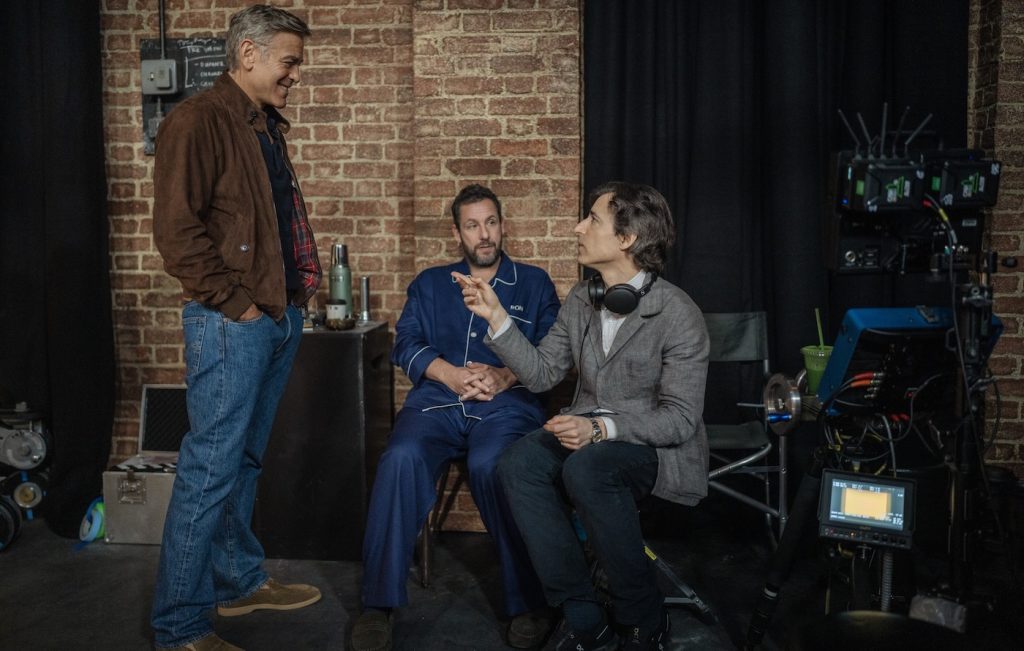
Jay Kelly feels loose and sometimes chaotic, in the best sense, but the plot itself relies on a sturdy structure to propel the hero through his wild journey. How did you hash out the storyline?
We just let it unfold. This guy is running away from his present, only to be met by his past. We knew that much. But it could have been any number of memories, and in fact, we wrote a million more, a million ideas—maybe three screenplays full of paths the story nearly went down, or did go down, but then we changed it. I mean, there was a lot of hashing out, obviously, because in the end, we had to wrangle it into this unconventional sort of storyline.
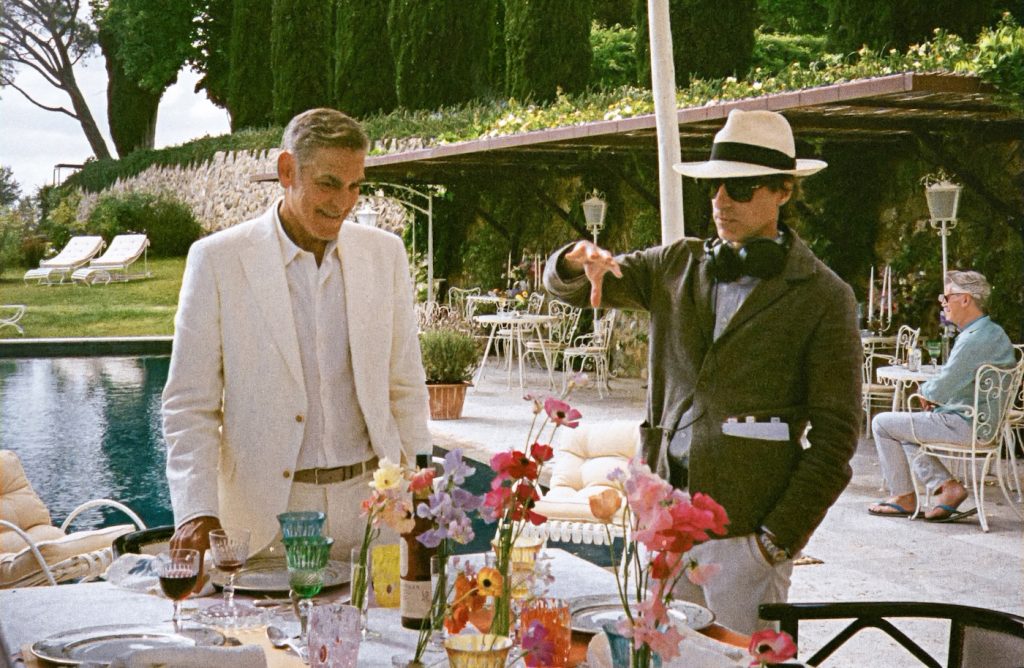
The film immediately establishes George Clooney’s world with a one-shot capturing the controlled chaos of a movie set. Then he learns of his mentor’s death, sparking a desire to reconnect with his daughters. When did you come up with that motivation?
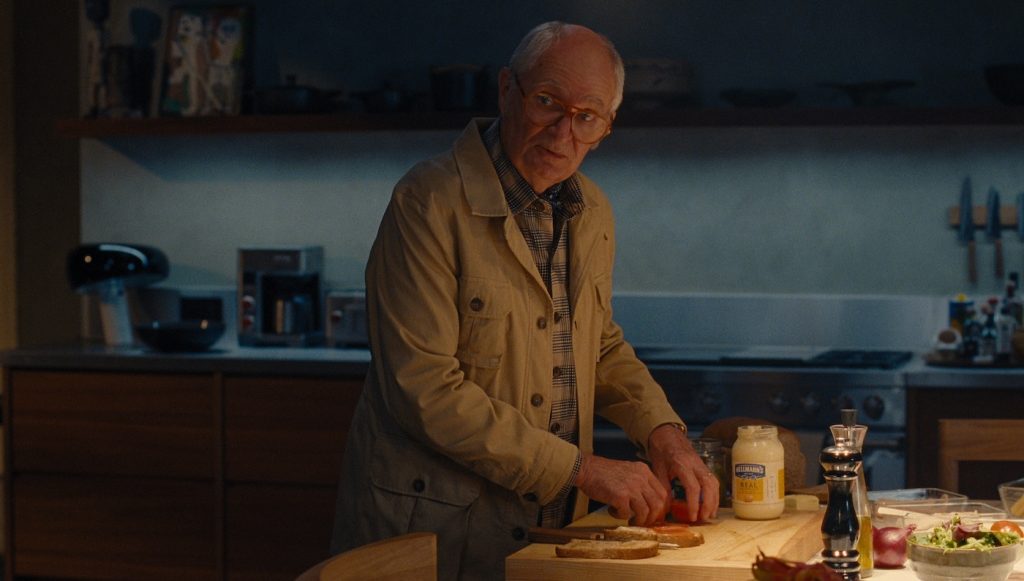
Noah first came to me with one half of a scene where Peter, his old mentor, is making a pickle sandwich for Jay, who’d given him his start, and Jay decides to put himself before his friend. I was immediately enchanted by this world, this character, this kind of unsavory feeling, especially at a time in your life when there’s kind of a referendum on it all. You’ve got children who are probably leaving home or have left home, and they’re deciding whether or not you did a good job with them. If you’re lucky to have a parent or two who are still alive, you’re wondering how much they fucked you up and whether or not you were a good enough child to them, just as they’re about to shove off this mortal coil. And you’re old enough to understand all the mistakes you made, all the things you did as a feckless youth that you’ve tried not to think about too much. And now, all that’s starting to come back at you. For some reason, I got all of that feeling from this pickle sandwich scene.
So Noah showed you this partial scene he’d written—where did things go from there?
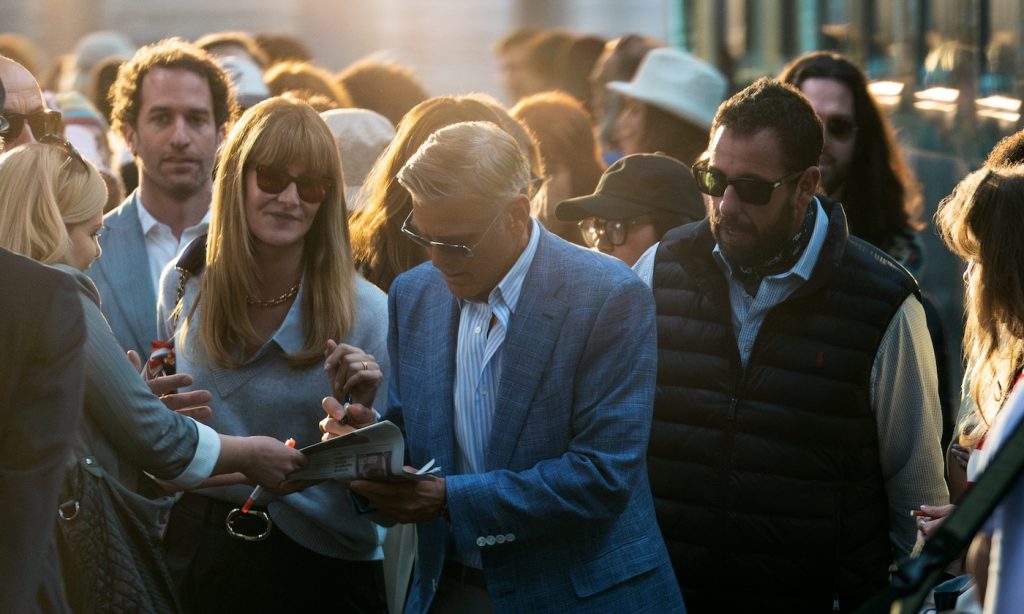
It started with us just talking and talking and talking. He was in London shooting Barbie initially, and I was acting on various film sets and constantly pushing mascara out of my face to chat with Noah, walking around a car park somewhere. There were lots of chats, making each other laugh and also making each other think. And also, certainly, I wanted to entertain Noah. That was really my sole aim.
Do not bore the director.
Exactly. I had reams of notes on every sort of device, and finally, at a certain point, we started writing. But it’s one thing to be entertaining in conversation with somebody and quite another to send lines of dialogue on a page. I remember at first suddenly being like, “Oh, my God, this is terrifying.”
Back in Brooklyn now?
Yeah. For the last six months of the process, we were in the same city, together every day in a room, reading the script, changing things, turning it all around, going back home, writing more, coming back, writing in the room. And then finally, we had a script.
You and Noah mapped out a journey that takes place mostly in France and Italy, but parts of Jay Kelly were filmed in Los Angeles, right?
Yes, many of the L.A. exteriors were shot actually in L.A.
As a filmmaker living in the United States, what are your thoughts on the impact projects like Jay Kelly can have on the local filmmaking community?
It’s a massively important sort of public service, I think, filmmaking, and we need to support this industry here in America. If the money people and the decision makers were not so far removed from the people who are actually making the movies, I think it would be better for everybody, and certainly better for the film industry as a whole.
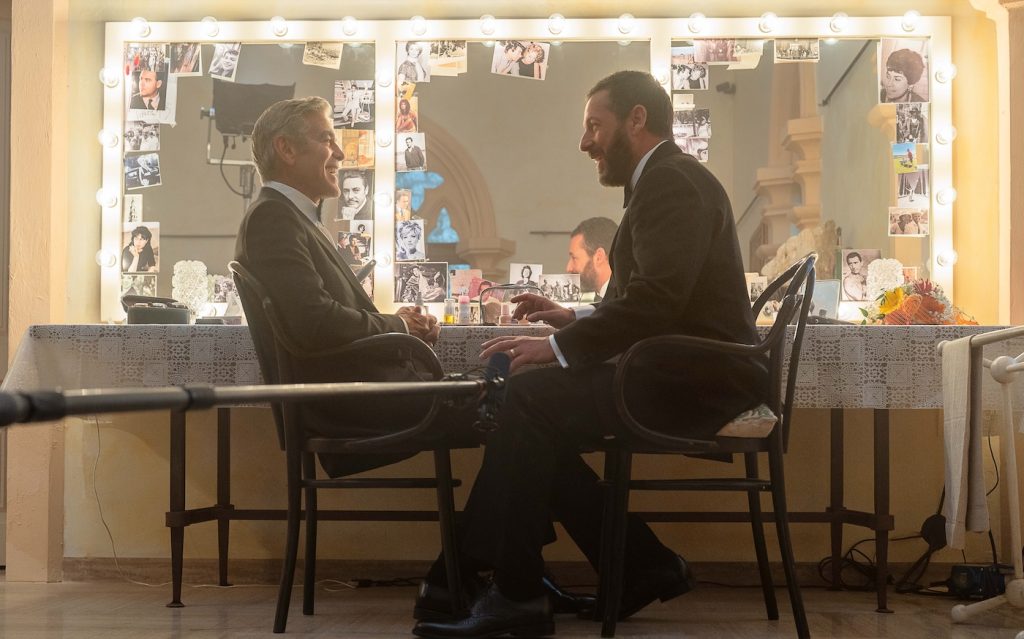
In some ways, this feels like a love letter to movies in general and the craft of acting in particular– especially when Jay Kelly convinces his talented former classmate Timothy—Billy Crudup—to deliver a dramatic reading of a menu. Where did that idea come from?
I watched Ethan Hawke’s brilliant documentary about Paul Newman, so did Noah, and it really got us both talking about the business of performing. That inspired us to explore the feeling of what it means to come up with the goods and find an emotion.
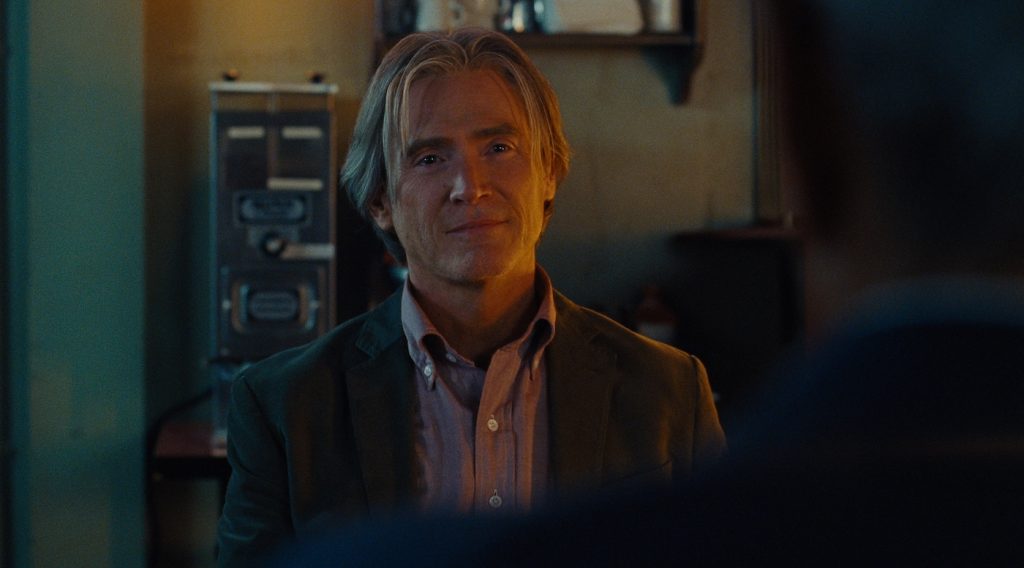
Which is very deep, but the comedic spin here is that “Timothy” gathers himself for a few moments of silence, then begins weeping, shedding real tears as he reads “Truffle parmesan fries. Brussels sprouts with balsamic honey glaze and bacon – twelve dollars.” It’s pretty hilarious.
Well, it is ridiculous, and at the same time it’s deadly serious. That’s the thing about acting: What is it that we’re even doing? In a way, it’s the same thing we did as kids, performing a play in the backyard for our parents, which is what the last penultimate scene of the movie is about. We’re just mucking around, really, but somehow acting is also deadly serious.
SPOILER ALERT
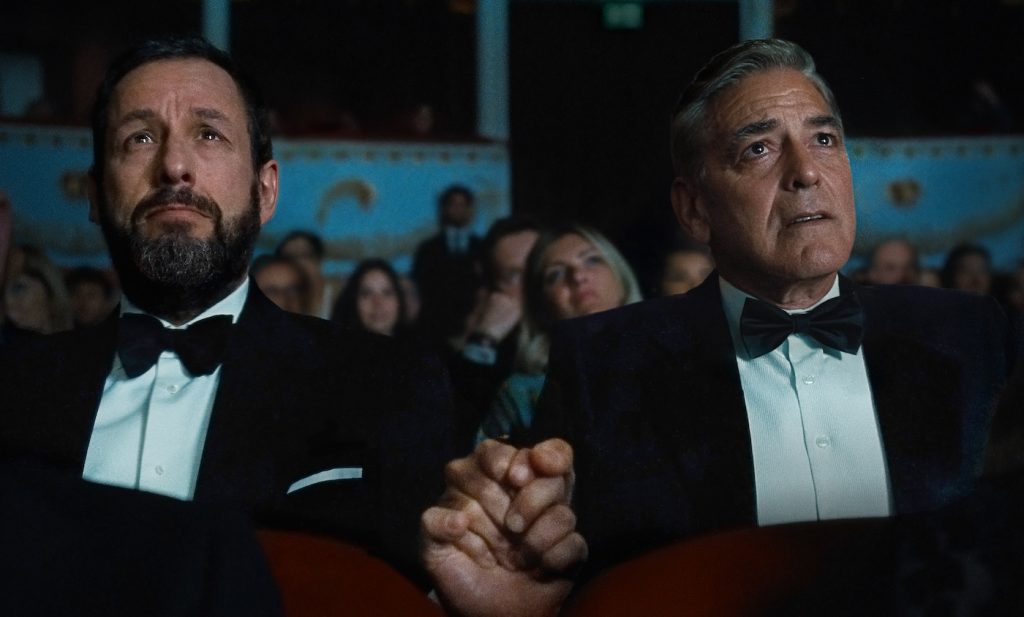
By the end of the movie, the entourage, both daughters, and cranky father have all parted ways with Jay. He sits in a darkened theater, watching a film festival’s greatest-hits tribute on the big screen. Then his manager, Adam Sandler’s Ben, shows up, and it’s such a heartfelt moment. Can you talk about this blur between professional and personal relationships?
It’s a really complicated thing in our profession. The people who help manage your career do become friends, and you rely on their love and support, you get to know them and their families, and they get to know yours. But of course, there’s also this professional relationship. In our story, Jay confronts a lot of uncomfortable truths, and the only thing he really works out is that he has a friend.
The theme being…?
Just one friend is enough. We had to give him a friend.
Featured image: Jay Kelly. George Clooney as Jay Kelly in Jay Kelly. Cr. Peter Mountain/Netflix © 2025.