
How Costume Designer Deborah L. Scott Dressed the Wind Traders and Ash People for “Avatar: Fire and Ash”
Four decades ago, Deborah L. Scott was on a plane to the middle of nowhere, Alaska, to design costumes for Carroll Ballard’s Never Cry Wolf (1983). The decision changed her career.
“As scared as I was, as ridiculous and unprepared as I probably looked, it was a good idea,” she shares with The Credits. “It’s ok to be unprepared, and stepping out of your comfort zone is good as an artist.” The project introduced her to Steven Spielberg and opened the door to E.T. She followed Elliot’s famous red hoodie with another unforgettable red look: Marty’s vest in Back to the Future. Great Scott! After designing for Hoffa, Legends of the Fall, and Heat, she joined forces with James Cameron on Titanic (1997), which brought her both an Academy Award and a BAFTA. Ten years later, the two met again on Avatar (2009). She would spend the next two decades with the director, working on Avatar: The Way of Water and Avatar: Fire and Ash.
“When I came in on Avatar, I had absolutely no idea what I was doing, which made Avatar: Way of Water much more comforting because I almost knew what I was doing. But at the time, we had [producer] Jon Landau, who was such a huge cheerleader for everything. He brought so much excitement to each and every day in his own work and therefore in ours,” she says. [Landau passed away in July 2024 at the age of 63]. “And in some ways, it made the job easier because we had such a mammoth amount of things to learn on Avatar: Way of Water. The technology was completely different. Jim had written a very complex script and wanted to try new things like shooting underwater. It was really hard at first, and then as you settled in and got your footing, it became easier except when things would come up, of course.”
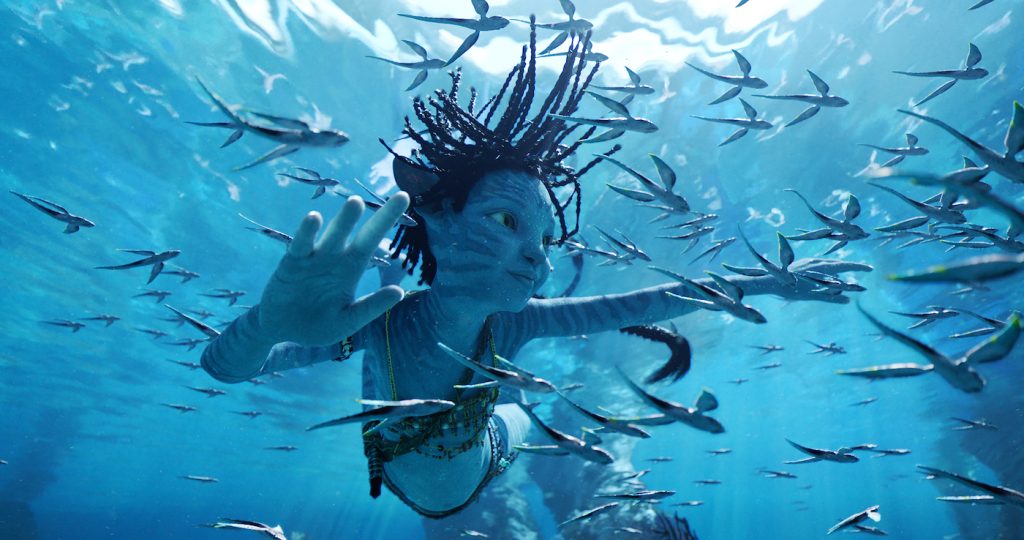
For The Way of Water, costumes created over 2,000 garments and introduced the ocean-friendly Metkayina. The third installment introduces new clans: the air-traveling Wind Traders and the Ash people, whose land was destroyed by a volcanic eruption. Their look is unmistakable – ash body paint and fiery red hues stand in contrast to the blue tones of other Na’vi clans. Below, the costume designer shares the inspiration behind both newcomers and the trick that streamlined collaboration with visual effects.
How did the filming technology of Way of Water and Fire and Ash affect costume design?
Working with the VFX team was an incredible opportunity to learn a lot about their craft, but I don’t draw on the computer or build things in a virtual space. So being with them was a wonderful opportunity to ask a bunch of questions, and also to chart your own course. So when I was making something with my textile artists, I would say, could it be a little longer? It doesn’t look quite right. It’s not moving quite right. So that ability to remake things, you’re doing it with your communication skills. So I had to really up my game, and I learned ways to get a better outcome for my costumes.
Were there any workflow breakthroughs while designing?
One thing I finally got to implement halfway through Fire and Ash was what I called the “lending library.” The VFX team does everything virtually, and they would get a huge packet of information from me, but they’d be looking at photograph samples. At one point, I was like what if we made things available for the effects company to check out. So we’d send the physical costume to the artists responsible for building and drawing them virtually, so they could see it in person, hold it in their hands, and digest what the costume was. Then they would send it back and get something else. We didn’t do it at the beginning because there was a little more security around stuff, but it became a huge breakthrough. I got an email from one of the supervisors saying it was a big deal to their artists.
A new clan in Fire and Ash is the Wind Traders (Tlalim clan). What informed their look?
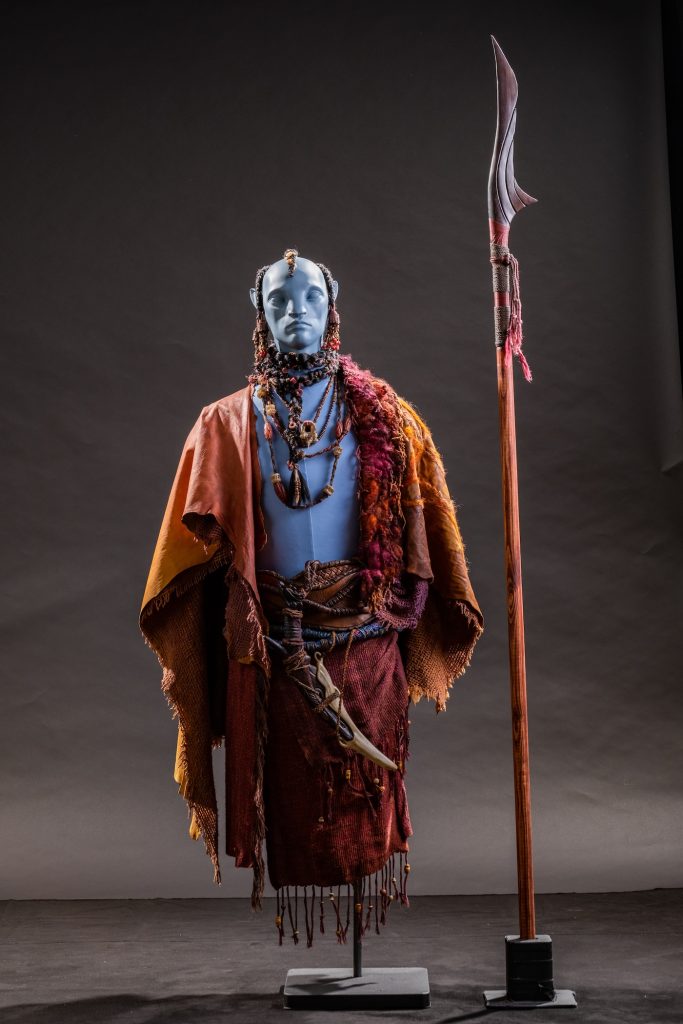
There is a lot about the Wind Traders that holds the concepts and ideas. They weave, even if it’s rudimentary, they weave. These people were able to make cloth. So we made cloth, we wove cloth. And because it’s cold up there, right, they had to be well-covered, and that was different. Then, the quality and the way they worked on the ship had a lot of influence on the costumes.
How did you approach Wind Trader chief Peylak (David Thewlis)?
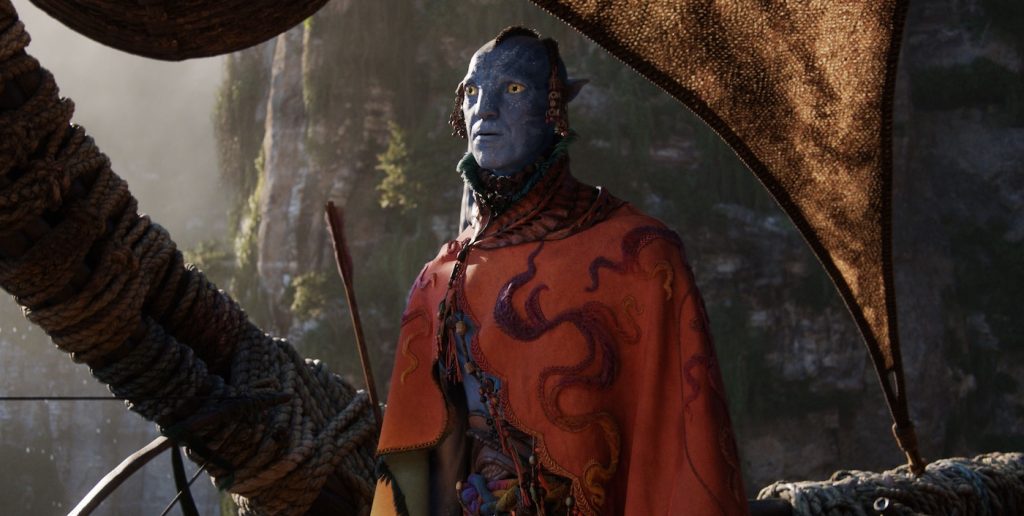
My first designs for the cloak were a lot more rustic. It wasn’t nearly as decorative as this one. But when we got further into production, Jim and I were looking at the performance. I said, oh my God, he stands with such grandeur. The way he inherits the part and acts with his body really influenced me to go back and say this guy deserves better.
How so?
I started with materials that I knew they used, and basically let myself go crazy. How can I make this guy look amazing? The colors are very vibrant in this clan. The motifs of the swirl really speak to a couple of different pieces of research that I did. One way I looked at aerial photography books over Earth, and you can see how strange shapes become. And the idea of looking up at the sky and seeing wisps of cloud. So, as I’ve gone on in the movies, I’ve really designed with the motion of the costume in mind… that the capes need to ripple in the wind. That you look at this motif and you feel movement. You feel his collar swirling around his neck. It was really fun to rise to the occasion of his performance.
How did you decide on Peylak’s color palette?
The colors took a lot of consideration because, when you see the cloak in the movie, you can see the color change from his shoulders to the hem, and it’ll look like a sunset or sunrise. It changes colors, and you can see the swirls shift as they move through the cloak. And that was all, a lot of hours of standing there going, no, darker purple, no lighter purple…this is where it transitions. When you make a costume like this, it’s almost like making a painting.
What went into designing the looks for the Mangkwan clan, aka the Ash People?
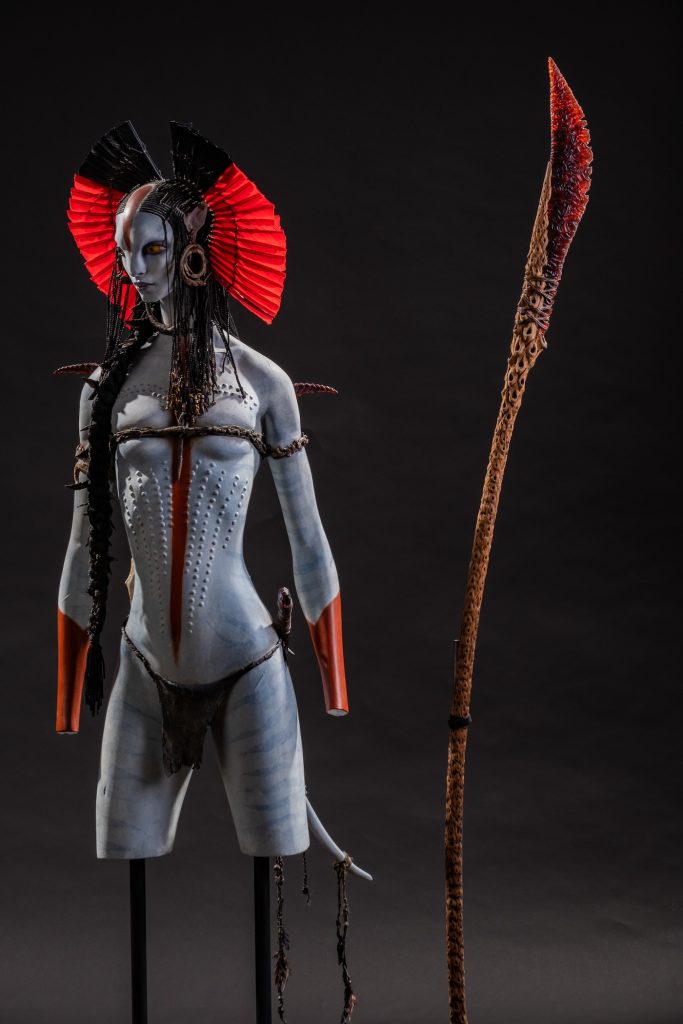
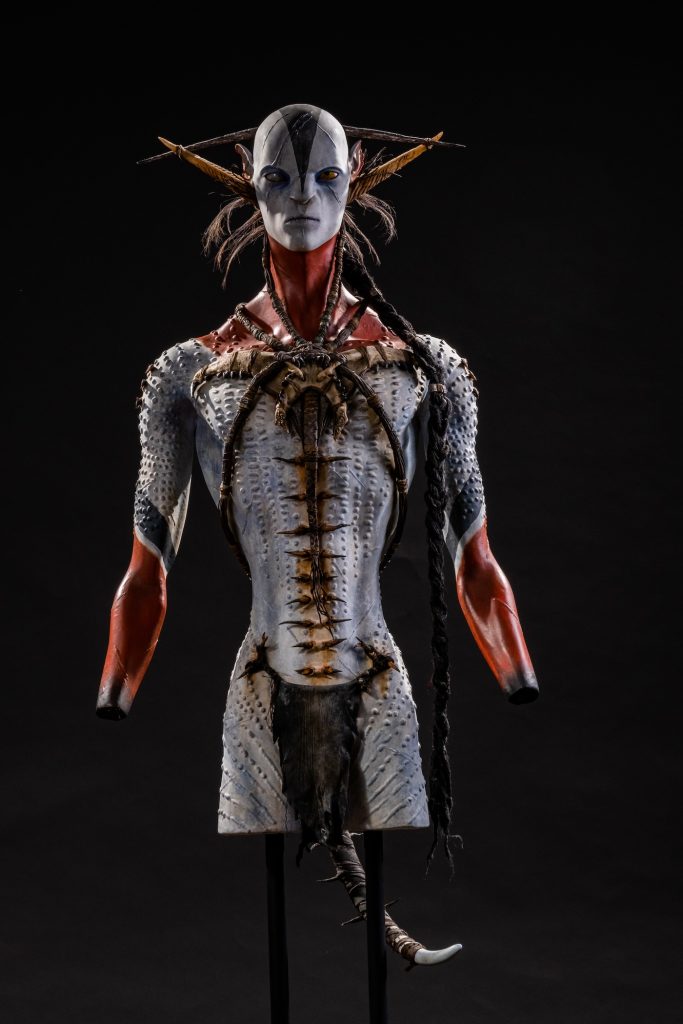
Our first pass at designing happened really early on, way before we started shooting. And it was important to show Jim what that world might look like, so we did some broad passes. The Ash people started off incredibly minimal, like barely a costume, no particular accessories, very, very, very rudimentary and simple. And then, as we got further down the pipeline, it became apparent that the whole clan needed much more interest visually.
Where did the visual inspiration come from?
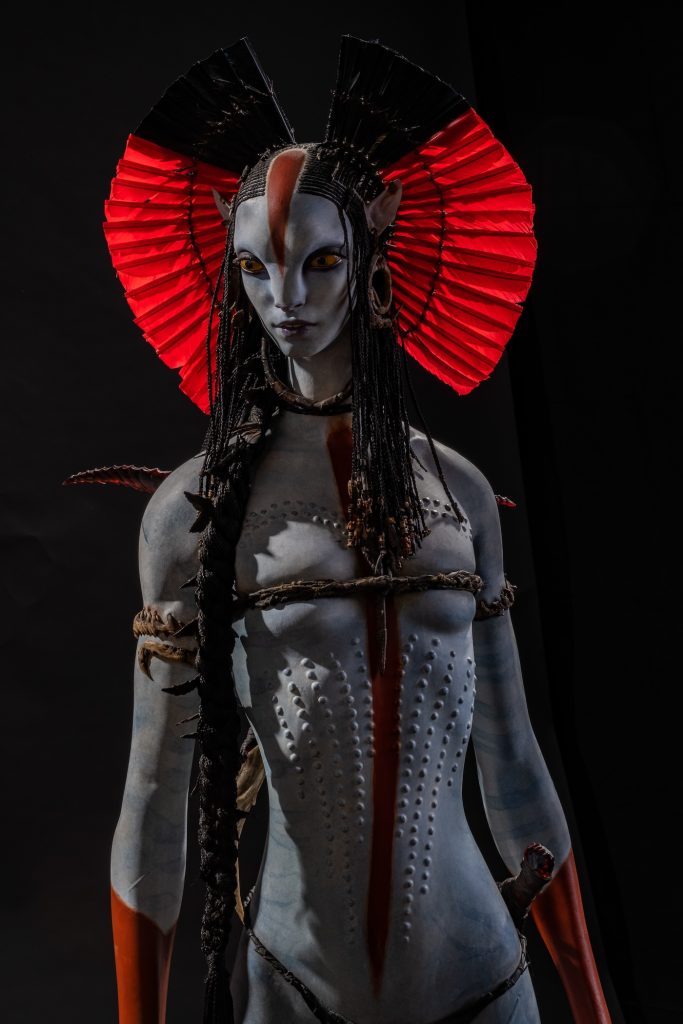
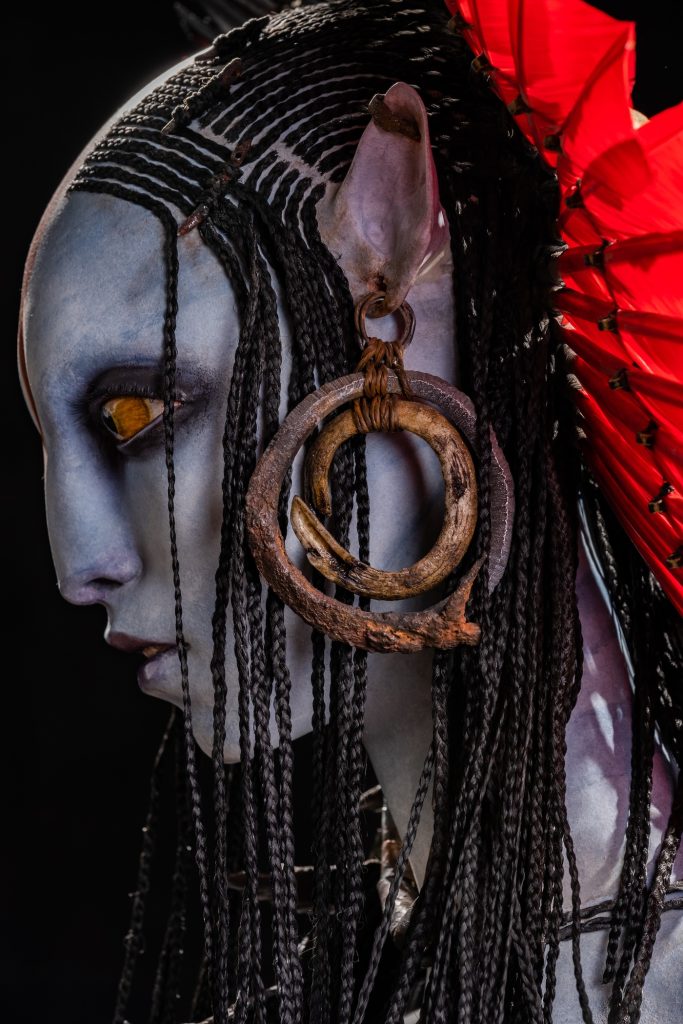
I always look to the environments from where they come from, and they live in a kind of volcanic wasteland. And so you had very rudimentary materials. You had clay, dirt, and stone, so we concentrated on those. Leather was part of the palette but almost opposite from the other people. So that was kind of fun. And then as we sort of developed them more, we realized they made things with their hands, and even though they have minimal materials, they’re very decorative people. Their body becomes the landscape.
How did the body painting develop among the Ash People?
That was the first thing Jim wanted. The paint, the ash that made the scarification patterns. They did it in ways in which people who live minimally still around the world decorate with body art for a reason, right? They’re showing stature in the clan. They’re showing their clanhood, their ideas in general. So we did a lot of work on that, a lot of work on piercings. They were, by Jim’s words, a very kind of sadomasochistic clan. They liked it. They didn’t mind piercing. So we did a really deep dive into that, and we had to pull back a teeny bit because it was getting pretty gruesome.
Avatar: Fire and Ash is in theaters now.
Featured image: The Ash people. CORAL – Costumes. Photo by Mark Fellman. © 2025 20th Century Studios. All Rights Reserved.