
How Production Designer Theresa Guleserian Found the Hidden Los Angeles of Ben Affleck’s “Animals”
Like Michael Mann‘s one-crazy-night-in-L.A. classic Collateral, thriller Animals (now streaming on Netflix) builds to a cinematic climax that simply wouldn’t work in any other city but Los Angeles. Writer/director/star Ben Affleck plays L.A. mayoral candidate Mark Kimball, kidnapped by criminals until he and his estranged wife, Abigail (Kerry Washington), hire Gillian Anderson’s ice-cool hostage negotiator to resolve the crisis involving the housekeeper’s undocumented husband, Ramon (Luis Gerardo Méndez).
The movie, debuting at number one last month on Netflix, is produced by Affleck and Matt Damon’s Artists Equity company, which champions Los Angeles-based shoots. Animals production designer Theresa Guleserian says she’s “rooting” for Artists Equity to succeed. “I am an Angelino,” Guleserian says. “I can tell a story in a deeper way than is possible elsewhere because I know the city so well.” Guleserian, who came west from Chicago to study at the American Film Institute, also backs the Motion Picture, Television, and Entertainment Revitalization Act, which, if passed by Congress, would provide a 20 percent tax credit for shows made in the U.S. “I’ve made many commercials pretending to be America in Sweden, and that’s okay,” she says. “But, like, why not just keep it here? Let’s do it for real!”
Speaking from her home in Glendale, California, Guleserian explains how one vintage mansion and a concrete riverbed helped embody Animals’ contemporary L.A. vibe.
You must know L.A. like the back of your hand?
I do! I’ve worked on many projects, like Togetherness for HBO, The High Note film, and the Valley Girl remake, where the filmmakers really cared about setting their stories in L.A.
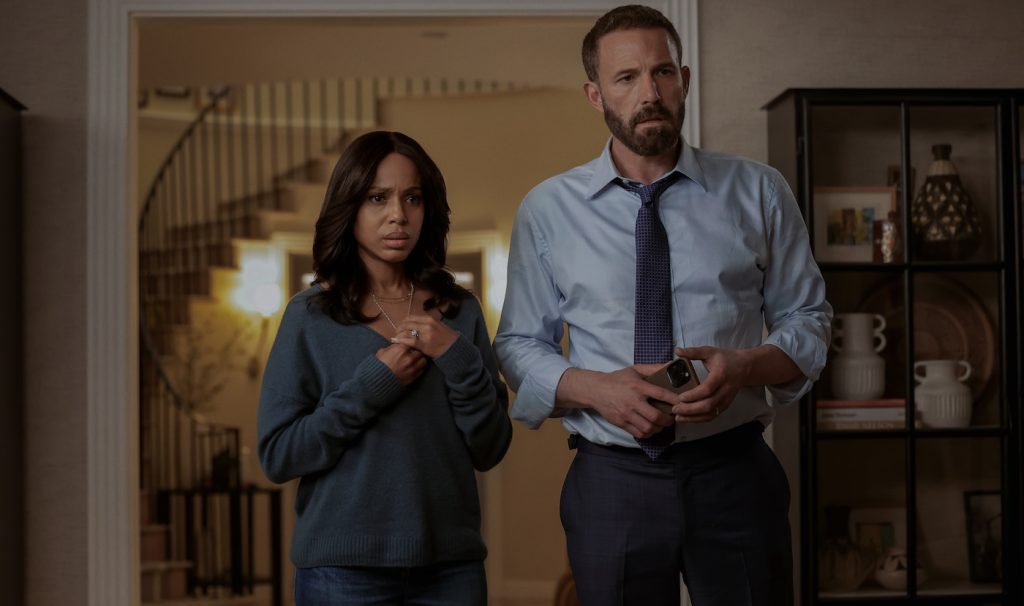
Here, Ben Affleck plays L.A. mayoral candidate Mark Kimball, who lives with his family in a beautiful mansion. What did you want to communicate about the Kimball family through their home?
There were multiple factors. In the very first conversation I had with Ben, we talked about architecture, and he told me about Paul Williams. I pulled up my look book, and it was almost a dead ringer for the house that he had in mind.
Paul Williams was the great black “Architect to the Stars” who built elegant homes for the rich and famous during the 40s and 50s.
Yeah. Paul Williams’ homes are a little East Coast, a little classical, a little American rather than Californian, and he shaped so much of Los Angeles architecture. I chose something in [L.A. neighborhood] Holmby Hills that looked like a Paul Williams home, first of all, because I thought our characters would want to project that status about themselves. Also, it communicates that this is maybe an inherited property. Ben loved it for those reasons, but also because this couple would want to brag that it was a Paul Williams home.
Even though the name “Paul Williams” is not actually mentioned in the dialogue.
Yes, but I’m a big believer in, for lack of a better description, “performance art” as well as production design.
In what way?
It doesn’t really matter to me whether something appears on screen, as long as the actors and the crew experience it as part of the set. I’ll give you an example. We made a fake brass plaque that my team aged beautifully. We mounted the plaque so that every single time someone went into the house, they would absorb what the characters would want them to have picked up about it.
Even if the audience does not notice the plaque, it’s important that the cast and crew see it.
That’s right. One of our producers was walking some guests around, explaining to them all that he had learned from the plaque. He turned to me and asked, “Did you see the plaque?” And I was like, “I put it there!”
What about the interior of the house, with its muted palette?
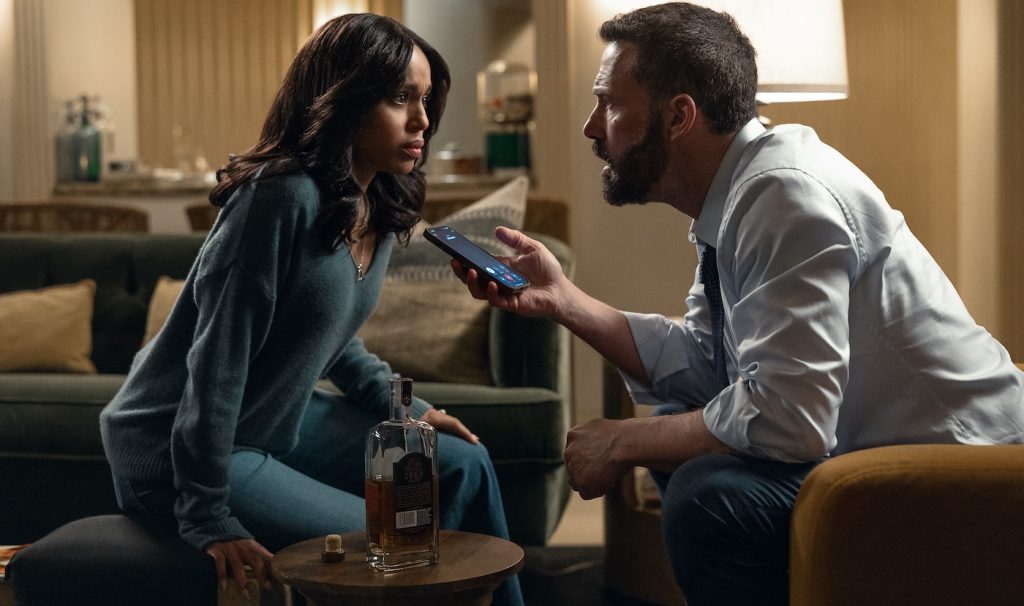
Ben wanted to represent the current trend of stripped-back, all-white interiors, almost as if the house had been staged by a realtor. Completely clean, completely white. That’s a very popular look right now, especially in that type of wealthy area. Melissa Levander, our set decorator, did a fantastic job.
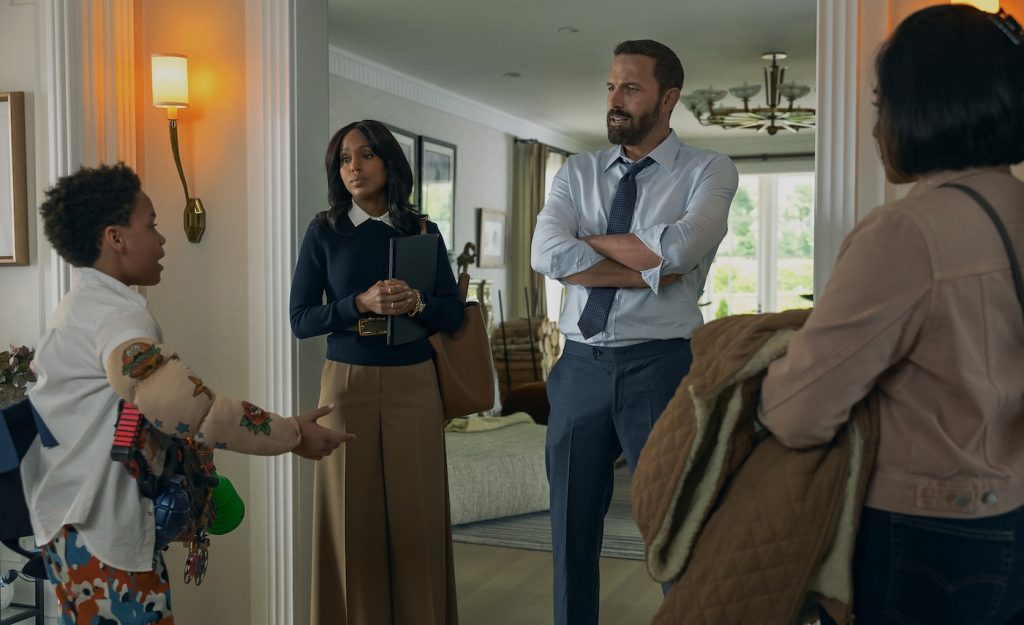
Nothing brash, nothing bright…
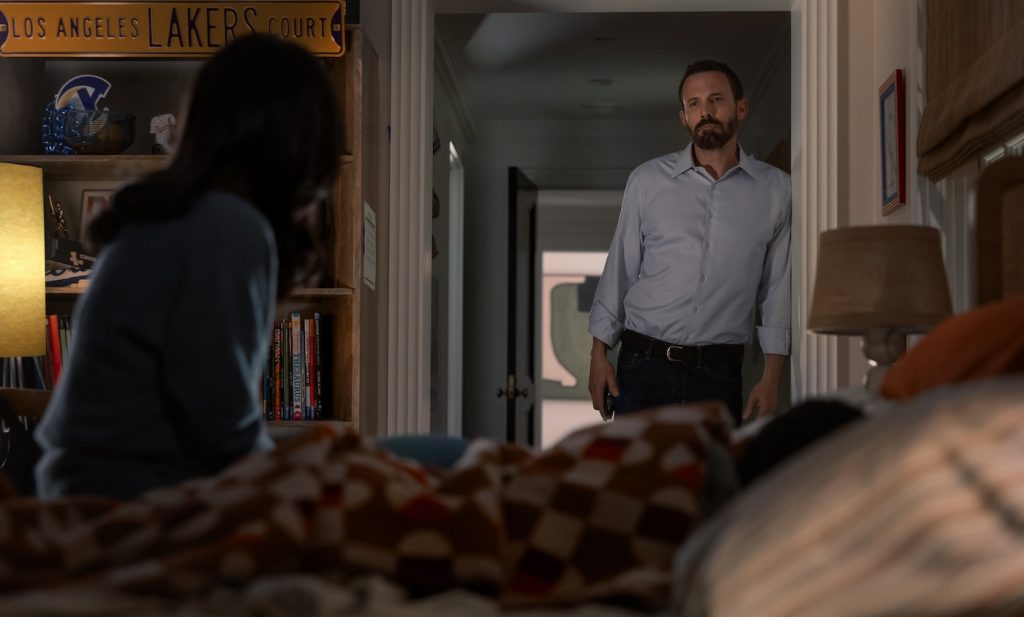
But I also wanted to make it feel like this family loved each other. Many of our materials were knit or woven so that they would literally feel warm. We also painted a couple of main rooms this pumpkin spice color, since the story takes place on Halloween. Ben came to my fully dressed house for two hours on a weekend, just with me, to look at every single thing. We had a great collaboration.
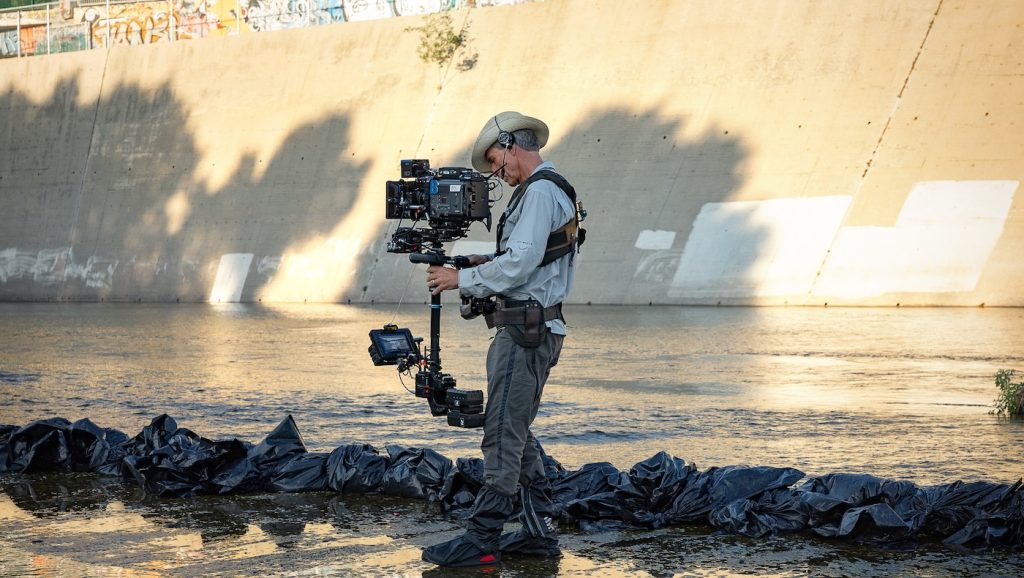
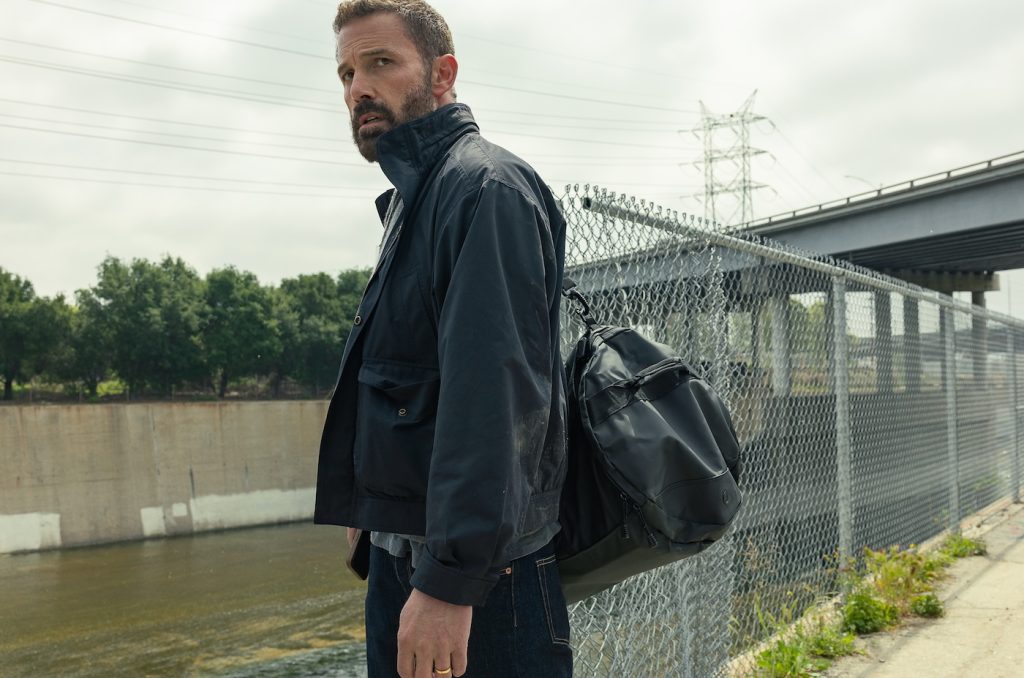
In the third act, everybody winds up in a secluded concrete channel that’s part of the Los Angeles River. Unlike normal rivers, this man-made culvert is oftentimes completely dry. It’s a very cinematic setting for the kidnappers’ showdown.
I am totally obsessed with the L.A. River zone. Everything in this movie that goes down in the river takes place basically underneath and in the shadow of the 110 and 5 freeways. All of Los Angeles is driving over you, so there’s a constant hum. It was beautiful to be down there with cinematographer Robert Elswit and Ben and Gillian Anderson, all these people, and no one noticed us! We could have done anything down there, and nobody would have known because it’s this overlooked part of L.A. Our location manager Steve Woroniecki did an excellent job finding little lost spots that you could barely access.
Before you became an expert in Los Angeles geography, you studied at the American Film Institute where you took a class with the great Hitchcock production designer Robert F. Boyle. How did AFI influence your approach to production design?
Most people learn how to be a production designer by coming up slowly but surely through the art department, becoming an art director, and maybe someday you make the jump to production designer. But that route doesn’t give you what AFI gave me: the storytelling part. Why did you pick this house? Why did you pick that neighborhood? That’s what a director wants to know. What does it mean? What does it make our audience feel? For Animals, what kind of art would Kerry’s character have on the wall of their house? Why are we in the riverbed of Los Angeles with the soon-to-be-mayor? Because where else in Los Angeles could he get away with what he’s doing and tell a lie about it? And also, we could have it be an epic cinematic moment. Those are the kinds of things AFI instilled in me.
You’ve worked steadily over the years, but have others in your peer group been affected by the slowdown in L.A.-based film production?
Yeah, it’s tough. My husband is a cinematographer, and we both graduated from AFI and went straight into the writers’ strike, so this isn’t new to us. We do travel for work. We have a son in elementary school now, so that affects our choices quite a bit, but our whole family just spent six months in New Jersey for a movie. I’m sure that will continue to happen.
The federal production incentive now being considered in Washington, D.C. aims to boost filmmaking in the United States. Would you welcome that program?
Yes! I’ve worked internationally. It’s fine. But I know L.A., and isn’t that a beautiful thing? Shouldn’t stories that are about Los Angeles be made in Los Angeles? Shouldn’t stories that are about Chicago be made in Chicago? The people are different. The faces are different. The buildings are different. I think if you’re going to tell an American story, it should be made in America.