Writer/Director Cristian Mungiu on “Fjord” and the High Cost of Living Inside Political Echo Chambers
With a screenplay mostly in Norwegian, along with Romanian, Swedish, and English, director Cristian Mungiu’s quietly riveting family drama is a true European co-production. “We shot in Norway, edited in Romania, sound design in Finland, and mixing in Denmark,” he said of Fjord, which won the Palme d’Or in Cannes this spring. “There was always somebody speaking Norwegian in post-production. For the final mixing in Denmark, we had people speaking Norwegian, Swedish, English and Romanian, so it was a crowded mixing room.”
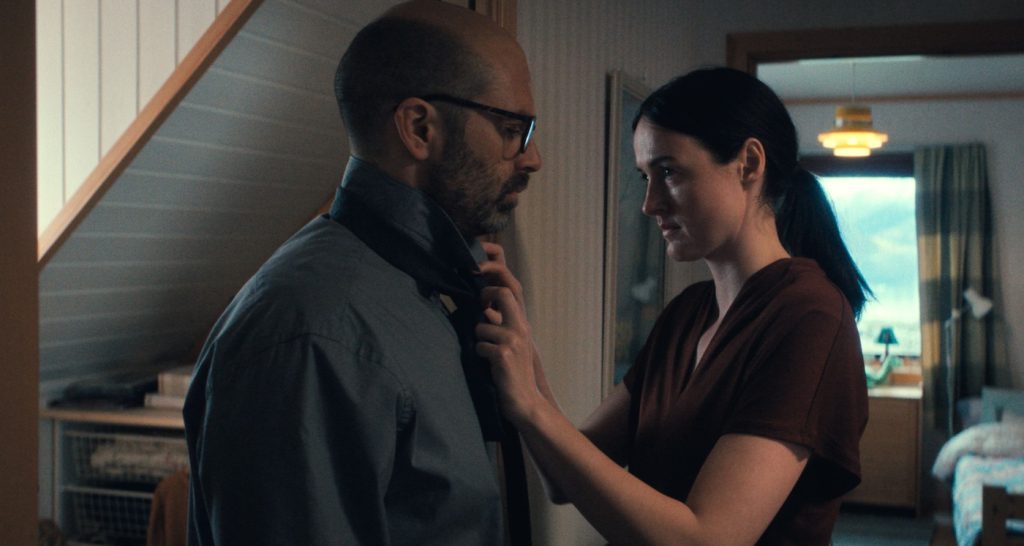
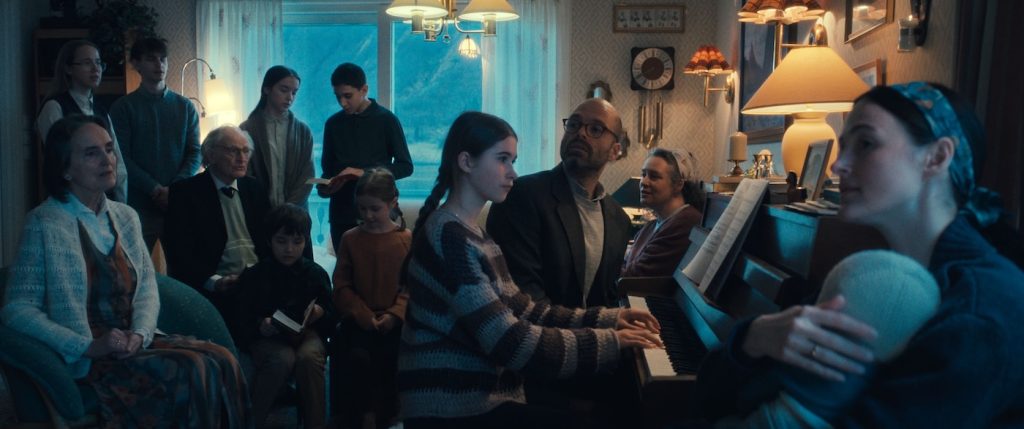
Romanian-born American actor Sebastian Stan (Oscar nominee for The Apprentice) plays Mihai Gheorghius, a religious father of five who recently moved his family from his native Romania to Norway, his wife Lisbet’s (Oscar nominee for Sentimental Value, Renate Reinsve) home country. As they adjust to a far more progressive environment in the small town, a teacher at school notices a bruise on one of the children, which quickly engulfs the family in a legal battle because the couple is presumed to be abusing their children. A thought-provoking exploration of what true progressivism and inclusivity should be, the film is Mungiu’s clarion call for everyone to engage in dialogue with those who hold views opposed to our own, so we can escape political echo chambers. In an increasingly polarized society, Mungiu hopes that we can engage in meaningful dialogue “to reduce this level of anger, anxiety, and aggression that exist today – it’s not safe to live in a society that has become this polarized.”
I appreciate stories that are set in a multilingual environment and authentically portrayed as such. What was it like to work with this multilingual screenplay?
The screenplay was translated into Norwegian and English. Since I don’t speak Norwegian, there was phonetic translation of Norwegian next to my English and Norwegian dialogue. There are ways to stress words to make them sound more natural in that language; I can do this in Romanian, English, and French. So, having it written phonetically, I at least knew the meaningful words in that sentence, and stressing them would express what I needed. My script supervisor was a Norwegian director who checked how I changed scenes and directed the Norwegian actors. They were very generous and understood my need to have the first few takes done in English. Once we got the right rhythm, we went back to Norwegian.
Editing picture and sound when the dialogue is in four languages must add another layer of complication?
We have 10-30 takes with tiny differences in rhythm and believability of the performances. The script supervisor was with us through editing, and we edited a lot on the dialogue.
Do the picture and sound editors speak Norwegian?
No, the editor speaks Romanian, but the script supervisor assisted him.
It must have been a relief that Sebastian is fluent in Romanian!
That was the nice part of working with him—we didn’t need a language coach. Everybody is mesmerized by his Romanian —he speaks it very well.
What inspired you to make Fjord?
The film is about the need to communicate better with others. We need dialogue in our society, which I don’t see a lot of right now. I was trying to understand whether the values we share depend on a common history and language. In Western societies, there are progressive liberal bubbles and conservative bubbles. We’ve stopped living in societies where we share the same language and history; it’s more about ideology now.
Is Mihai and Lisbet’s fight against the Norwegian authorities to get their children back based on real cases?
I looked at real stories that happened in Norway, where families from more conservative countries move to Scandinavia and have to deal with a very different society. Ultimately, there’s one thing that’s difficult to have different views about, when it’s about your children. There was a clash of values, and they need to be more inclusive to find a common approach.
This film demonstrates intricate, nuanced prejudices and a lack of understanding on both sides. Audiences from every political spectrum could walk away with an entirely different conclusion. Is that what you intended?
My intention was to trigger conversation about the fact that there isn’t just one truth. There are different ways of seeing the world, and the other half is not going anywhere. It’s our duty to be more inclusive and talk with them. The world has got to be too radicalized, and it’s good to have this humility and see that there’s not just one way. Especially with social media, where we see hatred between these groups, we need to fight and get back to having some common values and understand that it’s okay to disagree, but we shouldn’t kill each other for these differences in values.
How did Sebastian transform into Mihai?
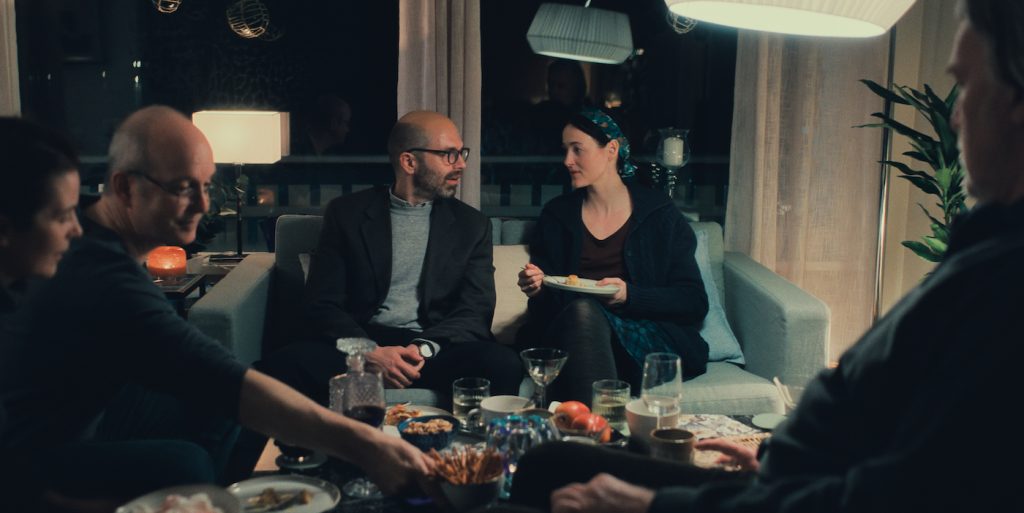
Sebastian understood right away that to portray a character who’s so far from your own values, you need to understand the psychology of that person, to practice a little bit of their life so you can express, in a very truthful way, their way of seeing the world. So he had to be very different from his regular iconic look, and he saw how these people live and what ceremonies they have in this church; he did all that to prepare for this film. As you see in the film, he is not the Sebastian that audiences know from his Marvel films.
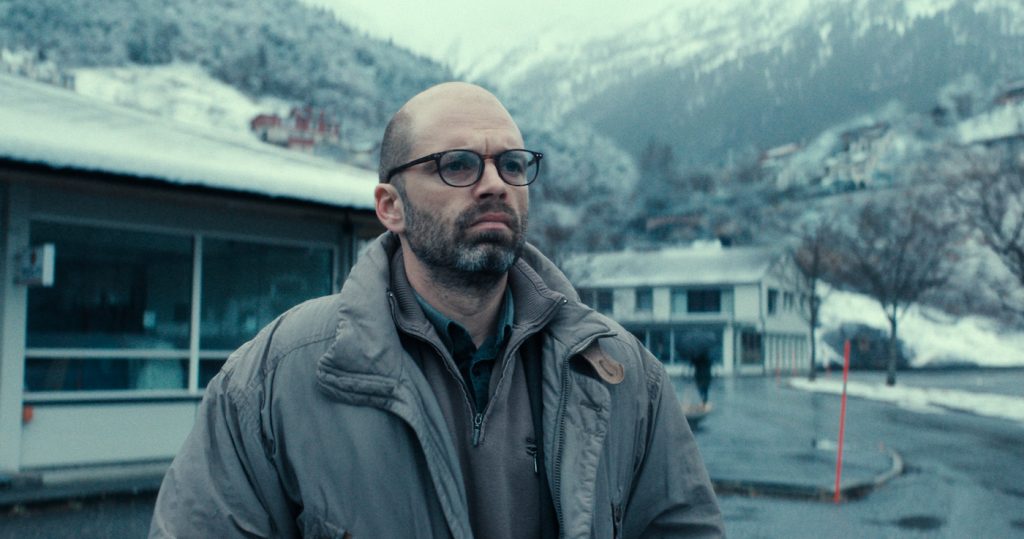
As the child protective services hearing against Mihai and Lisbet progresses, he decides on a different approach to save his family. Talk about that transformation.
In the end, Mihai becomes authoritarian and impulsive. So you’re not sure about the true nature of his relationship with his children, and that matches what I learned from the real cases. You have to make a choice not knowing what happens behind closed doors. This is what he did very well – he expressed all the shades of his character in subtle ways. By the end, he’s very authoritarian with this girl. So, maybe there was some sort of violence; you never know. What’s important is to make sure that you’re not biased when you’re judging the situation.
Lisbet is a quiet but intriguing character – they decide to move from Mihai’s native Romania to her country, which suggests that she has agency and choice within the family. How do you see the dynamic in their marriage?
When I talked to real couples, especially those with the same religious beliefs as Mihai and Lisbet, they had an ambiguous, nuanced relationship. On one hand, the woman is strong enough to make choices; she is from the country they moved to, so she knows better what the right choices are. On the other hand, because in their religion the male is the decision-maker in the family, she would oppose him. As a mother, she is understanding and empathetic with the children; you see this in the first shot, where she hugs the kids before school. She comforts them and is more inclusive, even though she and Mihai share the same values. Mihai is more of a traditional father; his affection depends on whether they respect his rules.
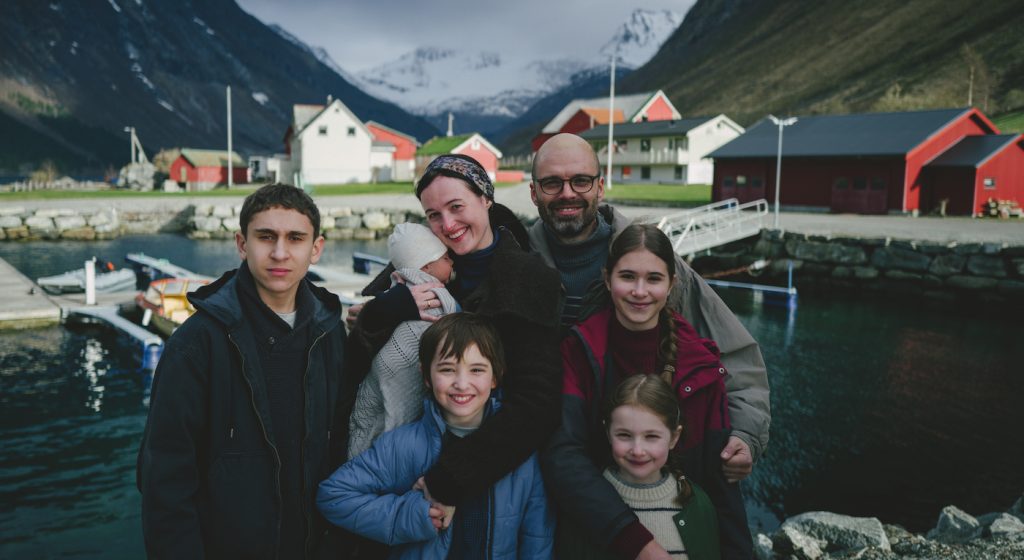
Mihai is the family’s ultimate disciplinarian.
Yes, but Lisbet has enough independence. On the set, things happen that shape how you end up directing the film. There is this scene when Mihai is chopping firewood when she comes to tell him some bad news. The scene is about how they differ in what they see as the solution. So, I encouraged them to go back to their house in different ways [afterward, in order to accentuate the conflict]. It’s not clear if she shares his way or not; from then on, she’s trying to follow him. She was leading until that moment, and then something changes.
The neighbor’s father, Åke (Øyvind Venstad Kjeksrud), is wheelchair-bound and asks Lisbet to help end his life. How does this intersect with the main story?
Lisbeth tries to be empathetic to everybody. So, she tries to help Åke experience some happiness in his final days. But what he asks her to do is very different than her values. That’s a very important moral dilemma. Are her own values more important? Will she try to save him no matter what, or will she accept that, if you’re truly empathic, you have to respect the values of the people you want to help? This is the film’s most important theme: the need to respect the values of the minority, even if you don’t share them. [Their lawyer] Mia (Lisa Carlehed) is progressive, but she understands that if the minority is conservative, you’re there to defend their point of view even if you don’t share their values. You might try to convince them there are other ways, but you still have to defend them. If you’re progressive, when the majority tries to impose their view on the minority, be an individual and help the minority.
What would you like the audience to take away from this story?
The audience is free to make something of the facts we’ve presented; we don’t bring our opinion, and we’re not judgmental about the characters. They need to decide what’s good, what’s wrong, and whether they agree.
Romania’s entry for the Best International Feature Film in this year’s Academy Awards, Fjord is playing in theaters now.