“The Dog Stars”: Ridley Scott on Preparing For the End of the World
Ridley Scott makes the apocalypse look lush. Horrifying, too, of course, but the filmmaker’s eye for the spectacular sees the inherent beauty in flying high above wastelands and in a pack of wild dogs roaming in front of a long-ago deserted Denver City Hall. In The Dog Stars, Scott paints a man and his dog scavenging through a new world with the precision and poignancy he’s amassed over a titanic career.
Without listing off the many classics, including Alien, Blade Runner, Gladiator, and Black Hawk Down, nobody has Scott’s specific style of grandeur and grasp of the gruesome and the gorgeous, nor his wide-ranging experience behind the camera.
The director’s latest picture is an adaptation of Peter Heller’s post-apocalyptic novel. Disease has wiped out most of humanity, and all that’s left is the desire to survive. Pilot Hig (Jacob Elordi) and his beloved pup fly around, looking for goods. When Hig’s feet are on the ground, he’s either running from scavengers or debating what really matters with his battle-ready roommate, played by the ever-sturdy Josh Brolin.
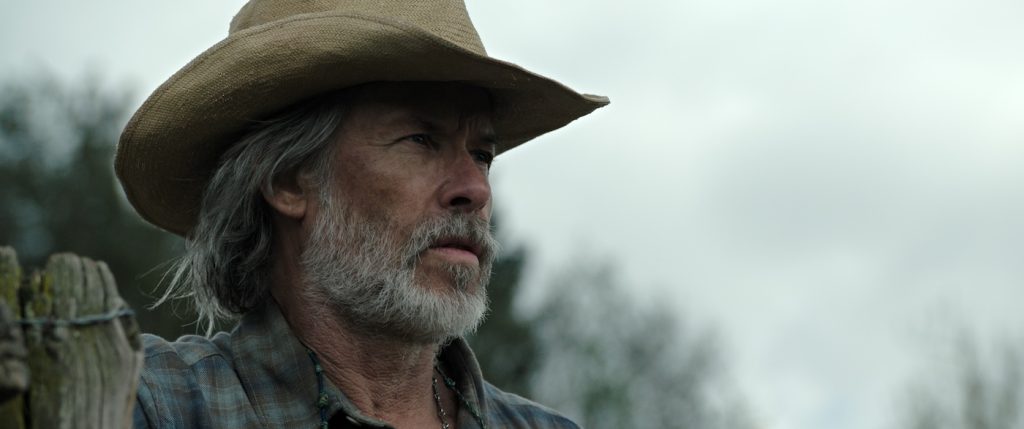
For all the action, death, and destruction on-screen, Scott has made an impassioned thriller about living. The Dog Stars is also a bit of a Western with its vistas, men with guns, and horses in action. Recently, the filmmaker spoke with The Credits about his affinity for the genre, his eye and imagination, and a memory from Blade Runner.
Your love of Westerns is very apparent in The Dog Stars.
Yes.
Did you feel like you were scratching that itch you have to make a Western?
No. The only thing I haven’t done is a Western. Every time I do a film, it tends to lean in that direction.
What is it that’s always really appealed to your eye about Westerns?
Well, I think it goes back to being a kid. I had access to horses and teaching, so I could ride. I could ride galloping, standing on the rump of a horse, and flip-flop across the horse going full gallop. And then I wanted to be a jockey. My aunt lived in Lockerbie, actually, way before the aircraft. I used to go up to a racing stable there and work the track. And then I got too big to be a jockey, so that was the end of that. But it goes in with horses, cowboys.
I imagine that inspired the drawings you did early in your life. You storyboard very thoroughly. When you’re drawing your storyboards, how much of the movie is fully realized in your head, and you’re just putting it down on paper? Or, say in the case of The Dog Stars, is it scene by scene?
No, it’s actually scene by scene. It’s quite a drawn-out comic strip. You draw close-ups, medium shots, and wide shots. On occasion, I haven’t seen the location, so I’m imagining what it should be. Colors are easier than black and white, so it’s drawn in color. You draw the whole movie. During that, I’m filming on paper in my head. And so, it’s really externalizing what’s on paper where I’ll go in a few weeks or a few months. I walk on the set knowing exactly what I want to do. There’s security in that because frequently I’ve watched other sets where they don’t know where to put the camera. And I say, “I do. I know where to put the camera.” Sometimes cameramen get a little annoyed by that. That may be in [cinematographer] John Mathieson’s comment.
[Laughs] As someone who was a camera operator, you know your way around one.
I was a great camera operator on 2,000 commercials and every film up to and including Thelma & Louise. Then I adjusted and changed.
You’ve cited your commercial experience as developing the great eye you have, but it’s still evolving, right? On a movie like The Dog Stars, do you still feel your eye for visuals growing, sharpening?
Well, it’s visual. And I still paint every weekend, even after art school. So there’s quite a lot of paintings hanging around. I’m constantly evolving on that side as well.
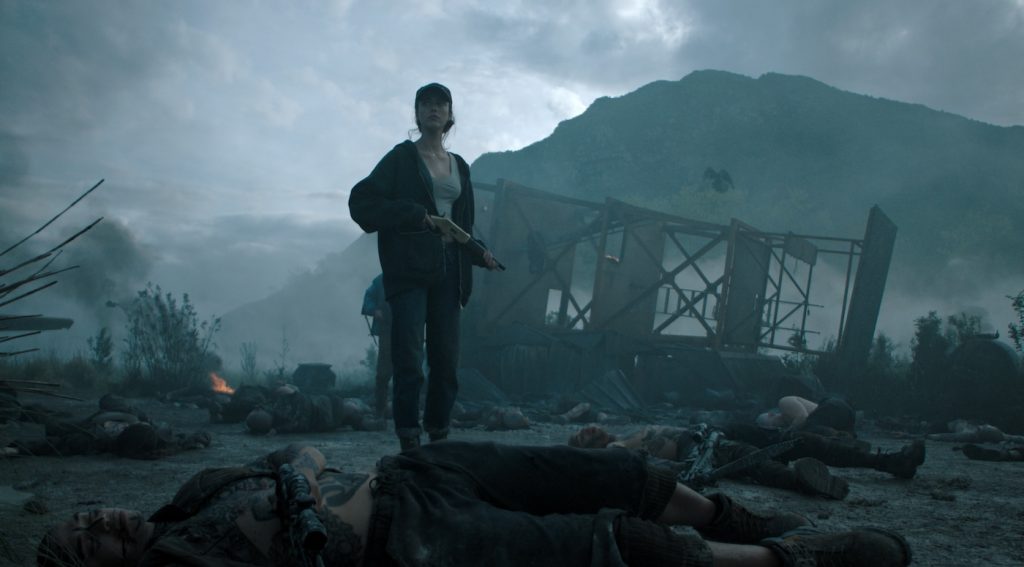
You shoot with many cameras. When you’re looking at the monitors, whether it’s one of the incredible landscapes in the film or an interior scene, what is your eye generally drawn to?
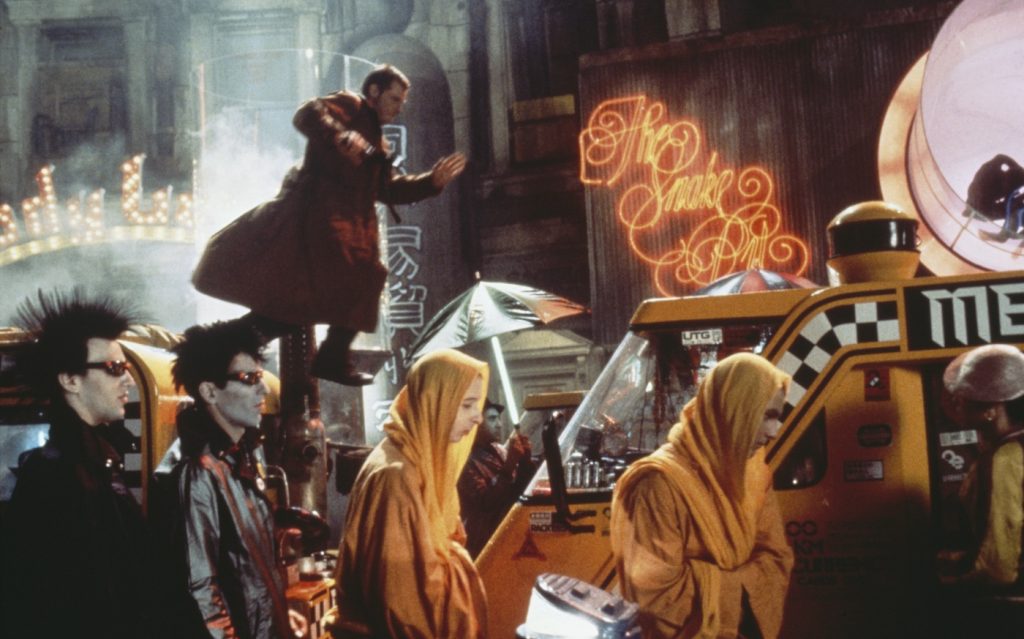
It comes from here [points to head]. It comes from imagination, then through to the eye. I’ve seen so many locations, so many places. I can say, like on Blade Runner, because of commercial advertising, I’ve shot commercials for cigarettes in Hong Kong before the first skyscraper. Hong Kong was kind of medieval China with 2,000 junks in the harbor. And from there, going down the backstreets of Hong Kong – they’ll forgive me for saying this – but it was dangerous then. I had to go around with the police. And from there, I imagined Blade Runner. It was always the choice between Chinese and Spanish-Mexican who would take over. I think what’s going to be prevalent will be Spanish. But at that point, Chinese seemed more interesting.
You create these vast worlds, but also, you craft legendary claustrophobia. One of the best scenes in The Dog Stars is three characters on a couch in a small room—realizing the trap they’ve walked into. When you’re creating tension, how do you know when to light the fuse and when to let the bomb go off?
Well, that wasn’t written. That was later because, as I was boarding, I got into it. I said, “This is getting repetitive.” There was a suggestion of cannibalism and travelers being lured by a siren, a woman—a middle-aged, respectable-sounding woman who is the siren. We’ll invite you in because, logically, anyone traveling around in the plane and still surviving probably has money. Therefore, with that, the siren lures them in, making them comfortable. Then, as is, you can give them horse tranquilizer and the rest is history, right? So you can keep them for what they’ve got, their aircraft, their gasoline, and maybe human meat.
Having said that, you make life-affirming dystopian and post-apocalyptic films. Do you consider yourself an optimist?
I would have to be an optimist to do my profession.
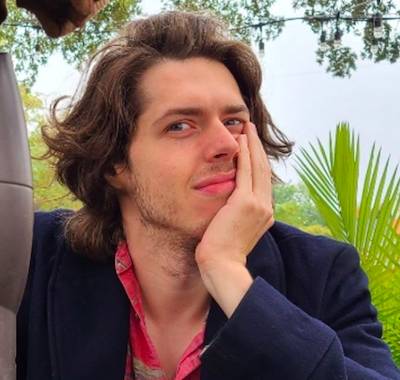
Featured image: (L-R) Jacob Elordi as Hig and Josh Brolin as Bangley in 20th Century Studios’ THE DOG STARS. Photo by Fabio Lovino. © 2026 20th Century Studios. All Rights Reserved.