
From Plague to Protest: Paul Greengrass Finds Modern Parallels in his Andrew Garfield-Led Epic “The Uprising”
Let’s start with the action.
The Peasants’ Revolt of 1381, often referred to as Wat Tyler’s rebellion, is the first documented great rebellion in England. The working class was in economic turmoil after the Black Death wiped out half of the population, including the laborers who worked the land, leaving many families without a means to provide.
From the opening scene, Paul Greengrass, writer and director of The Uprising(in theaters now), immediately thrusts viewers into the heightened emotional state of the 14th-century English working class.
“I started writing it on the second day of lockdown,” says Greengrass. “I’d been thinking for a while… after Brexit, which really was an English uprising. It made me think I’d like to do an English uprising story, which led me to the Peasants’ Revolt.”
King Richard II was only 14 years old at the time and was heavily influenced by his council. In order to pay for armies and costs resulting from England’s Hundred Years’ War with France, the council imposed a poll tax, sparking widespread outrage.
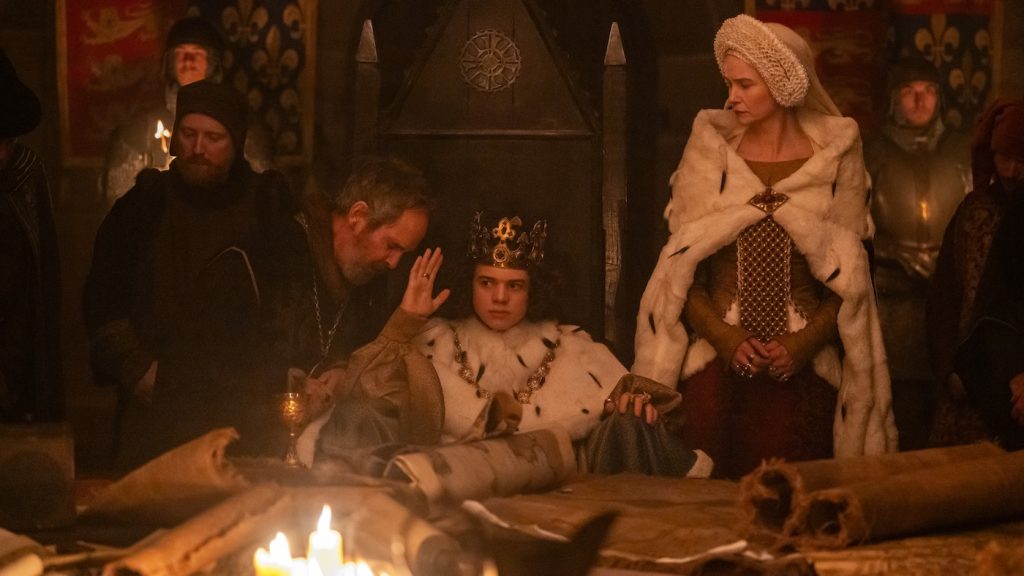
Credit: Betina La Plante/Focus Features. © 2026 All Rights Reserved. BETINA LA PLANTE
Greengrass says the parallels between the Peasants’ Revolt and the issues stemming from the global pandemic felt eerily “contemporary.”
“When lockdown happened and the pandemic, I started writing, and it was just very eerie how contemporary it all felt,” he says. “The post-pandemic world, the kind of world sharply divided between oligarchs protecting their wealth and power on the one hand, and this deep inequality and a sort of rage out there amongst the rest of the population.”
But rather than focusing the film on the typical rebellion leader, Wat Tyler, Greengrass says he really wanted to bring audiences into the mind of an “ordinary farmer” from that time. Enter Andrew Garfield’s character, Ploughman.
“I wanted him to be a moderate man in immoderate times,” Greengrass says. “You know, he’s not a kind of slavering radical. He’s an ordinary man who wants a fairer world and justice under God and King.”
Garfield’s character is an accidental hero. After the loss of his family to the Black Death, he has nothing to lose. His involvement in the uprising stems only from his desire to protect those in his community from further suffering.
“What’s known about the peasants’ revolt is all written from points of view that are hostile to the rebellion,” Greengrass explains. “I wanted to have a fictional character, somebody who got mixed up in it at the beginning, and then try and sort of thread their journey through to the end to see how that would feel. Of course, his journey takes him through the revolution.”
Ploughman insists throughout the film that if the peasants could simply speak with the king, they might be able to come to a solution. It isn’t until the film’s climax (spoiler alert!), when King Richard II promises to give in to the peasants’ demands, and then betrays them, that we watch Ploughman lose his faith in humanity.
But instead of succumbing to defeat, Ploughman rallies the survivors.
“He sees the revolution betrayed,” Greengrass says. “He sees the revolution betray itself and ends up an outlaw.”
This climactic battle scene is a true testament to Greengrass’s kinetic, handheld film style and highlights his earlier work as a documentary filmmaker. Viewers are thrust headfirst into the tension and terror of the peasants as they watch their fellow countrymen slaughtered around them.
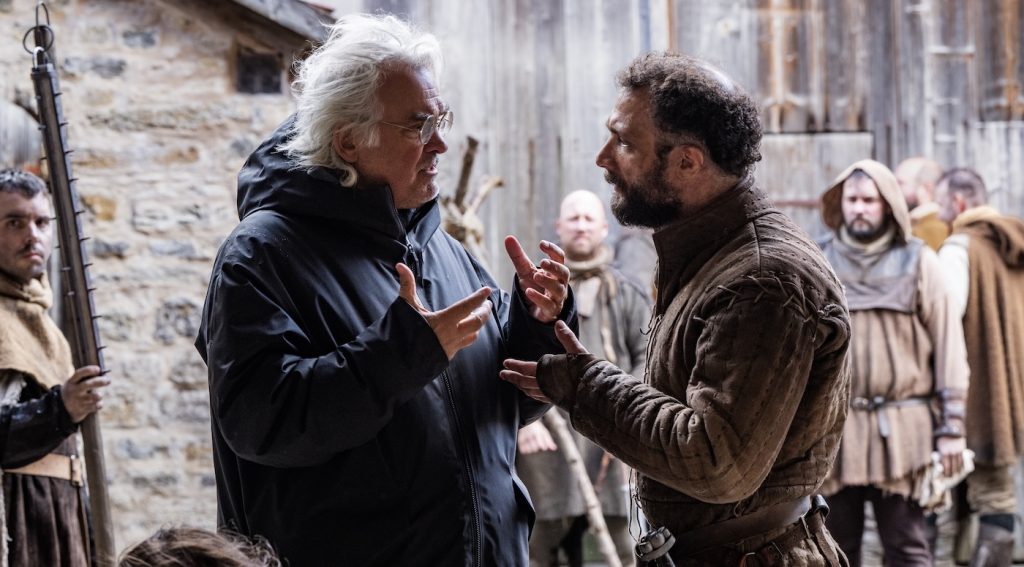
“I grew up making films in the real world,” Greengrass explains. “Documentaries, factual programs…including, very often, in places that were dangerous and difficult. And of course, if you’re in any kind of crowd or conflict situation, you’re not going to be laying dolly tracks.”
Greengrass’s films have always been characterized by energetic edits, immersive close-ups, and documentary-like movement—often credited with pioneering the “shaky cam.” In 2002, he received international acclaim for Bloody Sunday, a film about a civil rights protest in Northern Ireland that ended in bloodshed. In 2007, he won the Oscar for best director for his film, United 93, that chronicled the hijacked flight on 9/11 that crashed in Pennsylvania.
Greengrass says he saw no reason not to shoot The Uprising in his “normal” way, and feels that this style helps to immerse viewers.
“When I started out making films in the commercial mainstream, if I want to call it that: ‘Oh, this is so fresh and exciting. Look at that star,’” Greengrass jokes of early-career reviews. “Now they say, ‘Oh, he’s doing it all over again.’ I mean, everybody shoots like me, but I get a bit of stick for it, which always strikes me as quite comical.”
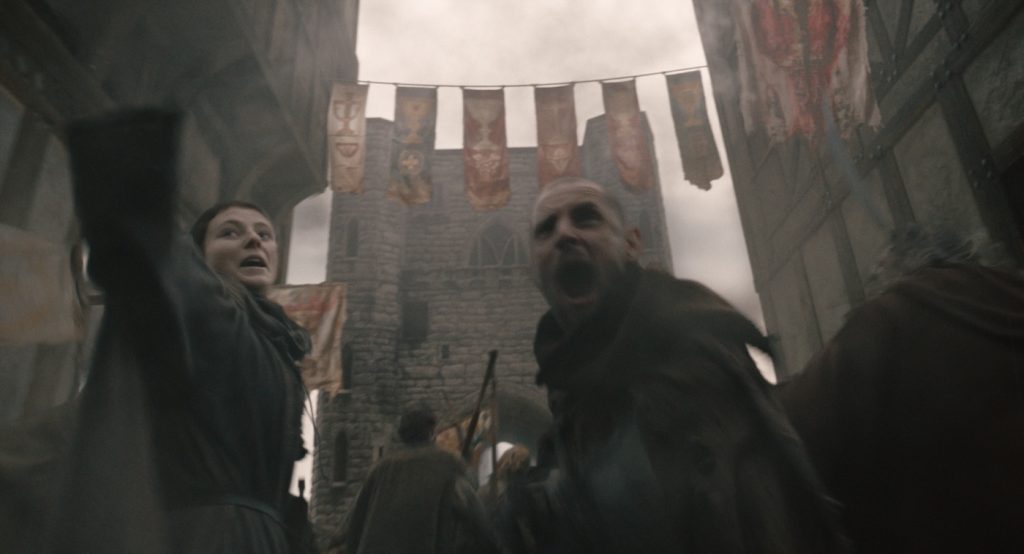
Although the historical accounts of the Peasants’ Revolt are that it was squashed, Greengrass says he had no interest in making a “downer” of a movie.
“Really, it wasn’t crushed,” he says. “It’s just that its victory was much delayed. Historians generally agree that it was the first moment, really, in European history when the identity of ordinary men and women entered the stage, took center stage, and said, ‘We matter. What we want matters.’”
It was important to Greengrass that viewers were left with a “strong” version of Ploughman—adorning a hooded cape in a cinematic reference to Robin Hood, masking his face in the mud of his hometown, and leading the common people to salvation.
“He’s very strong at the end,” Greengrass says. “And those who survive are strong because they’ve decided to not have any illusions; to look to themselves to govern themselves.”
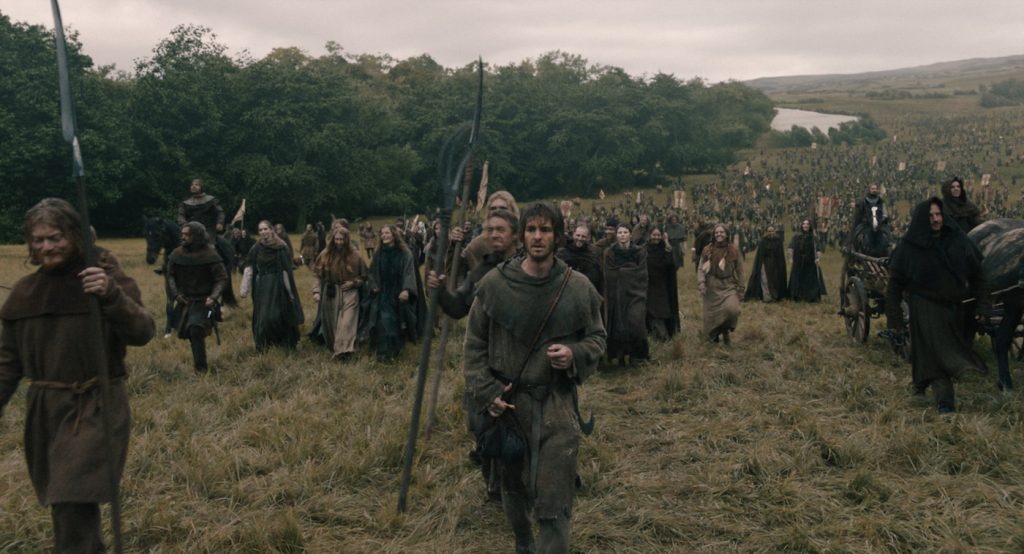
Watch the full interview here:
Featured image: Andrew Garfield in The Uprising. © 2026 Focus Features, LLC. All Rights Reserved.