“The Testaments” Director and Executive Producer Mike Barker on Finding Lightning in a Bottle with Chase Infiniti
A new sequel to The Handmaid’s Tale returns to Gilead, a world now squarely sustained by its most oppressed residents: the daughters of Gilead’s commanders, who are trained for a life of marriage, motherhood, and servitude. Unlike the women who came before them, Gilead is all the teenage girls of The Testaments have ever known. Illiterate and pious, the girls’ lives revolve around religion, social hierarchy, and Aunt Lydia’s (Ann Dowd) elite preparatory school for the future carriers of commander genes. With no exposure to any alternative, they are shockingly impassioned defenders of their limited world.
Within this violent yet pastoral setting, we meet Agnes (Chase Infiniti), a sweet and solemn adopted commander’s daughter. Her narration quickly outlines the way things work around here—the girls in purple, like Agnes herself, are still in training for adulthood. Once they hit puberty, they move into green dresses and enter the marriage market, hopeful that their mothers and the Aunts will secure a match with a high-ranking commander who isn’t assigned to Gilead’s colonies. Before then, however, their days are spent at Aunt Lydia’s. The school is also attended by the Pearl Girls, converts from outside Gilead who are taught to forget everything they know about their former lives. It’s in this context that Agnes is placed in charge of Daisy (Lucy Halliday), a setup that could end in either conflict or camaraderie.
Mike Barker, an executive producer on the show, directed the season’s first three episodes as well as the finale. A veteran of Gilead, Barker also directed twelve episodes of the first two seasons of The Handmaid’s Tale. For Barker, the Gilead of The Testaments represents a different era of this dystopia, one that’s more aesthetically idyllic yet even darker in its total regression regarding the country’s women. We had the chance to speak with Barker about the visual updates he brought to The Testaments, casting One Battle After Another‘s breakout star Chase Infiniti, working with Margaret Atwood’s original novel, and seeing the work’s broader themes reflected, once again, in current events.
What did you want to bring with you from The Handmaid’s Tale, and what did you want to do to make The Testaments stand on its own?
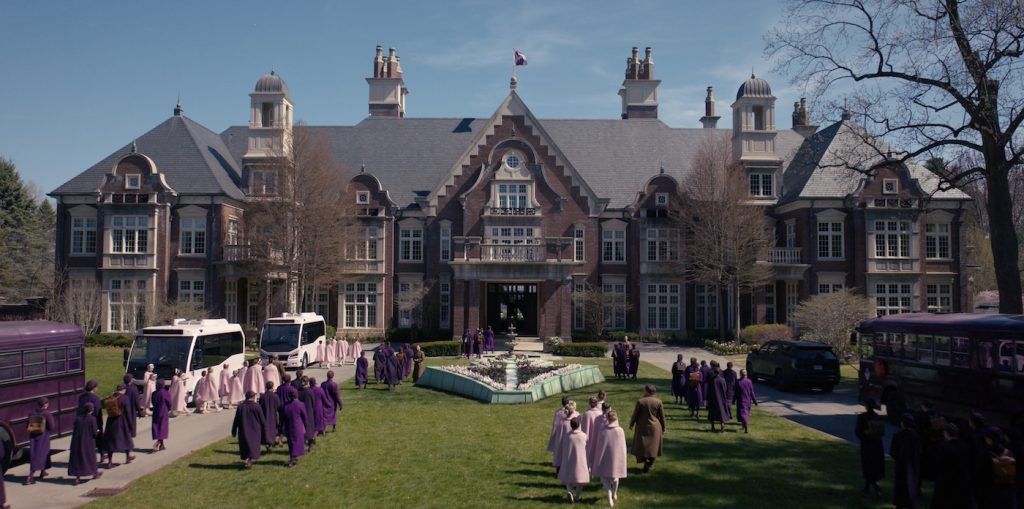
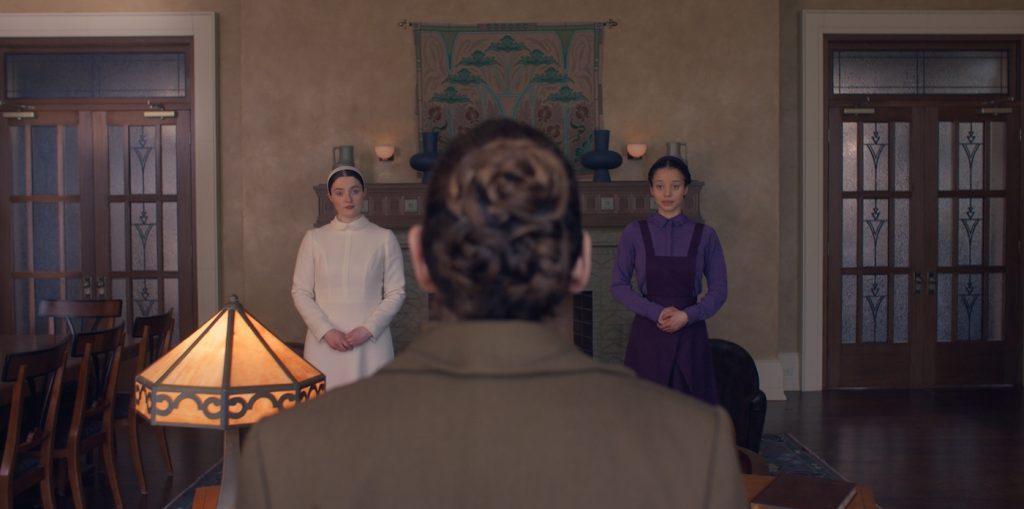
The Handmaid’s Tale was very much about a woman entering this new world as it was created around her. What was different about this one was that all these young women were actually born in the system, so they knew nothing different. I wanted to idealize it much more, to make it feel almost perfect, so that you start to feel the cracks within it, rather than the other way around. I also wanted to make it feel much more optimistic, at least initially. It’s very pretty. This was much more of an ensemble than Handmaid’s Tale, which was very much June’s point of view. It gave me the opportunity to open it up to actually shoot it in a very different way.
What were some of the new ways of shooting?
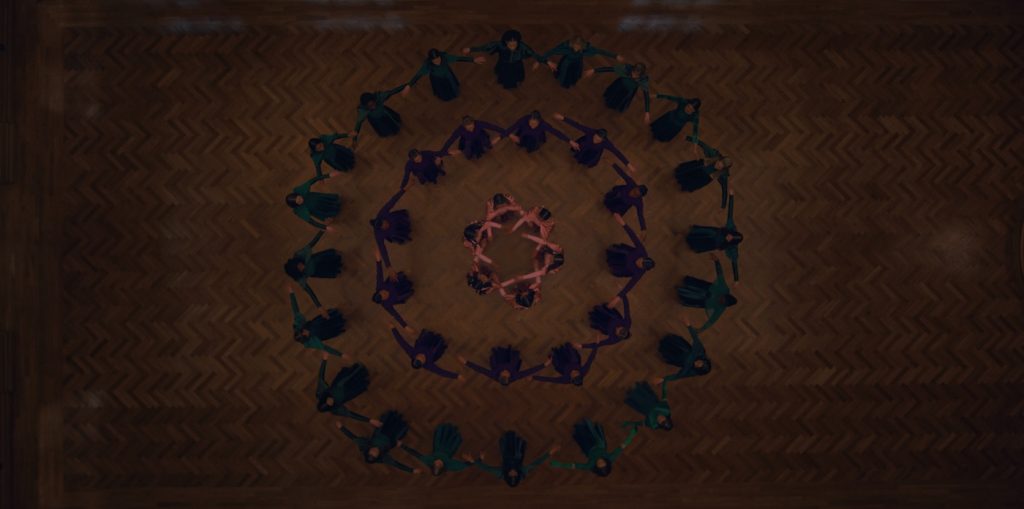
The baptism in the swimming pool—that overhead, almost surveillance kind of circular notion, I try to repeat as a theme all the way through. I wanted the windows to be open. This was a new generation that had no reason to have the curtains closed in the same way. It’s brighter, breezier.
Chase Infiniti is terrific in this role. Was she always the top choice to play Agnes?
We zoomed with her, and she has such a spirit about her that it was a bit of a no-brainer, to be honest. Like most young actors, she was sitting at her desk in her bedroom, reading some of the scenes. And she just had such an effervescent energy. She’s so famous now that everybody knows it, but back then we didn’t really know it at all. We’d only seen her in Presumed Innocent. She just shone straight away. There were lots of people on the list, but she was pretty much the only contender.
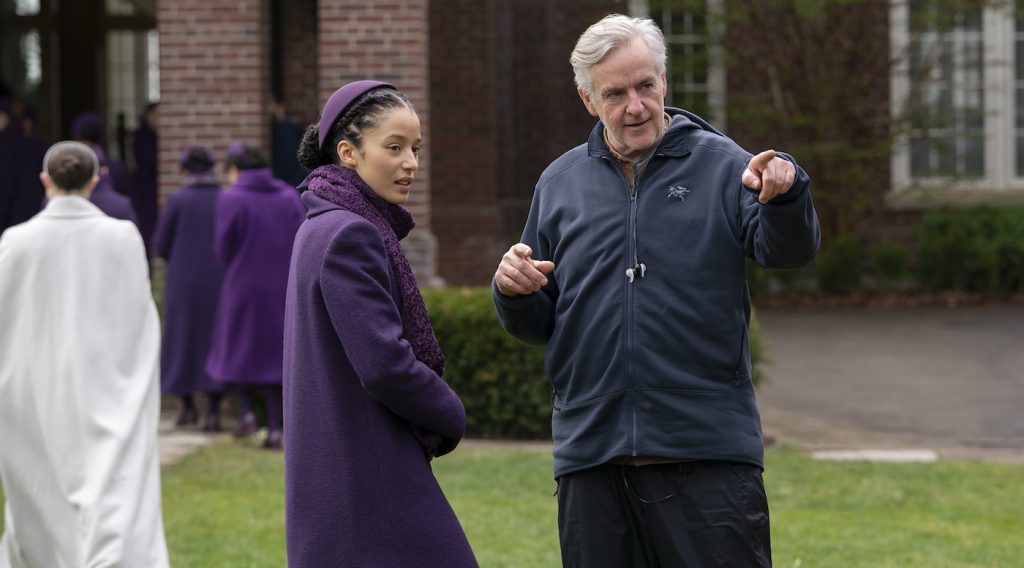
What are some of your directives when it comes to the sets? They say there’s no plastic in Gilead, and it’s amazing the degree to which that feeling comes through on-screen.
It’s fun taking all plastic out of things. Basically, the idea of Gilead is that it’s really clean. In The Handmaid’s Tale, we had all those toxic wastelands, and it was the infertile women who had to clean up the toxic soil.
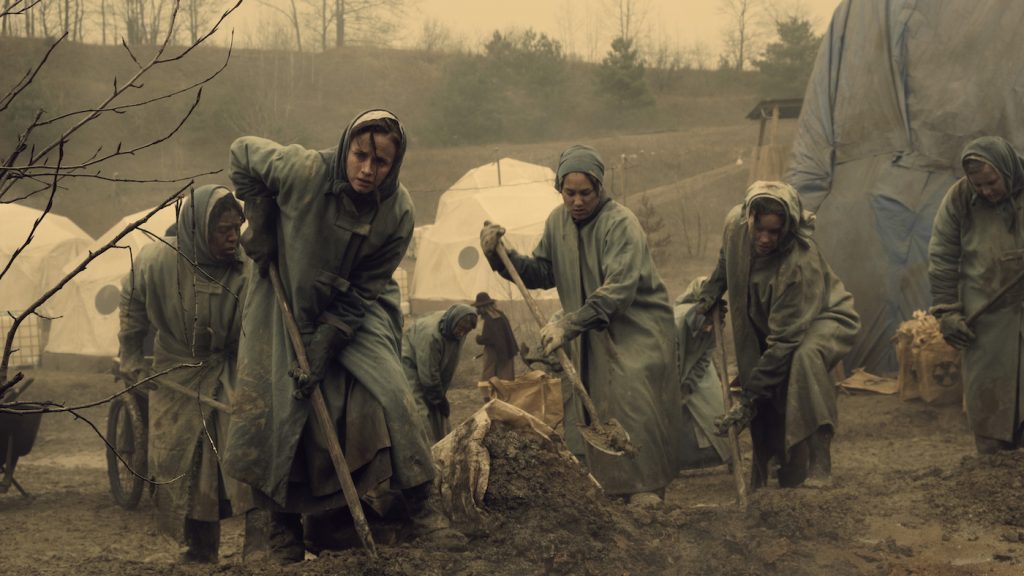
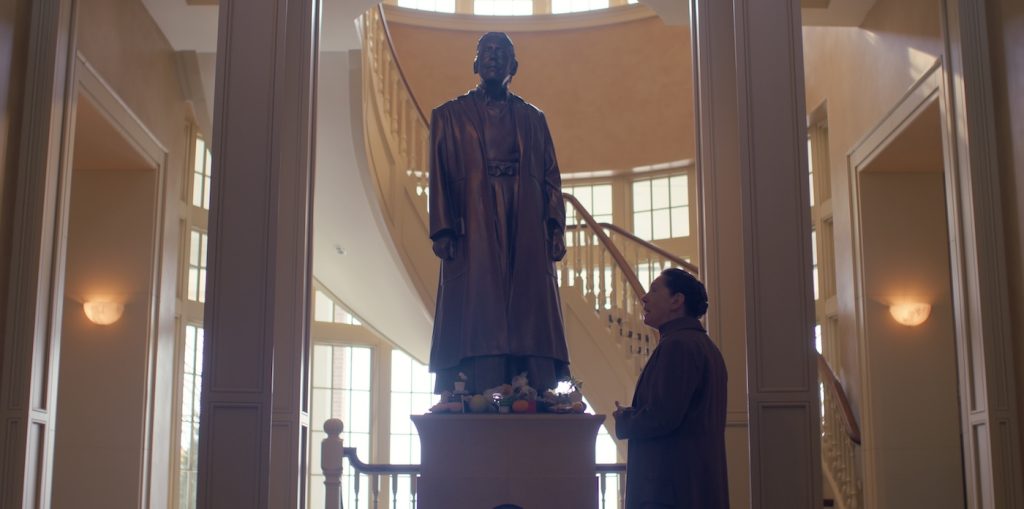
This little part of Gilead, this wealthy commander world that we’re in, is very idealized; it’s very pastoral, the light’s always beautiful. Water purification, healthy food, and the manufacturing of the honey all represent the idealized version of what Gilead was. And of course, the great storytelling in The Testaments is the cracks that we start to see in that world. We start to break that down as the system breaks down as well.
Did you read Margaret Atwood’s book going in?
Yeah, like a thousand times. All of the HODs, we read the book, and talked about it ahead of time. Bruce [Miller, series creator] uses the book as a very much a template. He obviously expands it much further. So yes, we do read the book, so we know exactly what the world is, but we really base it on the script.
How much do you look to the world around us for inspiration in directing something like this?
When we started the very first season of The Handmaid’s Tale, it coincided with Trump’s arrival. It just became incredibly relevant right at that moment. And it’s bizarre that it’s happening again on The Testaments. I mean, it’s kind of weird and frightening that it’s happening all over again. That sense of oppression, that sense of authority, unaccountability, all of that plays on in that upper level. I think what’s quite interesting about The Testaments, though, is the series is very much from these young women’s point of view. They’re defenders of the system. It’s only when Lucy’s character [Daisy] comes in that they even have a sense of what it might be outside.
What is Elisabeth Moss’s input like?
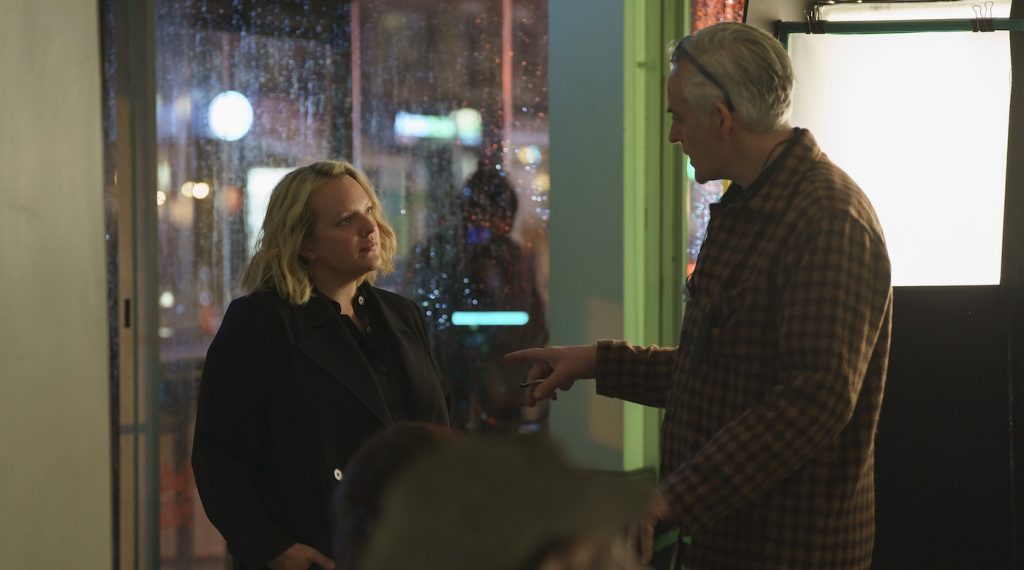
She’s always involved. She’s got great ideas. She takes her role as producer very seriously. I went down a very different path because she directed the last few episodes. There were definitely some interesting conversations about what I was trying to do differently, and that much more idealized look.
How did you deal with the jump forward in time in The Testaments?
Our little part of Gilead that we explore in these first few episodes is the most successful part of Gilead. What was great was actually leaning into the wealth, success, and duality of the men’s worlds and the girls’ existence. All of the weaving and the embroidery and the music, and all the things that these women were being prepared for—it’s a little bit like doing a period drama. But it’s quite interesting that as they’re making things cleaner in Gilead, the role of the women is regressing all the time. And of course, our young women don’t know the difference, so they’re taking real pride in their embroidery. Even though we were modernizing it as the future, we were still hanging on to and regressing on the other front, in terms of what women are allowed to do.
Featured image: THE TESTAMENTS – “First Look” of CHASE INFINITI. (Disney)