Love, Loss, & Interior Lives: The Language Behind Zosia Mackenzie’s Production Design for “The Drama”
When audiences talk about The Drama, much of the conversation centers on its tonal daring, oscillating between biting humor and emotional devastation without warning. Written and directed by Kristoffer Borgli, the film resists easy categorization, operating as a romantic black comedy that frequently veers into something far more unsettling and profound. But beneath its shifting emotional register lies a meticulously crafted visual world that quietly shapes how we understand its characters long before they say a word.
At the heart of that world is production designer Zosia Mackenzie, whose work on the film transforms spaces into psychological landscapes. Whether it’s the carefully curated apartment of engaged couple Emma (Zendaya) and Charlie (Robert Pattinson), a luminous wedding venue, or a gritty glimpse into a character’s past in New Orleans, Mackenzie’s design choices not only establish the setting but also deepen the story’s emotional resonance.
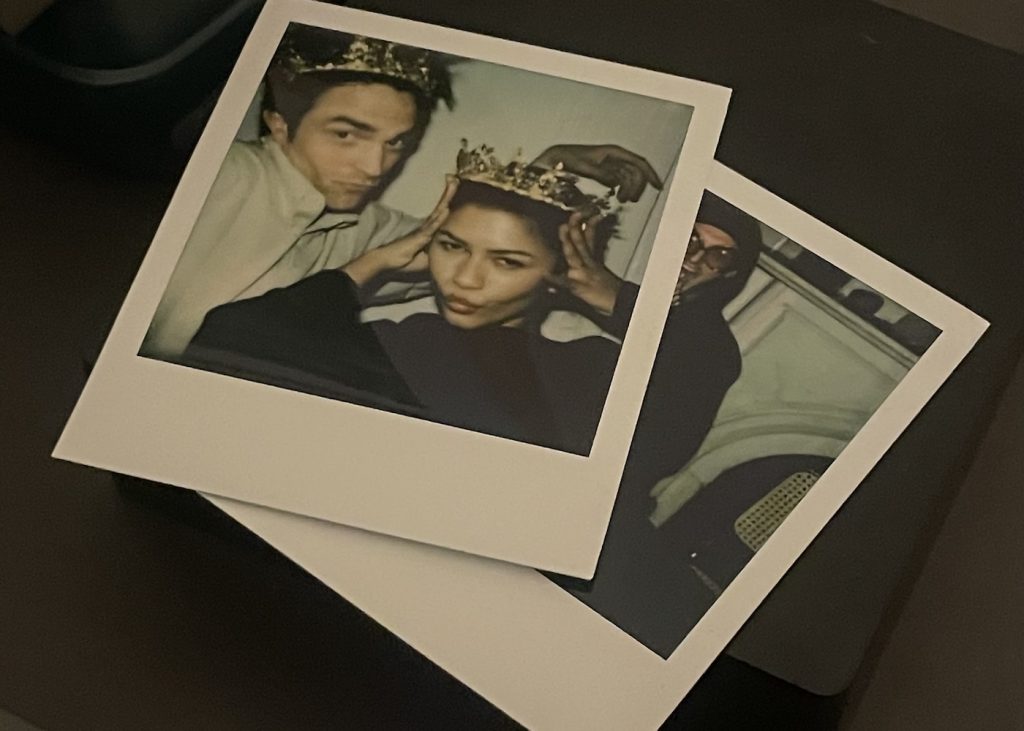
“I knew I wanted to do it definitely, immediately,” Mackenzie says of her first encounter with the project. “From speaking with Kris and knowing his previous work and our own relationship… I was like, ‘This is incredible.’ And then reading it, I was like, ‘double yep.’” That instinctive response evolved into a deeply collaborative, richly detailed design process that was equally rooted in character psychology as in aesthetics.
Mackenzie’s collaboration with Borgli began before The Drama, notably on Dream Scenario. That prior working relationship proved invaluable. “What’s kind of nice with him is that we can kind of skip that introductory phase,” she explains. “Because we already have that trust and that shorthand, we can just…start getting right into the characters and discussing them, and their backgrounds and their stories and where they’re from.” The shorthand between Borgli and Mackenzie extended beyond formal meetings, where the creative process spilled into dinners, film screenings, and long van rides while location scouting, in spaces where ideas could develop organically.
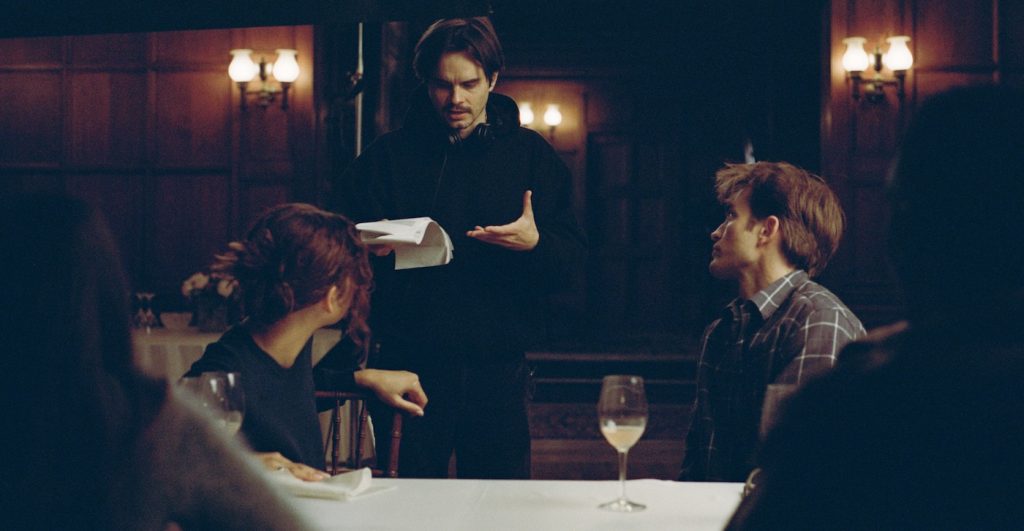
“He’s really good at bringing people together,” Mackenzie says. “So there’ll be dinners or film screenings where we kind of just keep talking and keep building it out.” The result was a production environment where design was alive, evolving, and deeply intertwined with every other creative decision.
For Mackenzie, production design begins with people rather than furniture or color palettes. “A big part of it is just diving deeper into who they are,” she says. “There are things… that even the writer or director, they’re not necessarily thinking of. Like, what food do they like to eat? What’s in their shelves, what’s in their closets?” To answer those questions, Mackenzie developed an extensive character-building process. She combed through the script repeatedly, compiling a detailed document that she shared with Borgli and other collaborators. Together, they interrogated every aspect of the characters’ lives, from their reading habits to their artistic tastes.
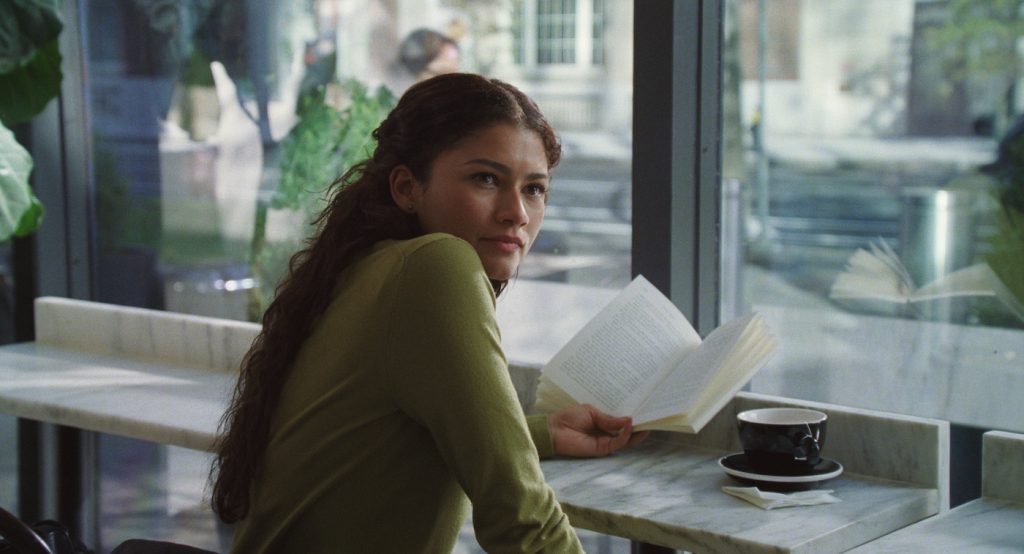
In the case of Zendaya’s Emma, that meant designing an entire professional ecosystem. “We were doing a lot of custom book covers for her publishing house,” Mackenzie explains. “There were a lot of questions there… not always going to be on the page, but they’re important.”
Mood boards followed, drawing from photography, film, and real-world references, often gathered during scouting trips. These visual collages eventually migrated from digital files to physical walls, where patterns, textures, and color palettes began to coalesce. “It all evolves pretty organically,” she says.
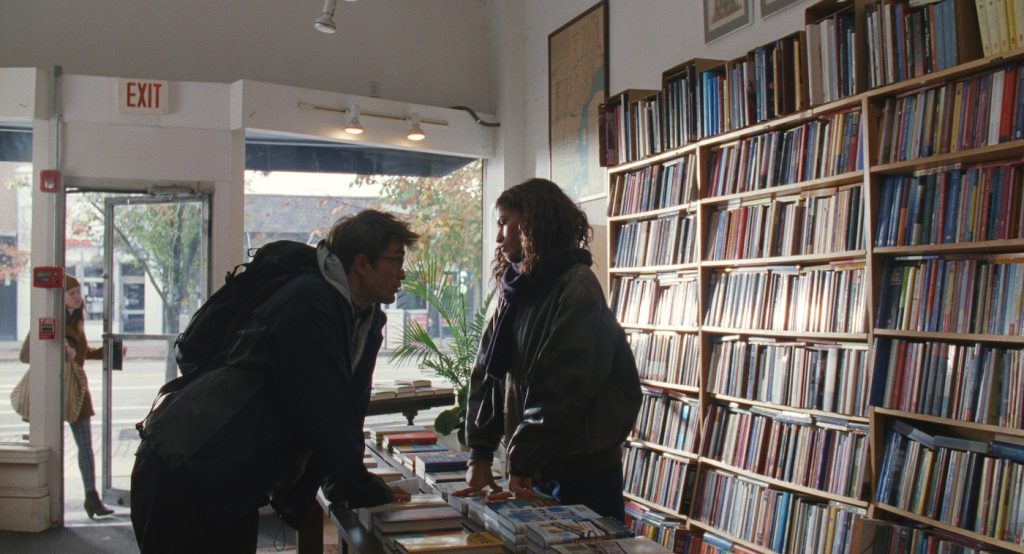
Although The Drama is emotionally universal, its sense of place is anything but generic. The film is set and largely shot in Boston, a choice that proved essential to its tone. “Boston is very historic, sort of European, and also has soul to it,” Mackenzie says. “It has that old-world elegance, and also that very cultural, intellectual vibe that made sense considering the characters.” The layered identity of the city mirrors the film itself. It’s refined yet raw, intellectual yet deeply emotional. For characters embedded in the arts, the city’s texture felt necessary.
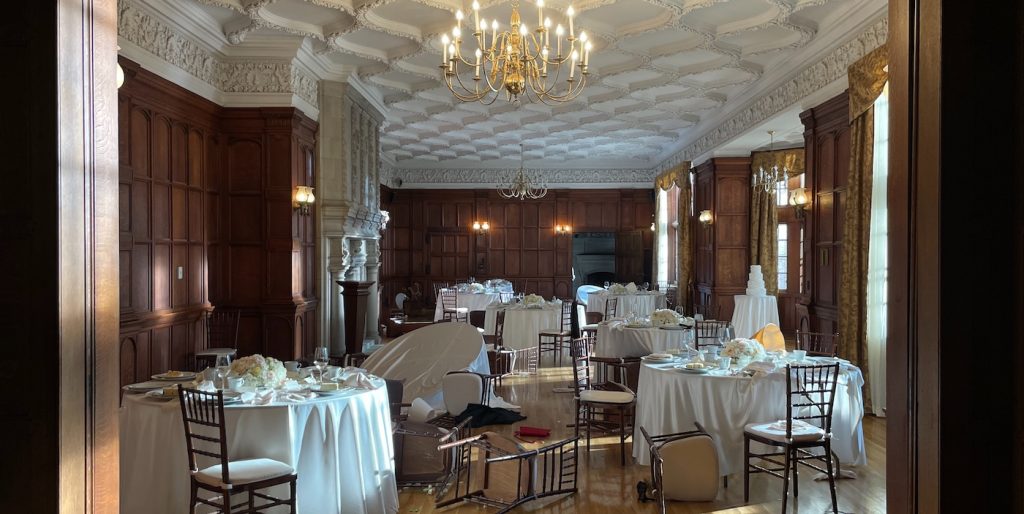
The team approached location scouting with both intuition and rigor. When a space felt right, they pursued it relentlessly, even when logistics became tricky. And nowhere was that determination more evident than in the film’s wedding venue, located at Turner Hill. “From the moment we saw the images of it, we were like, ‘That’s so perfect,’” Mackenzie recalls. “It has this very traditional, elegant, old-world vibe.”
But securing the venue was only the beginning. As a functioning event space booked months, sometimes years, in advance, it required constant negotiation and scheduling acrobatics. “We had to move in and out of there like three times,” she says. “Over about two weeks.” Each move meant dismantling and reconstructing elaborate set dressings, particularly challenging when it came to florals, which had to remain fresh across multiple shooting windows. “It was a heavy lift for all departments,” Mackenzie admits. “But I feel like… everyone was willing to maybe take that extra step to make it work.”
Even the venue’s limitations sparked creative solutions. The existing bathrooms, for instance, were windowless. So the team built a new bathroom set within the location itself, transforming an unused upstairs space into a fully functional set. “It was a big group effort,” she says. “We were working on that with construction between takes.” The final result is seamless on screen, a testament to the invisible labor behind it.
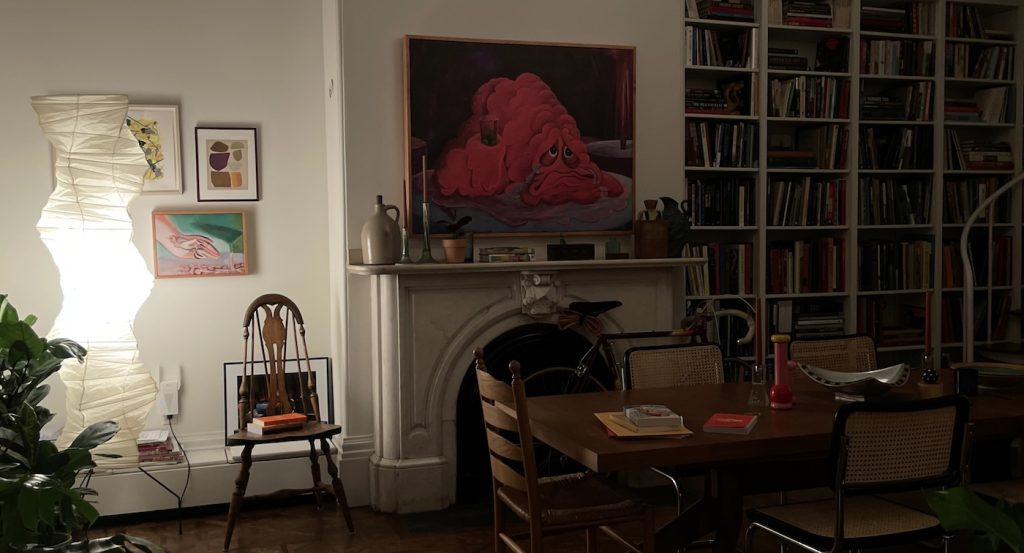
If the wedding venue represents spectacle, the couple’s apartment represents intimacy and, ultimately, emotional unraveling. “I’m most proud of the apartment,” Mackenzie says. “So much thought went into it… and it’s so important to the characters and who they are.”
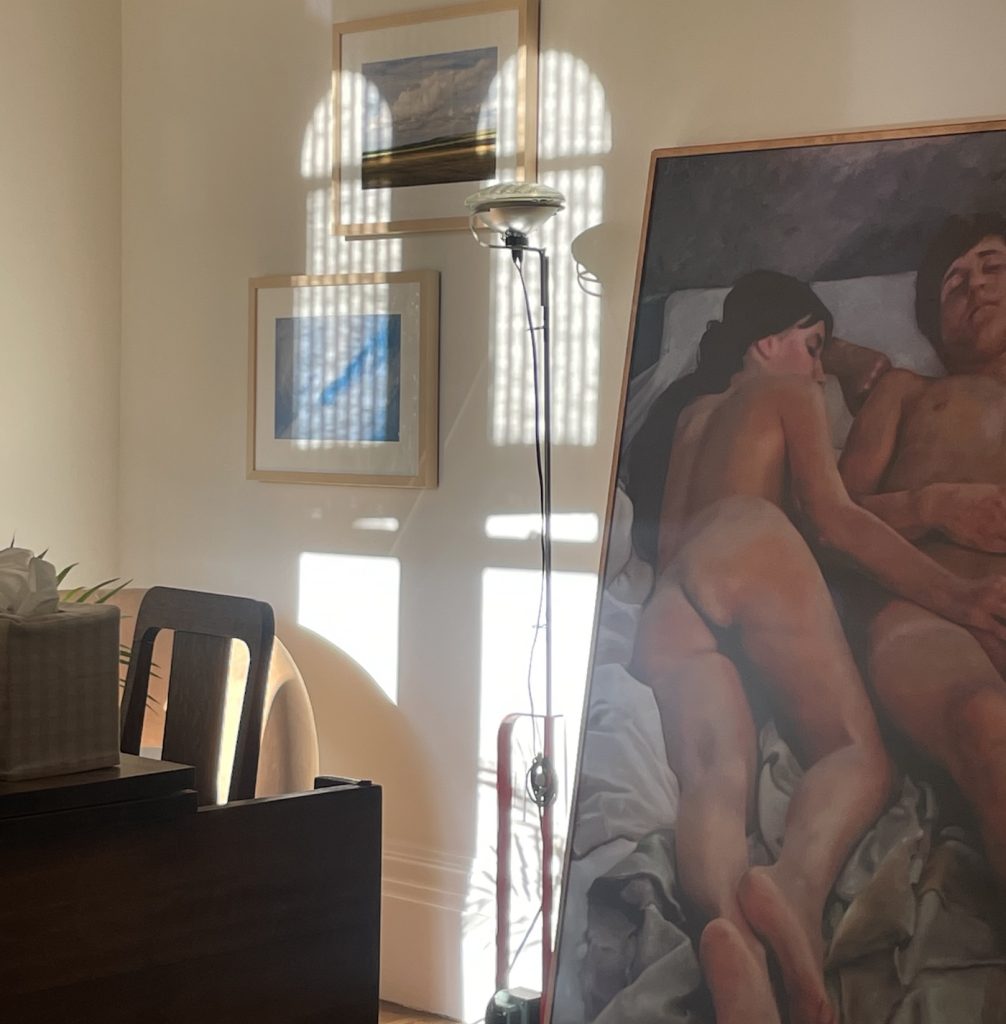
From the outset, the goal was to create a space that felt lived-in and accumulated over time. “We wanted something that felt elegant, grounded, very collected, not like they’d just gone to a shop or two and done a one-stop shop buy.” In order to achieve that authenticity, Mackenzie and her team immersed themselves in Boston’s local culture, visiting bookstores, flea markets, and furniture shops to source items that felt true to the characters. “It felt like they’d be the type of couple going to the Cambridge flea market on the weekend,” she says. “Collecting things over time.”
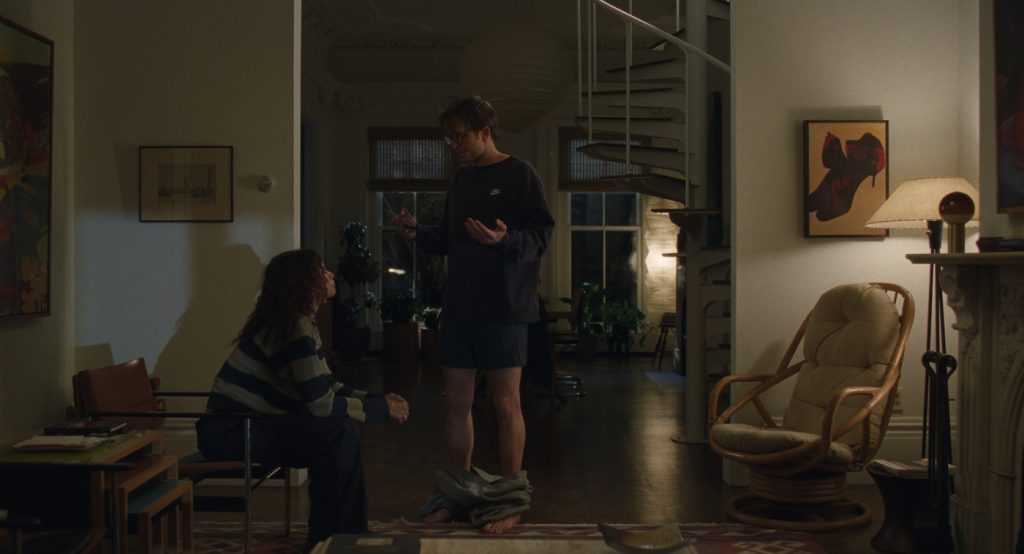
Key pieces, like a Knoll sofa and matching chairs, served as anchors, while thrifted finds and carefully selected books added texture. Unlike many productions, the team avoided generic prop rentals in favor of hand-selected items. “We really hand-picked every single book,” Mackenzie notes. “Same with the artwork: we wanted to dive into Charlie’s world as a curator.” Diving into that world meant collaborating with real artists, printing their work on canvas or linen, and constructing custom frames. The result is a home that feels deeply personal, authentic, and lived-in. Visually, the apartment’s architecture also played a crucial role. Its open layout, spiral staircase, and large windows allowed for the long, uninterrupted shots favored by Borgli. “It had these incredible sight lines,” Mackenzie says. “A lot of depth… which was so important.” That depth becomes emotionally significant, especially in moments of conflict. During the couple’s darkest emotional struggle, the apartment appears almost cavernous, amplifying the silence between the characters and heightening the tension.
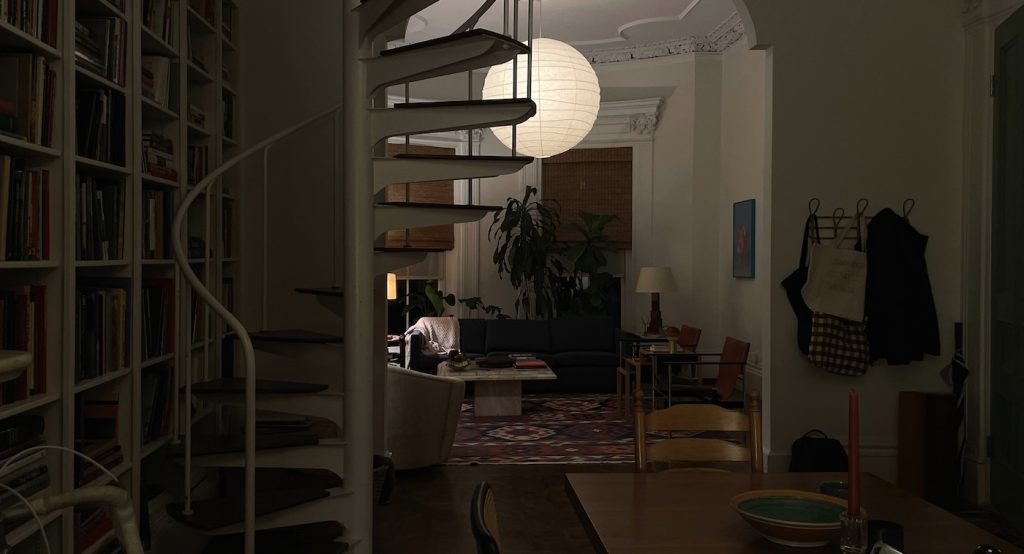
Achieving a meaningful level of cohesion required close collaboration with other departments, particularly cinematography and costume design. With cinematographer Arseni Khachaturan, the focus was on naturalism. “We spoke a lot about the importance of natural light,” Mackenzie says. “He didn’t want to light with film lights from inside… so we gave him a range of practicals.”
The apartment is filled with practical lighting sources like overhead fixtures, lamps, and ambient lighting, allowing Khachaturan to shape scenes without disrupting the set.
Costume design, led by Katina Danabassis, followed a similarly intuitive process. “She has incredible instincts,” Mackenzie says. “We didn’t need constant meetings… it was more free-flow, more organic.”
Together, these departments created a unified visual language and carefully collaborated in a cohesive aesthetic that ultimately feels effortless.
While Boston defines the characters’ present, the film also explores Emma’s past through scenes set in New Orleans. “That was really fun,” Mackenzie says. “Such a contrast to Boston.”
Where Boston is refined and muted, New Orleans is vibrant and raw. The design reflects that shift, incorporating bold colors, textured environments, and cultural references that speak to a different stage of Emma’s life. “We used Skinny Pimp and Lil Wayne posters,” she notes. “Kind of the antithesis to the more curated life they have in Boston.” The contrast is not only visual but thematic, underscoring the distance between who Emma was and who she has become.
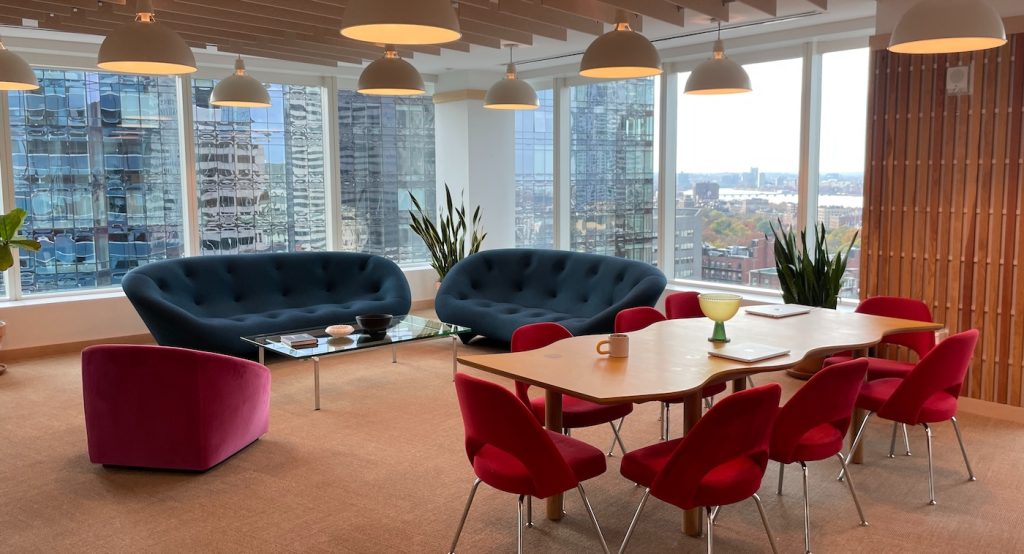
Beyond the apartment and wedding venue, Mackenzie highlights several other spaces that left a lasting impression, including Rachel’s office (Alana Haim), designed with a sharper, more contemporary edge, and the film’s final location: a diner that feels suspended in time. “It felt like an incredible time capsule to finish the film,” she says. That sense of temporal dislocation reinforces the film’s emotional arc: a longing for reset, for return, for something irretrievably lost.
Ultimately, Mackenzie sees The Drama as a film about perspective and emotional understanding. “I think the film is a lot about empathy,” she says. “About putting yourself in someone else’s shoes.” It’s a theme that extends to the production design itself. Every object, every texture, every carefully chosen location invites the audience to step into the characters’ lives. And like the film, those spaces reveal new layers with each viewing.
“Every single time I watch it, there’s some new sort of breakthrough,” Mackenzie says. “It depends so much on the audience and who you’re seeing it with.” The unpredictability of the audience’s takeaway, the way the film shifts depending on perspective, is precisely what makes it linger. As Borgli reportedly told audiences at a screening: “Laugh, cry, walk out, just feel something.”
Thanks to Mackenzie’s work, those feelings don’t exist in a vacuum. They’re embedded in walls, in objects, in light and shadow, and in a world that feels as real and complicated as the people who inhabit it.
The Drama is now playing in theaters nationwide.
Featured image: Robert Pattinson and Zendaya in “The Drama.” Courtesy A24