How Gregory Hernandez Is Bringing Independent Cinema Back to the Bronx
As CinemaCon continues in Las Vegas, where some of the most passionate advocates for the theatrical experience are unveiling new films—including Christopher Nolan, Steven Spielberg, and Tom Cruise—it’s an excellent reminder of how central the experience of going to the movie theater is to growing up, and how crucial the theaters is are as communal spaces.
That’s why this is a great week to introduce readers to Gregory Hernandez, the founder of the Bronx Independent Cinema Center. Hernandez’s mission is to reintroduce the film world to this vital borough, a historic, vibrant piece of the country’s largest city that, for too long, has been underrepresented in film and industry access. Hernandez has identified the lack of dedicated spaces for independent film screenings and networking and aims to fill the gap by creating a dedicated cinema center, which will include incubator programs and career development opportunities.
We spoke to Hernandez about his dream of restoring the Bronx’s rich theater history (it was once home to more than 100 theaters—it now has two, for a borough with 1.4 million residents), the patience required to see this vision through, and why a theater is much more than a place to watch a great film.
Gregory, thanks for joining us. To start, can you introduce yourself and explain how the Bronx Independent Cinema Center came to be?
I’m a filmmaker from the Bronx—born and raised in what is statistically the poorest congressional district in the country, just blocks away from Yankee Stadium. I grew up going to the movies on 161st Street, and when that theater closed, it really hit me. I realized we didn’t have a neighborhood movie theater anymore.
Which is shocking for a borough the size of the Bronx.
When I started looking into it, I learned there were only two movie theaters in the entire borough, serving nearly 1.4 million people. In 2022, I debuted a documentary I made about literacy in the Bronx. At the time, we only had one bookstore in the borough—we have two now—so there’s clearly a correlation between a lack of independent third spaces and access to culture and education.
Where did your doc screen?
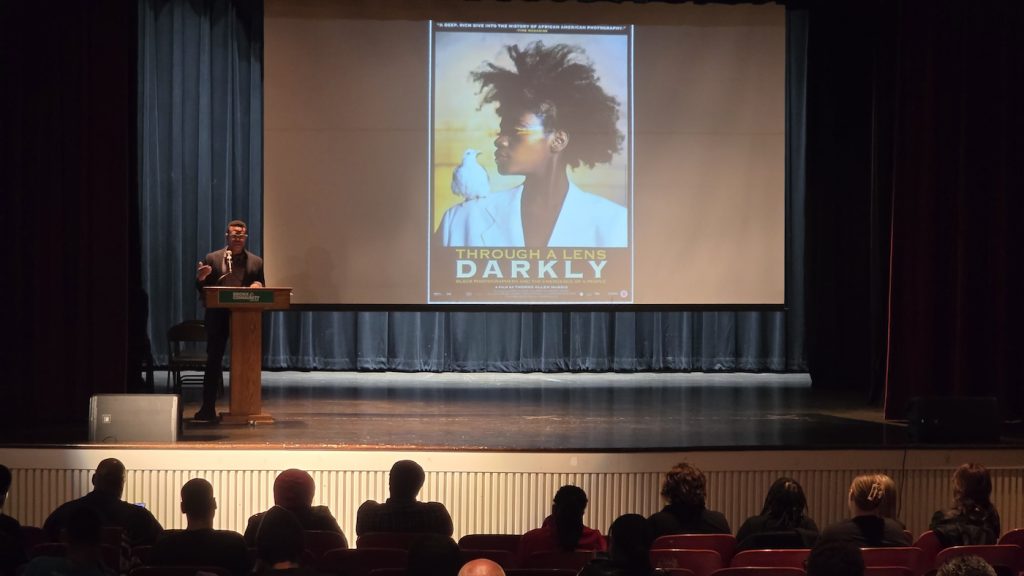
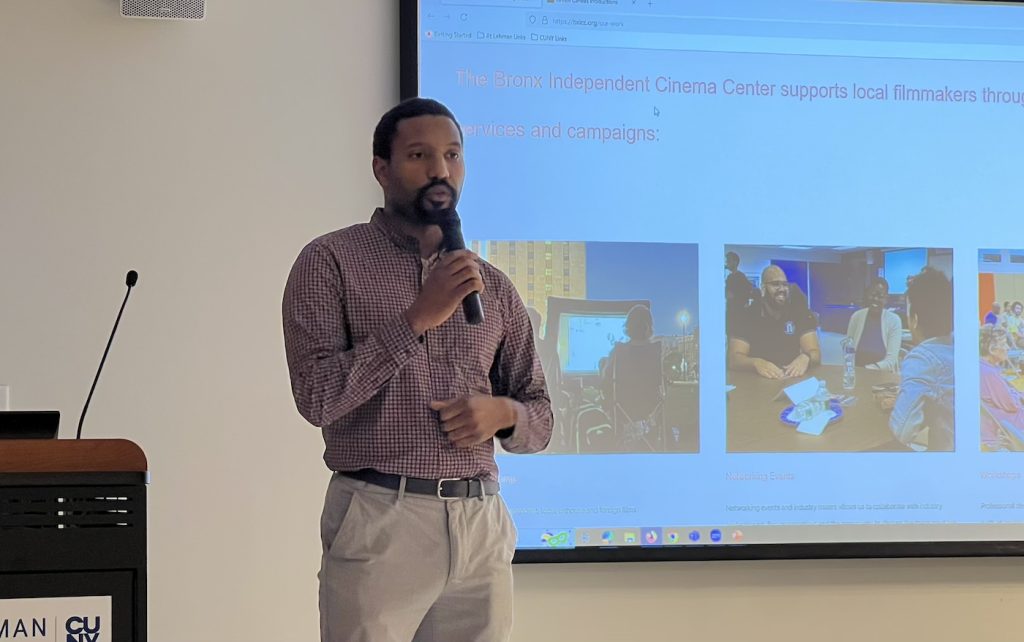
That documentary screened at an AMC in Bay Plaza, which wasn’t easy to get to. Only one theater was open then because of the pandemic, and that experience made something very clear to me: we need more spaces like this, especially for people who remember what these neighborhood theaters meant, and for younger people coming up now. That same year, I founded the Bronx Independent Cinema Center. I serve as executive director, and we’re a 501(c)(3) nonprofit. Our belief is simple: bring people together to watch films, talk about movies, history, and trivia, and connect people to careers in the industry—whether as filmmakers, film workers, or people who want to be in the orbit of the business.
Film is community. It’s education, career readiness, and workforce development. And if we don’t have spaces for local audiences to gather, how do we continue telling our stories visually?
The idea of keeping talent in the borough comes up again and again in your work. Why is that so important to you?
I know so many filmmakers who leave the Bronx because they don’t see opportunity here. So the question is: how do we keep that human capital? There’s so much raw, undeveloped talent. I have a background in workforce development, and I believe deeply in training people in different career pathways and trades—getting them certified, getting them into union pipelines, and into real industry jobs. We can talk about statistics and income levels all day, but at the end of it, I shouldn’t have to leave my borough to go to the movies. I shouldn’t have to leave my borough to train for the industry I want to work in. This is New York City. We’re one of the five boroughs. The industry needs to come uptown.
What does your long-term vision for the Cinema Center look like?
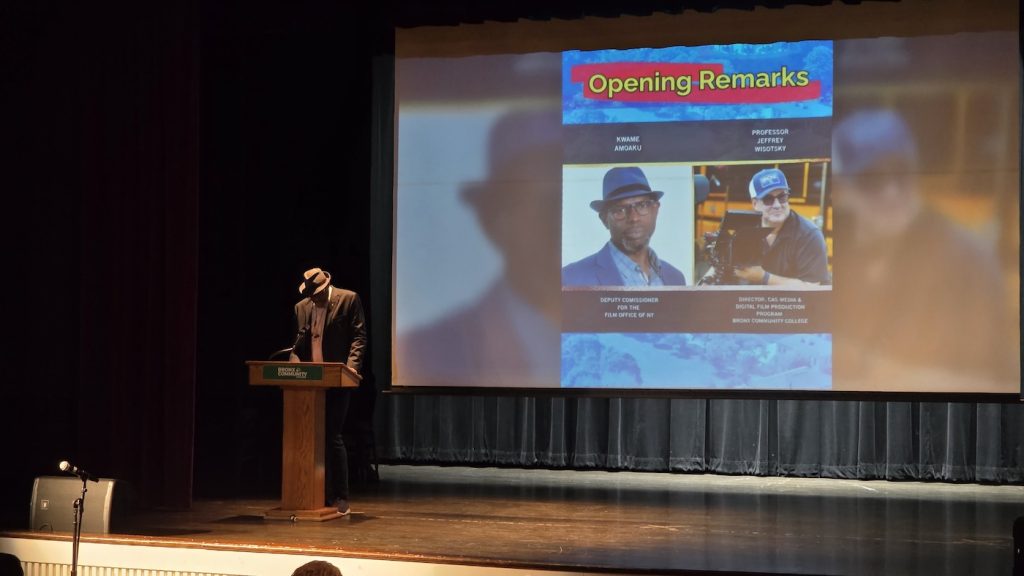
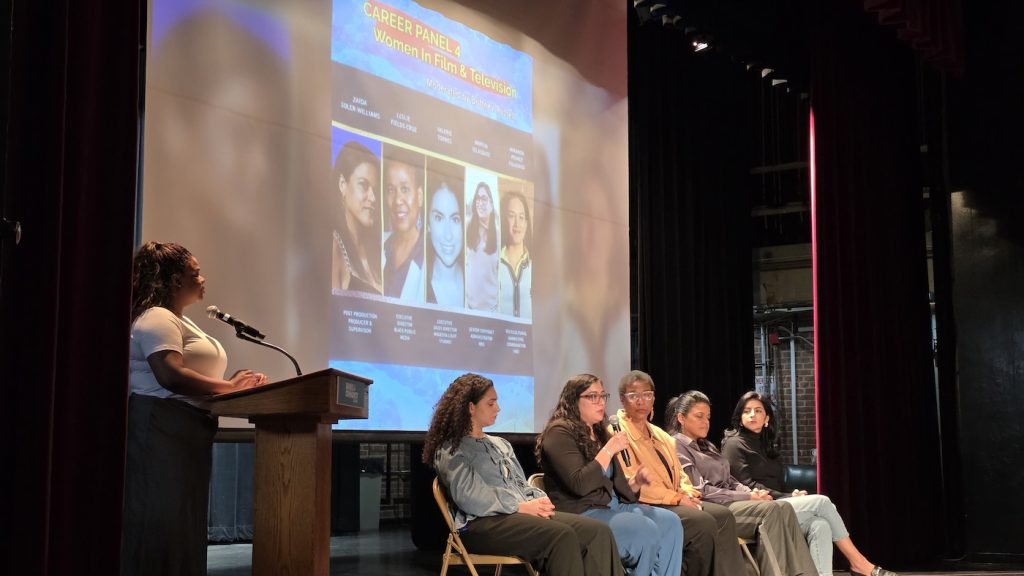
Our North Star is a dual-screen cinema: one screen dedicated to arthouse and local independent films, and another for commercial and classic films. But it’s more than a theater. It’s a space for exhibition, career development, and community engagement. We’re now in our fourth year. We’ve done indoor and outdoor screenings, workshops, series, and one-off events, fireside chats with industry professionals, career expos, and panels. We’ve brought the industry to the Bronx. Now we need to build something permanent.
How are you approaching finding a permanent space?
We’re talking with churches and community centers that aren’t in use and exploring how to convert them. I’m a homeowner in the Bronx—I’m staying here. I believe this can be a viable engine for economic and workforce development. It can boost tourism. We could host major festivals here. We’re already doing Bronx Film Week, and we want to establish a full Bronx Film Festival. If you’re a filmmaker from the Bronx, your film should be able to premiere here. We can be a first-run cinema center that’s educational, entertaining, and part of a vibrant workforce pipeline.
Have you spoken with other independent cinema leaders as you work toward that goal?
Yes. I’ve spoken with folks at BAM Film Forum, IFC, and Stewart Cinema. Emmeline Stewart, who runs a dual-screen theater, recently moved from Greenpoint to Long Island City. I’ve talked with the Maysles Documentary Center in Harlem, the Long Island Cinema Arts Center, and even driven up to Bedford Playhouse. There are also vibrant Black-owned cinemas in Maryland and Baltimore that people should really check out. I also want to shout out people like Eileen Lovell in Canarsie and Melissa Lide of Alfredo Cinema in Brooklyn. Karma is creating a cinema focused on short films. I think we’re seeing a real resurgence—maybe even a renaissance—where people realize they can watch at home, but they can also go to a curated local theater and experience something communal.
Where are you operating from now?
We currently operate out of an incubator space through a college. We have office space and run screenings, workshops, and a monthly film club there. We’ve identified four potential locations in the Bronx and spoken with all the owners. Three don’t want to sell.
The fourth—where we’ve put all our chips—is a former church space in the Tremont area that could operate as a single-screen cinema. It would be our first home. It’s about a million dollars to acquire.
We’re working with Senator Kirsten Gillibrand’s team to apply for congressional direct spending. The plan is in three phases: acquire the property, apply for capital funding to renovate it, and then secure additional funding—whether from elected officials, banks, or loans—to make it viable in the long term. If things align, we hope to move out of the incubator and into our own space by the end of this fiscal year. With additional capital funding, we could fully build out a robust cinema center.
What has it been like advocating for this project at the city and state levels?
You’ve got to put on every hat. I was in Albany shaking hands with elected officials, and everyone has different priorities. Some focus on healthcare, veterans, mental health, and housing. You have to make the case that this supports entrepreneurship, workforce development, and economic growth. I even had an assembly member look at me and say, “You’re the theater guy.” And I had to respond: “It’s not just a theater—it’s more than a theater.”
It’s a process that sounds like it requires considerable patience and perseverance.
People doubt you at first. Then they start to know you. Then they take you seriously. Consultants told me nonprofits really need to pass that three-year benchmark. Now we’re in year four, with three tax returns. Elected officials know who we are. City Council has funded us before. They’ve attended our events. We’re building a reputation in real time.
How do you keep going when funding doesn’t come through right away?
I still work other jobs. Nobody is on a salary. If I stop, everything stops. So it’s about patience and pragmatism. I don’t treat “no” as no—I treat it as “not yet.” We ask for feedback. We improve. We ask the community who’s good at grants, who knows who. We’re trying to connect with people like Kerry Washington, Julia Garner—anyone who believes in this mission. An independent theater is democratic. Every generation can come. You can see a new franchise movie or a restored classic you never got to experience in theaters. That communal experience is essential.
What’s your current team like?
We focus on partnership and delegation. My colleague Bernadette Mahoney leads our history-of-cinema project. Our volunteer Gordon Taft leads research and assessments. We work with Fordham University, Monroe, CUNY, and the Bronx Historical Society. We’re also realistic: we need funding for operations, for capital, and for programming. Even as a nonprofit, it’s a business model—ticket sales, space rentals, tours, education, and content creation. This is why we’re constantly refining our pitch deck and strengthening our data. Before the end of the decade, I believe we’ll have our forever home—a multi-screen cinema that truly belongs to the Bronx.
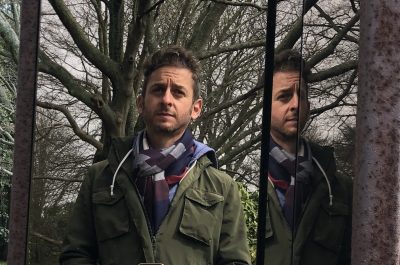
Featured image: Gregory Hernandez.