
How “Sinners” Oscar‑Nominated Editor Michael P. Shawver Carved Ryan Coogler’s Beautiful Chaos Into Pure Cinema
When you see a truly great film in a movie theater, if you’re anything like me, you’re simultaneously hyper-engaged and reduced to a kind of sentient sponge. I miss stuff. A lot of stuff. The first time I saw Ryan Coogler’s Sinners, I was mesmerized into a kind of satiated stupor. The film was clearly the work of an artist in full command not only of his own gifts but also of the many gifts of his cast and crew. I knew I’d need to see it again, and soon, to savor all of the work that left me dumbstruck.
On a film as good as Sinners, one of the chief pieces of magic is how something made on location, in the fecund, radiant heat of a Louisiana summer, no less, with almost comically extreme technical challenges (Michael B. Jordan playing a pair of twins, for starters), feels to the viewer like a perfectly synchronized, rapturous cinematic whole. Everything fits together. All elements, from the costumes to the cinematography to the production and sound design to the effects, both practical and visual, blend seamlessly into a coherent, cogent singular piece of narrative art. What the viewer is in the dark about is how something so finely made could be conjured from what would, to an outside observer who somehow managed to find themselves on set, look like total or at least partial chaos.
Oscar-nominated editor Michael P. Shawver is in the business of turning chaos into coherence, of stitching, beat by beat, shot by shot, a story that flows over you, through you, like a great piece of music. And because Shawver was on location in Louisiana for part of the shoot, he was there in the buzzing, biting heat of the production.
“I’m typically editing somewhere on location for Ryan’s movies,” Shawver tells me. He’s been working with Coogler since his breakout film, Fruitvale Station, in 2013, after they met at USC School of Cinematic Arts, and has edited every single one of his movies since. “As life unfolds — my son’s getting older, he’s in Little League — I have started pushing to travel less so I can be around. I’d just made that decision when Ryan said, “Hey, I need you to come out.”
The request was made because of the unusual nature of Coogler’s project. Despite having directed the mammoth blockbusters Black Panther and Black Panther: Wakanda Forever, Coogler’s Sinners was his most ambitious project yet. Deeply personal and devilishly original, featuring Michael B. Jordan twice over, Coogler needed Shawver there to keep an eye on key details. Hero shots, coverage, crucial, connective beats, and ensuring that, because Coogler shot Sinners on film, they were not missing anything that Shawver would need later, but that might be hard to recapture.
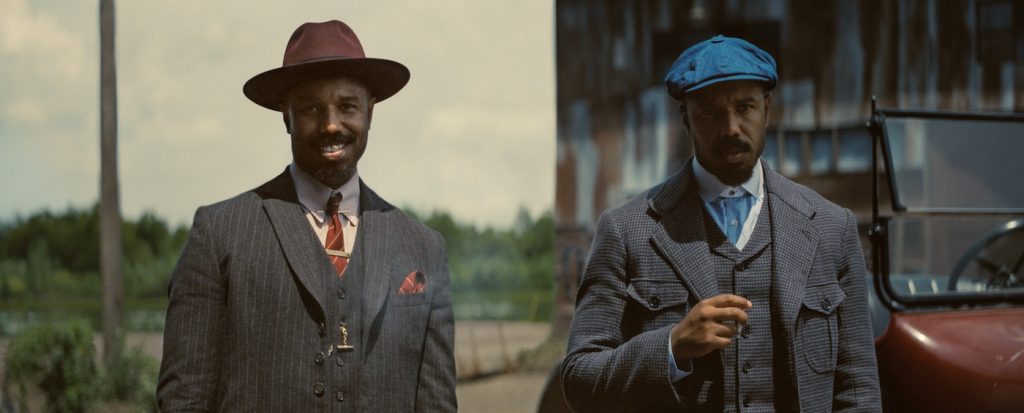
“Film has a different relationship with light,” Shawver says, “and we were shooting in Bayou locations, battling sunlight. Ryan and the team had to make decisions in the moment instead of having the luxury of waiting for the editing room.”
Shawver and his team assembled their Avid setup beneath a tent. They were watching the monitors, getting the film that Coogler and his cinematographer, Autumn Durald Arkapaw, had already shot, cutting those scenes, and talking with Coogler about takes.

A movie set, especially one shot on location in an environment as unpredictable as Louisiana, is an unruly thing, even with the most seasoned team. One of Coogler’s many strengths is the relationships he’s built with his closest collaborators, including production designer Hannah Beachler, aforementioned cinematographer Autumn Durald Arkapaw, composer Ludwig Göransson, and costume designer Ruth E. Carter. After every take, any one of them, or any number of other department heads, might have a question, or twelve ,for Coogler, who needs to have answers ready, while keeping his eye on the bigger picture, which always includes making sure they make the day so they can stay on schedule. Shawver was there specifically to give Coogler crucial information, and the director is well beloved by his peers for his warmth and focus, but that doesn’t mean it’s not a little intimidating to step up and say, “Wait, we might need to do that again.”
What Shawver could rely on was his rapport with Coogler and his deep understanding of his aesthetics and instincts. “After so many years of notes and revisions, I know what he looks for and what he wants to feel,” he says. “My job is to represent what the movie will feel like at the end of the day. That’s tough on set — it’s hot, there are bugs and alligators, there’s pressure to make the day. I’d be in front of the monitor trying to shut everything out and take the footage in the same way I would in an editing room.”
One of Shawver’s techniques to keep calm and focused while on set? He buys a pair of Ugg slippers for every film.
“I want to be physically comfortable — it helps me drop into that dream state.”
It’s not just the department heads, of course, who need to speak to Coogler; it’s first and foremost his performers.
“After a take, Ryan talks to the actors first — they’re the most vulnerable — then camera, sound, everyone else, Zinzi (his producing partner and wife). Once he’s free, or through a producer like Zinzi or the script supervisor, I’d relay thoughts: ‘What if he takes a beat here?’ or ‘Can we try this other angle?’ I had free rein to express what I was feeling in the moment.”
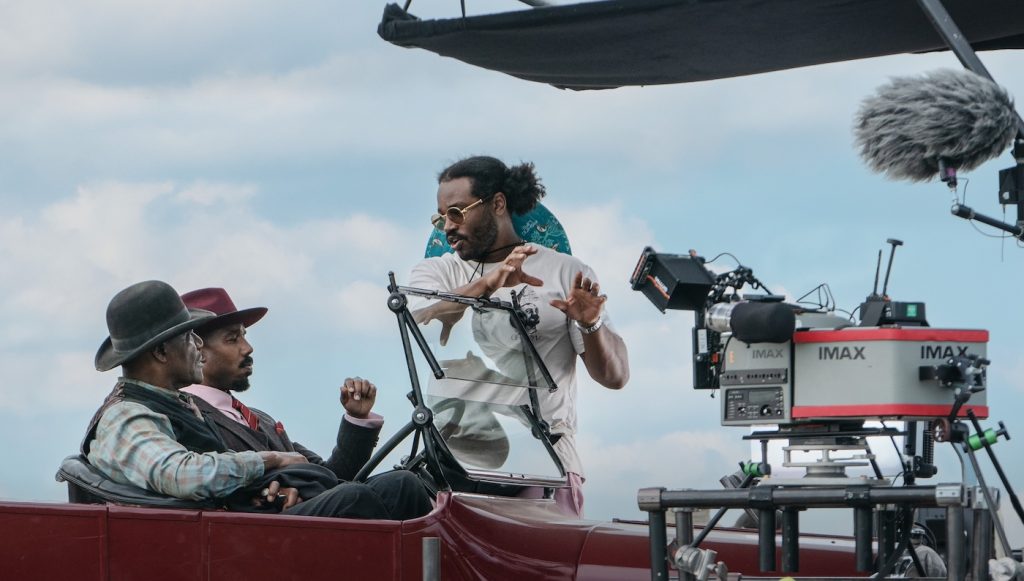
Shawver is not only trying to protect what the movie will ultimately be, but also his own needs when he’s back in the editing suite.
“You never want to hold back an idea out of fear, because if you’re in the editing room later wishing you had a shot that would make the scene work, you’re kicking yourself. When you’re an editor on set, you’re representing your future self. So it was about cutting through the chaos and focusing on the story and the relationships.”
Day Zero on filming Sinners was actually the film’s last scene, with the blues legend Buddy Guy on set, a fitting person to set the stage for a film that’s soaked in the blues, in ideas of creative ownership and the intermingling legacies of music past, present, and future. Shawver said that Guy gave the cast and crew an impromptu concert after filming his scenes. They were ready to go.
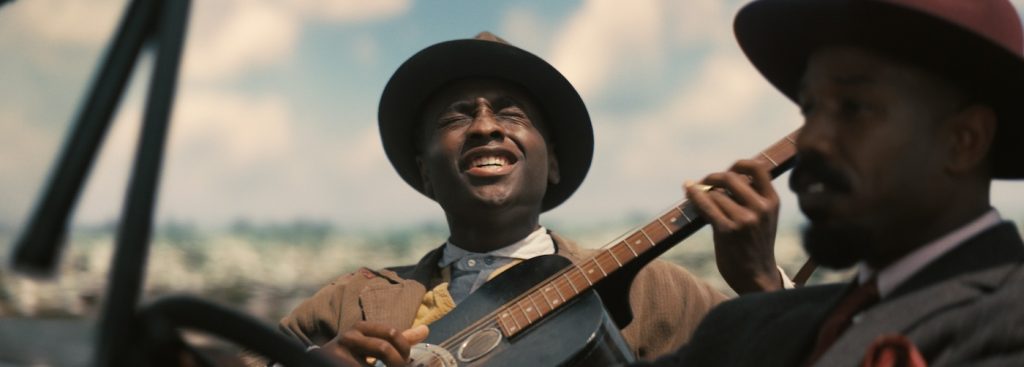
“Another day I remember well was when Sammy and Stack were in the car, and Sammy sang,” Shawver says. “That was the first time I’d heard Miles’s voice. I learned he’d never acted before and learned guitar for the movie. Hearing that timeless voice coming from such a young, hopeful character — that’s magic.”
Sinners was as close to a literal labor of love as a film set can get. Coogler has taken the biggest swing of his career, putting all the chips he’d earned from his blockbusters like Creed and the Black Panther franchise into the center of the table to make his passion project, a period vampire thriller that is so much more than that paltry label can describe. As they launched headlong into their ambitious project, Coogler instinctively felt the cast and crew needed a pick-me-up. He turned to Shawver.
“There was one day when Ryan asked if I could cut together a sizzle reel — to boost morale because we were heading into hard night shoots and people were getting fatigued,” Shawver says. “He wanted something five to ten minutes long. He asked me at 10:30 a.m. and said he wanted it by 6 p.m.”
This was going to be a tall order under an extreme time crunch in the middle of a shoot. But Shawver knew he’d never say no to Coogler, and he also knew Coogler was right.
“I went back to the editing room, blacked out, and just cut. Not to show off, but to give the crew something meaningful. We screened it as people wrapped, and the response was incredible — it lit everyone up again,” he says. “They even had to set up a special room the next day for the crew to watch it because so many people were coming. That reaction told me we had something special.”
One memorable scene involved the lovable Cornbread (Omar Benson Miller), who makes the mistake of going out for a pee, unaware that Remmick and his newly turned vampires, Joan (Lola Kirk) and Bert (Peter Dreimanis), are outside with him. We never see the moment Cornbread is bitten, which makes his trying to get back into the Juke Joint so unsettling.
“One change that affected everything with that scene is, originally, when Cornbread went out to pee, Joan — one of the vampires — appeared and blew out a lantern, signaling he’s doomed,” Shawver says. “I removed that in my first cut. Ryan wanted to put it back, but I said: If the audience doesn’t know, it’s better. They’re in the characters’ shoes.”
“Choosing shots that heighten awareness — a low side angle of Cornbread shifting his eyes, for example — makes the audience feel like they’re catching something the characters might not,” Shawver continues. “Comedy and fear break the tension in similar ways. My favorite cut is when we hit a moment where everyone inside realizes something is off with Cornbread, and we cut to Delta Slim [Oscar-nominee Delroy Lindo] taking a drink. It always gets a laugh because it’s so relatable. Scenes like that depend entirely on what the audience knows, what they’re anticipating, and where they’re looking. The relationship between the audience and the movie has to be strong in those moments.”
That’s the thing about seeing a great film for the first time: it conceals as much as it reveals, and it’s not until the second or third viewing that you start to notice details you’d missed. Brilliant touches, choices that kept you locked into the story and unable to sit back and analyze. Shawver spelled out one of the many things I’d missed during one of the film’s most emotionally resonant, mesmerizing sequences at the Juke Joint, with the revelers’ exuberant music opening up a portal between the physical, supernatural, and ancestral realms, and, in the process, drawing Remmick and his newly minted vampire acolytes toward them.
“My favorite overall sequence is the ‘Pale, Pale Moon’ sequence in the middle of the film. [It’s the moment at the Juke Joint when Pearline, played by Jayme Lawson, begins performing the song, which starts out sultry and bluesy before becoming a beautifully intense, collective rhythmic performance.] It’s when everything shifts from good to bad,” Shawver says. “It was scripted differently — there was a whole other performance originally — and the assembled footage ran four times longer than the song…”
“We had to get very selective,” he continues. “That sequence kicks off the genre shift. We’re match-cutting Remmick jumping in the air to Pearline jumping onstage and screeching—it supercharged the moment. There’s a restraint in the movie — we don’t overexplain. Once the characters are set up, we can play with the audience’s imagination. In that sequence, fear and anticipation build as the audience keeps track of where everyone is.”
Coogler asked Shawver to cut the entire sequence to the exact length of the song, meaning assembling hundreds of shots from multiple angles into a beat-perfect, meticulously synchronized sequence.
“My compass was what spiritually worked — action matches, emotional matches,” Shawver says. “When Pearline stomped onstage, there was a shot of her feet and the shaky camera that matched perfectly with Stack and Mary [Hailee Steinfeld] in the back room. Those connections elevated everything. That whole sequence is my favorite — the emotional build, the tension, the moment everything goes wrong. You love these characters, and now you’re terrified for them.”
Sinners is streaming on HBO Max.
Featured image: Caption: WUNMI MOSAKU as Annie and MICHAEL B. JORDAN as Stack in Warner Bros. Pictures’ “SINNERS,” a Warner Bros. Pictures release. Photo Credit: Courtesy of Warner Bros. Pictures