From “Dune” to “The Last of Us”: How Formosa Group Elevates Storytelling through Sound
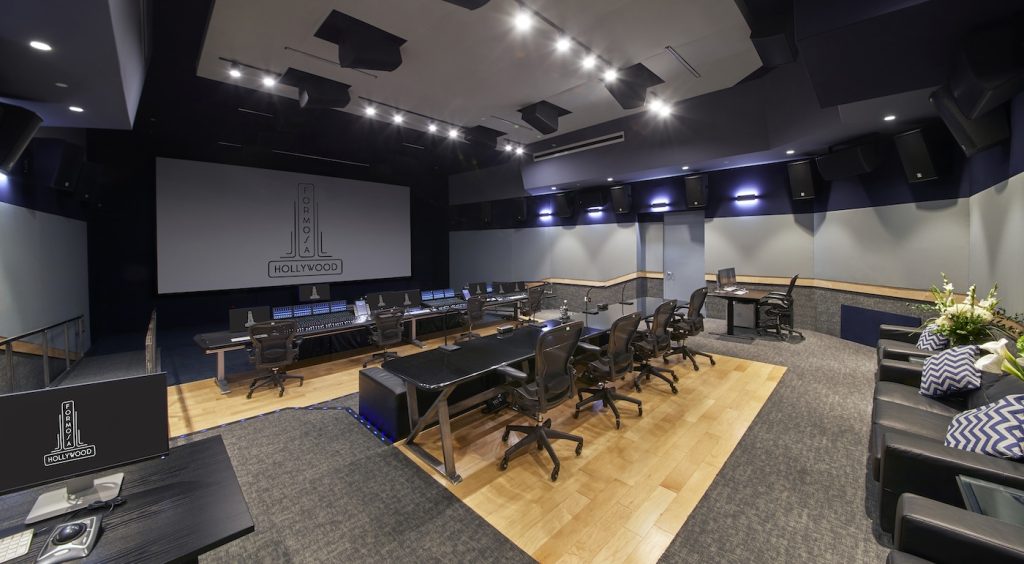
Robert Bresson, a legendary figure in French cinema, once said, “The eye sees better when the sound is great.” Since 2013, Formosa Group has brought sound to life on thousands of film, television, and music projects, creating immersive storytelling that deepens emotional impact through craft and innovation. Industry vet Bob Rosenthal established the postproduction facility, conceiving it as “a singular destination for artists to render their inspiring work within a collaborative and supportive home.”
Today, Formosa has locations in Los Angeles and New York and is home to a talented list of sound supervisors, sound designers, rerecording mixers, ADR mixers, and field recordists whose work has earned Oscars, Emmys, BAFTAs, MPSE Golden Reel Awards, and Cinema Audio Society honors. Among its credits are Sean Baker’s Anora, Denis Villeneuve’s Dune, the John Wick franchise (including Ana De Armas’ Ballerina spinoff), HBO’s The Last of Us, Game of Thrones, and Apple’s Masters of the Air.
As part of its parent company, Streamland Media – home to Picture Shop, Ghost VFX, Picture Head, and Ingenuity Studios – Formosa continues to impact the entertainment industry through aural storytelling while also supporting job creation, local economies, and the global creative ecosystem. The Credits sat down with COO Matt Dubin, who’s been with Formosa since the start, to discuss growth, the influence of sound, and the state of the industry.
Formosa Group has long been a foundational name in sound. How has your strategy evolved over the years to remain relevant and influential in the industry?
It’s a 13-year story, and in the beginning, it was a handful of us just rolling up our sleeves to build the business. I think our approach is to maintain an entrepreneurial perspective throughout. Some of the growth has been through acquisition, but most of it was guided by growing organically, by building what was needed, whether it is a new division or location to service the needs of our clients. Trying to maintain that organic perspective has been a guiding principle for both Bob [Rosenthal] and I, and other leaders at Formosa Group like Jackie Jones, who leads Broadcast and Leigh Kotkin, who runs Music editorial.
At the heart of the work are the creators and the stories you help tell. How does Formosa nurture long-standing relationships while continuing to seek out and support new voices?
The strategy, and this has been from the beginning, is with our talent. Many of our sound artists are at the peak of their careers or are highly sought after, and they already have relationships with filmmakers. So, we help to make sure they are plugged in and are attached to those relationships. But we’re also building and fostering expansiveness for them. We are always looking to build relationships with new filmmakers, and we focus on developing new talent and building teams with generational, gender, and racial diversity. It’s about matching the right people internally and externally.
What impact did Streamland Media’s 2021 acquisition of Technicolor Post have on Formosa Group’s structure, strategy, or direction?
Technicolor shifted from being a competitor to becoming a challenge we had to solve—specifically, how to absorb that infrastructure, integrate it into our own, and make it successful. More broadly, the industry remains in a fragile state—not just sound, but the entire post-production process. After COVID, demand surged to the point where capacity was maxed out, and talent was hard to find. Then strikes disrupted that momentum, and the industry is still recovering. We’ve adjusted our footprint as needed to continue our success in the business.
Now that California’s film tax incentive has been extended through 2030, are you starting to feel its impact on productions or client decisions?
It’s a significant piece of legislation that people worked really hard on. Fortunately, and for all the right reasons, I think the legislators got it right. It’s why Formosa Group wanted to be part of the California Production Coalition. I went to Sacramento to help and joined meetings in Los Angeles. It really is meaningful and helps level California production. We have locations elsewhere, but our largest infrastructure and the majority of our workforce are here in Los Angeles. We were really excited and happy for the community, as it’s very important to keep pace with Georgia, New York, and the many other destinations with strong incentive programs. And while the new legislation has not yet trickled down to post sound, we are seeing them start to hit productions. Local productions are picking up, which is great news and will unquestionably help.
What advice would you offer on the importance of sound in storytelling, and how working with a team like Formosa Group can enhance a project?
I’m still a fan of quoting George Lucas, who said sound is 50% of the film. And obviously we believe that. Emotionally, if you take sound out, you realize its importance. And that’s what we always try to stress to our clients or prospective clients. At Formosa Group, we treat sound as a storytelling tool, not a final step. We use sound to shape emotion, perspective, and immersion—helping filmmakers tell richer, more impactful stories than visuals alone can achieve.
Formosa Group has collaborated on countless film and television projects over the years. Are there particular works that helped define the company’s culture or philosophy around sound?
I recently came across our awards stats and learned that we’ve had 65 Emmy nominations in the last 5 years, and 5 Oscar nominations in 7 years. As remarkable as that is, our greatest measure of success is the lasting relationships we build with filmmakers who keep coming back. Among them are the John Wick and Fast & Furious franchises. We are also quite proud of Masters of the Air, The Last of Us series, Dune, The Pitt, and Only Murders in the Building, among others.
This article is part of an ongoing series that raises awareness about businesses in the film and television community. Formosa Group is a member of the California Production Coalition. The series includes:
\
Featured image: Zendaya is Chain in “Dune: Part Two.” Courtesy Warner Bros.