“Avatar: Fire and Ash” Scene-Stealer Oona Chaplin on Creating the Captivating, Vengeful Varang
If ever there was an actor more perfectly aligned with the ethos of James Cameron and the world of Pandora, it’s Oona Chaplin. Chaplin’s first conversation with Cameron revolved around biodynamic and organic farming. She is an activist and environmentalist whose humanitarian efforts span from Brazil, Cuba, Chile, Mexico, and beyond. She’s volunteered in refugee camps and supported film education for Saharawi refugees through the FiSahara Festival.
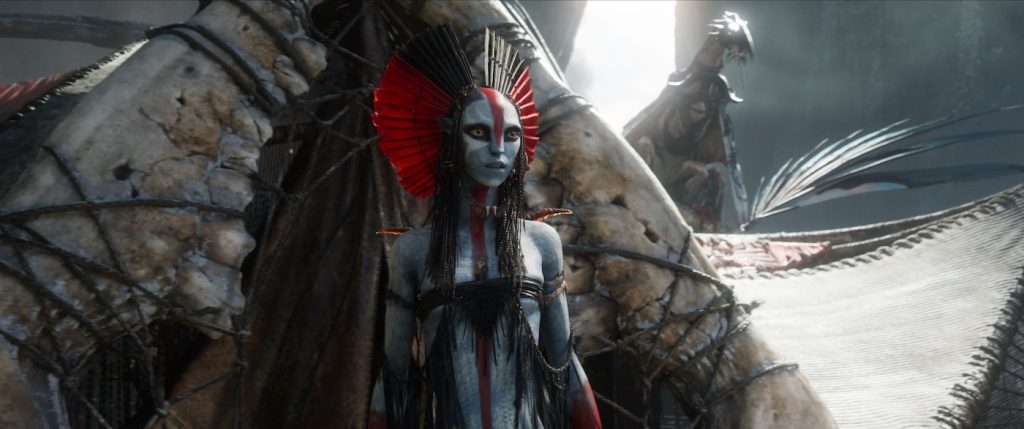
In Avatar: Fire and Ash, Chaplin plays the leader of the Mangkwan Clan, Varang. She’s a warrior consumed with anger and loss. While the Na’vi worship their deity, Eywa, she resents “Great Mother” for the destruction of her home.
Chaplin, who lives on a 20-acre farm within a broader community, recently spoke with The Credits about defining the rich antagonist and her continued work supporting Indigenous communities.
How’d your first meeting with James Cameron go? Being environmentalists, was there an instant connection?
We talked about potassium in the soil and how alfalfa brings potassium. I was, at the time, taking a 180-degree turn from a lot of things. I built myself a tree house in the jungle in Cuba. I was hellbent on living there by myself and with a friend. I’m not there anymore, and I’m very glad for it, although it was a very fundamental theme of my life. But we talked about that, really, and how to grow food responsibly, and trying to understand how to build soil. That was probably 40 minutes of our conversation.
That must be a good note to start on, right?
Yeah, come on, the guy speaks my language.
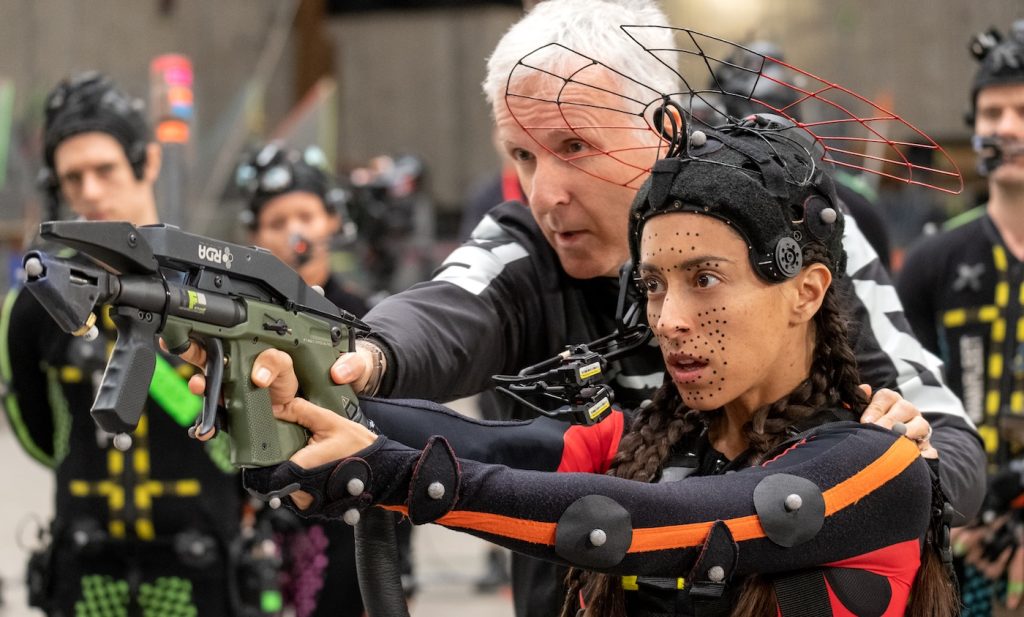
Do you two discuss the technical side of motion capture and the creation of the world of Avatar?
That’s the great thing about performance capture: you don’t have to worry about any of the lights. You don’t have to worry about camera angles. You don’t have to worry because they’re catching it all in three. It’s like a permanent close-up the entire time. You have a lot of freedom as an actress or as an actor to be in the moment, and they’ll catch whatever they want in post.
How’d you prepare to create Varang’s unique body language, especially how she leads her people into battle?
There was a lot around being able to move in a natural way, which we, as human beings, I’ve realized how unnaturally I move. We spend so much time sitting down. There’s no other creature in nature that spends that much time sitting down. When we walk, we walk with shoes that are too tight. Suddenly, it was just embodying my human form in a whole new way, using my knees constantly up and down and constantly going. Using the full breadth of my limbs was really fun.
How’d Varang’s backstory influence how she moved?
It was all about closing around the heart, because she’s got a lot of trauma, a lot of pain in her heart because her land was destroyed. There’s an unresolved trauma that provoked the closing around the heart. We just dropped her center of gravity to the groin and the pelvis.
You have described her in the vein as a revolutionary. Were there any revolutionaries you were reading about or focusing on while shooting?
I didn’t draw any inspiration from anyone alive or real, but I did draw a lot of inspiration from Idris Elba’s performance in Beasts of No Nation. Nobody real, although it’s all there. She reflected back to me exactly the outlook that I have. Our natural state is more like the Na’vi, even though obviously we don’t have the neural queue and all that fancy stuff, but we do have our own ways to connect. When you lose that connection, when you sever that connection with nature, there’s conflict. It’s really easy because you don’t feel like you’re a part of anything, and you start to feel yourself being separate. And so, that was an easy access point because I can relate. I think we can all, whether it’s with our neighbor, with nature, or even with ourselves.
You work with Indigenous communities worldwide. What projects have inspired you lately?
We’re working with several people from different Indigenous communities who are making big moves in this world. There’s one guy, Benki Piyãnko, who has planted millions of trees in the Amazon [called the Yorenka Ãtame project] and has a team of, we call them his lieutenants, but they’re not lieutenants. They’re just awesome dudes who are all about reforesting, too. And so, Benki has a cultural rehabilitation center that’s full of all of these seeds. They are privately buying up land, putting it in the trust, so it’s very much donation-based. Through donations, they buy up land, then eat it, then reforest it, and, through their work, become a replicable model that then runs outreach programs for neighboring Indigenous communities.
Who else are you working with these days?
We have a relationship with Pat Scott, who’s pretty much doing the same thing in the White Mesa here. He is a Diné, commonly known as Navajo, but self-referred to as a Diné elder. He cleaned up the water in the White Mesa. We have relatives that are Yawanawá; we have amazing Yawanawá relatives, women who are breaking tradition to keep the tradition alive. I never think about it as philanthropy or anything else. It’s Indigenous-led projects we support through our outreach and networking. But they’re all projects that we know intimately and that are having a big impact on the world.
Any leaders, at the beginning of your outreach, who really spoke to you?
I met Ninawa Pai da Mata, the Kuni elder from the Brazilian Amazon, from the region of Acre. The way that he talked about his home and his land, the way that he talked about his people, and the way that his language sounded, I became interested in culture that way because land and people and culture — they’re not separable. They’re the same thing. To protect the land, we must protect the people and culture that have coevolved with it. By some miracle, I’ve kept meeting amazing Indigenous elders.
You must have learned a great deal from meeting people these leaders.
I’ve also become interested in Indigenous technology. It was unknown to me just what you can do with rosemary. I became fascinated with the building work – the ways to grow food. I want to do everything I can, not just to help them with their projects and community initiatives, but also to learn as much as I can and represent what I’ve learned as well. It’s complex, but it’s beautiful.
How have these experiences changed you as a person and as an artist?
As an artist, I became much more interested in the art of storytelling. Stories can be told in so many different ways, but one of the main ways that you can tell a story is by living it. I decided to treat my life more like an art form, telling a story with the gift I have that can be as inspiring and uplifting as possible. And as a person, I became very fascinated with planting seeds and watching them grow, which I’ve never been able to do. I’ve always traveled a lot. And so, I would always plant seeds or buy a little to start, but I never really got the chance to plant something, watch it grow, and take care of the land. So about four and a half years ago, we started stewarding this plot of land with some friends. We live in a community; we live in a little village.
I saw. That’s great.
Little village, big problems, but it’s totally worth it, and it’s very fun as well as very challenging. We take care of the land, we garden, we grow food, and we are doing some repair work on our creek. We try to get into sync with the natural rhythms of life and the natural rhythms of the cycles of time. It’s just these things that have been very foreign to me. I’m doing a very humble study of the very baseline of how to be a human in this world.
Where do you begin?
The main thing is just observation. There’s a bird around where I live that’s called the Swainson’s thrush, and they make this incredible call around the time of July and August. It depends on how hot it is, but they don’t sing like that the rest of the year. So it’s just noticing these times, these things, and seeing, okay, what time, at what point does the sun start shifting? There’s something that happens around the solstices and equinoxes: things suddenly change with the seasons. What grows, what doesn’t grow? It’s all woven in. And so, in the seasons, I like to hibernate more than animals do, and that’s what my body wants to do. I want to sleep more.
How far along are you on this journey?
So, it is really the baseline. I’m not a master; I’m just starting, really, with the basics and relating to the elements. Beginning with the basic building blocks of life, appreciating them, and having gratitude for them. I’m constantly humbled by very simple things.
Avatar: Fire and Ash is in theaters now.
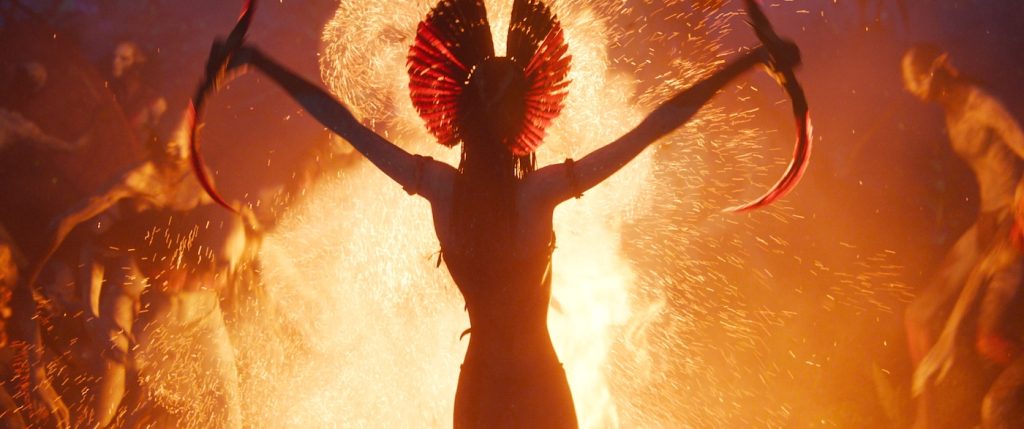
Featured image: Varang (Oona Chaplin) in 20th Century Studios’ AVATAR: FIRE AND ASH. Photo courtesy of 20th Century Studios. © 2025 20th Century Studios. All Rights Reserved.